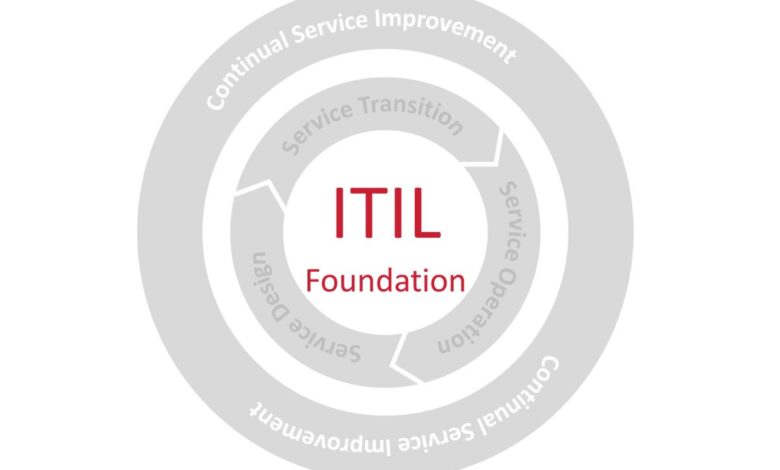
In an era when technology underpins virtually every business outcome, the question of how IT services are managed — how incidents are resolved, how changes are governed, how service quality is measured, and how technology teams align with organisational strategy — has become as strategically important as the technology choices themselves. ITIL, the Information Technology Infrastructure Library, is the world’s most widely adopted framework for IT service management (ITSM), and the consulting firms that help organisations implement, mature, and optimise ITIL-aligned practices occupy a uniquely important role in the modern enterprise technology ecosystem.
India, with its vast concentration of IT services delivery capability and its increasingly sophisticated enterprise technology adoption, has developed one of the world’s strongest ecosystems of ITIL consulting expertise. Whether a company is implementing ITIL 4 for the first time, transforming its service desk into an AI-augmented support operation, or integrating ITIL practices with agile and DevOps methodologies, Indian ITIL consulting firms offer a combination of framework depth, implementation experience, and cost-effectiveness that few other markets can match.
This article profiles the top 10 ITIL consulting companies operating in India in 2026 — all of them active, credible, and well-positioned to help organisations at different stages of their ITSM maturity journey.
Understanding ITIL in 2026: More Than a Framework
Before exploring the firms themselves, it helps to understand what ITIL consulting actually involves today, because the discipline has evolved considerably from its earlier versions. ITIL 4, released in 2019 and now the governing standard, represents a significant philosophical shift from the process-heavy prescriptions of ITIL v3 toward a more flexible, value-driven approach built around the Service Value System (SVS) and four dimensions of service management. Critically, ITIL 4 is designed to coexist with Agile, DevOps, Lean, and cloud-native ways of working rather than competing with them — a shift that has made ITIL relevant again for organisations that had previously found it too rigid for modern delivery models.
In practice, an ITIL consulting engagement in 2026 might involve assessing an organisation’s current ITSM maturity against the ITIL 4 capability model, redesigning incident, problem, change, and request management processes, implementing or optimising a platform like ServiceNow, BMC Helix, or Jira Service Management to operationalise those processes, training service management teams on ITIL 4 practices, and building governance dashboards that give leadership real-time visibility into service quality. The firms that do this best combine deep ITIL framework knowledge with practical technology implementation capability and genuine change management expertise — because even the most perfectly designed ITSM process fails if the people and culture don’t adopt it.
1. Tata Consultancy Services (TCS) — ITSM and Service Management Consulting
Headquarters: Mumbai, Maharashtra
TCS is India’s largest IT company and home to one of the most experienced and scalable ITIL consulting practices in the country. Its Service Management Consulting practice, embedded within its larger IT infrastructure and digital operations division, has delivered ITIL implementations for some of the world’s most complex enterprise environments — spanning global banks, pharmaceutical manufacturers, telecommunications operators, and government agencies.
What distinguishes TCS’s ITIL consulting in 2026 is the integration of its ignio AI platform with ITSM process design. Rather than simply mapping processes to ITIL 4 practices and calling it done, TCS designs service management frameworks with automation at their core — so that incident detection, classification, and first-level remediation happen through machine learning before a human analyst is ever involved. This fusion of ITIL framework rigour with AIOps delivery capability represents genuinely next-generation ITSM consulting, and TCS’s ability to execute it at global scale is unmatched among Indian firms.
2. Infosys — IT Service Management Practice
Headquarters: Bengaluru, Karnataka
Infosys has built a sophisticated ITIL consulting capability within its digital operations and infrastructure services division, with particular depth in ServiceNow implementation — the platform that has become the dominant vehicle for operationalising ITIL 4 practices in large enterprises globally. Infosys is a ServiceNow Elite Partner, which represents the highest tier of ServiceNow partnership and reflects the depth of its platform expertise across ITSM, ITOM (IT Operations Management), ITAM (IT Asset Management), and GRC modules.
The practical significance of Infosys’s ServiceNow depth is that it can handle the full ITIL consulting lifecycle in a single engagement: designing the ITIL-aligned processes, configuring ServiceNow to operationalise them, integrating ServiceNow with the client’s existing monitoring, CMDB, and HR systems, and training service desk and operations teams to work within the new framework. This end-to-end ownership eliminates the costly friction that occurs when process consultants and technology implementers are separate firms with different interpretations of what “done” looks like. Infosys is one of the most capable firms in India for large, complex ITIL 4 transformation engagements.
3. Wipro — IT Service Management and ITIL Advisory
Headquarters: Bengaluru, Karnataka
Wipro’s ITSM consulting practice is one of the more technically rounded on this list, combining ITIL process design with deep integration expertise across the leading ITSM platforms — ServiceNow, BMC Helix, and Micro Focus Service Manager — as well as its own proprietary Holmes AI layer, which brings intelligent automation to service management operations. Wipro’s ITIL advisory team has delivered maturity assessments and process transformations for clients across banking, manufacturing, retail, and government sectors, and its particular strength in regulated industries gives it a nuanced understanding of how ITIL governance requirements interact with external compliance mandates such as RBI IT frameworks, ISO 20000, and SOC 2.

In 2026, Wipro has also invested in integrating ITIL 4’s Service Value Chain with enterprise DevOps pipelines, helping clients bridge the traditional divide between ITSM teams that manage stability and DevOps teams that drive velocity. This integration work — often the most culturally and technically difficult part of a modern ITSM transformation — is where Wipro’s consulting maturity is most evident.
4. HCLTech — DRYiCE-Powered ITSM Consulting
Headquarters: Noida, Uttar Pradesh
HCLTech’s approach to ITIL consulting is deeply shaped by its proprietary DRYiCE platform — an AI-powered ITSM and IT operations automation suite that the company has developed and refined over several years. DRYiCE implements ITIL 4 practices natively, providing workflows for incident, problem, change, service request, knowledge, and configuration management that are designed from the ground up for AI-augmented execution. When HCLTech implements ITIL for a client, it is implementing those practices within a platform that it owns, which gives it an unusual degree of control over the quality and consistency of the outcome.
Beyond the technology layer, HCLTech’s ITIL consulting team brings genuine service management philosophy depth — the firm’s service management architects have contributed to industry thinking around ITSM and have a track record of helping large enterprises move from fragmented, tool-centric ITSM to genuinely integrated, outcome-focused service management. For organisations that want an ITIL implementation that is tightly coupled with an intelligent operations platform and backed by a firm with genuine IP in the space, HCLTech is among the strongest choices in India.
5. Capgemini India — Cloud Infrastructure and ITSM Consulting
Headquarters: Mumbai, Maharashtra (India operations of the French multinational)
Capgemini’s India operations are a significant component of its global delivery capability, and its ITIL consulting practice benefits from both the depth of its global ITSM experience and the scale of its India delivery centres. Capgemini has delivered ITIL implementations across industries including aerospace and defence, energy and utilities, consumer goods, and financial services, and its global client relationships mean that many of its India-delivered ITIL engagements serve multinational organisations with operations across Europe, North America, and Asia-Pacific simultaneously.
What makes Capgemini distinctive in 2026 is its integration of ITIL consulting with cloud service management. As enterprises have migrated significant workloads to AWS, Azure, and Google Cloud, the need to extend ITIL practices — particularly change management, configuration management, and service continuity — into cloud environments has become urgent. Capgemini’s cloud-aware ITSM practice designs service management frameworks that govern both on-premises and cloud-hosted services under a unified model, which is exactly what most enterprise organisations need as they operate hybrid technology estates. Capgemini India is fully operational, financially stable, and backed by its global parent’s strong balance sheet.
6. Cognizant — ITSM and Process Excellence Practice
Headquarters: Chennai, Tamil Nadu (India operations headquarters of the Nasdaq-listed firm)
Cognizant’s ITSM consulting practice is built around its broader digital operations and transformation capability, with ITIL serving as the governance framework that ensures operational consistency and quality across its clients’ service delivery environments. Cognizant’s ITIL consulting team has particular depth in the banking, financial services, insurance, and healthcare verticals — sectors where ITSM governance intersects heavily with regulatory compliance and where the consequences of poor incident management or unauthorised change extend beyond operational inconvenience into regulatory risk.

Cognizant’s consulting approach is notably methodology-driven, combining ITIL 4 with Lean Six Sigma principles to produce not just better-designed processes but measurably more efficient ones. Its process excellence team applies value stream mapping and waste elimination techniques to ITSM workflows, often identifying significant cycle time reductions in change approval and incident resolution processes that ITIL redesign alone would not have surfaced. For organisations that want both ITIL framework alignment and quantifiable operational efficiency improvements from their ITSM transformation, Cognizant’s integrated approach is particularly well-suited.
7. Deloitte India — Technology Strategy and ITSM
Headquarters: Mumbai, Maharashtra
Deloitte India’s Technology Strategy and Transformation practice approaches ITIL consulting from an enterprise architecture and business alignment perspective that is somewhat different from the technology-delivery-oriented approach of the IT services majors. Where TCS or Infosys might lead with platform capability, Deloitte leads with strategy — helping CIOs and IT leadership teams understand how ITIL 4’s Service Value System connects technology service management to business outcomes, and then designing operating models that make that connection explicit and measurable.
This executive-level, strategy-first approach makes Deloitte India particularly valuable for organisations at the beginning of their ITSM transformation journey, where the most important question is not “which ITSM platform should we use?” but “what kind of IT service organisation do we want to be, and how do we get there?” Deloitte’s ITIL consulting engagements often include organisational design work — restructuring IT teams around ITIL 4 practice ownership — alongside process and technology recommendations, which produces more sustainable transformations because the people dimension is addressed alongside the process and technology dimensions.
8. KPMG India — IT Operations and Service Management Advisory
Headquarters: Mumbai, Maharashtra
KPMG India’s Technology Risk and Advisory practice includes a well-regarded IT service management advisory capability that is particularly strong in the intersection of ITIL governance and IT audit. Many of KPMG’s ITIL consulting engagements originate from IT audit findings — an internal audit identifies weaknesses in change management, incident response, or CMDB accuracy, and KPMG’s advisory team is then engaged to design and implement the ITIL-based controls that address those weaknesses. This audit-to-advisory pipeline gives KPMG’s ITIL practice a distinctive rigour orientation — its process designs are built to satisfy not just operational efficiency criteria but also auditability requirements.
In 2026, KPMG India’s ITIL practice has also developed meaningful capability around ISO/IEC 20000 certification readiness, helping IT service providers prepare for and achieve the international standard for IT service management that is directly aligned with ITIL 4 principles. For organisations that need ITIL implementation backed by audit-credible documentation and independent quality assurance, KPMG India offers a service combination that pure-play technology firms typically cannot match.
9. EY India — Technology Risk and ITSM Transformation
Headquarters: Mumbai, Maharashtra
EY India’s Technology Risk practice approaches ITIL consulting through the lens of digital trust and operational resilience — a framing that has become increasingly relevant as organisations recognise that poor ITSM practices are not just an efficiency problem but a risk and reputation problem. Its ITIL consulting team helps organisations design service management frameworks that are built for resilience from the ground up, integrating ITIL 4’s practices with business continuity management, cyber incident response, and crisis communication planning.
EY’s consulting methodology places particular emphasis on the human and behavioural dimensions of ITIL adoption. Many ITSM transformations fail not because the process design is wrong but because the organisational culture doesn’t support the discipline required to follow structured processes under pressure. EY’s change management practice, integrated with its ITIL consulting delivery, addresses this through targeted training, leadership alignment, and sustained adoption monitoring that continues well beyond the initial implementation go-live. For organisations that have experienced failed or stalled ITSM transformations before, EY India’s culture-conscious approach is a meaningful differentiator.
10. Microland
Headquarters: Bengaluru, Karnataka
Microland is a specialist IT infrastructure services and digital workplace company that has built one of India’s most focused ITIL consulting and ITSM implementation practices outside the Tier-1 IT majors. Founded in 1989, Microland has spent three decades refining its service management delivery model, and in 2026 it occupies a strong mid-market position, serving regional enterprises, Indian MNC subsidiaries, and global companies with India delivery centres that want the rigour of a specialist ITSM firm without the overhead of a full-scale Tier-1 engagement.
Microland’s ITIL consulting practice is built around its proprietary Service Management Office (SMO) model, which embeds dedicated ITIL process owners and governance structures within client organisations rather than delivering a consulting report and departing. This embedded model produces significantly higher adoption rates because process ownership resides within the client team from day one, with Microland consultants serving as advisors rather than decision-makers. Microland is fully operational, financially stable, and has been recognised by multiple industry analysts for the maturity of its ITSM delivery framework. For mid-market organisations seeking a specialist partner with genuine ITSM depth, Microland is one of the most credible options in India.
What to Look for When Evaluating an ITIL Consulting Partner
Choosing the right ITIL consulting firm requires moving beyond brand reputation and evaluating four specific dimensions that consistently predict engagement success. The first is ITIL 4 certification depth within the team — not just individual certifications, but how many of the firm’s consultants hold the ITIL 4 Managing Professional or Strategic Leader designations, which represent genuine framework mastery rather than introductory knowledge. The second is platform implementation experience — because ITIL processes only deliver value when they are operationalised in a well-configured ITSM platform, the consulting firm’s hands-on implementation track record with ServiceNow, BMC Helix, or whichever platform you use is as important as its process design credentials.
The third dimension is vertical depth — a firm that has implemented ITIL specifically in your industry understands the regulatory constraints, cultural norms, and technology patterns that shape what “good” ITSM looks like in your context, and that understanding saves significant time in both design and change management. The fourth is change management methodology — because the most technically perfect ITIL implementation in the world delivers zero value if it is not adopted by the people who must live within it every day. Firms that treat change management as a separate workstream rather than an integrated discipline consistently produce weaker adoption outcomes than those that embed it throughout the engagement lifecycle.
Conclusion
India’s ITIL consulting landscape in 2026 is sophisticated, diverse, and well-matched to the full spectrum of enterprise ITSM needs — from the global scale and platform depth of TCS, Infosys, and HCLTech, to the audit-credible rigour of Deloitte, KPMG, and EY India, to the focused specialist capability of Microland for mid-market organisations.

What the best firms on this list share is a recognition that ITIL is not a destination — it is a continuously evolving practice discipline that must keep pace with changing technology, regulatory, and organisational realities. The consulting partners worth trusting are those whose own thinking and methodology has kept pace with ITIL 4’s evolution, and who approach every engagement not as a process documentation exercise but as a genuine transformation of how an organisation creates and delivers technology value.