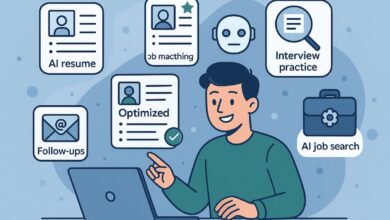
India’s job market is one of the most complex and voluminous in the world. With a workforce exceeding 500 million people, millions of fresh graduates entering every year, and an economy that is simultaneously generating high-skilled technology roles, blue-collar services jobs, and everything in between, the infrastructure needed to connect employers and employees at this scale is genuinely enormous. Job portals are that infrastructure — the digital marketplaces where careers begin, where companies find the talent to grow, and where the formal employment economy conducts a significant share of its matching and hiring activity.
In 2026, India’s job portal landscape has evolved well beyond the early-2000s model of uploading a resume and waiting. Today’s leading platforms use AI-powered matching, video-based applications, vernacular interfaces, assessment-led hiring, and hyperlocal discovery to serve a workforce that is more diverse, more digitally connected, and more demanding of good experiences than at any point in the country’s history. This article profiles the top 10 job portals actively and substantively serving Indian job seekers and employers in 2026 — each one selected on the basis of active operational status, user base scale, feature depth, and genuine relevance to the Indian hiring context.
1. Naukri.com
If India’s job market has a nervous system, Naukri.com is it. Founded in 1997 by Sanjeev Bikhchandani and operated by Info Edge India — a publicly listed company — Naukri is not merely the oldest major job portal in India but still the largest and most deeply embedded one, consistently accounting for the highest share of white-collar job applications in the country. With tens of millions of registered job seekers and hundreds of thousands of active job listings at any given moment, the platform’s scale is simply unmatched in the organised employment space.
What has kept Naukri relevant for nearly three decades in a fast-changing digital landscape is its continuous evolution. The platform’s AI-based matching engine, its “Resdex” recruiter database, its profile visibility tools, and its salary benchmarking features give both job seekers and employers a sophisticated experience built on top of the largest career dataset in India. For mid-career professionals, senior executives, and specialists in IT, finance, marketing, and operations — Naukri is typically the first and most productive destination, and in many cases, the last one they need.
2. LinkedIn
LinkedIn occupies a category of its own in India’s job search ecosystem, because it is simultaneously a job portal, a professional social network, a content platform, and a talent intelligence tool. With over 130 million users in India — making the country one of LinkedIn’s largest markets globally — the platform’s sheer density of professional profiles gives it a matching depth that no pure-play job board can replicate.
The fundamental difference between LinkedIn and a traditional job portal is the network effect. When you apply for a job on LinkedIn, the platform can show recruiters whether you share connections, whether your profile has been endorsed by people they know, and how your trajectory compares to others who have been hired for similar roles. This social proof layer — layered on top of strong AI job recommendations and an increasingly capable “Easy Apply” mechanism — makes LinkedIn particularly powerful for roles at premium companies, for passive job seekers who want to be discovered rather than search actively, and for professionals whose industry reputation is their most important hiring credential.
3. Indeed India
Indeed operates as a job search aggregator rather than a traditional portal — it crawls company career pages, partner job boards, and direct employer postings to compile one of the largest consolidated databases of live job listings anywhere in India. This aggregator model is both its greatest strength and the reason it serves a different function from Naukri or LinkedIn.
For a job seeker, Indeed’s value is comprehensiveness. Positions listed only on a company’s own careers page — which would never appear on Naukri — show up on Indeed, giving it a breadth of coverage that makes it an essential cross-reference for thorough job searchers. The platform’s transparent approach to listing information — showing salaries where available, displaying the source of each listing, and offering company reviews alongside job descriptions — gives job seekers a more honest picture of their options than platforms that rely entirely on employer-reported information. Indeed’s scale in India has grown steadily, and it now serves as a default starting point for many job seekers who want to scan the full market before narrowing their focus.
4. LinkedIn Talent Solutions / Foundit (formerly Monster India)
Foundit — rebranded from Monster India in 2022 and backed by Quess Corp, one of India’s largest workforce management companies — has used its relaunch to position itself as an AI-first career and talent platform rather than simply a job listings aggregator. This repositioning reflects a genuine investment in rebuilding the platform’s matching and recommendation infrastructure around skills and behavioural signals rather than keyword matching alone.

Foundit’s “CareerAI” suite offers personalised job feed curation, a role fit scoring system that tells candidates exactly where they match a job description and where they fall short, and a skills recommendation engine that suggests targeted learning interventions to make candidates more competitive for their target roles. For job seekers in manufacturing, retail, logistics, BFSI, and infrastructure sectors — areas where Monster had deep historical recruiter relationships — Foundit’s combination of legacy network reach and modernised AI features gives it a competitive relevance that the rebranding effort was designed to unlock.
5. Shine.com
Shine.com, operated by HT Media, is one of India’s most visited job portals and has built particular strength in sectors including banking, insurance, telecom, retail, and BPO — industries that collectively represent some of the largest volumes of formal employment creation in the country. The platform’s association with the Hindustan Times group gives it a media reach and brand recognition that many standalone job portals lack.
What distinguishes Shine beyond sector coverage is its candidate support infrastructure. The platform offers resume building tools, mock assessments, and a career advice section that is genuinely useful for first-generation job seekers navigating the formal employment market for the first time. Its AI-powered job recommendation engine analyses browsing and application patterns to refine suggestions over time, and its recruiter reach in mass-hiring sectors means that candidates in mid-market industries often find more relevant opportunities here than on platforms that skew toward premium technology roles. Shine occupies a valuable middle ground in India’s portal ecosystem — broader than niche platforms, more sector-specific than fully general ones.
6. Apna
Apna has done something that most job portals have consistently failed to do — it has made the job search process genuinely accessible for India’s blue-collar, grey-collar, and entry-level workforce. Founded in 2019 by Nirmit Parikh, Apna was built on the insight that the standard job portal experience — create a detailed text profile in English, upload a formatted resume, browse text-heavy listings — excludes the majority of India’s working population by design, even if not by intent.
Apna’s community-based model allows job seekers to join professional groups organised by trade or occupation, connect with peers, receive job alerts matched to their skills and location, and apply for roles through a low-friction interface that supports Hindi and several regional languages.
Its AI matching engine uses location proximity, skill category, and platform engagement patterns to surface relevant opportunities, including through its conversational interface that functions more like a helpful guide than a search engine. With tens of millions of users concentrated in Tier 2 and Tier 3 cities as well as metros, Apna’s significance in India’s full employment ecosystem is difficult to overstate — it represents the formal job market becoming accessible to people it had long ignored.
7. Unstop (formerly Dare2Compete)
Unstop has built a job portal experience that is fundamentally different from every other platform on this list, because it does not begin with a resume. Founded in 2016 and rebranded in 2022, Unstop’s platform starts with performance — competitions, case study challenges, hackathons, and hiring drives — and uses the results of those assessments as the primary matching signal between candidates and employers.

This inverted hiring logic is commercially powerful for a specific and valuable cohort: students and early career professionals at India’s competitive colleges, where the gap between resume-stated ability and actual demonstrated capability can be enormous in both directions. For the engineering student from a regional college whose skills exceed their institutional brand, Unstop’s merit-based matching is a genuine equaliser. For companies that have grown sceptical of resume inflation and want to identify talent through verified performance, Unstop’s assessment-anchored platform reduces the risk of bad hires at the point of first filtering. In 2026, Unstop is one of the most actively used platforms for campus and early career hiring across India’s most competitive employers.
8. iimjobs.com
iimjobs.com occupies an important and deliberately narrow segment of India’s job portal landscape — it serves mid-to-senior management professionals, MBA graduates from premium institutions, and experienced specialists who are targeting roles at well-regarded companies, typically at compensation levels above ₹15 to 20 lakh per annum. The platform’s intentional focus on this premium segment has allowed it to build a recruiter base and a candidate pool that are both calibrated to the same quality standard, producing a meaningfully better signal-to-noise ratio than general platforms for users in this demographic.
What iimjobs does that makes it genuinely valuable is enforce a certain quality filter on both sides of the market — employers posting on iimjobs expect premium candidates, and candidates browsing iimjobs expect roles at credible companies with competitive compensation. The matching feels less like searching a crowded bazaar and more like navigating a curated marketplace. Its sibling platform hirist.com serves a similar function for the technology professional segment — senior engineers, architects, and CTOs — with the same focused, quality-over-volume philosophy applied to the technical hiring context.
9. Internshala
Internshala earns its place on this list not as an internship portal that also handles jobs — which is how it is sometimes categorised — but as a genuinely significant channel for India’s enormous early-career job market. Founded in 2011 in Gurugram, Internshala has expanded well beyond internship listings to include fresher jobs, part-time roles, and trainee positions that bridge the gap between academic completion and first employment.
What Internshala does better than any other platform for this segment is understand the student’s perspective holistically. Its training courses, its resume builder, its application tracking, and its community of active college-student users create a full ecosystem rather than just a listings board. For a student in their final year looking simultaneously for an internship that might convert to a job, a certification course to add credibility to their profile, and advice on how to navigate their first salary negotiation — Internshala is the most complete single destination available. The platform’s enormous registered user base among Indian college students gives it a distribution and awareness advantage in the fresher segment that no general portal can match.
10. Kaam.com
Kaam.com is a Bengaluru-based hiring platform specifically focused on the entry-level and frontline workforce, built with the recognition that the standard job portal experience is too complex, too English-heavy, and too credential-focused to serve the millions of young Indians seeking their first formal employment in retail, banking, BPO, field sales, delivery, and hospitality. The platform’s design philosophy places accessibility above sophistication — the goal is to make the job application process as simple as possible for someone who may be filling out a digital job profile for the first time in their life.
The platform’s AI matching engine incorporates hyperlocal matching — prioritising opportunities within a realistic commute distance — and works with vocational qualifications, skill certifications, and ITI credentials that other platforms are not built to evaluate. Kaam.com’s growing employer base includes large retail chains, banks, insurance companies, and FMCG firms that hire frontline staff at scale, and its increasingly vernacular-capable interface makes it one of the most important job discovery tools for India’s vast first-job-seeking workforce. As India’s services economy continues to create enormous volumes of entry-level formal employment, Kaam’s specific focus on this segment positions it as an increasingly critical piece of the hiring infrastructure.
Choosing the Right Job Portal for Your Situation
Understanding which portal to invest your time in depends almost entirely on where you are in your career and what kind of role you are seeking — which is worth thinking through clearly rather than simply registering on all of them simultaneously.
If you are a mid-career or senior professional in white-collar industries, Naukri and LinkedIn are non-negotiable starting points, with iimjobs worth adding if you are targeting management or premium specialist roles. If you are a fresh graduate or final-year student, Internshala and Unstop are likely to produce better early-career matches than the platforms built for experienced professionals.
If you are entering the job market for the first time from a blue-collar, grey-collar, or services background, Apna and Kaam.com are specifically designed for you and will produce far more relevant results than portals calibrated for white-collar professional profiles. If you want to ensure you have seen every available listing in the market — including roles that are only posted on company websites — Indeed’s aggregator model serves as an essential cross-reference regardless of what else you use.
The most effective job search strategy in India’s 2026 landscape is not to find the single best portal but to use two or three platforms that together cover your specific segment comprehensively, and to invest in making your profile genuinely compelling on each of them rather than spreading minimal effort across all ten.

Conclusion
India’s job portal ecosystem in 2026 reflects the extraordinary breadth and complexity of the country’s labour market itself. From platforms serving the IIM graduate targeting a CXO role to tools designed for a first-generation job seeker in a Tier 3 city finding their first formal employment, the ten portals profiled here collectively span the full range of India’s working population. The right portal is not the most famous one — it is the one that was built for someone in your specific situation. Understanding that distinction, and making it consciously, is the most productive first step any job seeker or hiring manager can take.