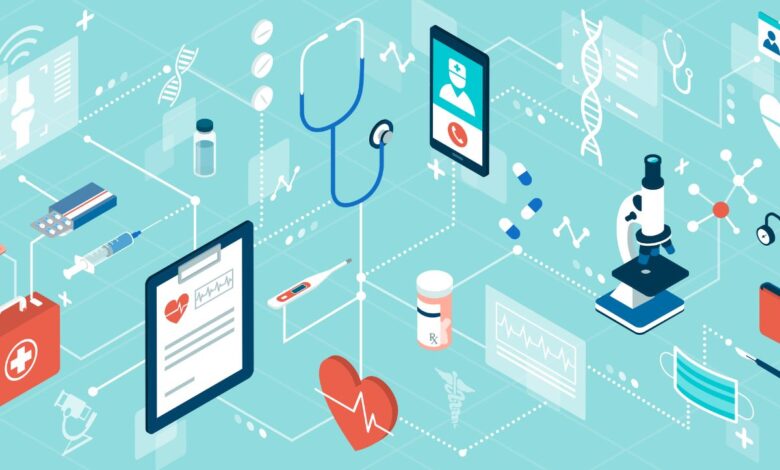
India’s healthcare infrastructure is experiencing a technological transformation that extends far beyond telemedicine applications and digital appointment booking. At the operational core of this transformation sits an ecosystem of Software-as-a-Service platforms that hospital administrators, clinic managers, and healthcare system operators rely upon daily to manage everything from patient registration through discharge, from pharmacy inventory through laboratory reporting, and from billing through insurance claim processing. These platforms have evolved from simple digitization tools that merely replaced paper records with electronic equivalents into comprehensive management systems that actively improve clinical workflows, reduce administrative overhead, ensure regulatory compliance, and create the data foundation that enables evidence-based healthcare delivery at scale.
According to industry analysis from late 2025 and early 2026, India’s healthcare SaaS market is experiencing compound annual growth exceeding twenty percent as hospitals recognize that operational efficiency and clinical quality increasingly depend on technological infrastructure that cannot be built in-house. The Ayushman Bharat Digital Mission’s establishment of health identifiers and electronic health record standards has created interoperability requirements that make cloud-based SaaS platforms more attractive than legacy on-premise systems that struggle to integrate with national digital health frameworks. The 7 platforms profiled below represent the current state of healthcare SaaS in India, all verified as actively operating with substantial customer bases and no governmental scrutiny that would qualify them for exclusion.
1. Drlogy: The Fastest-Growing AI-Powered Hospital Management Platform
Drlogy Hospital Management Software has achieved remarkable market penetration, claiming a user base exceeding fifty-one thousand hospitals and doctors across India as of late 2025, making it arguably the most widely deployed healthcare SaaS platform in the country by sheer number of installations. What distinguishes Drlogy from competitors is its aggressive positioning as an AI-driven cloud-based solution that incorporates artificial intelligence not just as a marketing claim but as functional capability embedded throughout patient management workflows including AI-enhanced report generation that the company claims improves hospital management accuracy by thirty-five percent.
The platform provides comprehensive hospital information management system capabilities spanning outpatient department management, inpatient department management including intensive care unit workflows, operation theater scheduling, pharmacy management, laboratory information systems, billing and accounting, human resources, and inventory control. This breadth means a hospital can theoretically run its entire operation through Drlogy without requiring additional software systems for specific departments, which reduces the integration complexity that plagues healthcare IT when multiple point solutions from different vendors must communicate with each other.
Drlogy’s cloud architecture eliminates the need for hospitals to invest in on-premise servers, maintain IT infrastructure, or employ dedicated systems administrators, which creates immediate appeal for small and mid-sized hospitals that lack substantial IT budgets or technical staff. The platform operates on a subscription pricing model that the company markets as affordable for facilities of all sizes, with mobile applications for Android and iOS enabling doctors and staff to access patient information and clinical workflows from smartphones rather than being tethered to desktop computers in specific locations.
The platform’s multi-channel patient communication capabilities including email, SMS, WhatsApp integration, patient portals, and mobile apps represent sophisticated patient engagement infrastructure that extends healthcare service delivery beyond physical hospital visits into continuous digital relationships. For laboratory and diagnostic centers specifically, Drlogy’s ability to share reports digitally with referring physicians and patients eliminates the paper-based report delivery that historically created delays and administrative overhead. The company’s focus on data security and HIPAA compliance addresses the privacy concerns that have historically made healthcare organizations reluctant to adopt cloud-based systems where patient data resides outside their physical control.
2. MocDoc: The Cloud-Based Platform With Global Customer Base
MocDoc Hospital Management System has built a customer base exceeding fifteen hundred healthcare facilities worldwide, positioning itself as a mature platform with substantial international deployment experience that brings global healthcare IT best practices to Indian market applications. The platform’s core value proposition centers on being fully integrated, cloud-based, secure, and reliable, which are the fundamental requirements any healthcare facility evaluates when considering SaaS adoption rather than continuing with legacy on-premise systems or paper-based processes.
The software streamlines operations spanning the complete patient journey from initial registration through final discharge, with particular emphasis on optimizing both clinical workflows that directly affect patient care quality and administrative tasks that determine operational efficiency and financial performance. MocDoc’s clinic management system variant provides appointment management, outpatient case sheets, patient dashboards, and billing and accounting tools specifically configured for smaller clinic environments rather than full hospital implementations, acknowledging that single-physician practices and multi-physician clinics have different operational requirements and budget constraints than hospitals with hundreds of beds and dozens of departments.
For hospitals specifically, MocDoc’s hospital information management system covers the full operational spectrum including patient registration and admission, electronic medical records, pharmacy management, laboratory information systems, radiology information systems, billing and insurance claims processing, inventory management, and financial accounting. The platform’s architecture supports multiple communication channels including email, SMS, and WhatsApp for patient engagement, automated appointment reminders, report delivery, and billing notifications that reduce no-show rates and improve patient satisfaction through convenient digital interactions rather than requiring phone calls or physical visits for routine communications.
MocDoc’s emphasis on workflow management as a tool for optimizing care quality rather than simply digitizing existing processes reflects understanding that technology adoption should improve clinical outcomes rather than just replacing paper with screens. The platform’s insurance and business-to-business settlement capabilities address the revenue cycle management challenges that cause cash flow problems for many Indian healthcare facilities, where delays in insurance reimbursements and third-party administrator claim processing create working capital constraints that affect hospital operations and strategic investments.
3. DocPulse: The Comprehensive Digital Healthcare Ecosystem
DocPulse positions itself as providing state-of-the-art digital solutions encompassing clinic management software, patient management software, and hospital integrated management software, with particular focus on serving the distinct needs of individual doctors, small clinics, and larger hospital facilities through appropriately configured variants of its platform rather than forcing all facility types into identical software implementations. The company describes itself as an established healthcare solutions provider trusted by renowned clinics, hospitals, and multi-chain facilities with customer presence spanning India and international markets.
The platform’s telemedicine integration provides video consultation capabilities, electronic prescription generation, online payment collection, and chat-based patient interactions through both mobile applications and web browsers, creating a complete virtual care platform that extends healthcare delivery beyond physical facility visits. This telemedicine functionality became particularly valuable during the COVID-19 pandemic when physical distancing requirements made in-person consultations difficult or impossible, and the infrastructure remains relevant in 2026 for serving geographically distributed patient populations and providing specialist consultations to patients in locations where specialists are not physically available.
DocPulse’s outpatient department software emphasizes reducing paper usage and centralizing information access, addressing the perennial healthcare challenge where patient records, test results, billing information, and clinical notes exist in scattered physical files and disconnected computer systems that make comprehensive patient history review difficult when clinical decisions require complete information. The electronic medical records system includes customizable medical case sheets that allow different specialties to configure data capture forms appropriate to their specific clinical needs rather than forcing all specialties into generic templates that capture irrelevant information while missing specialty-specific details.
For hospital implementations, DocPulse HIMS manages appointments, billing, laboratory operations, pharmacy inventory, inpatient department workflows including bed management and nursing documentation, and generates revenue analysis reports that hospital administrators need for financial planning and departmental performance evaluation. The laboratory information system component automates pathology and radiology workflows, delivers digital reports to patients and referring physicians through SMS, mobile applications, and email, and creates the laboratory data integration that allows doctors to view test results directly within the hospital information system rather than requiring separate laboratory software access or physical report retrieval.
4. KareXpert: The Security-Focused Digital Healthcare Platform
KareXpert HIMS markets itself as built specifically to simplify patient records through intuitive productivity tools and facilitate easy data transfer throughout hospital or clinic operations, while bringing security and orderliness to what it characterizes as a chaotic, siloed healthcare environment where information exists in disconnected systems that do not communicate effectively. The platform’s positioning as a six-in-one healthcare platform indicates integration of multiple functional modules that would traditionally require separate software systems, including electronic health records, practice management, billing, scheduling, inventory, and analytics.
Customer testimonials highlighting the platform’s unique capabilities, wide feature range, and positive user experience suggest that KareXpert has achieved the combination of comprehensive functionality and usable interface design that determines whether healthcare workers actually adopt new software systems or continue using familiar paper-based workflows and legacy systems regardless of management directives to transition to new platforms. Healthcare software adoption depends heavily on whether busy clinicians and administrative staff find the new system easier rather than harder than their existing processes, because unlike in other industries where management can mandate software usage, healthcare workers facing patient care pressures will simply bypass systems that slow them down or add complexity to already demanding workflows.
The security emphasis in KareXpert’s positioning addresses healthcare’s unique regulatory requirements around patient data protection, where privacy violations carry both legal penalties and reputational damage that can fundamentally harm healthcare organizations’ relationships with their patient populations and referring physician networks. Healthcare data breaches expose not just demographic and financial information but intimate medical histories, psychiatric records, substance abuse treatment details, and other highly sensitive information whose unauthorized disclosure causes genuine harm to patients beyond the inconvenience that typical data breaches create.
5. CrelioHealth LIMS: The Laboratory Information Specialist
CrelioHealth LIMS occupies a specialized position within healthcare SaaS by focusing specifically on laboratory information management systems and radiology information systems rather than attempting to provide comprehensive hospital management functionality. This vertical focus allows CrelioHealth to develop deep expertise in laboratory workflows, sample tracking, result validation, quality control, equipment integration, and regulatory compliance requirements specific to diagnostic laboratories and radiology centers that general hospital management platforms often address superficially.
The platform’s web-based architecture enables management of information across multiple medical facilities through a single unified system, which creates particular value for diagnostic laboratory chains operating testing centers in multiple cities or regions where centralized visibility into operations, standardized workflows, and consolidated reporting provide both operational efficiency and quality consistency that independent facility-level systems cannot achieve. Patients benefit from being able to access test results from any facility in the chain through a unified patient portal rather than maintaining separate accounts and credentials for each testing location they visit.
CrelioHealth’s workflow automation capabilities reduce the manual data entry, paper-based result recording, and physical report printing that historically made laboratory operations labor-intensive and error-prone, while sample tracking functionality ensures that specimens are properly identified throughout the testing process from collection through analysis to result reporting, preventing the specimen mix-ups that cause incorrect test results and potential patient harm. The platform’s ability to integrate with laboratory equipment including analyzers, imaging systems, and automated testing platforms eliminates the manual transcription of instrument results into laboratory information systems that introduces transcription errors and creates workflow delays.
6. Oracle Healthcare Cloud: The Enterprise-Grade Solution
Oracle Healthcare Cloud brings the infrastructure, security, and enterprise software experience of a global technology leader to Indian healthcare organizations seeking proven platforms with the stability and support that only established multinational technology companies can provide. The platform manages healthcare analytics and healthcare management requirements for hospitals and clinics of all sizes, with Oracle’s cost-effectiveness claims based on economies of scale, infrastructure efficiency, and development resources that allow the company to amortize platform development costs across a massive global customer base rather than depending on smaller Indian market revenues alone.
Healthcare organizations choosing Oracle are often making decisions based on risk mitigation rather than purely feature comparison, recognizing that Oracle’s financial stability, ongoing platform investment, security infrastructure, compliance certifications, and global support organization provide assurances that smaller healthtech startups cannot match regardless of how innovative their products may be. For large hospital chains, healthcare conglomerates, and government health systems where platform failure would affect thousands of patients and hundreds of staff simultaneously, the additional cost of enterprise vendors provides insurance against the operational disruption, data loss, security breaches, and vendor abandonment risks that can accompany smaller vendors.
Oracle Healthcare Cloud’s enrollment and premium management capabilities address health insurance and managed care administration requirements beyond traditional hospital operations, positioning the platform for health insurance companies, third-party administrators, and integrated healthcare delivery systems that combine insurance and care provision. The value-based care tools support the industry’s ongoing transition from fee-for-service payment models where providers are paid for volume of services delivered to value-based arrangements where reimbursement depends on measured health outcomes, quality metrics, and cost efficiency that require substantially different data collection, analysis, and reporting infrastructure than traditional billing systems provide.
7. eHospital Systems: The Comprehensive Electronic Health Records Platform
eHospital Systems positions itself as a server-based software capable of managing all aspects of hospital, clinic, or diagnostic laboratory operations in automated and systematic fashion, with particular emphasis on its electronic health records system capabilities that monitor and control every operational aspect of medical facility management. The platform’s scalability focus addresses the growth trajectory challenge where hospitals that select software appropriate for their current size sometimes outgrow platform capabilities within a few years and face expensive and disruptive migrations to more capable systems, making initial platform selection decisions with long-term consequences.
The feature array including appointment management, billing and invoicing, claims management for insurance processing, inventory management, outpatient and inpatient department workflow management, secure messaging between staff members, patient records management, and physician scheduling represents the baseline functionality that any comprehensive hospital management system must provide to seriously compete for customer consideration. What differentiates platforms is not whether these features exist but rather how intuitively they are designed, how seamlessly they integrate with each other, how well they perform at scale when managing thousands of patients and hundreds of concurrent users, and how effectively they reduce rather than increase administrative burden on already overstretched hospital staff.
eHospital Systems’ security and compliance focus addresses both data protection requirements and operational access controls, where different staff roles need different levels of system access based on their responsibilities and appropriate patient information visibility. Nurses need access to clinical documentation and medication administration records but not financial information, billing staff need access to charges and insurance details but not complete medical records, and physicians need comprehensive clinical information but may not require access to internal operational metrics that hospital administrators monitor.
The Regulatory and Technological Context Shaping Healthcare SaaS in 2026
Understanding these individual platforms requires understanding the broader forces reshaping India’s healthcare IT landscape in ways that make cloud-based SaaS platforms increasingly attractive compared to alternatives including continued paper-based operations, on-premise server installations, or custom software development. The Ayushman Bharat Digital Mission established during 2021 and reaching maturity in 2026 creates national digital health infrastructure including unique health identifiers for every Indian citizen, electronic health records that patients control and can share with providers, nationwide health facility registries, and healthcare professional registries that create the foundation for interoperable digital health.
These national standards mean healthcare organizations choosing platforms must consider interoperability with government systems rather than selecting software in isolation, which favors established SaaS platforms that have invested in Ayushman Bharat compliance over legacy systems or custom development that would require substantial additional engineering to meet national integration requirements. The regulatory framework under the Digital Information Security in Healthcare Act and related privacy regulations creates compliance obligations around patient data protection that cloud SaaS providers can often meet more effectively than individual healthcare facilities trying to implement security measures with limited IT resources and expertise.
The economics of SaaS versus on-premise deployment have shifted decisively in SaaS favor as cloud infrastructure costs have declined, Internet connectivity has improved even in smaller cities, and the total cost of ownership for on-premise systems including hardware, software licenses, IT staff, upgrades, and maintenance has become more apparent. Healthcare organizations are recognizing that the apparent cost savings of one-time on-premise purchases become expensive over five to ten year periods when ongoing maintenance, necessary upgrades, security patches, and the eventual need to replace systems are properly accounted for.
The talent availability challenge where skilled healthcare IT professionals capable of implementing and maintaining complex hospital information systems are scarce and expensive creates another advantage for SaaS platforms where vendor staff handle infrastructure, updates, troubleshooting, and ongoing optimization rather than requiring customer organizations to build and retain internal expertise. For hospitals in tier-two and tier-three cities particularly, accessing experienced healthcare IT implementation teams would be difficult regardless of budget, making SaaS platforms with remote implementation and support capabilities practically the only viable option for comprehensive digital transformation rather than just a cost-driven choice.

The 7 platforms profiled in this analysis collectively serve tens of thousands of healthcare facilities across India and represent hundreds of millions of patient encounters annually, making them essential infrastructure in India’s healthcare delivery system despite rarely being visible to patients or the general public. Their continued evolution in 2026 and beyond will substantially determine whether India’s healthcare system successfully navigates the transition from fragmented, paper-based operations toward coordinated, data-driven care delivery that national health policy envisions and that patient populations increasingly expect as digital services become ubiquitous in every other dimension of daily life.
For healthcare administrators evaluating platforms, for investors assessing the sector, and for policymakers considering how to support healthcare digital transformation, understanding these platforms is understanding the operational backbone of India’s healthcare future.