Trump-Induced Iran War Fractures Indian Markets As Sensex Crashes 2,400 Points; The Knockout Effect On Oil, The Rupee And India’s Economy – What Comes Next
A war thousands of kilometres away has suddenly shaken Indian markets. As the US–Israel conflict with Iran pushes oil prices above $100 and the Sensex tumbles 2,400 points, investors are confronting a harsh reality: could this geopolitical shock ripple far deeper into India’s economy than markets expect?

Indian stock markets opened the week with a jolt that few investors had anticipated just days earlier. The escalating war involving the United States, Israel and Iran sent tremors through global financial markets, and Dalal Street was quick to react.
Within minutes of Monday’s opening bell, the Sensex plunged nearly 2,400 points to around 76,424, while the Nifty 50 slid more than 700 points to roughly 23,750, marking one of the sharpest single-day declines in recent months.
The sell-off was swift and brutal. In less than ten minutes of trading, investors saw more than ₹12.39 lakh crore wiped off the total market capitalisation of companies listed on the BSE, dragging the figure down to about ₹437 lakh crore. Every single stock on the Sensex traded in the red during the early session, showing how widespread the panic selling was.
Airline operator IndiGo emerged among the worst hit, with its shares falling close to 8%, reflecting investor anxiety about the immediate impact of surging fuel costs on aviation companies. Heavyweights such as Tata Steel, Larsen & Toubro, State Bank of India and Maruti Suzuki were not spared either, with losses hovering around the 5% mark.
Across sectors, the damage was visible. The Nifty PSU Bank index dropped more than 5%, while the Auto, Realty and Private Bank indices fell between 3% and 4%, signalling a broad-based retreat by investors.
The trigger for this sharp correction lies far beyond India’s borders. Over the weekend, tensions in the Middle East escalated dramatically as the conflict between Iran and the US–Israel alliance intensified, raising fears of a wider regional war. Financial markets, which tend to react instantly to geopolitical shocks, began pricing in a series of risks: soaring crude oil prices, currency volatility, foreign investor outflows and potential pressure on India’s economic stability.
The Oil Shock: Why Markets Are Suddenly Nervous
If the stock market’s fall looked dramatic, the real trigger behind the panic lies in the sudden explosion in global oil prices. Energy markets were the first to react to the escalating war in the Middle East, and the numbers have been staggering.
On Monday morning, West Texas Intermediate (WTI) crude surged nearly 30% to about $118 per barrel, while Brent crude jumped more than 27%, pushing both benchmarks decisively above the psychologically important $100 per barrel mark. The scale of the move is significant. Oil has not crossed this level since the early phase of the Russia-Ukraine war in 2022, making the current rally one of the sharpest in recent years.
The Strait of Hormuz Problem
The spike in prices is being driven largely by fears surrounding the Strait of Hormuz, one of the world’s most critical energy corridors. This narrow stretch of water connects the Persian Gulf with the Gulf of Oman and ultimately the Arabian Sea.
Under normal circumstances, more than one-fifth of the world’s oil supply flows through this chokepoint, carried by a steady stream of tankers heading toward Asia, Europe and beyond.
But the ongoing war has turned this vital shipping route into a zone of extreme risk.
Reports of attacks on oil tankers and rising military activity in the region have made shipping companies and insurers increasingly cautious. While the United States has attempted to reassure markets by saying that the Strait remains open and has even offered to insure vessels travelling through the waterway, traders remain unconvinced. The fear is simple: if Iran begins targeting vessels attempting to pass through the Strait, the disruption to global energy supply could be immediate.
Why This Matters For India
For India, the oil shock is not just another global commodity fluctuation. It strikes at the heart of the country’s economic structure.
India imports around 90% of the crude oil it consumes, and a large portion of these shipments originate from Gulf producers such as Iraq, Saudi Arabia, the UAE and Kuwait. Many of these cargoes pass directly through the Strait of Hormuz before reaching Indian refineries.
When oil prices jump suddenly, the consequences ripple quickly through the economy. Higher crude prices increase the country’s import bill, weaken the rupee, raise transportation and manufacturing costs, and eventually feed into inflation. Financial markets are acutely aware of this chain reaction, which explains why equities reacted so violently the moment oil began climbing.
The concern now is not merely about oil touching $100 per barrel – it is about how long prices might remain elevated if the conflict deepens. Energy markets tend to react aggressively to geopolitical uncertainty, and even the perception of supply disruption can send prices soaring.
Rupee Weakens As Global Uncertainty Rises
If oil markets delivered the first shock, the currency market quickly followed with its own warning signal. As crude prices surged and global investors moved toward safer assets, the Indian rupee came under immediate pressure.
The rupee opened around 92.19 against the US dollar, marking a sharp fall from the previous close of roughly 91.74. During trading, the currency slipped further to an all-time low near 92.33, reflecting the growing anxiety in financial markets about the economic consequences of rising oil prices and escalating geopolitical tensions.
Why Oil And The Rupee Are Closely Linked
For oil-importing economies like India, currency movements are often closely tied to energy prices. When crude becomes more expensive, the country needs to spend more dollars to pay for imports. This increased demand for dollars naturally puts pressure on the domestic currency.
The situation becomes more complicated when geopolitical risks rise at the same time. Global investors tend to shift money away from emerging markets and into safer assets such as US government bonds or the dollar itself. As funds move out, emerging market currencies – including the rupee – often weaken further.
Market participants say this combination of surging crude prices and global risk aversion is precisely what has been weighing on the rupee.
According to analysts tracking currency markets, the rupee is now likely to remain highly sensitive to two variables: the trajectory of oil prices and developments in the Middle East conflict. Any further escalation could intensify pressure on the currency, particularly if foreign investors continue to reduce exposure to emerging markets.
RBI Intervention And Market Expectations
Traders indicated that the Reserve Bank of India may have stepped into the market to limit the rupee’s fall, a move that is not unusual during periods of sharp volatility. Central bank intervention often helps smooth extreme movements in the currency, although it rarely changes the underlying trend if global pressures remain strong.
For policymakers, a rapidly weakening rupee presents multiple challenges. A weaker currency makes imports (especially oil, gas and fertilisers) more expensive, adding to inflationary pressure. At the same time, it complicates monetary policy decisions at a time when central banks globally are already navigating uncertain economic conditions.
In many ways, the rupee’s decline serves as an early indicator of the broader economic stress that could emerge if energy prices remain elevated. Financial markets may react within minutes, but currencies often reveal how deeply those shocks might eventually travel through an economy.

Foreign Investors Retreat As Global Markets Turn Risk-Off
Beyond oil and currency movements, another factor amplifying the pressure on Indian markets is the behaviour of global investors. In times of geopolitical uncertainty, international funds typically retreat from riskier assets and move capital into safer havens such as US government bonds, gold or the dollar. The current conflict in West Asia appears to be triggering exactly that pattern.
Foreign Portfolio Investors (FPIs) have already been reducing exposure to Indian equities in recent sessions. Market data shows that foreign investors sold nearly ₹16,000 crore worth of Indian equities during the first week of March, while the first four trading sessions of the month alone saw outflows of roughly ₹21,829 crore.
This reversal comes after a brief period of buying seen in February, indicating how quickly global sentiment can shift when geopolitical risks intensify.
Global Markets Mirror The Anxiety
The cautious mood is not limited to India. Equity markets across Asia opened sharply lower as investors digested the implications of soaring oil prices and the widening conflict in the Middle East.
Japan’s Nikkei 225 dropped more than 6%, while South Korea’s Kospi plunged close to 8%, reflecting heavy selling across technology and export-oriented companies. Hong Kong’s Hang Seng index declined nearly 3%, while China’s Shanghai Composite slipped over 1%.
The negative sentiment had already been visible in Western markets before the Asian session began. On Friday, major US indices ended the day in the red, with the Nasdaq falling more than 1.5%, while European markets such as the FTSE, CAC and DAX also closed lower.
Early indicators suggest that Wall Street may open weak again, with S&P 500 futures falling around 1.6% and Nasdaq futures dropping nearly 1.7%.
Why Foreign Capital Matters For Indian Markets
For emerging markets like India, the behaviour of foreign investors plays a crucial role in shaping short-term market movements. Global funds often allocate capital across multiple countries, and when risk levels rise, they tend to pull money out of equities and move it toward safer assets.
India’s vulnerability to higher oil prices also adds to investor caution. Rising crude prices can weaken the rupee, increase inflation and widen the current account deficit- all factors that international investors closely monitor.
Analysts say foreign investors are unlikely to return aggressively until there is greater clarity about how the conflict evolves and whether oil prices stabilise. Until then, markets may continue to face intermittent bouts of volatility as global funds adjust their portfolios in response to the rapidly changing geopolitical environment.

The Macro Risk – Inflation, Current Account And Policy Pressure
Beyond the immediate market turmoil, the bigger concern for policymakers and economists lies in the broader macroeconomic impact that a prolonged conflict could have on India. A sharp and sustained rise in oil prices tends to ripple through multiple parts of the economy, influencing inflation, the current account balance and fiscal policy.
India’s dependence on imported crude makes it particularly vulnerable to such shocks. When oil prices climb rapidly, the country’s import bill rises almost immediately, increasing the outflow of dollars and putting pressure on the current account deficit. If the trend persists, it can weaken the rupee further and complicate monetary policy decisions for the Reserve Bank of India.
Ratings agency Moody’s has warned that a prolonged disruption to shipping through the Strait of Hormuz could trigger sustained supply shortages and keep oil prices above $100 per barrel, potentially fuelling inflation and tightening financial conditions globally. For India, this combination could prove especially challenging.
Higher energy costs typically feed into transportation, manufacturing and food prices, gradually pushing inflation upward. According to research estimates from SBI, every $10 increase in crude oil prices could raise inflation by roughly 35–40 basis points, depending on how much of the increase is passed on to consumers.
Pressure On Fiscal And Monetary Policy
Rising oil prices also place governments in a difficult position. If global crude prices remain elevated, authorities may face pressure to reduce fuel taxes or expand subsidies to shield consumers from rising costs. While such measures can soften the impact on households, they also strain government finances and widen the fiscal deficit.
At the same time, the Reserve Bank of India may find its room for monetary easing limited. If inflation begins to accelerate due to energy costs, the central bank may be forced to maintain a tighter policy stance even if economic growth begins to slow.
In the worst-case scenario – if crude prices surge toward $130 per barrel and remain elevated for an extended period – some estimates suggest that India’s economic growth could slow noticeably. Research from SBI indicates that GDP growth could slip closer to 6% instead of the projected 7% range, indicating how deeply energy prices can influence the country’s economic trajectory.
Oil May Not Be The Only Concern
While crude oil usually attracts the most attention during such crises, analysts suggest that India’s vulnerabilities extend beyond oil alone. Liquefied petroleum gas (LPG) and liquefied natural gas (LNG), both increasingly important components of India’s energy mix, could face even greater disruptions if shipping routes are affected.
Government programmes over the past decade have significantly expanded LPG usage across Indian households, replacing traditional fuels and sharply increasing demand. Today, India imports around 80–85% of the LPG it consumes, making it the world’s second-largest importer after China.
Most of these LPG shipments originate from Gulf countries such as Qatar, Saudi Arabia, the UAE and Kuwait, and like crude oil, they typically pass through the Strait of Hormuz before reaching Indian ports.
Liquefied natural gas presents a similar challenge. India’s domestic gas production meets only a fraction of its needs, forcing the country to rely heavily on imports to power industries, fertiliser plants, electricity generation and city gas distribution networks. Of the roughly 25 million tonnes of LNG India imported last year, a significant portion travelled through the same strategic corridor.
Limited Buffers In Some Energy Segments
Unlike crude oil, where India maintains strategic reserves and commercial inventories that can provide several weeks of supply cover, LPG and LNG have far smaller storage buffers. Industry estimates suggest that stocks of LPG held by refiners and distributors could cover only two to three weeks of demand if imports were disrupted.
This does not necessarily mean India is heading toward immediate shortages. The country could increase purchases from alternative suppliers such as Russia, the United States, western Africa or Latin America if required. However, such shipments take considerably longer to arrive — often 25 to 45 days compared with just five to seven days for cargoes from the Gulf – raising transportation costs and extending supply chains.
For now, most analysts believe a complete and prolonged closure of the Strait of Hormuz remains unlikely. More probable scenarios include temporary disruptions, rerouting of vessels or higher insurance costs for shipping companies.
Trade Shock
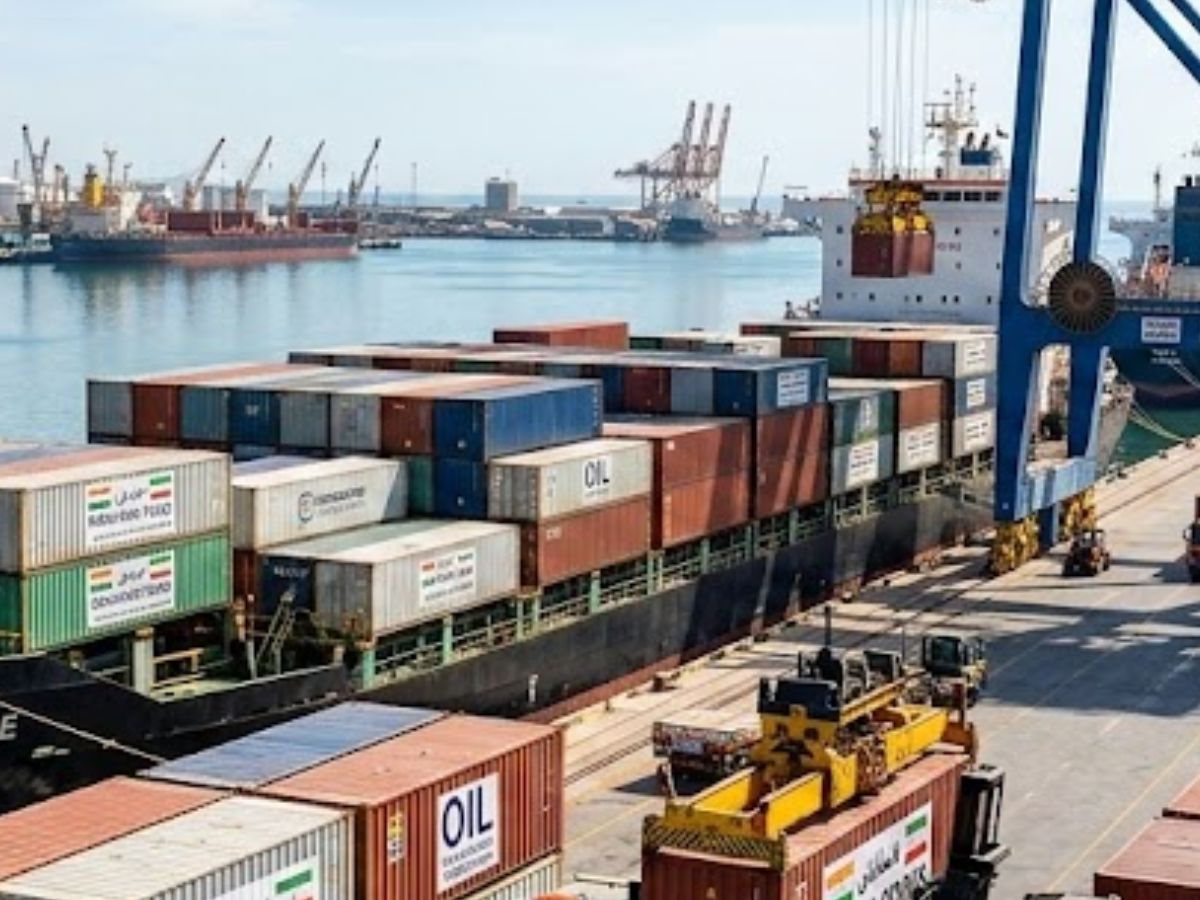
While energy markets dominate headlines during conflicts in West Asia, another important dimension often receives less attention: trade flows between India and the Gulf region. If instability persists, disruptions to shipping routes and rising insurance costs could begin affecting India’s export economy as well, particularly the agricultural sector.
India exported around $11.8 billion worth of agricultural and food products to West Asia in 2025, making the region one of the country’s most important overseas markets for farm produce. In fact, the Gulf accounts for more than one-fifth of India’s total agricultural exports, creating a deep economic link between Indian farmers and consumers across the Middle East.
Among the products most exposed to the crisis is basmati rice, one of India’s flagship agricultural exports. The country shipped nearly $4.43 billion worth of rice to West Asia in 2025, accounting for more than a third of India’s global rice exports. Major buyers include Saudi Arabia, Iraq and Iran.
Industry sources suggest that the conflict has already begun to affect logistics. Nearly four lakh metric tonnes of basmati rice are currently reported to be stuck at ports or in transit, raising concerns about potential delays and higher freight costs if instability around the Strait of Hormuz continues.
Farmers Across Several States Could Feel The Impact
The ripple effects of such disruptions extend far beyond exporters and shipping companies. A slowdown in Gulf-bound trade could affect farmers across several Indian states where these crops form a major part of the agricultural economy.
Rice farmers in Punjab, Haryana, Uttar Pradesh, Andhra Pradesh and Telangana are particularly exposed to the Gulf market. If shipments slow or buyers postpone orders due to rising shipping risks, the impact could eventually filter down to farmgate prices and rural incomes.
The Gulf region also absorbs a significant share of India’s fruit, vegetable, meat and spice exports. According to trade data, more than 70% of India’s exports of certain food products – such as sheep and goat meat, fresh beef, bananas and copra – are shipped to West Asia.
India’s spice trade is similarly dependent on Gulf demand. Around 70.5% of exports of nutmeg, mace and cardamom are destined for the region, while spices such as cumin, coriander, ginger and turmeric also have significant exposure to Gulf markets.
India’s Trade Dependence On The Region
For decades, the Gulf has been a natural destination for Indian exports due to geographic proximity, established shipping routes and the presence of a large Indian diaspora that has shaped consumption patterns across the region.
But that close economic relationship also means that any prolonged instability in West Asia can quickly ripple through India’s trade ecosystem. Shipping disruptions, rising war-risk insurance premiums and delays at ports could all complicate the flow of goods between the two regions.

The Gulf Diaspora And India’s Remittance Lifeline
Beyond energy and trade, India’s relationship with West Asia is also deeply tied to the millions of Indians who live and work across the Gulf. Over the decades, migration to the region has quietly become one of the most important pillars supporting India’s external finances and household incomes.
Today, nearly 10 million Indians reside across the Gulf Cooperation Council (GCC) countries – including Saudi Arabia, the United Arab Emirates, Qatar, Kuwait, Oman and Bahrain. From construction workers and technicians to engineers, healthcare professionals and entrepreneurs, Indian migrants form a significant part of the region’s workforce.
Their economic contribution to India is substantial. In the financial year 2024–25, India received around $135 billion in remittances, retaining its position as the world’s largest recipient of overseas money transfers. A large portion of these flows originate from Indian workers in the Gulf, helping support millions of families across the country.
These remittances play a quiet but crucial role in India’s economy. They help finance a significant part of the country’s merchandise trade deficit, strengthen household consumption and support regional economies in states that send large numbers of workers abroad.
Kerala, for instance, receives roughly a fifth of India’s total remittances, highlighting how deeply some parts of the country depend on Gulf migration. But other states such as Uttar Pradesh, Bihar, Telangana, Tamil Nadu and Andhra Pradesh also have large migrant communities in the region.
Chabahar And India’s Strategic Dilemma In Iran
The conflict with Iran also casts fresh uncertainty over one of India’s most important strategic infrastructure projects in the region – the Chabahar port. For more than a decade, New Delhi has viewed the Iranian port as a crucial gateway that allows India to access Afghanistan and Central Asia while bypassing Pakistan.
India signed a development agreement for Chabahar in 2016 and has since invested in building the Shahid Beheshti terminal, using the route to ship humanitarian aid and wheat to Afghanistan. The project has long been seen as a key piece of India’s broader connectivity ambitions linking South Asia with Central Asia and beyond.
However, the port’s future has increasingly become entangled in the complex geopolitical tensions surrounding Iran.
The United States had previously granted India a sanctions waiver that allowed it to continue operating and developing the port despite Washington’s broader restrictions on Iran. But that waiver was revoked in September 2025, creating fresh uncertainty about the project’s long-term viability.
In a temporary reprieve, Washington later granted India a conditional six-month waiver allowing operations to continue until April 2026, giving New Delhi some breathing room while negotiations continue.
War Adds Another Layer Of Uncertainty
The current war has complicated matters further. As tensions rise between Washington and Tehran, India finds itself facing a delicate diplomatic balancing act. On one side lies its strategic partnership with the United States and growing ties with Israel; on the other, its historical relationship with Iran and its economic interests in maintaining regional connectivity.
Analysts note that India’s engagement with Iran has already been constrained by sanctions and Iran’s limited integration into the global financial system. The war could make cooperation even more difficult, particularly if tensions between Iran and the West escalate further.
At the same time, India’s economic interests in the broader Gulf region have grown significantly over the past decade. Trade, energy imports and the presence of millions of Indian workers have deepened New Delhi’s partnerships with Arab Gulf states such as Saudi Arabia and the UAE.
For policymakers in Delhi, the immediate priority is stability in the region rather than strategic expansion. Any prolonged conflict could delay infrastructure projects, complicate diplomatic relations and reshape the balance of partnerships that India has carefully built across West Asia.
In that sense, the war does not only threaten markets or energy supplies; it also places India’s long-term regional strategy under fresh strain.

What Should Investors Do?
With geopolitical tensions intensifying and oil prices surging, investor sentiment has clearly turned cautious. One indicator of the nervous mood in the market is the sharp spike in the India VIX, often referred to as the market’s “fear gauge,” which jumped more than 20% to around 23.9 during the session.
The surge in volatility reflects the uncertainty surrounding the trajectory of the conflict and its potential impact on global energy markets. For investors, such periods can feel unsettling, particularly when markets react sharply to geopolitical developments that are difficult to predict.
Market strategists, however, point out that history offers some perspective. Geopolitical conflicts often trigger sudden market declines, but their long-term impact on equities tends to be limited unless the conflict severely disrupts global economic activity.
According to analysts tracking the current market environment, investors should avoid reacting impulsively to short-term volatility. Instead, periods of correction are often seen as opportunities for disciplined long-term investors to accumulate fundamentally strong companies.
Sectors That Could Remain Resilient
Certain segments of the economy may be less vulnerable to the immediate effects of the crisis. Domestic consumption-driven sectors such as banking, financial services, automobiles, telecom and cement tend to be relatively insulated from external geopolitical shocks compared with export-oriented industries.
Meanwhile, defence and pharmaceutical companies could also demonstrate resilience, given their structural demand drivers and relatively limited exposure to global energy price fluctuations.
From a technical perspective, some analysts believe that the Nifty could test levels near 23,535, which would represent a key retracement point for the market’s upward move since March 2025. A breach below that level could open the door for deeper corrections, potentially targeting the March 2025 lows around 22,000 and even the November 2023 levels near 19,000 if global conditions deteriorate significantly.
On the other hand, the market’s ability to stabilise above the 24,000 mark could signal a potential pause in the current wave of selling pressure.
For now, the key variable remains the trajectory of the conflict and its impact on energy markets. As long as oil prices remain volatile and geopolitical tensions persist, investors should expect continued swings in market sentiment.
The Last Bit, A Distant War With Very Real Consequences For India
The sharp fall in Indian markets is a reminder that in an interconnected global economy, conflicts thousands of kilometres away rarely remain distant for long. The escalating war involving Iran, the United States and Israel has already triggered a surge in oil prices, shaken global investor sentiment and pushed the rupee to new lows.
For India, the risks extend beyond the immediate reaction in financial markets. The country’s heavy dependence on imported energy, its deep trade links with the Gulf region and the presence of millions of Indian workers across West Asia mean that instability there can quickly ripple through the broader economy.
Higher oil prices threaten to push up inflation and widen the current account deficit. Disruptions around the Strait of Hormuz could complicate energy supplies and shipping routes. Agricultural exports to the Gulf, remittance flows from the diaspora and strategic projects such as the Chabahar port could all face varying degrees of uncertainty if the conflict drags on.
For now, financial markets are reacting to the first wave of the shock. But the true economic consequences will depend on how long the conflict lasts and whether tensions around one of the world’s most critical energy corridors continue to intensify.
In that sense, the turbulence seen on Dalal Street may only be the opening signal of a much broader economic test, one that could shape India’s financial and strategic outlook in the months ahead.