Trump Launches Trade Investigation Into 60 Economies – After The Iran War Shock, Are Trump’s Tariffs About To Shake The Global Economy Again?
The world economy is barely absorbing the shock of the U.S.-backed Iran conflict when Washington has triggered another potential disruption. The Trump administration has launched trade investigations into 60 economies, a move that could reopen the tariff battles that once rattled global trade and markets.

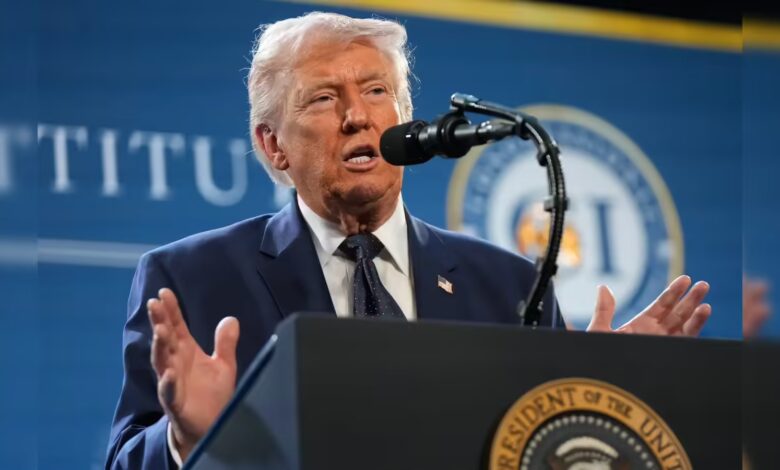
The United States has launched sweeping trade investigations into 60 economies, including major partners such as India, China, Pakistan, Bangladesh, Cambodia, Vietnam, the European Union, Canada, Mexico, the United Kingdom, Brazil, Russia, Israel, Australia, Indonesia, Japan, Malaysia, Singapore, South Korea, Switzerland and Thailand.
Just when the global economy was struggling to absorb the aftershocks of geopolitical tensions and volatile energy markets, Washington has opened yet another front, as global trade comes under the spotlight once again.
The investigations, initiated under Section 301(b) of the U.S. Trade Act of 1974, will examine whether these countries have failed to adequately prevent goods produced using forced labour from entering their markets and eventually reaching the United States. The probe is one of the broadest trade reviews undertaken by Washington in recent years and signals that the White House may once again be preparing to use tariffs and trade barriers as a strategic policy instrument.
Announcing the move, U.S. Trade Representative Jamieson Greer said the investigations will assess whether foreign governments have taken sufficient steps to prohibit the import of goods produced through forced labour. According to Washington, the failure to effectively curb such practices creates an uneven playing field for American companies and workers.
“For too long, American workers and firms have been forced to compete against foreign producers who may have an artificial cost advantage gained from the scourge of forced labour,” Greer said, adding that the probe will determine how such practices may be harming U.S. economic interests.
What makes the development particularly notable is the wide net being cast by Washington. The investigation covers major manufacturing hubs across Asia such as China, Vietnam, Bangladesh and Cambodia; large trading partners including India, Canada and Mexico; advanced economies like Japan, South Korea and Switzerland; as well as strategic allies such as the United Kingdom, Australia and Israel. Even the European Union as a bloc has been included, indicating the the scale of the review.
Under U.S. law, Section 301 investigations provide the administration with considerable leverage. If the probe concludes that foreign governments have engaged in unfair trade practices or failed to address labour violations linked to global supply chains, Washington can impose tariffs or other trade restrictions without additional congressional approval.
For global markets already struggling with geopolitical tensions and fragile economic recovery, the announcement has added a new layer of uncertainty. With dozens of economies simultaneously under scrutiny, the move raises the possibility that a fresh wave of trade tensions could be building – one that risks further complicating global supply chains and economic stability.
Yet the timing of the investigations has also sparked an important question: why now? The answer lies not only in Washington’s concerns over labour practices but also in a series of political and legal developments inside the United States that have reshaped how the administration can deploy tariffs as a policy weapon.

Tariff Strategy Reborn After The Supreme Court Blow
The timing of Washington’s sweeping trade investigations is not accidental. They come barely weeks after a major legal setback for the Trump administration, when the U.S. Supreme Court struck down the president’s earlier tariff regime, ruling that the White House had exceeded its authority in imposing sweeping duties on foreign goods.
Those tariffs – which had targeted multiple trading partners and in some cases imposed steep levies, including a 50 percent tariff on Indian goods – were introduced under the justification of emergency economic powers. The court, however, concluded that the administration had stretched those powers beyond what the law permitted, effectively dismantling one of the central pillars of Trump’s aggressive trade strategy.
The ruling forced Washington to quickly reassess how it could continue exerting pressure on foreign trading partners. Tariffs have long been one of the administration’s preferred tools to push countries into renegotiating trade terms that it argues are unfair to American manufacturers and workers.
Almost immediately after the court decision, the White House attempted to keep that strategy alive by invoking another provision of the same legislation – Section 122 of the Trade Act of 1974 – to impose a temporary 10 percent blanket tariff on imports. Officials also indicated that the tariff could be raised further, potentially reaching 15 percent, signalling that the administration had little intention of abandoning its tariff-first approach.
But the launch of the new Section 301 investigations now appears to represent a more durable route for the administration to rebuild its tariff framework. Section 301 gives Washington the authority to investigate the trade practices of foreign governments and, if violations are identified, impose tariffs or other restrictions without needing fresh approval from Congress.
Trade policy analysts have pointed out that the move effectively creates a legal pathway for the administration to reintroduce tariffs under a different justification. Instead of broadly targeting trade deficits or reciprocal duties – arguments that the Supreme Court rejected – the new investigations frame the issue around forced labour practices within global supply chains.
In doing so, the administration may be attempting to achieve two objectives at once: restoring its ability to use tariffs as leverage in trade negotiations, while also positioning the move as part of a broader campaign to enforce labour standards in international commerce.
The speed and scale of the investigations have, however, raised eyebrows among trade experts. The Office of the U.S. Trade Representative has scheduled hearings on the probes between April 28 and May 1, a timeline that some analysts describe as unusually compressed given that 60 economies are simultaneously under review.
Critics argue that such a tight schedule could suggest that the investigations are less about lengthy fact-finding and more about establishing a procedural basis that would allow Washington to move toward tariffs again if it chooses.
In effect, what initially appeared to be a routine trade investigation may in fact represent something far larger – a revival of Washington’s tariff strategy after the Supreme Court temporarily blocked its earlier attempts.
And this renewed trade confrontation is unfolding at a particularly sensitive moment for the global economy, which is already facing growing uncertainty from another source: the escalating conflict in West Asia that has begun to rattle global energy markets.
A Tariff Strategy Reborn, The Backdrop Of Trump’s Trade Wars
To understand why Washington’s latest investigations carry such significance, it is necessary to revisit the backdrop against which they are unfolding. Donald Trump’s approach to global trade has, from the very beginning, been defined by an aggressive use of tariffs – a strategy that effectively held large parts of the global trading system hostage during his second term in office.
Arguing that the United States had long been disadvantaged by unfair trade practices, Trump launched a sweeping tariff campaign against several of America’s largest trading partners. The most dramatic confrontation emerged with China, where Washington imposed tariffs on hundreds of billions of dollars’ worth of Chinese goods, triggering a retaliatory response from Beijing and setting off what quickly became one of the largest trade wars in modern economic history.
But China was far from the only target. The administration also imposed tariffs on steel and aluminium imports from a wide range of countries, including close allies in Europe and Asia, arguing that these measures were necessary to protect American industries and reduce trade imbalances. Countries affected by these measures responded with their own tariffs on U.S. exports, turning the dispute into a global tit-for-tat that unsettled supply chains and injected uncertainty into international commerce.
India too found itself caught in the crossfire of this tariff-driven approach. Trade frictions between Washington and New Delhi escalated during Trump’s earlier tenure as the United States withdrew India’s preferential access under the Generalized System of Preferences (GSP) programme, arguing that India had failed to provide sufficient market access to American companies.
In more recent months, however, India and the United States have been engaged in discussions to ease some of these tensions and explore a broader trade arrangement that could stabilise bilateral economic relations. While negotiations have made progress on certain market access issues, the relationship remains sensitive, particularly as Washington continues to examine trade practices among a wide range of its partners.
The scale and unpredictability of Trump’s tariff actions have left a deep imprint on the global trading system. Markets were repeatedly rattled by sudden tariff announcements, supply chains were forced to adjust to shifting trade barriers, and businesses across continents struggled to plan amid an environment where trade policy could change overnight.
And if the world had hoped that trade tensions would ease after the earlier tariff battles, the latest developments suggest that the era of tariff-driven economic confrontation may be far from over.

Meanwhile, A War Is Already Shaking Global Energy Markets
Even as Washington appears to be reopening trade battles, the global economy is already grappling with the consequences of another major disruption – the escalating confrontation involving the United States, Israel and Iran.
What initially began as a regional security crisis has rapidly evolved into a geopolitical flashpoint with far-reaching economic consequences. The conflict has raised fears about the safety of energy supplies passing through the Strait of Hormuz, one of the most critical oil transit routes in the world through which a significant portion of global crude exports flow.
Markets have reacted swiftly. Oil prices have surged amid concerns that any disruption in the region could choke supplies at a time when global demand remains strong and inventories in many countries are relatively tight. Even the possibility of shipping risks in the Gulf has been enough to inject volatility into energy markets.
The conflict has also unsettled financial markets, with investors increasingly wary of the broader consequences of a prolonged confrontation in the Middle East. If the tensions escalate further or threaten major energy infrastructure in the region, the resulting supply shock could ripple across economies worldwide.
A Double Shock For The Global Economy
The significance of Washington’s latest trade actions becomes clearer when viewed alongside the geopolitical turmoil unfolding in the energy markets. Together, these developments risk delivering a double shock to the global economy – one driven by war and the other by trade confrontation.
On one side lies the energy shock. Rising oil prices triggered by tensions in West Asia threaten to push inflation higher across economies, forcing central banks to remain cautious about cutting interest rates and slowing economic recovery in several regions.
On the other side lies the possibility of renewed tariff battles. If the United States ultimately imposes trade restrictions following its investigations, the result could be fresh disruptions in global supply chains that are only just beginning to stabilise after years of pandemic-related upheaval.
For businesses and governments alike, the combination of these pressures creates an unusually complex economic environment. Higher energy costs raise the price of production and transportation, while tariffs can simultaneously restrict trade flows and increase the cost of imported goods.
Historically, either of these shocks alone has been capable of rattling global markets. Together, they carry the potential to amplify economic stress across multiple fronts – slowing growth, fuelling inflation and increasing volatility in financial markets.
What makes the current moment particularly striking is that both pressures appear to be emerging simultaneously from decisions taken in Washington – the geopolitical confrontation in the Middle East and the renewed willingness to wield tariffs as a tool of economic policy.
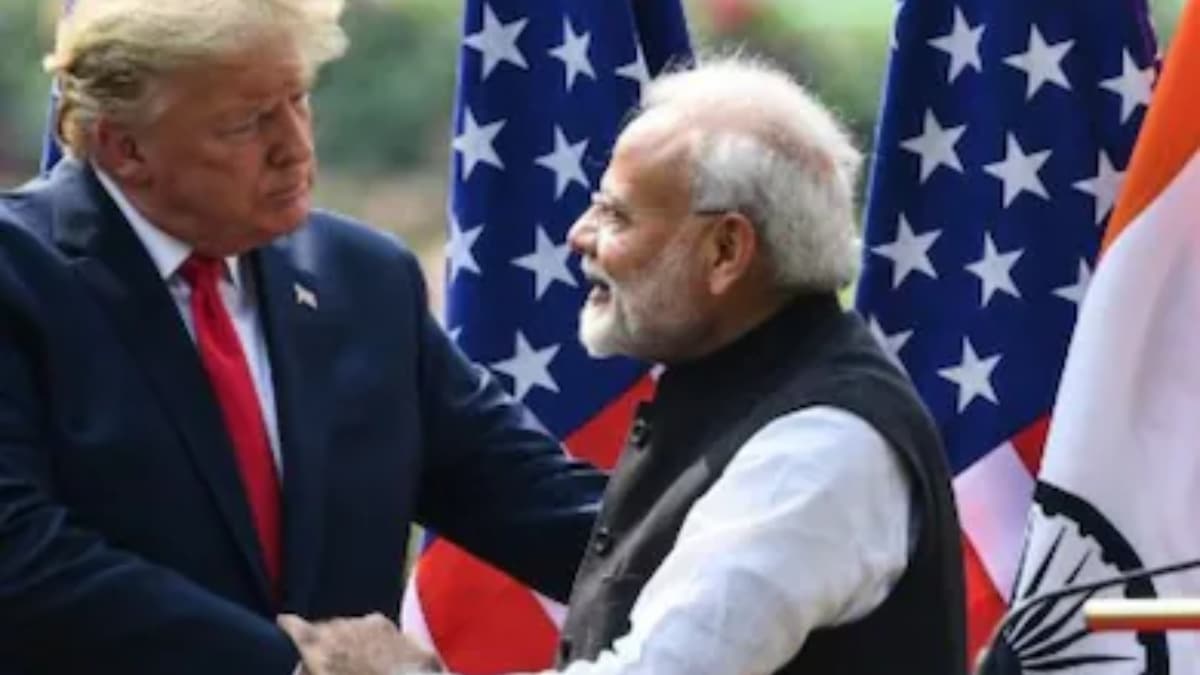
Why India Could Feel The Pressure From Both Sides
For India, the convergence of rising geopolitical tensions and renewed tariff threats from Washington presents a particularly delicate challenge. Few major economies are as exposed to the twin pressures of energy shocks and shifting global trade policies.
To begin with, India remains one of the world’s largest importers of crude oil, relying on overseas suppliers for more than four-fifths of its energy needs. Any sustained increase in oil prices therefore has a direct and immediate impact on the country’s economic stability. Higher crude prices widen India’s import bill, strain the current account deficit and often place downward pressure on the rupee.
The consequences ripple across the broader economy. Costlier energy raises transportation and manufacturing expenses, eventually feeding into consumer inflation. For policymakers in New Delhi, this creates a difficult balancing act: containing inflation while also trying to sustain economic growth.
At the same time, India now finds itself among the 60 economies under investigation in Washington’s latest trade probe. While the investigations are still at an early stage, the possibility that they could eventually lead to tariffs or other restrictions creates uncertainty for Indian exporters.
Over the past decade, the United States has emerged as one of India’s most important trading partners. Indian exports ranging from pharmaceuticals and textiles to engineering goods and information technology services depend heavily on access to the American market. Any disruption to these flows — even the threat of new tariffs — could complicate trade dynamics between the two countries.
The situation is particularly sensitive because India and the United States have attempted to stabilise their trade relationship following earlier disputes over tariffs and market access. Negotiations toward a broader trade understanding have periodically surfaced as both sides sought to reduce friction in an otherwise strategic partnership.
Yet Washington’s decision to include India in the latest trade investigations suggests that economic disagreements remain very much alive beneath the surface.
If oil prices continue to climb due to the conflict with Iran while trade tensions simultaneously escalate, India could find itself feeling pressure on multiple fronts – a rising energy bill on one side and potential trade uncertainty on the other.
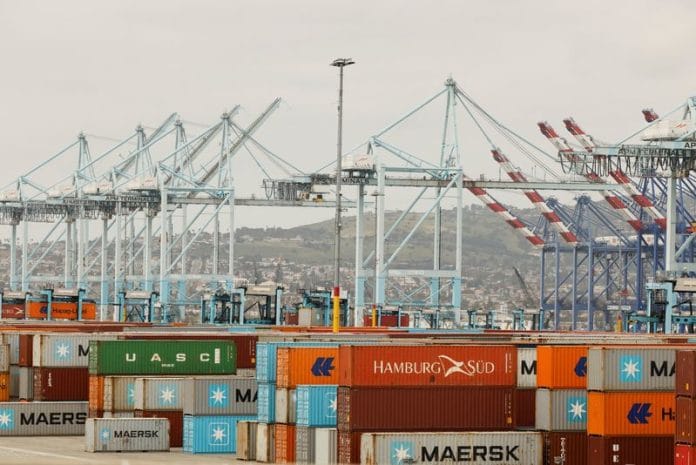
The Last Bit, A World Once Again At The Mercy Of Economic Power Plays
Taken individually, each of these developments would be significant enough to command global attention. A war threatening one of the world’s most vital energy corridors is a major geopolitical event. Likewise, sweeping trade investigations targeting dozens of economies carry the potential to reshape international commerce.
But occurring together, they paint a far more consequential picture.
The global economy today is still adjusting to the disruptions of the pandemic, shifting supply chains and uneven economic recovery across regions. Into this already fragile environment now enters the possibility of renewed tariff battles alongside rising energy instability.
The moves emerging from Washington suggest a willingness to once again use both geopolitical and economic leverage to reshape global dynamics – whether through confrontation in strategic regions or pressure in trade negotiations.
For countries across the world, the challenge will be witnessing a period where political decisions made in a handful of capitals can rapidly reverberate across markets, supply chains and national economies.
And as the latest developments show, the intersection of war, trade policy and economic strategy may once again be shaping the trajectory of the global economy in ways that few countries can afford to ignore.