Trump Puts Iran On Notice As Oil Markets Watch Closely. Diplomacy And Deterrence Collide In U.S.–Iran Standoff
In his State of the Union address, Donald Trump did not declare war on Iran, but he unmistakably shifted the ground beneath it. By framing military action as conditional rather than hypothetical, he signaled that diplomacy now unfolds under mounting pressure — with markets, allies and adversaries recalibrating in real time.

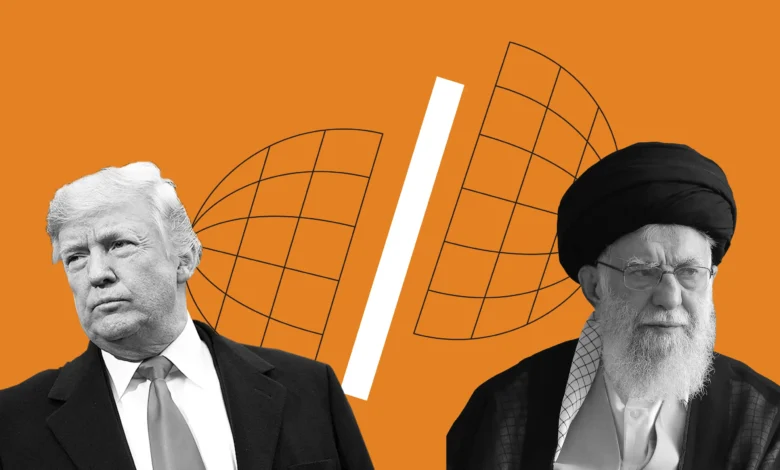
During his State of the Union address to Congress, Donald Trump delivered the most consequential portion of his nearly two-hour speech in a restrained, deliberate tone. The message was clear but controlled – a strategic warning framed carefully within policy language rather than overt escalation.
“I will never allow the world’s biggest sponsor of terrorism to have a nuclear weapon,” he said, referring to Iran.
It was not a declaration of war. It was something more strategic: the normalization of the possibility.
For months, Washington’s approach toward Tehran had oscillated between negotiations and pressure. In this speech, Trump did not announce immediate action. Instead, he constructed a public rationale – revisiting Iran’s support for militant proxies, its missile development, alleged repression of protesters, and claims that its nuclear ambitions were once again accelerating.
By the time he reached the Iran section – roughly 90 minutes into the address – the framing was clear. The United States, in his telling, was not choosing escalation; it was preparing to confront an unavoidable threat.
The speech did something subtle but significant: it moved the debate from whether the U.S. might strike Iran to under what conditions it would. That distinction matters.
Because even as Trump reiterated his preference for diplomacy, his language left little doubt that military action remained firmly on the table. The speech was less a trigger than a threshold-setting exercise — a signal to Congress, allies, adversaries and markets that Washington was prepared to act if talks collapsed.
The Military Reality
Behind the words, military assets are already shifting.
The United States has assembled significant naval power within striking distance of Iran. The aircraft carrier USS Abraham Lincoln and its strike group are positioned in the region, while the USS Gerald R. Ford and its escorts are moving into theatre. Together, the two carrier groups can deploy more than 150 aircraft and over 5,000 personnel — a level of force projection that exceeds routine deterrence posture.
This is not symbolic deployment.
In parallel, the State Department ordered the evacuation of non-emergency personnel from the U.S. embassy in Beirut. Military planners are reportedly preparing for the possibility of sustained operations lasting weeks should negotiations fail. Trump himself has referenced a two-week window for progress.
The build-up suggests Washington wants Tehran — and perhaps Beijing — to understand that the cost of miscalculation would be immediate and overwhelming. At the same time, such visible preparation narrows political flexibility. Once forces are assembled, standing down carries its own signaling risks.
The strategic environment, therefore, is no longer abstract. Hardware is in motion.
The Diplomacy Window: Narrow But Not Shut
Yet even amid the military build-up, diplomacy has not collapsed.
Talks are scheduled in Geneva between U.S. envoys and Iranian officials, with both sides publicly signaling openness to a deal – though on sharply different terms.
Iran’s Foreign Minister, Abbas Araghchi, described an agreement as “within reach, but only if diplomacy is given priority.” According to officials familiar with the discussions, Tehran is prepared to consider exporting a portion of its most highly enriched uranium, diluting the remainder, and participating in a regional enrichment consortium.
In return, Iran seeks recognition of its right to peaceful nuclear enrichment and the lifting of economic sanctions.
Washington’s position remains more rigid. U.S. negotiators have pushed for an effective zero-enrichment outcome – a demand Tehran has historically viewed as a red line tied to sovereignty.
Technically, a framework exists. Politically, trust does not.
Indirect negotiations last year failed largely over this same enrichment dispute. Both sides accuse the other of bad faith, even as they return to the negotiating table. The result is a paradox: diplomacy is active, but escalation planning continues in parallel.
For now, the Geneva talks represent a narrow corridor between compromise and confrontation. Whether that corridor widens or closes may determine not just regional stability but energy markets, shipping routes, and the balance of power in the Middle East.
The Domestic Constraint
For all the military positioning abroad, the political battlefield that may matter just as much lies at home.
Donald Trump rose to power in part by railing against what he called America’s “endless wars.” The conflicts in Iraq and Afghanistan became shorthand for strategic overreach – costly, protracted engagements with ambiguous outcomes. His political base embraced a foreign policy that prioritized domestic revival over overseas entanglements.
That legacy complicates the current moment.
Public opinion data suggests Americans remain deeply cautious about new military interventions. A Reuters/Ipsos poll in January found that 69% of respondents agreed the U.S. military should only be used when facing a direct and imminent threat. Only 18% disagreed. With midterm elections approaching, congressional control is also at stake.
This creates a delicate balancing act. On one side, projecting strength reinforces deterrence and signals resolve to adversaries. On the other, initiating another Middle Eastern conflict risks alienating a war-weary electorate.
Democratic leaders have already questioned the opacity of operational planning, arguing that military action must be debated openly rather than decided behind closed doors. Even some Republicans, privately, are mindful that escalation without clear justification could fracture party unity.
The White House must therefore manage two fronts simultaneously: deterrence abroad and consensus at home.

Oil, Trade Routes & Market Signals
Markets, meanwhile, are watching with pragmatic detachment.
Oil prices have edged higher amid the renewed tension. U.S. West Texas Intermediate crude has traded near the mid-$60s per barrel range, while Brent futures hover above $70. Analysts suggest that sustained escalation — particularly any disruption to Gulf shipping lanes – could push prices toward $80 or beyond.
The Strait of Hormuz remains the critical variable.
Roughly one-fifth of global oil supply transits the narrow waterway separating Iran from Oman. Any military confrontation that threatens tanker traffic would have immediate ripple effects – not only on crude prices, but on shipping insurance costs, freight rates, and inflation expectations worldwide.
The global economy, already facing supply chain recalibrations and uneven growth, is sensitive to energy shocks. Higher crude prices would complicate monetary policy decisions in the United States and Europe, potentially delaying interest rate adjustments and feeding broader price pressures.
At this stage, markets are pricing risk – not panic.
But history suggests that geopolitical miscalculations in the Gulf can shift from contained volatility to sustained shock with little warning. The 2019 tanker attacks and earlier confrontations serve as reminders of how quickly localized tension can escalate into systemic economic concern.
The Iran question, therefore, is not confined to nuclear compliance. It intersects directly with inflation, trade flows and investor sentiment.
The China Factor
If the military build-up represents the visible dimension of the crisis, China represents the strategic undercurrent.
Iran is reportedly close to finalizing a deal to acquire CM-302 supersonic anti-ship cruise missiles from Beijing. The weapons, marketed by China’s state-owned defense conglomerate, would significantly enhance Tehran’s ability to target naval vessels operating in the Gulf.
Such capability would complicate U.S. carrier operations in the region. Supersonic anti-ship missiles travel low and fast, reducing reaction time for shipborne defenses and increasing interception difficulty. Even a limited deployment would alter tactical calculations.
Beijing has denied knowledge of a finalized sale. Yet military cooperation between China and Iran has expanded steadily in recent years. Joint naval exercises involving China, Iran and Russia signal a broader convergence of interests — one rooted less in ideology and more in shared opposition to U.S. strategic dominance.
The missile negotiations, if completed, would carry implications beyond the immediate crisis.
They would signal China’s growing willingness to assert itself in a region long shaped by American naval supremacy. They would also deepen Iran’s leverage, embedding its security architecture more firmly within a multipolar alignment that includes Beijing and Moscow.
In effect, Iran is no longer operating in isolation.
For Washington, this complicates deterrence. Any strike on Iranian assets would unfold against a backdrop of intensifying great-power rivalry. For Beijing, deeper involvement offers strategic dividends – expanding influence in energy-rich corridors critical to its own economic security.
The standoff thus acquires a second dimension: it becomes a test not only of U.S.–Iran brinkmanship, but of how far China is prepared to extend strategic backing to a sanctioned partner.
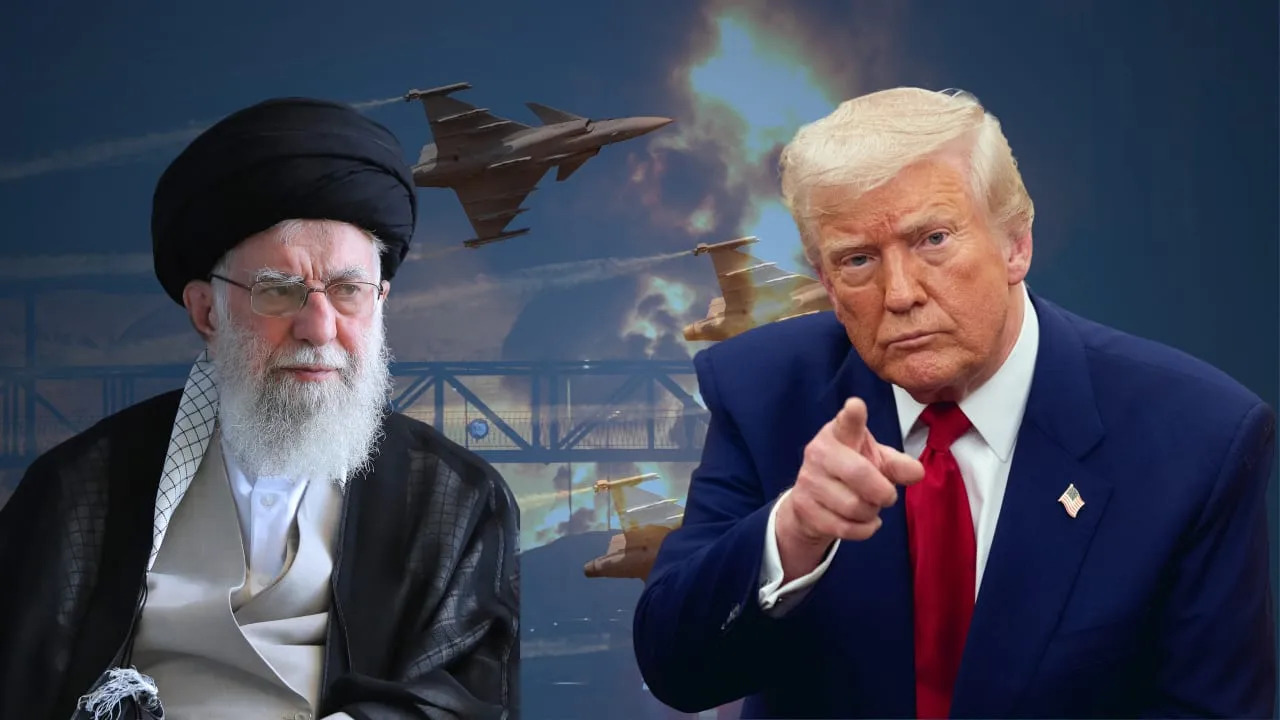
Military Balance & Escalation Risks
Iran’s military capabilities have been shaped by years of sanctions and asymmetric warfare doctrine. While its conventional forces lag behind those of the United States, Tehran has invested heavily in missile systems, drone technology and proxy networks.
Last year’s strikes on Iranian nuclear facilities – which Washington described as devastating – depleted elements of its arsenal. Yet stockpiles of previously enriched uranium are believed to remain, and missile development has continued.
Iran has warned it would target U.S. bases across the region in the event of an attack. American assets in Iraq, Syria and the Gulf could become immediate targets. Proxy groups aligned with Tehran might activate in Lebanon, Yemen or elsewhere, widening the theatre beyond a bilateral confrontation.
The introduction of advanced anti-ship systems would raise the stakes further, particularly in confined waterways like the Strait of Hormuz.
Escalation, therefore, would unlikely remain surgical.
Military planners may envision limited airstrikes focused on nuclear facilities. Iran’s retaliatory calculus, however, could involve broader disruption — particularly in energy infrastructure and maritime transit.
This asymmetry is central to the gamble both sides face.
The Strategic Hinge
At the core of the standoff lies a narrow but decisive hinge.
Tehran insists its nuclear program is peaceful. It is willing, officials suggest, to export part of its most highly enriched uranium stockpile, dilute the remainder, and participate in a regional enrichment consortium. But it demands recognition of its right to enrich uranium under international law – and relief from punishing economic sanctions.
Washington’s position is structurally harder. U.S. negotiators have pushed for an outcome that effectively prevents Iran from maintaining enrichment capability on its soil – a condition Tehran has historically rejected as an infringement on sovereignty.
This is where diplomacy repeatedly fractures.
Indirect talks in recent years have collapsed over precisely this dispute. Each side accuses the other of maximalism. Each side claims to prefer diplomacy. And yet, both continue preparing for force.
Iranian officials have warned that a U.S. strike would trigger retaliation against American bases in the region. The White House has reiterated that while diplomacy is the preferred route, military options remain ready.
The logic of deterrence is meant to prevent conflict.
But deterrence works only if both sides believe the other will stop short of action. When military assets are deployed, deadlines are issued, and domestic political pressures mount, the margin for miscalculation narrows.
An attack – even if framed as limited – would not occur in a vacuum. It would invite retaliation calibrated not merely for symbolic response but for strategic cost.
That is the hinge: a deal remains technically possible. But the political trust required to secure it is thin, and time-bound.
The Last Bit, Where Geopolitics Meets Markets
This moment is about far more than uranium enrichment.
If diplomacy succeeds, the immediate crisis may recede into the long pattern of uneasy containment that has defined U.S.–Iran relations for decades. Oil markets would stabilize. Carrier groups would rotate out. Election-year pressures in Washington would shift back toward domestic priorities.
But if talks collapse, the consequences would not be confined to missile strikes or damaged facilities.
A military confrontation in the Gulf would reverberate through global trade routes. The Strait of Hormuz — through which roughly a fifth of the world’s oil supply passes — would become an immediate risk corridor. Energy prices could surge, insurance premiums on shipping could spike, and inflationary pressures could resurface in economies already navigating fragile recoveries.
For the United States, escalation would test not only military dominance but political cohesion at home. For Iran, retaliation would risk overwhelming force. For China, deeper strategic involvement would signal a more assertive posture in a region long anchored by American naval supremacy.
In that sense, this is not simply a U.S.–Iran dispute.
It is a convergence point – where great-power competition, energy security, domestic politics and financial markets intersect.
President Donald Trump did not declare war in his State of the Union address. He framed a conditional pathway toward it.
Whether that pathway leads to compromise or confrontation will determine not just the future of Iran’s nuclear program – but the stability of trade corridors, oil markets, and geopolitical alignments far beyond the Gulf.
And once military momentum overtakes diplomatic restraint, history suggests it rarely pauses neatly at the boundaries intended.