Trump’s Cuts To University Funding, Say Good Bye To Next GPS Or iPhone! How Trump’s Cuts Could Cripple The Next Generation Of Game-Changing Tech

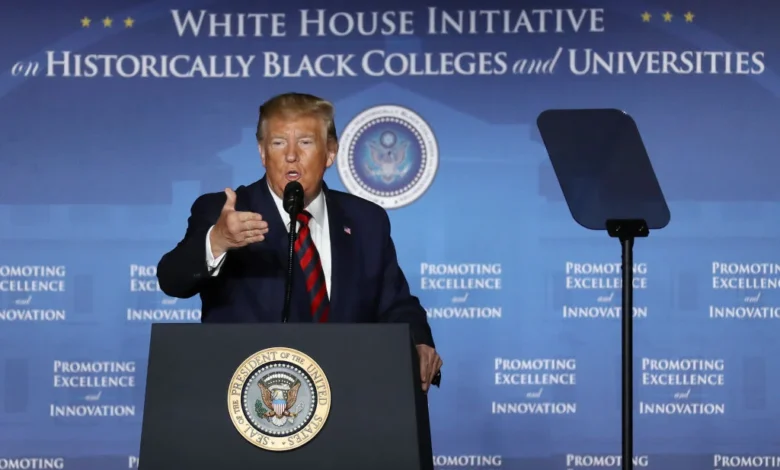
The science and technology that have become integral to modern life, from the GPS on our phones to the mRNA vaccines that saved millions, may never have existed without the support of federally funded research conducted at American colleges and universities. But that pipeline of innovation now stands at risk.
The Trump administration is threatening to withhold billions of dollars in federal research grants from institutions across the country, sparking widespread concern among educators, scientists, and policy experts. They warn that this could severely jeopardize America’s position as a global leader in research and development.
Imagine a world without the internet, without GPS, without touchscreen technology!
At the heart of the administration’s move appears to be an effort to exert political pressure on elite academic institutions, a push for ideological alignment that critics argue threatens both academic freedom and scientific advancement.

Harvard University is currently in a high-stakes standoff with the federal government over more than $2 billion in multi-year grants and contracts. The Ivy League institution has refused to comply with a series of demands tied to funding, with university president Alan Garber vowing that Harvard “will not surrender its independence or its constitutional rights.”
Other universities, however, are taking a more cautious approach. While some might be able to absorb temporary funding cuts, Fansmith warns that long-term survival without federal support is unlikely, even for the most well-resourced schools.
“When you’re talking about hundreds of millions or billions of dollars, no institution — regardless of how big their endowment is — can sustain that kind of loss indefinitely,” he said.
Universities operate like self-contained ecosystems, housing thousands of faculty members, students, and researchers. Their funding models vary widely, but many rely on a delicate balance of tuition revenue, philanthropic donations, and crucially government grants.
Public universities often receive substantial support from state and local governments. Private universities, meanwhile, lean heavily on endowments and donor contributions. Harvard, for example, derived 45% of its revenue last year from philanthropy, much of it linked to its $53 billion endowment, the largest of any university in the U.S.
But even that vast financial cushion comes with caveats. Endowment funds are typically earmarked for specific uses, with restrictions set by donors or investment guidelines. As a result, universities cannot simply dip into their endowment coffers to make up for sudden shortfalls in research funding.
Endowments Can’t Save Universities From Deep Cuts
While universities like Harvard boast massive endowments, those funds are neither limitless nor fully flexible. Endowments are designed to sustain institutions in perpetuity, which is why strict rules govern how much money can be withdrawn each year. The goal is to ensure the university’s financial health across generations.
In 2024, Harvard’s $2.4 billion distribution from its endowment accounted for more than a third of its overall budget. But even that substantial figure comes with a critical caveat – 80% of the money was earmarked for specific uses such as financial aid, named professorships, and scholarships tied to particular schools or programs.
“If I decide to endow a chair in the English department, the institution is legally not allowed to use that money for some other purpose,” said Jon Fansmith of the American Council on Education. “Universities don’t have the flexibility to just shift donations to other purposes if they think it’s a more pressing need.”
That rigidity is precisely why federal funding plays such a pivotal role – it provides the discretionary support needed to fuel new research, take academic risks, and respond to emerging challenges.

Federal Research Dollars Drive Discovery
Consider Johns Hopkins University, which receives more funding from the National Institutes of Health (NIH) than any other institution in the United States. In 2024 alone, Hopkins received $1 billion from the NIH. Harvard, meanwhile, secured $686 million in federal research grants during the same fiscal year.
Such funding not only support lab equipment or principal investigators, it underwrites entire ecosystems of scientific discovery. Graduate students, postdoctoral researchers, and administrative staff all depend on these grants for their livelihoods.
But all of that is now on the line. If the Trump administration follows through on its threat to withhold federal research dollars, universities could be forced into drastic measures. Johns Hopkins has already felt the sting of federal funding volatility, cutting thousands of employees following an $800 million shortfall triggered by deep cuts to USAID.
How Federal Funding Became the Lifeblood of Academic Innovation
The federal government’s central role in academic research wasn’t always a given. Prior to World War II, scientific discovery was primarily bankrolled by wealthy industrialists such as Andrew Carnegie and John D. Rockefeller, who built institutions and funded private research with their fortunes.
That changed in 1941 when President Franklin D. Roosevelt, recognizing that scientific innovation would be essential to the war effort, created the Office of Scientific Research and Development (OSRD) through executive order. He tapped Vannevar Bush, then-dean of MIT’s School of Engineering, to lead the initiative.
The OSRD unleashed a wave of federally funded research at universities across the country, including the top-secret Manhattan Project. The breakthroughs of that era , from the atomic bomb to radar to lifesaving medical technologies, redefined the power of academic science when backed by government investment.
Although the OSRD was dissolved after the war, its success cemented a long-term partnership between American universities and the federal government. For more than seven decades, that alliance has kept the United States at the forefront of global scientific advancement.
Now, that relationship is under unprecedented strain.
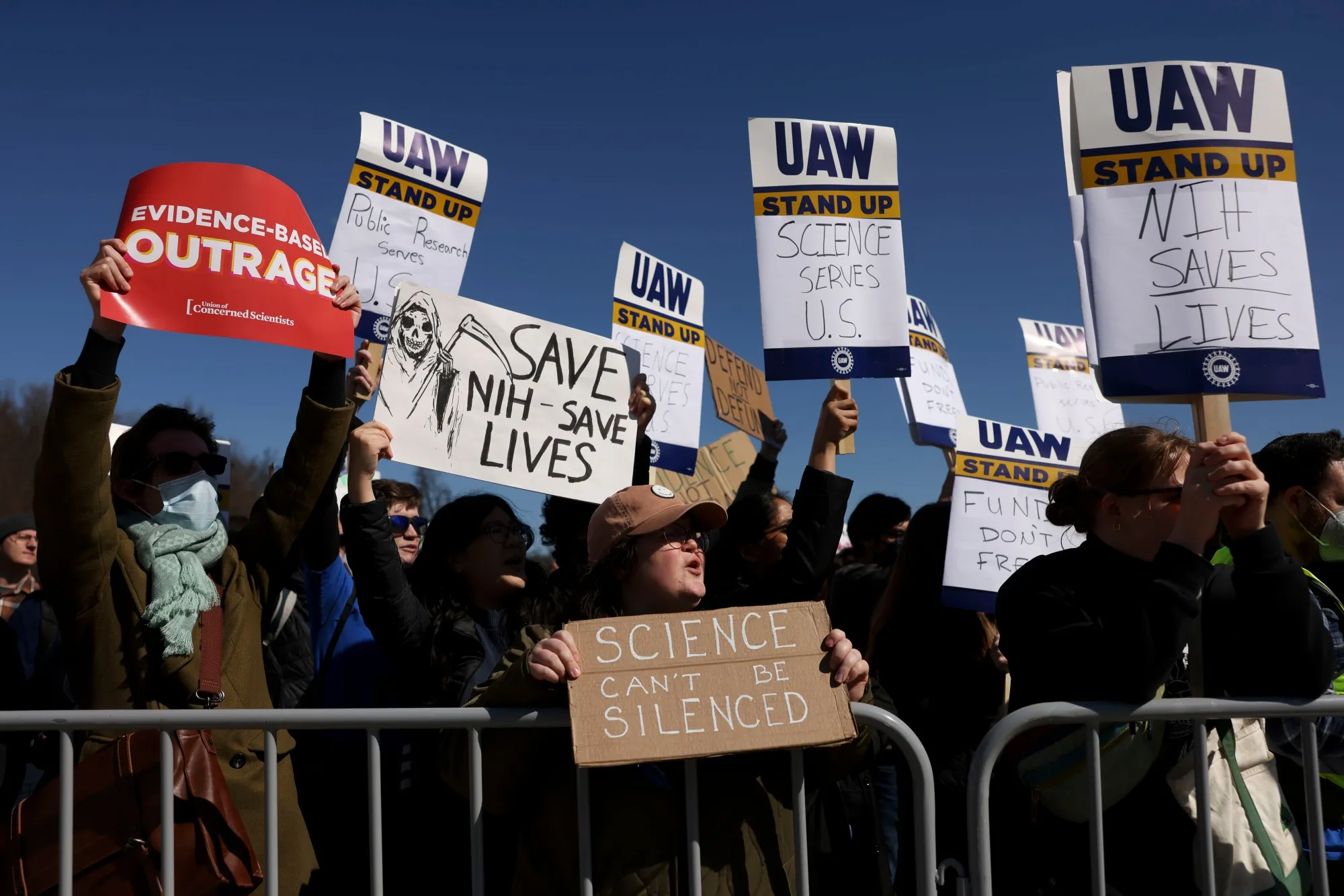
Life-Changing Innovations
Today, agencies like the National Institutes of Health (NIH), the Department of Defense, the National Science Foundation (NSF), and the Department of Energy are the largest funders of academic research across the United States. These agencies, according to Toby Smith, senior vice president for government relations at the Association of American Universities, fuel the pipeline of discovery that flows through America’s research universities.
But federal dollars don’t simply land in the coffers of institutions like Harvard or Columbia. Universities must apply for competitive research grants, which are reviewed by panels of experts to ensure the most promising ideas get funded. “This system enables the government to fund the best researchers at the lowest cost,” said Jon Fansmith of the American Council on Education.
That funding also helps cover the high fixed costs of maintaining research labs and equipment. Under a decades-old cost-sharing agreement dating back to the OSRD, federal agencies provide partial support for the infrastructure that enables world-class research to occur.
“In essence, universities operate like national laboratories,” said Smith. “When you take money away from a Columbia or a Harvard or other research institutions, you’ve just taken away funds from the best researchers who were judged by other scientists to do that research on behalf of the American people – in areas like cancer, Alzheimer’s, pediatrics, diabetes, and other critical research areas.”
Many life-altering scientific breakthroughs were not the result of targeted discovery, but of serendipitous findings uncovered through federally funded basic research. The annual “Golden Goose” Award recognizes these kinds of unexpected innovations that have profoundly shaped lives.
Thanks to National Science Foundation funding, for instance, economists studying market dynamics helped devise the algorithm now used in kidney donor matching chains – a system that has since saved thousands of lives. In 2012, Alvin Roth and Lloyd Shapley were awarded the Nobel Prize in Economics for this work.
In another example, NIH-funded research at Duke University involving rats led to a breakthrough in neonatal care – the practice of infant massage, which has since become standard protocol in hospitals around the world to support the development of premature babies.
Therefore, in a nut shell, government-funded research has given us

Touchscreens & Siri
Developed with backing from the National Science Foundation and DARPA, these now-ubiquitous technologies were once obscure academic projects.
GPS
Originally funded by the U.S. Department of Defense, GPS technology now powers everything from Google Maps to Uber.
mRNA Vaccines
NIH-backed research into mRNA over decades paved the way for the lightning-fast development of COVID-19 vaccines.
Alzheimer’s & Cancer Research
Billions in NIH grants have fueled research that is advancing treatments and understanding of some of the world’s most devastating diseases.
Infant Care Innovations
NIH-funded animal studies at Duke led to the practice of infant massage, revolutionizing neonatal care for premature babies.
Kidney Donation Chains
What began as academic economics research became a Nobel Prize-winning innovation that saves lives through advanced donor-recipient matching.
The Last Bit
Therefore, is innovation on the chopping block – from GPS to the iPhone touchscreen, MRNA vaccines to life-saving neonatal practices, federally funded university research has been the quiet engine behind America’s most transformative innovations. Now, that engine is at risk of stalling.
If the Trump administration follows through with its threats to withhold billions in federal research funding, the consequences could reverberate far beyond the ivory towers of academia. Entire fields of scientific research could be slowed or shut down. Breakthroughs in medicine, technology, energy, and climate science could be delayed or lost altogether.
“At the end of the day, we won’t have that knowledge,” Smith said. “Other countries will overtake us in science and resulting technology, if we don’t recognize and protect the unique system that we have in place.”
And the ultimate cost, experts warn, won’t be paid by universities or researchers. It will be borne by the American people, in lives not saved, cures not found, and opportunities missed.