When Adani Builds Aircraft, It Raises An Awkward Question For HAL. How Adani Is Occupying Strategic Sectors India Failed To Build
When Adani partnered Brazil’s Embraer to assemble commercial aircraft in India, it marked more than another expansion into a new sector. It spotlights two parallel realities: a private conglomerate steadily occupying strategic economic verticals and a nation that, despite decades of aerospace experience and a state-owned champion like HAL, never built a globally competitive civilian aircraft industry.

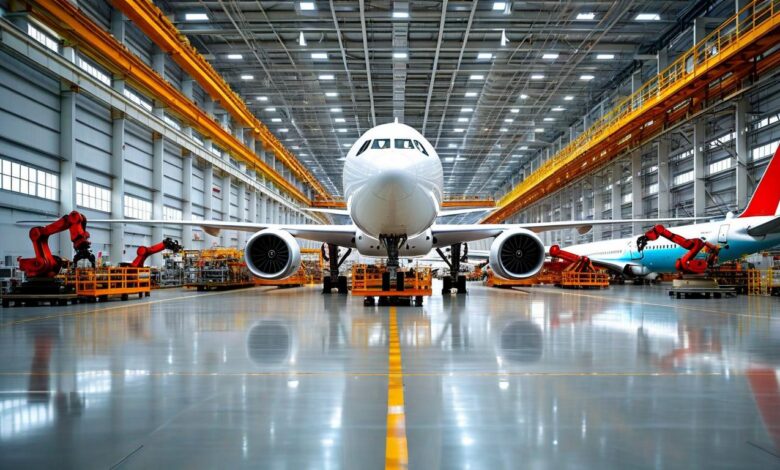
Adani Group and Brazil-based aircraft maker Embraer on Tuesday announced a partnership to explore aircraft manufacturing in India, marking Adani’s entry into commercial aviation assembly.
The partnership aims to set up a regional transport aircraft venture covering assembly, manufacturing support, and higher localisation of parts and components. In a joint statement, the two companies said they had signed a memorandum of understanding to explore cooperation across aircraft manufacturing, supply chains, aftermarket services, and pilot training. Financial details were not disclosed.
For Adani, which already operates airports and has a growing defence and aerospace business, the move expands its footprint into yet another strategic sector. For India, it raises a far more uncomfortable question.
After 85 years of aerospace activity, why India welcoming a foreign company to assemble commercial aircraft on its soil…the proposed facility will assemble regional jets designed and certified in São José dos Campos, Brazil, using components sourced from Embraer’s global supply chain. India will provide the assembly line; Brazil will retain the intellectual property, certification expertise, aerodynamic design, and systems integration.
This distinction matters enormously.
Final assembly typically accounts for 15–20% of an aircraft’s value. The remaining value lies in design, testing, certification, avionics integration, and long-cycle R&D- the capabilities that determine whether a country is an aerospace power or merely a manufacturing outpost.
After eight decades, this is the rung at which India is still entering.

The Comparison India Avoids: HAL vs Embraer
The deal invites an uncomfortable comparison.
Brazil, with a GDP roughly half of India’s and a population one-sixth the size, has built the world’s third-largest commercial aircraft manufacturer. Embraer’s regional jets fly in more than 70 countries, dominating a market segment that neither Boeing nor Airbus adequately serves.
India, with 1.4 billion people, a $3.7 trillion economy, and an eight-decade aerospace legacy, has produced zero commercial aircraft that airlines outside the subcontinent choose to buy.
Hindustan Aeronautics Limited (HAL) was founded in 1940 – nearly three decades before Brazil established Embraer in 1969. India had the head start, the technical workforce, and the institutional foundation. Brazil, emerging from military dictatorship with little more than an aeronautics institute, came from behind to become a global aerospace power.
This is not a story about inherent capability. India’s space programme reaches Mars. Its engineers build global software platforms. Its manufacturers export cars and pharmaceuticals worldwide. This is a story about institutional choices and policy architecture.
HAL could have become what Embraer became. It had the time, the talent, and the foundation. Understanding why it did not matters not just for aviation, but for India’s ambitions in semiconductors, electric vehicles, and advanced manufacturing.
One head start, opposite outcomes
Success
Embraer has delivered more than 9,000 aircraft worldwide, generated $6.4 billion in revenue in 2024, and holds an order backlog of $26.3 billion.
HAL, despite eight decades of operation, derives about 95% of its revenue from India’s armed forces, exports barely 1% of its output, and has never developed a globally competitive commercial aircraft. Its Regional Transport Aircraft programme, launched in 2007, remains in the design phase nearly two decades later. The last passenger aircraft it produced – the licence-built HS-748 Avro – ceased production in 1988.

How Brazil Climbed From Assembler To Innovator
Embraer’s success was the result of deliberate industrial strategy.
Brazil laid the groundwork by establishing the Instituto Tecnológico de Aeronáutica (ITA) in 1950, modelled on MIT, creating a steady pipeline of aerospace engineers. Embraer began with licensed production but pivoted early toward exports. By 1975, just six years after its founding, it was selling aircraft abroad.
The turning point came in 1994, when Embraer was privatised during Brazil’s economic crisis. The government retained a golden share for strategic vetoes but exited day-to-day management.
Privatisation enabled changes impossible under state ownership. Embraer adopted a risk-sharing partnership model, cutting its direct R&D burden dramatically by distributing development costs among global suppliers. It focused narrowly on regional jets—an underserved niche between turboprops and large narrowbodies—rather than challenging Boeing and Airbus head-on.
The E-Jet programme, launched in 1999, cemented this strategy. More than 1,900 E-Jets now fly with over 80 airlines, achieving industry-leading reliability.
India’s Captive Market Trap
HAL followed a different path.
Nationalised in 1964, it became the sole supplier to India’s armed forces, a captive market that guaranteed revenue but eliminated competitive pressure. When the Indian Air Force needed fighters, HAL assembled MiGs under licence. When it needed trainers, HAL built Hawks. Assembly skills improved; design capability did not.
Licensed production transfers know-how in manufacturing, not in system design. When India attempted indigenous development, timelines stretched into decades. The Tejas Light Combat Aircraft took over 30 years to reach operational status.
HAL’s structure rewarded compliance, not competitiveness. Guaranteed orders meant delays carried few consequences. Cost-plus contracts incentivised overruns rather than efficiency. Export pressure (the single most powerful driver of quality) was absent.
Policy Divergence As Destiny
The divergence between India and Brazil reflects policy choices, not national capability.
Brazil combined long-term institutional investment with market discipline through privatisation and export orientation. India retained state ownership and domestic protection, creating an environment hostile to efficiency and innovation.
Five differences proved decisive:
- Export discipline versus domestic captivity
- Privatisation versus permanent state control
- Risk-sharing versus cost-plus funding
- Niche focus versus programmatic sprawl
- R&D reinvestment versus dividend extraction
HAL’s dividends to the exchequer came at the cost of long-term technological sovereignty. Without indigenous design capability, India remained dependent on foreign aircraft and vulnerable to technology denial in times of crisis.

The Adani Deal
The Adani–Embraer agreement encapsulates the consequences of these choices.
After 85 years, India welcomes a foreign firm to establish its first commercial aircraft assembly line and welcomes assembly, not manufacturing capability. The core intellectual property remains abroad. India gains jobs and industrial activity, but not the knowledge needed to build its own aircraft.
The pattern is familiar. Tata’s Airbus C-295 facility follows the same logic: structural assembly in India, design in Europe. These are steps forward but they do not close the technology gap.
Embraer estimates India will need 500 regional aircraft over the next two decades. That demand will be met by foreign manufacturers, not by HAL.
Where Adani Now Stands
Seen in isolation, the Embraer partnership looks like diversification. In context, it reflects a broader shift.
Adani now operates across 12–14 strategic sectors—ports, airports, power, transmission, renewables, gas, cement, roads, SEZs, defence, data centres, mining, and now aerospace – placing it alongside Tata and ahead of most Indian conglomerates in sectoral breadth.
What distinguishes Adani is not just scale, but concentration in non-substitutable national assets. These are regulated, capital-intensive sectors with long payback cycles and high policy interfaces. That concentration explains both the scrutiny the group attracts and its growing systemic importance.
Crucially, Adani is not displacing a successful public-sector champion in commercial aviation. It is filling a vacuum left behind.
Adani’s Ascent Despite Controversies
What makes Adani’s entry into commercial aviation more striking is the context in which it arrives.
Over the past two decades, the Adani Group has climbed rapidly across India’s strategic business verticals – ports, power, airports, energy, defence, and now aerospace – despite being among the country’s most scrutinised and controversial conglomerates.
Gautam Adani and the group have faced repeated allegations, regulatory probes, and most recently, developments linked to a U.S. indictment and related legal proceedings, all of which the group has consistently denied. Yet, unlike many business empires dented by prolonged controversy, Adani’s core businesses have continued to operate, expand, and attract capital.
The Embraer partnership adds another layer to this trajectory: even amid sustained scrutiny, the group has not merely survived, but steadily extended its footprint into new, high-stakes sectors.

The Last Bit, What The Adani–Embraer Deal Ultimately Reveals
Taken together, the Adani–Embraer partnership is neither a triumph nor a scandal. It is a mirror.
It reflects a country that began its aerospace journey early but chose institutions that prioritised protection over performance, certainty over competition, and compliance over innovation. It reflects how Brazil, starting later with fewer advantages, built a global aircraft manufacturer by forcing its institutions to face markets, exports, and commercial discipline. And it reflects why, after eight decades, India still enters the global aerospace value chain through assembly lines rather than drawing boards.
Adani’s role in this story is consequential but secondary. The group is not the cause of India’s aerospace deficit; it is a response to it. As a private conglomerate, Adani has moved swiftly into strategic sectors vacated by institutional failure – ports, power, airports, defence, and now aviation – often amid intense scrutiny and controversy, yet with remarkable operational continuity. Its entry into aircraft assembly does not crowd out a thriving public-sector champion. It fills a vacuum that should never have existed.
The deeper lesson extends far beyond aviation. Semiconductors, electric vehicles, advanced batteries, and emerging technologies will all confront the same question India avoided in aerospace: whether long-term capability is built through institutional comfort or through market-tested discipline. Talent and time are necessary, but they are not sufficient. Policy architecture determines outcomes.
Brazil built an aircraft manufacturer. India built an assembler and a contractor. The difference was not destiny, but choice. And until those choices change, India will continue to celebrate new assembly lines while wondering why it never built the aircraft.