When Identity Becomes The Target, The Everyday Racism Faced By India’s Northeast
In India’s capital, three young women from Arunachal Pradesh were allegedly racially abused over a minor housing dispute; the slurs were familiar, the defence predictable. The episode is not an isolated outburst; it reflects a deeper, persistent ignorance and harassment faced by many from the Northeast across the country.

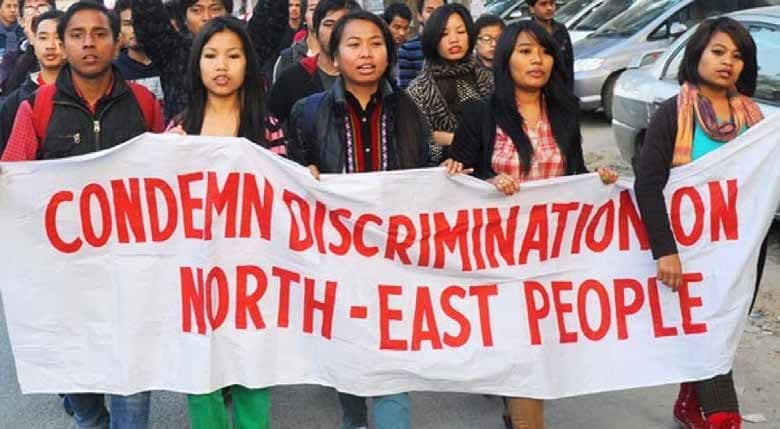
How many times can racial abuse against people from the Northeast be dismissed as an argument that simply “went too far”? How often can slurs be excused as anger before they begin to look like instinct? And how long can a nation speak of unity while some of its own citizens from the North East are still asked – implicitly or explicitly – whether they belong?
What unfolded in South Delhi’s Malviya Nagar last week was, on the surface, a minor residential disagreement; a routine air-conditioner installation; a little dust; an irritated neighbour.
But for three young women from Arunachal Pradesh, one of them preparing for the UPSC civil services examination, it turned into something far heavier – allegations of racial abuse, moral insinuation and intimidation.
Once again, India was forced to confront a question it has avoided for decades; why does prejudice against people from the Northeast surface so easily, so casually, and so repeatedly?
A Small Dispute, A Sharp Escalation
On February 20, the three women called an electrician to install an air conditioner in their rented fourth-floor apartment in Malviya Nagar; during the drilling process, some debris fell into the flat below.
According to the complaint, what began as an argument over dust quickly deteriorated; the neighbours – identified as Harsh Singh and Ruby Jain – allegedly hurled racially charged slurs and derogatory insinuations at the women.
The students have said the language used against them was not merely abusive but explicitly racial; they were allegedly called “momo,” accused of running a “massage parlour,” and subjected to comments implying involvement in prostitution.
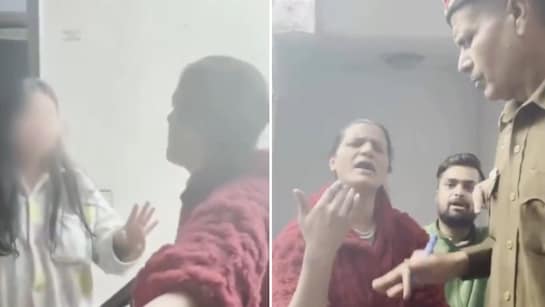
In a video that has since circulated widely, the confrontation appears heated; the three women are seen protesting the remarks in the presence of police personnel; the altercation is no longer about dust; it is about identity.
An FIR has been registered by Delhi Police under sections relating to outraging the modesty of a woman, criminal intimidation, and promoting enmity or ill-will between groups.
The UPSC aspirant, who has lived in the National Capital Region for over two years, told reporters; “This is a crime; this shouldn’t be justified; it can cause severe mental trauma.” She added something that many from the region have said before; “Because we look different and we can’t speak Hindi that well, they think we are not part of this country.”
The Apology And The Debate It Triggered
Following public outrage, Harsh Singh speaking to media; described the remarks as a product of the “heat of the moment,” apologised to “all Northeastern people,” and urged social media not to portray them as “Delhi’s darinde couple.”
He said they would accept whatever punishment was awarded but requested that media trials be avoided; he also alleged that their property was damaged and that online abuse directed at his family followed the viral video.
But for many observers, the apology raised a deeper question; can racism erupt spontaneously; or does it reveal something already embedded?
Social media users argued that slurs referencing ethnicity and stereotypical professions are rarely improvised in seconds; they are learnt; normalised; stored in everyday vocabulary, ready to surface.
Not An Isolated Flashpoint
The Malviya Nagar case may have dominated headlines; it is far from isolated.
In Gorakhpur, a third-year resident doctor from Nagaland posted at AIIMS alleged that she was followed for over a kilometre, subjected to racial slurs and physically assaulted near the campus gates; police have registered a case and formed teams to track the accused.
Around the same time, a video posted by a woman from the Northeast went viral; she spoke about persistent ignorance – people not knowing where the Northeast lies on the map, yet freely using slurs such as “chinki,” “Chinese,” “momo,” and “go back to China.”
Her question was simple; if people from the Northeast are expected to understand the languages, culture and geography of the rest of India, why is that curiosity not reciprocal?
The question lingered; not because it was loud, but because it was familiar.
A Long Memory of Cases And Of Responses
For many Northeastern communities in Delhi (and even the rest of the country) the Malviya Nagar episode does not feel new; it feels familiar.
Student groups and civil society organisations have documented incidents stretching back nearly two decades; many faded from national attention within days.
In May 2005, a 19-year-old Mizo girl was abducted from Dhaula Kuan and gangraped in a moving car; the brutality shocked the community; what followed disturbed them further — a college authority suggested that Northeastern girls adopt “safer” clothing to avoid such incidents.
In November that year, a Manipuri girl was molested in Chanakyapuri; in Nehru Vihar, another was dragged into a deserted alley; complaints were reportedly met with delays; in some cases, dismissal.
The Manipur Students’ Association, Delhi compiled case after case; assaults in Mahipalpur; a rape and murder in Vijaynagar; public molestation near Kingsway Camp; the Gandhi Vihar incident where two sisters from Manipur were allegedly thrashed and molested by a group of men.
In several instances, police action was initiated only after media intervention; victims recount being told to “identify the accused first” before FIRs were registered; others say they were advised to “take it easy.”
What emerges is not merely a catalogue of crimes; it is a record of hesitation; a pattern of conditional credibility.
The Language of Blame
In some cases, prejudice did not remain informal; it entered official language.
A press release issued by a college vice-principal suggested that girls from the Northeast were being “sent by militants” to seduce mainland Indians; the statement read less like ignorance and more like institutionalised bias.
Police remarks quoted in media reports implied that complaints were “daily drama”; one officer was cited as saying; “There is no smoke without a fire.” When authority echoes stereotype, accountability weakens; when credibility becomes conditional, silence becomes survival.
Numbers Without Faces
There are approximately 90,000 people from the Northeast living in and around Delhi; students; nurses; call centre employees; hospitality workers; professionals preparing for national examinations.
Yet mainstream awareness often remains shallow; identity is reduced to appearance; diversity collapses into stereotype.
In 2014, the murder of Nido Taniam from Arunachal Pradesh forced national reflection; a committee headed by M.P. Bezbaruah recommended measures including fast-track courts and police sensitisation.
Reforms were announced; implementation, activists argue, has been uneven.
Each new incident revives an old question; were the recommendations institutionalised; or did they fade once public attention shifted?
Gender At The Centre
The historic record reveals another pattern; women have been disproportionately targeted. Sexualised stereotypes frequently accompany racial abuse; clothing; social habits; perceived cultural liberalism; all are invoked to justify harassment.
The insinuation that women from the Northeast are “easy” or morally lax has surfaced repeatedly in testimonies over the years; racism here intersects with misogyny.
When appearance becomes shorthand for character; violence becomes easier to rationalise.
Institutional Friction
Activists associated with the North-East Support Centre and Helpline say many victims approach them not to escalate cases; but to navigate communication barriers with police stations.
Language remains an obstacle; unfamiliarity with legal processes compounds vulnerability.
For students and professionals who move to Delhi seeking opportunity, the city can feel administratively complex and socially alien; research has shown that many describe it as culturally overwhelming; unfamiliar language; different codes; an unspoken sense of being watched.
Yet the burden of adjustment is often placed on them.
The Structural Blind Spot
The Northeast is connected to the rest of India by the narrow Siliguri Corridor; often called the “chicken neck”; the geography symbolises more than physical distance; it reflects a psychological one.
Ignorance is rarely neutral; when mixed with arrogance, it becomes prejudice.
When prejudice is normalised in vocabulary; it travels easily from private conversation to public confrontation.
Law On Paper, Reality On Ground
India has legal provisions addressing hate speech, criminal intimidation and offences against women; the FIR in the Malviya Nagar case invokes several of these sections.
Yet enforcement remains uneven; activists argue that reporting processes can be intimidating; delays discourage complainants; public fatigue sets in. If slurs are routine and justice feels uncertain; silence can appear easier than escalation.
Political Response
Union Minister for Development of North Eastern Region Jyotiraditya Scindia said he was “deeply disturbed” by the incident; he spoke with Arunachal Pradesh Chief Minister Pema Khandu and took up the matter with the Delhi Police Commissioner; he sought stringent action.
Political condemnation matters; communities, however, measure safety not by statements; but by outcomes.
The Last Bit, The Larger Question
- What makes a residential disagreement slide so quickly into racial stereotyping?
- Why does appearance trigger assumptions about nationality?
- Why are Northeastern citizens still asked — directly or indirectly — to prove their Indianness?
- And why, after decades of documentation, does the pattern not meaningfully weaken?
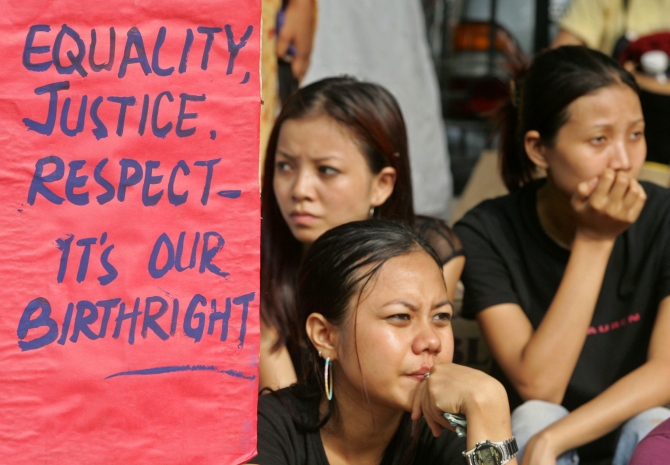
India often speaks of unity in diversity; diversity, however, must extend beyond celebration; it must survive in housing societies; in classrooms; in police stations; in everyday speech.
This is not about painting a city as hostile; nor is it about isolating one couple as uniquely prejudiced. It is about recognising continuity; when similar language resurfaces across years and across states, it ceases to be coincidence; it becomes pattern.
And patterns, if ignored long enough, become systems.
The question is not whether prejudice exists; the question is whether India is willing to confront it without waiting for another video to go viral.