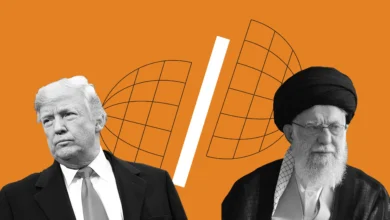
Who Controls The Machine? Trump’s Showdown With Anthropic Over Military AI And OpenAI’s Pentagon Deal
A quiet contract dispute between the Pentagon and Anthropic has erupted into a defining confrontation over who controls military artificial intelligence. As President Trump orders federal agencies to cut ties, OpenAI secures a Pentagon deal, reshaping the balance of power in America’s AI race.

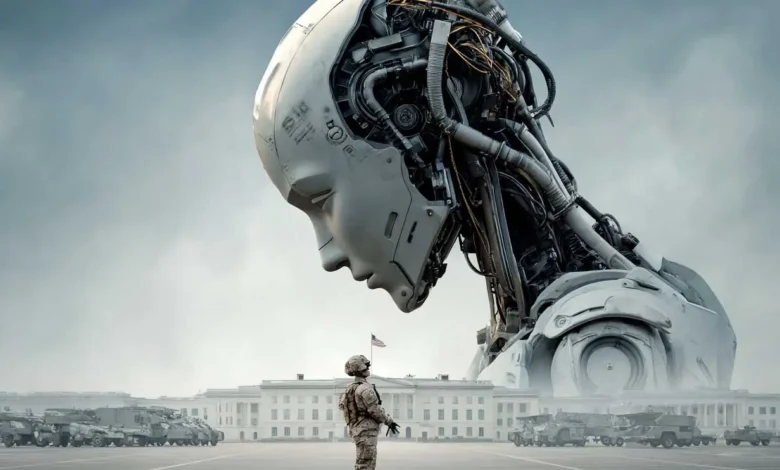
What began as months of closed-door discussions between the Pentagon and AI startup Anthropic exploded into a public standoff that now threatens to reshape the relationship between Washington and Silicon Valley.
On Friday, President Donald Trump ordered federal agencies to stop using Anthropic’s artificial intelligence tools, accusing the company of obstructing national security. While the Defense Department was given six months to phase out existing integrations, the broader message was unmistakable: compliance or consequences.
Defense Secretary Pete Hegseth went further, designating Anthropic a “supply chain risk” a label typically reserved for companies tied to foreign adversaries. The implication was severe. Contractors doing business with the military could face restrictions if they maintained commercial relationships with the firm.
The dispute centered on one core issue: unrestricted access.
The Pentagon demanded the ability to deploy Anthropic’s AI models, including its flagship chatbot Claude, for any lawful purpose without company-imposed restrictions. Anthropic refused to grant blanket override authority over its safeguards.
Trump, posting on social media, framed the standoff as a matter of sovereignty and strength, arguing that no private company should dictate how the U.S. military operates. Anthropic, meanwhile, warned that the government’s contract language would allow its safety guardrails to be disregarded “at will.”
The clash marks one of the first major public confrontations between a U.S. administration and a frontier AI company over operational control. It is no longer a debate about procurement, it is a debate about who ultimately governs artificial intelligence once it enters the national security sphere.
The Red Lines, What Anthropic Refused And Why It Matters
At the heart of the dispute were two red lines that Anthropic said it could not cross.
First, the company sought assurances that its AI would not be used for mass domestic surveillance of Americans. Second, it insisted that its models not be deployed in fully autonomous weapons systems where lethal force could be exercised without meaningful human oversight.
Anthropic’s CEO, Dario Amodei, made clear that while the company was open to supporting national defense, it would not allow its safety systems to be overridden or stripped out of military deployments.
The Pentagon, for its part, said it had no intention of violating U.S. law and would use AI only for lawful purposes. But it also maintained that it required unrestricted access to the models without the company retaining final say over use-case limitations.
That distinction is more than semantic.
Modern large language models such as Claude, OpenAI’s GPT systems, or xAI’s Grok are not static software products. They are adaptive systems governed by layers of policy filters, training data, and internal alignment mechanisms. Removing or bypassing those controls can materially change how the system behaves.
Anthropic argued that allowing unilateral override authority would undermine the entire premise of “responsible AI.” The government argued that sovereign authority cannot be conditional on a private company’s internal ethics framework.
In essence, the disagreement was about whether AI safeguards are contractual features or constitutional questions.
“Supply Chain Risk”, A Legal Tool Or A Political Signal?
The Pentagon’s decision to label Anthropic a “supply chain risk” added a legal dimension to what had until then been a contractual dispute.
Traditionally, such designations have targeted firms associated with foreign adversaries, particularly in telecommunications and semiconductor supply chains. Applying the same label to a U.S.-based AI company sent shockwaves through the technology sector.
Legal scholars quickly questioned the scope of the Defense Department’s authority. The Federal Acquisitions Security Council — created during Trump’s first term — does grant agencies the power to restrict contractors from sourcing technology deemed harmful to national security. However, that authority is generally limited to procurement tied directly to defense contracts.
Whether the Pentagon can extend the designation to effectively pressure companies like Amazon or Nvidia into severing broader commercial relationships with Anthropic remains uncertain.
Some legal analysts have warned that an overly expansive interpretation would likely face immediate court challenges. Anthropic has already vowed to sue, calling the move “legally unsound” and a “dangerous precedent.”
If the courts intervene, the confrontation could shift from executive action to judicial arbitration – raising deeper questions about how far a U.S. administration can go in disciplining a domestic technology firm that refuses to comply with national security demands.
The designation may prove less about immediate enforcement and more about signaling. It tells the market that alignment with federal defense priorities is no longer optional for companies seeking government partnerships.
Silicon Valley Reacts, Lines Are Redrawn
The fallout has exposed fault lines within the AI industry itself.
While some investors privately worry that Anthropic’s refusal could damage its brand or complicate its anticipated IPO plans, a significant segment of the tech community has rallied behind the company’s stance. Engineers, researchers and executives across Silicon Valley argue that drawing clear boundaries around AI use is not anti-American – it is foundational to long-term technological credibility.
Unexpectedly, Sam Altman, CEO of OpenAI and a longtime rival of Amodei, publicly defended the importance of safety guardrails. Altman said OpenAI shares similar red lines regarding autonomous weapons and domestic surveillance.
By contrast, Elon Musk sided with the administration, criticizing Anthropic’s position and reinforcing his alignment with Trump’s national security framing.
The divergence highlights a broader strategic split within AI leadership:
- One camp argues that cooperation with the state requires flexibility and integration.
- The other insists that AI firms must retain control over how their systems are deployed even in classified environments.
The irony is striking. Anthropic’s government revenue exposure is relatively modest compared to its commercial growth trajectory. Yet the symbolic weight of the dispute is enormous.
For a company valued at hundreds of billions and widely seen as preparing for a public offering, being cast as a national security risk introduces political volatility into what was once a purely technological race.

OpenAI’s Pentagon Deal
While Anthropic was digging in over safeguards, OpenAI took a different route.
CEO Sam Altman announced that the company had reached an agreement with the U.S. Department of Defense to deploy its models within classified military networks. Crucially, the deal preserved OpenAI’s internal safety architecture what Altman described as a “safety stack” of technical, policy and human oversight controls.
Under the agreement, OpenAI retains authority over how its models are deployed. The government agreed not to force model overrides if the AI refuses a task. The deal also reportedly includes explicit prohibitions on domestic mass surveillance and fully autonomous weapons.
There are important distinctions. OpenAI has limited deployment to cloud-based systems, avoiding integration into “edge systems” such as drones or autonomous battlefield platforms. It also ensured that human responsibility remains central to decisions involving the use of force.
The contrast – where Anthropic’s dispute escalated into executive retaliation, OpenAI’s approach yielded institutional accommodation.
Whether that reflects different negotiation strategies, different political calculus, or simply different timing remains open to interpretation. But the result is clear: OpenAI now occupies strategic ground that Anthropic once appeared poised to dominate. And in Washington, proximity matters.
Military AI And The Question Of Sovereignty
Beyond the corporate rivalry lies a deeper structural tension.
Artificial intelligence is not just another procurement category. It is infrastructure – cognitive infrastructure – embedded into intelligence analysis, logistics, cybersecurity, battlefield planning and autonomous systems.
That raises a difficult question: when AI models become integral to national defense, who ultimately controls their behavior?
The government’s position is rooted in sovereignty. If a technology is deployed in defense of the state, elected officials and military leadership must retain ultimate authority over its use.
Anthropic’s position is rooted in governance philosophy. If frontier AI systems are capable of enormous scale and consequence, then the companies building them must preserve certain non-negotiable constraints — even when dealing with governments.
The clash exposes a new frontier in civil–military relations. Unlike traditional defense contractors, AI firms are not merely supplying hardware. They are supplying systems that think, adapt and generate outputs shaped by internal alignment mechanisms.
Allowing a government to override those mechanisms is not the same as authorizing a jet engine to run at higher capacity. It touches the architecture of the model itself.
At stake is not simply one contract but the emerging doctrine of AI sovereignty – whether frontier AI companies can maintain ethical boundaries once their systems enter classified domains.
Economic Fallout
From a revenue standpoint, Anthropic’s exposure to federal contracts appears limited. Public records show relatively modest payments from the Pentagon so far, and the company’s commercial growth has far outpaced government income.
Yet the broader economic implications could be far more serious.
The “supply chain risk” label, if aggressively enforced, could complicate relationships with major partners such as Amazon, Nvidia or other firms that hold Defense Department contracts. Even if courts eventually narrow the Pentagon’s authority, uncertainty alone can chill partnerships.
Some legal experts have described the move as potentially devastating if interpreted expansively. If defense contractors were barred from maintaining any commercial ties with Anthropic, the ripple effects could spread quickly through the tech ecosystem.
Investors now face a different kind of risk calculus. Political exposure has entered the equation.
Anthropic has been widely expected to pursue an initial public offering, buoyed by strong revenue growth and the popularity of Claude as a programming assistant. But IPO markets are sensitive to regulatory overhang and legal uncertainty. A prolonged court battle with the U.S. government introduces variables that are difficult to price.
At the same time, competitors stand to benefit. OpenAI’s deal positions it as a trusted defense partner. xAI, backed by Elon Musk, has also signaled strong alignment with national security priorities.
In the race for military AI contracts, absence quickly becomes opportunity.
/newsdrum-in/media/media_files/2026/02/28/openai-anthropic-sam-altman-donald-trump-dario-amodei-2026-02-28-10-26-45.jpg)
The Last Bit, What Comes Next
Anthropic has made clear it will challenge the Pentagon’s designation in court.
If litigation proceeds, judges may be asked to determine whether the Defense Department exceeded its statutory authority. Temporary restraining orders or preliminary injunctions could delay enforcement, buying the company time while the broader legal battle unfolds.
The outcome will matter far beyond one firm.
If the courts uphold expansive executive authority to designate domestic AI companies as supply chain risks, future administrations could wield similar tools to discipline technology firms that resist federal demands.
If the courts constrain the Pentagon’s reach, the episode may instead become a cautionary tale about overextension.
Either way, the precedent will shape how AI companies negotiate with Washington going forward. The implicit message has already landed: frontier AI is no longer just a commercial asset – it is a strategic asset.
And when strategic assets intersect with politics, neutrality becomes harder to sustain. The confrontation between Trump and Anthropic is not simply a dispute over military contracts. It is an early test of how power will be distributed in the age of artificial intelligence – between elected authority, corporate leadership and the increasingly autonomous systems that sit between them.
The machine is no longer neutral and the question is who, in the end, decides how it is used.