Great Nicobar Project: India’s Grand 81,000-Crore Strategic Bet Is About A Port Vs A Tribe. Building Amrit Kaal On Very Fragile Ground?
What makes the Great Nicobar project deeply contentious is not the idea of development itself, but the model of development being pursued. Forests are being diverted, tribal reserves re-notified, ecological red lines reclassified, and long-standing environmental safeguards diluted — all in the name of strategic urgency. Regulatory clearances have been fast-tracked, dissenting voices marginalised, and critical questions about geological safety, indigenous survival, and long-term sustainability left inadequately answered.

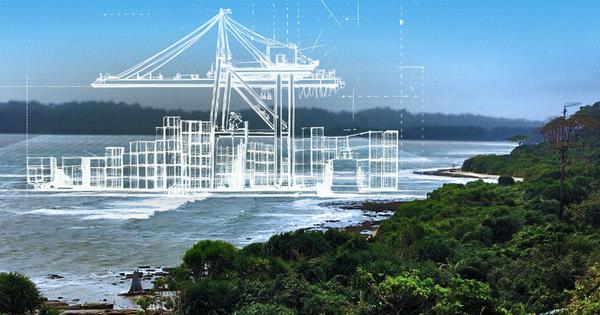
At the southernmost tip of India’s map, far away from television studios, policy panels, and election rallies, lies Great Nicobar Island. Great Nicobar is not just another island; it is India’s last geographical frontier, a densely forested, ecologically fragile landmass barely 900 square kilometres in size, home to fewer than 10,000 people and to one of the world’s most vulnerable indigenous communities, the Shompen tribe, whose population is estimated at just 300–400 individuals.
Today, this quiet island has been thrust into the centre of an ₹81,000-crore ambition: the Holistic Development of Great Nicobar Project, a plan that promises a transshipment port, an international airport, a power plant, a township, and a permanent strategic military presence overlooking the Indo-Pacific’s most critical maritime chokepoints.
On paper, the logic appears compelling. Strategically located near the Malacca Strait, Great Nicobar is being projected as India’s answer to China’s expanding footprint in the region. Economically, the port is expected to reduce India’s dependence on foreign transshipment hubs. Politically, the project is framed as overdue integration of a neglected territory into India’s growth story.
But beneath the language of strategy, security, and GDP lies a far more uncomfortable question – one that cannot be answered by feasibility reports or glossy vision documents.
Is India willing to risk the extinction of a Particularly Vulnerable Tribal Group, destroy a UNESCO-recognised biosphere reserve, and urbanise a seismic, tsunami-prone island. This is not merely a policy debate. It is a moral and civilisational reckoning.

A Development Model Built On Fragile Ground
Over 85% of Great Nicobar was declared a biosphere reserve in 1989. In 2013, it was inducted into UNESCO’s Man and Biosphere Programme. The island hosts tropical virgin forests, over 1,700 species of flora and fauna, endangered leatherback turtles, the Nicobar megapode, and some of the richest coral ecosystems in the Indian Ocean.
It is also one of India’s most disaster-prone regions.
In 2004, the undersea earthquake and tsunami permanently altered Great Nicobar’s geography. Parts of the island sank, coastlines shifted, forests were salinated, and indigenous communities were displaced inland, many of them never allowed to return to their ancestral lands.
Two decades later, the same land is now being proposed for a mega city, a gas-based power plant, a massive port, and an airport. Thus, this contradiction is not incidental, it is foundational.
If Great Nicobar was deemed unsafe for its original inhabitants after the tsunami, how does it suddenly become safe for dense urbanisation, hazardous infrastructure, oil storage, and global shipping traffic?
The answer, it appears, lies not in geology or ecology but in strategic impatience.
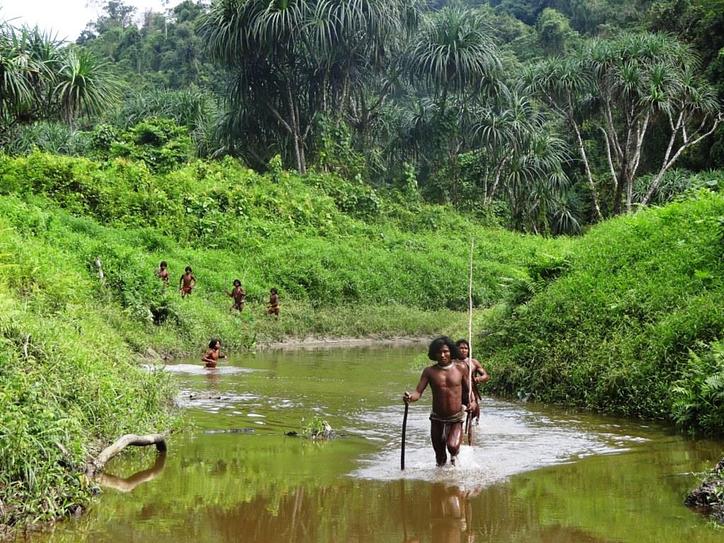
The Shompen Question. Development At The Cost Of Survival?
At the heart of this project lies the fate of the Shompen tribe, a Particularly Vulnerable Tribal Group that has lived in near-total isolation for centuries, dependent entirely on the island’s forests for survival.
Genocide experts from across the world have already warned that forced exposure to outside populations could wipe out the Shompens through disease alone. Anthropologists have repeatedly stated that even limited intrusion into their habitat risks cultural annihilation.
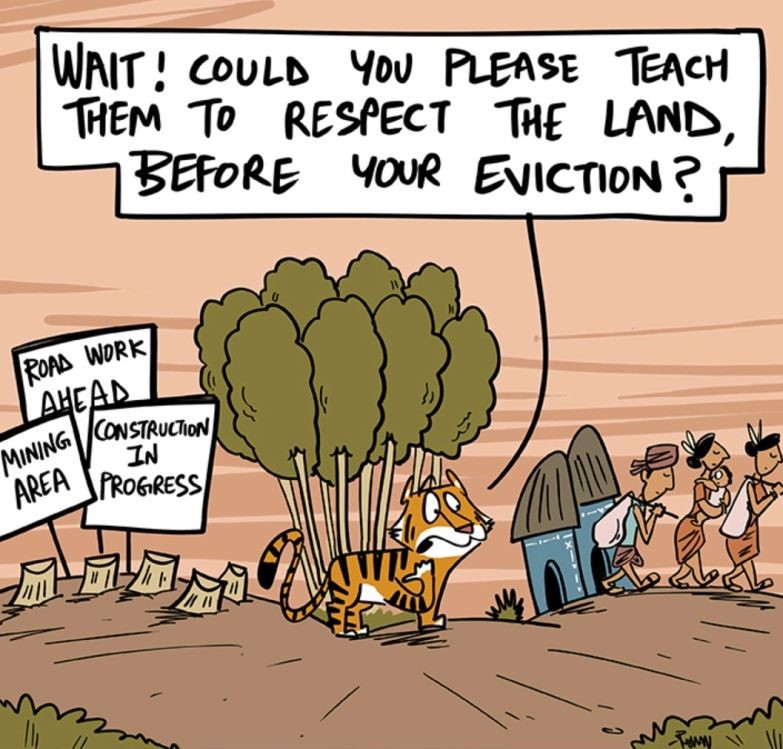
Yet, forest clearances have been granted. Tribal reserves have been reconfigured. Surveillance towers and barbed fencing are being proposed, not to protect forests, but to contain people within them.
And it raises a troubling question: When development requires fencing off indigenous people in their own homeland, who is development really for?
When Red Zones Quietly Turn Green
Perhaps the most unsettling aspect of the Great Nicobar project is not what is being built but how regulatory barriers have been made to disappear.
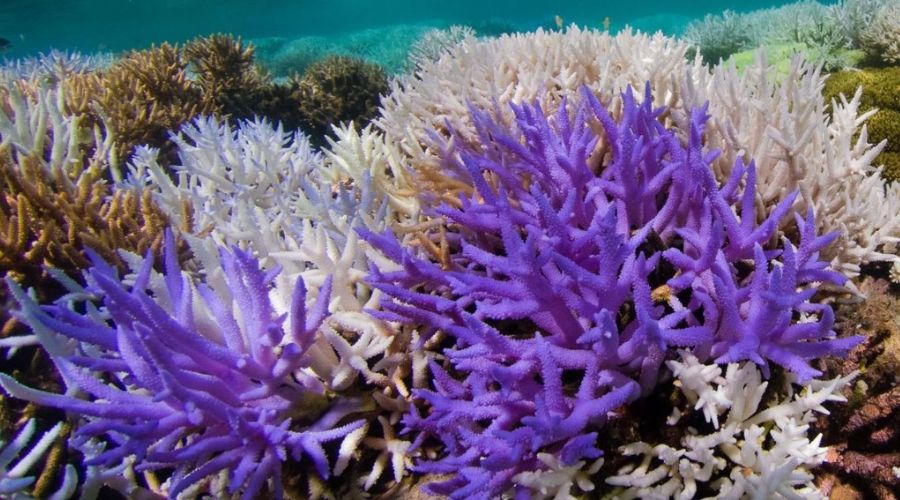
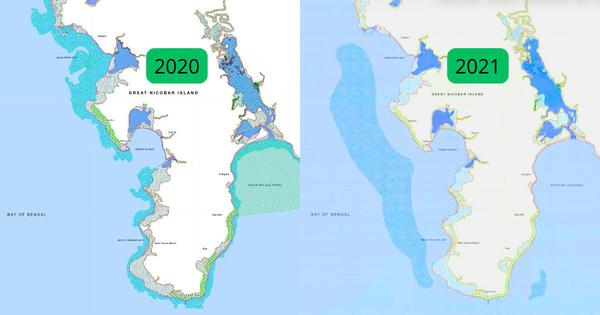
Maps from 2020 clearly showed extensive coral reefs around Galathea Bay, placing it firmly under CRZ Category IA – India’s strictest environmental “red light” zone, where major ports and industries are prohibited. By 2021, those reefs had vanished not from the sea, but from official maps.
The same bay was reclassified as CRZ IB, clearing the way for construction.
- Who authorised this transformation?
- On whose recommendation did a no-go zone become negotiable?
- And what precedent does this set for every other ecologically sensitive region in India?
These are not mere procedural questions. They strike at the credibility of India’s environmental governance itself.
Every mega project comes wrapped in the same reassuring vocabulary – jobs, growth, connectivity, national interest. The Great Nicobar project is no exception. But when one peels away the rhetoric, a more pointed question demands an answer: Development for whom and at whose cost?
—Who will own the port that is being carved out of Galathea Bay?
—Who will build it, finance it, insure it, and operate it?
—Who will win the contracts for dredging, construction, logistics, fuel supply, and power generation?
—And most importantly — who bears the irreversible risks?
The answers are conspicuously absent from public discourse, but maybe we can take a guess – Adani Group perhaps!
What is visible, however, is who stands to lose.
Forest land will be diverted. Tribal reserves will be re-notified. Private lands will be acquired. The Nicobarese, already displaced once after the 2004 tsunami, face relocation yet again.
The Shompens, whose survival depends entirely on uninterrupted access to forests, are expected to coexist with ports, airports, surveillance towers, and industrial infrastructure. Proving that this is not shared sacrifice. It is asymmetrical burden-sharing, where the most vulnerable pay the highest price so that strategic and commercial interests elsewhere can benefit.
If this is development, it is development without consent.

The Dangerous Illusion of “Compensatory Afforestation”. Can We Truly Replicate?
Few ideas have been misused as effectively and as conveniently as compensatory afforestation.
The argument goes like this: forests lost in Great Nicobar will be “compensated” by planting trees elsewhere, even in faraway states like Haryana. On balance, the environment will supposedly be better off. This logic collapses under even minimal scrutiny.
A 2,000-year-old tropical rainforest, evolved through complex ecological relationships, cannot be replaced by plantation-style tree cover in arid or semi-arid land. Forests are not interchangeable units. They are living systems – with soil chemistry, microbial life, endemic species, water cycles, and carbon sinks that cannot simply be recreated elsewhere.
Therefore, planting saplings in Haryana does not restore:
- coral reef ecosystems destroyed in Galathea Bay
- nesting grounds of leatherback turtles
- habitats of endemic birds and animals
- or the food security of forest-dependent tribes
To suggest otherwise is not environmental management, it is environmental accounting fiction. Worse still, such arguments normalise the idea that ecologically irreplaceable zones can be sacrificed as long as paperwork balances out elsewhere. That precedent should alarm anyone who cares about India’s environmental future.
Amrit Kaal Or Ecological Amnesia?
The Great Nicobar project is repeatedly framed as part of India’s Amrit Kaal – a vision of confident, forward-looking nation-building. But Amrit Kaal was also promised as an era of people-centric development, sustainability, and respect for indigenous rights.
So which version of Amrit Kaal is this? One where:
- indigenous communities are fenced in “for their own protection”
- ecological red lines quietly turn green on official maps
- disaster-prone zones are urbanised without answering basic geological questions
- and consultation becomes a procedural checkbox rather than meaningful consent
If development demands the erosion of constitutional protections, dilution of environmental laws, and silencing of tribal voices, then it is not progress, it is regression dressed up as ambition.

Motives: The Questions That Refuse to Go Away
When logic, ecology, and lived experience all raise red flags, it becomes necessary to ask an uncomfortable but essential question: What are the real motives behind the Great Nicobar push?
Several possibilities present themselves, none mutually exclusive.
1) Strategic Signalling: The project allows India to project power in the Indo-Pacific and signal resolve to China. But strategic urgency cannot justify bypassing environmental and social safeguards especially when long-term instability could undermine the very security the project claims to enhance.
2) Real Estate and Infrastructure Windfall: Ports, airports, townships, SEZs, power plants – these are not just strategic assets, they are commercial goldmines. Large-scale land diversion in remote areas has historically created opportunities for speculative gains, opaque contracts, and rent-seeking behaviour. India’s infrastructure history offers no shortage of cautionary tales.
3) Regulatory Shortcuts as Precedent: Great Nicobar may also serve as a testing ground – a place where environmental norms can be bent, reinterpreted, or quietly diluted. What happens here could set a template for future projects in other ecologically sensitive regions.
4) Unchecked Corruption Risks: Mega projects with overlapping authorities, fast-tracked clearances, limited public scrutiny, and geographically isolated execution environments are ideal conditions for corruption. When accountability is fragmented and transparency diluted, misuse of public funds becomes not an anomaly, but a risk built into the system.
The Last Bit,
None of this is an argument against development. It is an argument against development that refuses to listen, that treats indigenous lives as collateral damage, and ecology as an obstacle rather than an inheritance.
If India cannot build strategically without erasing its most vulnerable citizens and ecosystems, then the problem lies not with the island but with the imagination guiding the project.
Great Nicobar is not asking to remain frozen in time. It is asking not to be sacrificed in it. Why this island? Why now? And why at this cost?
Why must one of India’s most ecologically fragile, disaster-prone, and culturally irreplaceable regions bear the weight of a project that could have been explored elsewhere? Why are ports in Chennai or Vizag – existing, connected, and historically underutilised – not prioritised with the same urgency? Why is a mega city being imagined on land that quite literally shifted and sank barely two decades ago?
And most importantly, why are the Shompens expected to gamble with extinction for a development vision they did not ask for, do not control, and will not benefit from?
If this project is truly in the national interest, then transparency should strengthen it not threaten it. Yet, critical documents remain contested, consultations disputed, and regulatory decisions cloaked in ambiguity. Environmental red lines appear negotiable. Tribal consent appears procedural. Geological warnings appear inconvenient.
This pattern does not inspire confidence. It breeds suspicion and at the heart of it all lies the destruction of the Great Nicobar and its treasures!