
Yotta Data Services’ $2 Billion AI Hub. Nvidia GPUs, India IPO Plans, And The Race To Own AI Compute
Yotta Data Services is building a $2 billion AI hub powered by Nvidia’s advanced GPUs, positioning itself at the centre of India’s rapidly expanding compute race. As it prepares for an India IPO, Yotta’s expansion signals a larger shift - from AI consumption to infrastructure control.

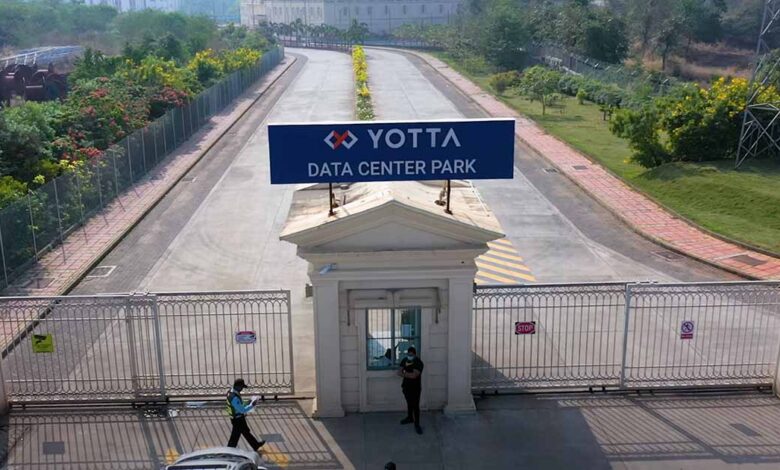
Yotta Data Services is building a $2 billion artificial intelligence hub powered by Nvidia’s most advanced GPUs and preparing for an India listing as demand for AI compute surges. The Mumbai-based company claims control of a majority share of India’s GPU capacity, placing it at the centre of the country’s emerging AI infrastructure race.
India’s AI ambitions are no longer confined to policy papers and summit declarations. This is no longer about chatbots. It is about control over compute.
For years, India has been described as one of the world’s largest AI markets – a vast consumption base with deep engineering talent. But markets consume. Infrastructure builds power. And the difference between the two is measured in data centres, electricity capacity and racks of GPUs.
Yotta’s aggressive expansion signals that India may finally be moving from being an AI user to becoming an AI infrastructure player.
India’s AI Gap: Strong Talent, Weak Compute
India has world-class engineers, a thriving startup ecosystem, and one of the fastest-growing digital user bases globally. Yet it has lagged behind the United States and China in one decisive area: foundational AI models supported by large-scale domestic compute infrastructure.
The United States, powered by companies like Nvidia, built massive GPU clusters that now underpin frontier AI models. China created state-backed compute ecosystems aligned with national strategic priorities. India, meanwhile, has largely depended on foreign hyperscalers for high-end AI workloads.
That dependency created a structural limitation.
Without compute, talent cannot scale. Without GPU capacity, AI remains rented rather than owned. Foundational model training requires thousands of advanced chips operating in parallel – something India historically lacked at scale.
That equation now appears to be shifting.
The IndiaAI Mission and rising domestic policy focus have begun nudging capital toward AI infrastructure. But policy intent alone does not generate compute capacity. Capital expenditure does.
And that is where Yotta enters the picture.

Yotta’s $2 Billion Bet On The GPU Backbone
At the centre of this shift is Yotta Data Services, a Mumbai-based data centre operator backed by the Hiranandani Group. The company says it now controls between 60% and 70% of India’s GPU capacity – a striking claim in a country racing to scale AI capability.
Through its Shakti Cloud platform, Yotta already operates more than 16,000 Nvidia H100 GPUs and has announced plans to acquire 8,000 Blackwell B200 chips – Nvidia’s next-generation architecture.
The company began sourcing Nvidia GPUs in 2023, well before the current AI frenzy reached its peak. Now it is scaling aggressively, citing demand that is exceeding supply. In simple terms, India does not have enough GPUs for the AI workload being generated domestically.
Control of GPU clusters does not just enable cloud services. It determines who can train large models, who can host inference at scale, and who becomes indispensable in the ecosystem.
Demand Is Surging – From Startups To Silicon Valley
The demand spike Yotta is responding to is coming from two directions.
First, Indian AI startups are beginning to launch early versions of domestic models. Companies like Sarvam AI have rolled out limited-capacity deployments of their AI chatbot Indus, acknowledging that users may initially face waitlists due to compute constraints. That admission itself is telling: India’s AI innovation pipeline is constrained less by ideas and more by infrastructure.
Second, global AI firms are expanding aggressively in India.
OpenAI, Google and Perplexity AI have offered AI tools at low or no cost to millions of Indian users. India is rapidly becoming one of the largest markets for AI consumption. As usage explodes, so does the need for inference capacity – the ability to process millions of real-time queries efficiently.
AI consumption, however, requires local infrastructure. Latency concerns, data localisation requirements and cost optimisation push companies to deploy capacity closer to end users. That means more data centres. More GPUs. More power supply.
India currently has roughly 1.93 gigawatts of total data centre capacity and is projected to nearly double that by 2028. A significant portion of new investment is expected to flow into AI-focused infrastructure.
The deeper question is this: Is India building sovereign AI capacity or simply becoming the world’s fastest-growing AI backend?
The Hyperscaler Arms Race Is Already Underway
Yotta’s expansion is not happening in isolation. Global tech giants are accelerating their India infrastructure play.
Microsoft has announced plans to invest $17.5 billion to expand its data centre footprint in the country. Google has firmed up a $15 billion data centre hub in southern India. In a significant signal of India’s growing AI relevance, OpenAI became the first customer of Tata Consultancy Services’ data centre business, signing up for 100 MW of capacity with the option to scale to 1 GW.
That 1 GW figure is not trivial. At hyperscale levels, power capacity becomes strategic capacity.
Brokerage estimates suggest that India’s total data centre capacity – currently around 1.93 gigawatts – could nearly double to 4 gigawatts by 2028. Billions of dollars are being earmarked for AI-linked infrastructure over the next five to seven years.
The direction is unmistakable: India is emerging as a key geography in the global AI infrastructure map. But infrastructure ownership will determine who captures long-term value and who merely hosts it.

The IPO Pivot: Why List In India Instead Of Nasdaq?
Perhaps the most revealing element of Yotta’s strategy is not just the GPU buildout, but the listing pivot.
The company had originally planned to list on Nasdaq and had reportedly completed much of the SEC approval process. Yet it chose to shift its IPO plans toward Indian markets instead.
The reasoning appears straightforward: the opportunity at home is accelerating.
India’s IndiaAI Mission, rising domestic investor appetite for AI-linked assets, and growing confidence around sovereign AI capacity have strengthened the case for a domestic listing. Yotta is now exploring an India IPO in FY27 while pursuing a substantial pre-IPO fundraising round.
This is more than a financial adjustment. It reflects confidence that Indian capital markets are prepared to fund deep-tech infrastructure at scale.
It also reflects something else.
AI infrastructure is geopolitically sensitive. Listing locally aligns more closely with regulatory frameworks, policy incentives and long-term positioning within India’s strategic technology landscape.
The Capital Intensity Problem
If there is one unavoidable reality in AI infrastructure, it is this: it is brutally expensive.
Yotta has already invested roughly $1 billion across data centres and GPUs. It is now exploring a pre-IPO round in the range of $1.2 billion to $1.5 billion, with reports suggesting over ₹4,000 crore may be raised in the near term.
But GPUs are not static assets. They depreciate quickly. Technology cycles are short. Today’s cutting-edge H100 cluster can be overtaken by next-generation architectures within a few years.
Nvidia’s Blackwell B200 chips represent the next leap. Yet even those will eventually be replaced.
This creates a relentless capital expenditure treadmill. To remain competitive, infrastructure providers must continuously upgrade hardware, expand capacity and optimise energy efficiency.
That raises uncomfortable but necessary questions:
- Can Indian capital markets sustain multi-billion-dollar compute cycles over time?
- Will pricing power remain strong as hyperscalers deepen their presence?
- Does GPU concentration create competitive leverage — or financial vulnerability?
AI infrastructure rewards scale and punishes miscalculation.
Sovereign AI Or The World’s GPU Rental Hub?
At its core, this story is not merely about one company’s IPO ambitions. It is about India’s position in the global AI value chain.
For decades, India excelled as the world’s IT services powerhouse. It hosted back-end operations, managed global systems and delivered cost-efficient scale. But foundational technology ownership often remained elsewhere.
The AI era presents a similar fork in the road.
If domestic GPU capacity supports Indian foundational model development, research ecosystems and enterprise AI products, then this infrastructure push could underpin genuine technological sovereignty.
But if most capacity ends up serving global firms targeting Indian users, India risks once again becoming a high-volume execution base rather than a value-capture hub.
Compute is the new oil of artificial intelligence. Whoever controls it shapes the ecosystem built on top of it.

The Last Bit, Owning The Backbone
Yotta’s $2 billion AI hub is not merely a corporate expansion story. It represents a strategic inflection point.
If successful, it could anchor India’s AI backbone – reducing dependence on overseas compute and enabling domestic model builders to scale meaningfully. If misjudged, it could become another capital-heavy cycle vulnerable to technological churn and global competition.
India’s AI future will not be decided by chatbot launches alone. It will be determined by who owns the clusters, who funds the upgrades and who captures the economic upside.
The AI race is often framed around algorithms and models. In reality, it begins with power grids, cooling systems and racks of GPUs humming inside data centres. And this time, India appears determined not just to participate in the AI race but to own part of its foundation.


