15 Years of Waiting: How Raheja Developers Turned Dreams Into A Nightmare Of Empty Promises
On 6 November 2026 the Enforcement Directorate filed a prosecution complaint alleging that Raheja Developers collected roughly ₹2,699 crore from about 4,600 homebuyers and investors, only for ₹1,353 crore to be identified as proceeds of crime. For families who poured life savings, took crushing loans and waited more than a decade, the numbers confirm what they have lived every day: incomplete towers, frozen hopes and a system that allowed their money to disappear while the projects remained skeletons. This is not merely a legal case; it is the accumulated agony of thousands who still have neither possession nor refund.

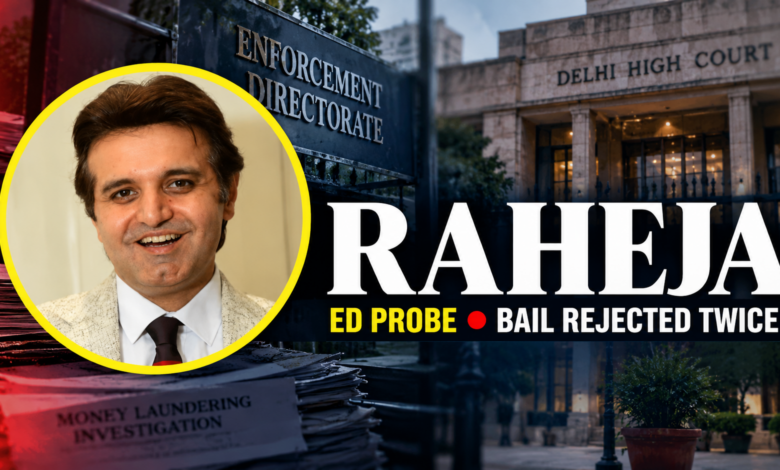
The Enforcement Directorate’s prosecution complaint filed on 6 November 2026 before the Special PMLA Court at Saket is not just another chapter in a long investigation in Raheja Developers Case.
For the approximately 4,600 homebuyers and investors who handed over roughly ₹2,699.13 crore to Raheja Developers Limited, it is the formal recognition of a wound that has festered for years. The agency has identified ₹1,353.26 crore as alleged proceeds of crime, where ₹1,175.86 crore taken out of project, escrow and RERA accounts for purposes other than construction, and ₹177.40 crore collected in cash outside registered agreements.
Properties with a book value of ₹810.57 crore and a current market value of ₹2,399.65 crore stand provisionally attached. 21 accused, including the company, its Managing Director Navin M. Raheja, his son Nayan N. Raheja, daughter Nayana N. Singhania, wife Nirmal Raheja and 16 other individuals and entities, face allegations of money laundering under the Prevention of Money Laundering Act.
For the families who paid, often 90 to 95 percent of the consideration years ago, the numbers land with the agony. Half the money collected has been flagged as diverted. Most of the group’s projects remain incomplete. The complaint names four projects that feature repeatedly in homebuyer grievances: Raheja Revanta, Raheja Atlantis, Navin Minar and The Delhi Mall. The human cost is measured not only in crores but in lost years, mounting EMI pressure, rented flats that were never meant to be permanent, children’s education delayed, marriages postponed and the quiet erosion of trust that once made people believe a brochure and a builder-buyer agreement were enough.
The scale is staggering. According to the ED, Raheja Developers collected approximately ₹2,699.13 crore from around 4,600 homebuyers and investors across residential and commercial projects in Delhi and Gurugram on the promise of timely delivery. Of this, the agency has so far identified ₹1,353.26 crore as proceeds of crime. That is more than half the money taken from people who believed they were buying homes. The provisional attachment of properties valued at nearly ₹2,400 crore in the market is an important protective step, but attachment is not possession, and it is not a refund. Homebuyers continue to service loans on units that do not exist in completed form while the legal process grinds forward.
The complaint traces a pattern of alleged diversion. Funds were moved to group companies and to entities operated through employees and their relatives acting as nominee directors. Those companies were then used to acquire land. Money was also shifted between the RERA accounts of different projects. Separately, ₹177.40 crore is said to have been collected in cash outside the registered agreements. The investigation, which began on the basis of multiple FIRs registered by the Economic Offences Wing of Delhi Police and by Gurugram Police under sections dealing with criminal breach of trust, cheating, forgery and conspiracy, has now moved to the stage of a formal prosecution complaint.
Searches in June 2025 and April 2026 recovered documents, digital devices, jewellery, gold coins, bullion and foreign currency. The adjudicating authority has allowed retention of the seized material. Three successive provisional attachment orders issued between April and July 2026 have built the current cumulative market value of ₹2,399.65 crore.
For homebuyers, these procedural milestones do not erase the lived experience of the projects themselves. Each of the named developments carries its own history of delay, regulatory intervention and personal hardship.
Raheja Revanta in Sector 78, Gurugram, stands as the most visible symbol. Launched around 2011, the project promised possession within 36 months for independent floors and 48 months for the high-rise towers. An extended RERA deadline of July 2022 was also missed. Buyers paid substantial portions of the consideration, many of them 90 to 95 percent. In June 2026 the National Company Law Tribunal admitted an insolvency petition filed by 176 allottees holding 99 units who had collectively paid more than ₹137 crore.
Haryana RERA had earlier banned further sales, ordered a forensic audit and frozen accounts and inventory. Consumer forums and the National Consumer Disputes Redressal Commission have ordered refunds with interest in multiple individual cases. Families who booked units more than a decade ago continue to wait while the project remains incomplete and the resolution process inches forward. The human arithmetic is brutal: EMIs paid for years on a home that was never handed over, rent paid in parallel, and the constant uncertainty of whether the unit will ever be completed or whether a refund will materialise.
Raheja Atlantis appears in the same cluster of grievances that triggered the underlying FIRs. Homebuyers who paid for units in the project report the familiar pattern of promised timelines that slipped, substantial payments made, and neither possession nor timely refund. The project is specifically named by the ED as one of those linked to the complaints of non-delivery that formed the foundation of the money-laundering investigation. For the allottees, the legal developments of 2025 and 2026 arrive after years of private struggle, court filings and regulatory complaints that yielded orders but often little practical relief.
Navin Minar, another project expressly mentioned in the ED’s account of homebuyer complaints, follows the same trajectory. Buyers who invested in residential or commercial units allege that the money they paid did not result in the delivery they were promised. The project’s inclusion in the list of developments that underpinned the FIRs underscores that the problem was not confined to a single tower or a single locality. Each incomplete unit represents a household that planned its future around a specific possession date and then watched that date recede.
The Delhi Mall, the commercial component named by the agency, brings the same pattern into the realm of business investment. Allottees who paid for commercial spaces with the expectation of timely handover and income generation instead found themselves locked into prolonged uncertainty. Commercial buyers often face additional pressure because the units were intended to generate returns that would service the financing taken to acquire them. When those units remain undelivered, the financial strain compounds.
These four projects do not exhaust the list of troubled developments associated with the group. Earlier insolvency proceedings, RERA interventions and consumer orders have touched projects such as Raheja Shilas, the Krishna Housing Scheme and others. The pattern that emerges from public records is one of repeated delays measured in years rather than months, of buyers who paid the overwhelming majority of the consideration, and of regulatory and judicial interventions that produced orders for refunds or compensation but frequently left enforcement and actual recovery as further battles.
The alleged mechanisms of diversion described by the ED go to the heart of the homebuyer’s fear. Money collected against the promise of construction is said to have left the protective ring of project, escrow and RERA accounts. It is said to have moved into group companies and into entities controlled through nominee directors who were employees or their relatives.
Those entities are alleged to have acquired land. Funds are said to have been shifted between the RERA accounts of different projects, a practice that, if established, would undermine the project-specific ring-fencing that RERA was designed to create. Separately, the alleged collection of ₹177.40 crore in cash outside registered agreements raises questions about transparency and about money that may never have entered the formal accounting trail in the same way as the documented consideration.
From the homebuyer’s vantage point, each of these routes represents a breach of the basic compact. A buyer pays for a specific unit in a specific project. The money is supposed to fund the land and construction of that project. When it is moved elsewhere, the project starves. When cash is collected off the books, the risk of non-accountability multiplies.
When land is acquired in the names of companies controlled through nominees, the beneficial ownership becomes harder to trace and the assets harder to recover for the original allottees. The ED’s case is that these were not isolated accounting irregularities but a systematic process that generated proceeds of crime. The Special Court will examine the evidence. For the families who paid, the practical consequence has already been lived: incomplete buildings and years of financial pressure.
The agony is not abstract and it is not recent. Many of the buyers who booked units in the early 2010s are now in a different stage of life. Children who were supposed to grow up in the new home have finished school or college. Parents who invested retirement savings have aged further while still paying rent or living in temporary arrangements.
Couples who delayed marriage or children until they had a permanent roof have watched the timeline stretch beyond recognition. The psychological toll of repeated promises, revised dates, regulatory complaints, consumer cases and now a major money-laundering investigation is cumulative. Each new development brings a spike of hope followed by the realisation that possession or refund still lies on the other side of complex legal processes.
Attachment of assets valued at nearly ₹2,400 crore is a significant protective measure. Yet homebuyers know from long experience that provisional attachment does not automatically translate into completed apartments or returned money. Confiscation, if ordered, still requires further judicial steps. Distribution of any recovered value among thousands of claimants, many of whom also hold claims against the same incomplete projects in insolvency or RERA proceedings, will be a protracted exercise. In the meantime the EMI continues, the rent continues, and the uncertainty continues.
The company has previously maintained that it invested more than it collected and that forensic audits supported its position. It has attributed delays, particularly in Revanta, to the absence of external infrastructure despite payment of development charges. Those defences will be tested against the financial trail that the ED has assembled. For the homebuyers, the central fact remains unchanged: they paid, the promised homes were not delivered on the promised timelines, and a very large sum of money has now been formally identified by a central investigating agency as alleged proceeds of crime.
The filing of the prosecution complaint on 6 November 2026 marks a decisive escalation. The matter has moved from investigation and provisional attachment into the formal prosecutorial stage. The Special Court will decide whether to take cognizance, how to proceed against the accused, and ultimately whether the allegations are proved.
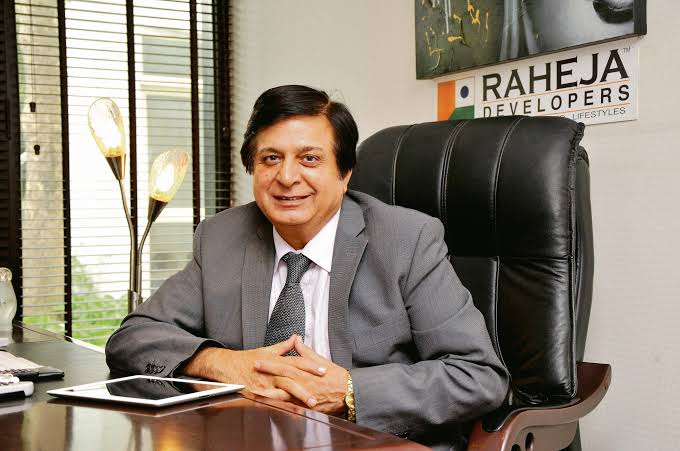
Non-bailable warrants have been sought against four family members who, according to the ED, did not join the search proceedings and did not comply with repeated summonses. Anticipatory bail applications by Nayan Raheja were dismissed by the Special Court and by the Delhi High Court. These developments intensify the pressure, yet they do not by themselves hand over a single set of keys or restore a single family’s lost years.
What homebuyers need is not only accountability for the past but a realistic path to either completed homes or recovery of the money they paid, with interest that reflects the real cost of the delay. The RERA framework was meant to prevent precisely this kind of situation by ring-fencing project funds and linking withdrawals to certified progress. The ED’s allegations suggest that those safeguards were circumvented on a large scale. If the courts ultimately uphold the agency’s case, the episode will stand as a stark illustration of how easily the protective architecture can be undermined when money is moved through related entities and nominee structures.
Until that determination is made, the human reality persists. Thousands of families continue to live with the consequences of decisions they made in good faith years ago. They paid for homes. They received incomplete structures, prolonged litigation and the knowledge that a substantial portion of their money is now the subject of a major money-laundering prosecution. The towers that were meant to house them remain unfinished. The financial and emotional cost continues to compound with every month that passes. For these homebuyers, the 6 November 2026 complaint is not a distant legal development. It is the latest official acknowledgement of a betrayal that has already shaped their lives for more than a decade.