
Why the Indian Stock Market is Falling: The Big Reason No One Talks About
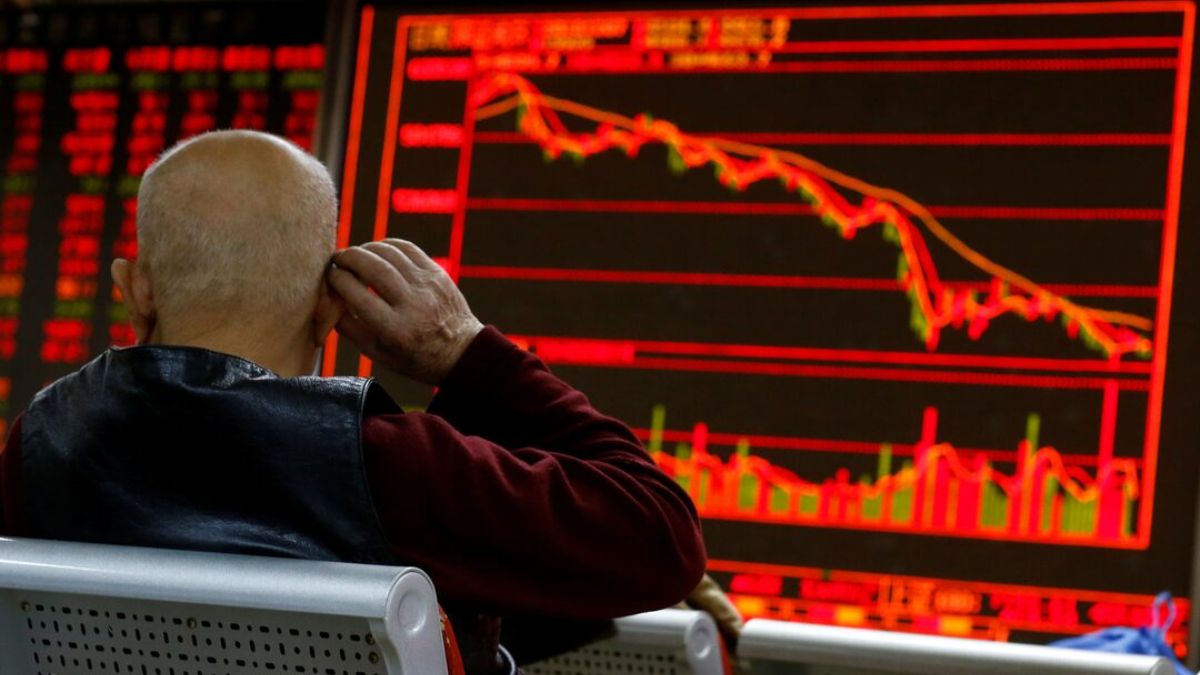
The Indian stock market, once the darling of global investors, is now bleeding red, and no, it’s not Holi yet. If you’re wondering why your once-glorious portfolio is looking more like a tragedy, well, welcome to the Dalal Street roller coaster, where foreign investors leave at the speed of light and governments conveniently forget that the economy needs stability, not just election manifestos.
The Curious Case of Mike: A Foreign Investor’s Nightmare
Let’s talk about Mike, a hypothetical yet painfully realistic investor. He believed in India’s economic growth and poured in $10,000 when ₹80 per USD was the exchange rate. Fast forward a year, his investments gained 15%, taking his portfolio to ₹9,20,000. Fantastic, right?
Hold on.
- Tax on profit (10%) = ₹12,000
- Amount left after tax = ₹9,08,000
Still decent? Here comes the kicker—the exchange rate changed. Now it’s ₹90 per USD, and when Mike converts his money back, he gets only $10,088. Despite a fantastic market performance, his real return is just 0.88%.
Mike is furious. Why should he stay in India when US bonds offer risk-free 5%+ returns? He exits India. And guess what? Mike isn’t alone. FIIs are leaving India in droves, turning the stock market into a ghost town.
)
Foreign Investors Are Running Away. Here’s Why.
If you still believe that the Indian stock market is a stable paradise, let’s break it to you: it’s not.
1. The US Market Is Simply More Attractive
Why would a global investor choose an emerging market like India when they can earn 4.45% on US government bonds, practically risk-free? With the dollar strengthening, FIIs are flocking to the US, where the economic climate is far more stable.
The numbers don’t lie:
- MSCI India Index (USD): Negative six times in the last 14 years.
- MSCI Emerging Markets Index: Negative seven times in the same period.
- MSCI US Index: Negative only twice.
Why play the unpredictable game in India when the US market gives a solid, predictable return?
2. Interest Rate Differentials Are Shrinking
Warren Buffett once said, “Interest rates are to asset prices what gravity is to the apple.”
In 2012, Indian government bonds were yielding 8.5%-9.0%, while US bonds gave only 1.5%-2%. That was a juicy 700 basis point spread; an easy win for FIIs investing in India. But today? That spread has fallen to just 225 basis points, making Indian markets far less appealing.
US treasuries now yield 4.52%, and hedging currency risks wipes out any extra returns from India. This is why global investors are choosing to park their money elsewhere.
3. The Rupee Is Falling… And Falling… And Falling…
A depreciating currency is every investor’s nightmare. The rupee has fallen 5.4% against the dollar in a year, and hedging against currency risks is expensive. Let’s say an FII invested $1 billion in India when the exchange rate was ₹70 per USD. Now, with the rupee at ₹85 per USD, they need ₹8,500 crore just to recover their initial $1 billion. That’s a 21% return needed just to break even.
The RBI’s forex interventions have slowed the rupee’s decline, but at the cost of draining foreign-exchange reserves. Eventually, the rupee will weaken further, driving more FIIs away.
4. Slow Growth, High Inflation: The Deadly Combo
Here’s the ugly truth: India’s GDP growth is slowing, while inflation is rising.
- US GDP growth (July-Sept 2024): 3.1%
- India’s GDP growth: Seven-quarter low of 5.4%
- Inflation: Hit 6.2% in October 2024 (14-month high!)
Slowing growth, high inflation, and weakening corporate earnings make the stock market far less attractive for both FIIs and domestic investors.
5. Taxation: Because the Government Wants a Piece of Everything
The Indian government loves to milk the stock market when it’s doing well. But here’s the problem: When FIIs were already wary, the government decided to increase capital gains tax in July 2024.

- Short-term capital gains tax: Up from 15% – 20%
- Long-term capital gains tax: Up from 10% – 12.5%
- Buyback tax introduced
The result? FIIs saw their post-tax returns shrink overnight. And when they have the option to invest elsewhere without these taxes, why would they stay in India?
The Final Cut: Is the Indian Stock Market in Trouble?
In one word? Yes.
The Indian stock market has been propped up by domestic investors, but that’s not sustainable. FIIs are a key pillar, and without them, market liquidity and valuation suffer.
But our FM is in different mood???
The Indian government, meanwhile, is pretending everything is fine. In a recent post-budget media conference, FM Nirmala Sitharaman had a completely different perspective on the significant FII (Foreign Institutional Investors) outflow that is taking place on D-street. While concerns remain as foreign capital quits India’s stock market, FM believes the current outflow demonstrates that Indian equities markets are providing decent returns. Investors are now shifting to profit booking as local markets have produced significant returns.
The major indexes, the Sensex and Nifty, have fallen by more than 3.3% this year. Since October last year, FIIs have sold shares worth more than Rs 1.56 lakh crore, including roughly Rs 1 lakh crore in 2025 alone. This had a significant influence on investor mood, resulting in a dramatic decline in the market.

Adding the FM’s perspective on FIIs, Finance Secretary Tuhin Kanta Pandey stated that foreign investors are not relocating between developing countries, but rather returning to their home country, especially the United States, where investment yields are higher.
Spoiler alert: It’s probably not.
Ending Thoughts: The Government Needs to Wake Up… And Fast
The Indian stock market isn’t falling—it’s being pushed. Pushed by short-sighted policies, FII outflows, and a weakening economy. The government has gotten too greedy, assuming that domestic investors can support the market alone.
But here’s the bitter truth that the double engine government (at Centre and National Capital) has to accept. The music has stopped, and the cookie jar is about to run dry. Our beloved government needs to act before this turns into a full-blown market collapse.
So, if you’re watching and crying for your portfolio bleed, don’t just blame the markets. Blame the system that let it happen.