The Indian Middle Class EMI Trap: A Cycle Of Aspiration And Societal Pressure!

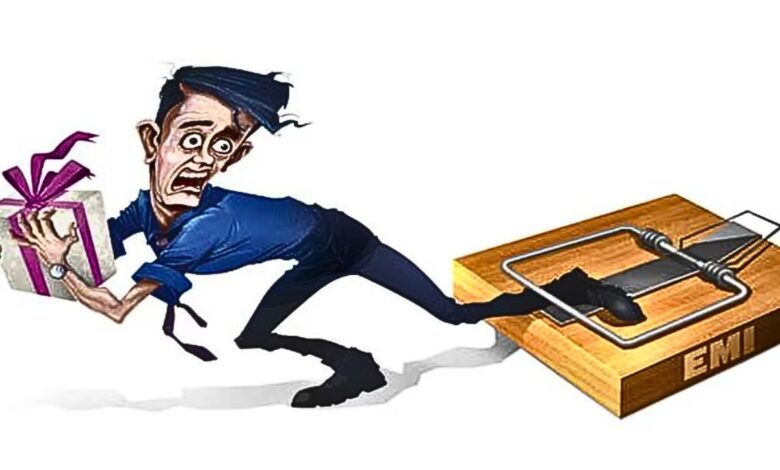
In the crowded streets of Indian cities, it is becoming increasingly common to spot young professionals with brand-new iPhones stepping out from small flats they barely pay for and into vehicles that consume half their monthly salary in installments. This is an odd fiscal situation for India’s modern middle class.
The tragic fact is that the majority of iPhones in India are purchased on EMI (Equated Monthly Installments) by the Indian middle class.
The majority of vehicles are driven home with five-year loans. Even houses, once synonymous with fiscal security, are now being mortgaged for three decades or more. What was once a temporary arrangement has become a permanent lifestyle, with EMIs becoming as ubiquitous as morning tea.
This is not merely a matter of people buying things—this is a struggle for identity in India’s 350-400 million middle class. This middle class, which was once touted as being responsible for India’s economic boom, now finds itself ensnared by its own decisions. As the old adage goes, “We buy things we don’t need, with money we don’t have, to impress people we don’t like.” Never has this adage been more true to the contemporary Indian middle class, where financial decisions are being made not out of comfort or necessity, but out of appearances in a status-driven society.
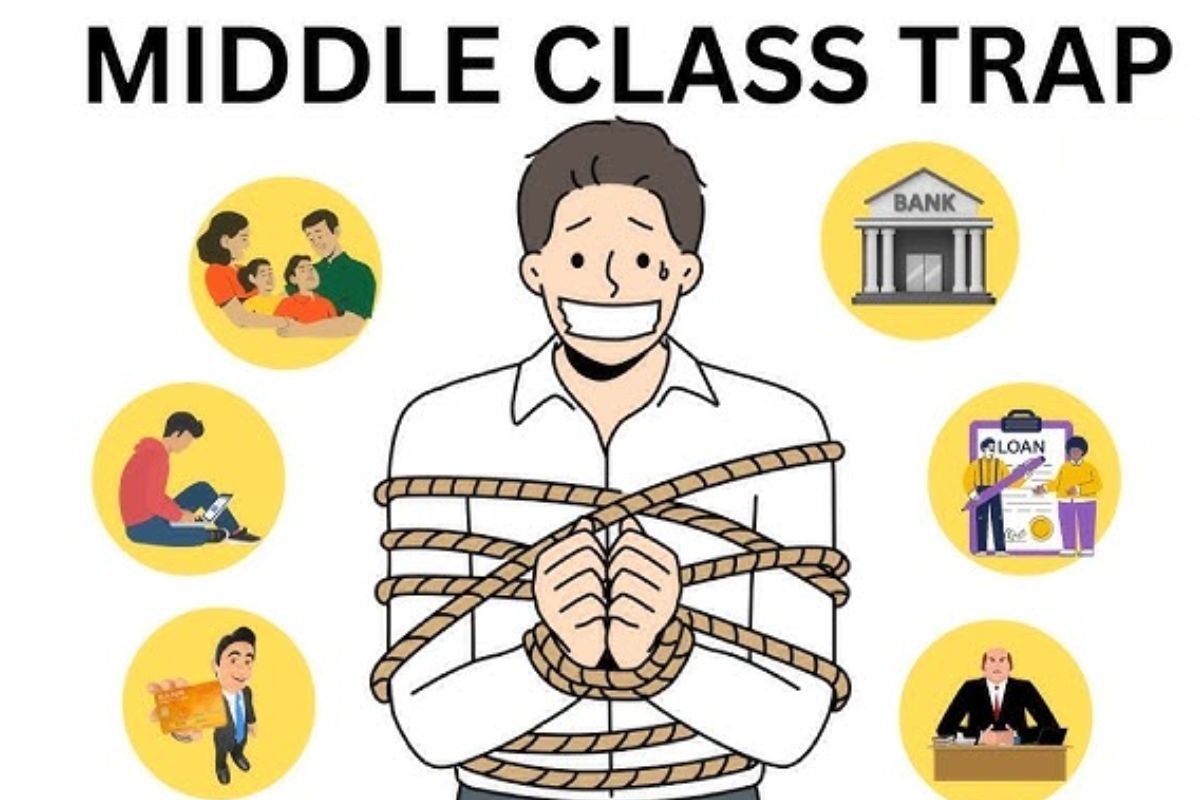
The contrast between how the rich and the middle class approach loans proves a fundamental lack of money knowledge. The rich use debt wisely—they take out loans to purchase items that will earn them more money, such as expanding their businesses, investing in real estate, or capitalizing on market opportunities. The middle class takes out loans to purchase items that lose value and experiences that don’t bring any financial rewards. An iPhone loses its value the moment you purchase it. A car loses 20-30% of its worth within the first year. And yet, people refer to such expenditures as “investments” or even “necessities” in our conversation.
Looking back at how we got here gives us some interesting ideas. The Indian middle class of the 1970s and 80s had a very different mindset about money. Our parents and grandparents followed the dictum of “save first, spend later.” The post-independence generation that helped make modern India understand the value of waiting to spend what they earned because they had lived through times of not having enough and valued financial security. They bought houses only after saving for decades. Cars were expensive items that they bought in cash after planning. Consumer loans were available but people were wary and felt ashamed to take advantage of them—being in debt was poor money management, not a lifestyle option.
The economic shifts in the 1990s altered everything. With foreign brands entering Indian shops and satellite television bringing global lifestyles into Indian living rooms, people’s aspirations altered a great deal. Meanwhile, the banking system also altered, making it simpler to obtain loans. The combination of increased aspirations and easy loans had a huge impact. By the early 2000s, EMIs became the norm, and by the 2010s, they were the norm to purchase things like washing machines and holidays.
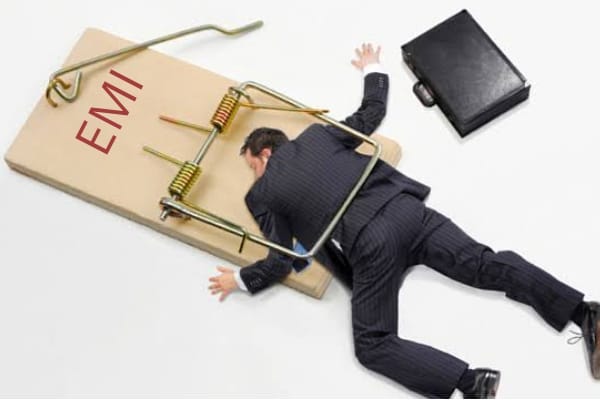
Today, the majority of middle-class people feel suffocated because of social media. They see what others post on Facebook and Instagram, and it affects the way they spend money. The need to keep up with the lives presented online forces the majority to make choices that hurt their finances. A Pune government official recently said, “I spend 70% of my salary on EMIs—housing loan, car loan, personal loan for my daughter’s wedding, and a recent iPhone purchase. Some months, after paying all installments, I have barely enough for groceries.” This is not one person’s story; it is a common situation.
What makes this situation so disturbing is that in contrast to our Western counterparts, the Indian middle class has other expenses that make this EMI-based existence even more precarious. Joint family commitments, healthcare costs in a country where there is hardly any insurance cover, school fees in a more competitive universe, and the cultural pressure to spend on costly weddings and other celebrations provide multiple points of pressure on middle-class finances. Add to this the lack of a robust social security system, and the gravity of financial mismanagement becomes all the more apparent.
The COVID-19 pandemic exposed how vulnerable this financial plan was. When the incomes of individuals were drastically cut or lost, many middle-class families suffered and could not afford to pay their EMIs. Banks witnessed a record level of defaults on loans, and many families were compelled to sell their savings and investments to keep up with their EMI payments. The pandemic should have been a wake-up call, but it is hard to change habits. When the economy opened up again, the habit of availing EMIs came back strongly, driven by the desire to spend after being restrained.
The new “Buy Now, Pay Later” (BNPL) phenomenon has further complicated this problem. The phenomenon has simplified borrowing money by enabling individuals to purchase goods in installments over time rather than traditional loans. Employees can now purchase designer apparel, new devices, and even food in installments without even being aware of the complete details of these accumulating debts. The click of the “Pay Later” button conceals the fact behind the accumulating financial burdens.
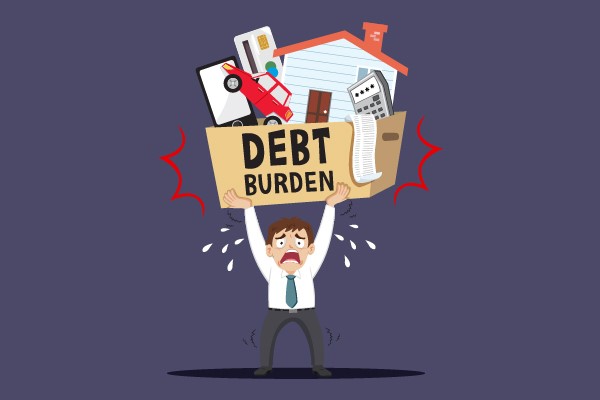
Financial literacy is extremely important here. Though India places a lot of stress on education, financial literacy is neglected. Very few middle-class Indians, including professionals, have a basic understanding of simple concepts like compound interest, inflation, asset allocation, or risk management. Surveys have shown that fewer than 30% of middle-class Indians save for retirement, and few people know how their EMIs impact their long-term finances. As the old Hindi proverb says, “Jab tak hai jaan, try karo LOAN”—a humorous but poignant observation on how common debt is in our society.
Most individuals fail to observe the general advice to save an emergency fund of 6-8 months’ expenditure. The majority of families spend every paycheck despite hard work and good earnings. The gap between what individuals earn and what individuals save has widened. With every rise in incomes, there also rises a rise in debts. For instance, a software programmer who earns fivefold more than his dad used to earn as a government servant may have less money worries due to his numerous loans and minimal savings.
This is not to say all loans are evil and that the middle class must eschew credit altogether. Strategically borrowing to acquire wealth-generating assets or genuine needs makes sense. A mortgage to build equity in a rising asset is sound if the terms are reasonable and the property judiciously chosen. School loans raising earning capacity can be seen as investments in human capital. But cell phone, vacation, or wedding reception loans are financial decisions that sacrifice long-term security for temporary indulgence.
What is truly worrying is the manner in which this trend continues from generation to generation. Children who watch their parents deal with many EMIs get used to this habit and replicate it in their own money lives. The cultural change from saving to spending, from waiting to have things immediately, indicates a core shift in the manner in which the Indian middle class thinks about money. As one money planner explained, “We’ve gone from a culture that prized ‘zero debt’ to one where being debt-free is considered either unambitious or impossible.”
The solutions are not simple or quick. They require individuals to alter their behavior and also more deep-seated shifts in culture. For individuals, middle-class Indians need to think differently about eating and status. The phrase “live within your means” must be applied in the terms of the day. Money education must be significant, beginning with simple education in schools and extending throughout life. Individuals must have a clear concept of the distinction between good debt (which builds wealth or increases income) and bad debt (which is wasted or loses value).
Culturally, we need new success stories that have nothing to do with spending and showing off. We need to relearn the advice of previous generations, who cared more about being financially secure and protected than about image. As correctly noted by Mahatma Gandhi, “The world has enough for everyone’s need, but not enough for everyone’s greed“—this is important for individual financial matters as well as for resource sharing across the world.
There is an interesting irony in the manner in which the Indian middle class, described as being frugal and cautious, has eagerly adopted a culture of wanting things immediately on credit. The same families who budget meticulously for their children’s education are not bothered to spend six months’ worth of salary on a wedding bash funded by personal loans. The disparity between these money decisions reflects the confusion and contradictions in the manner in which we handle money.
The path forward requires honesty and sometimes tough decisions. It involves being able to distinguish between wants and needs, between genuine requirements and things to flaunt. It involves being aware that freedom from money comes not from earning more but from desiring fewer things. Above all, it involves recognizing that the real richness of the middle class has always been its ethic of moderation, saving for the future, and prudent use of resources—ethics that are under threat in our consumption-oriented lifestyle funded by EMIs.
As we take major money decisions, middle-class choices today will determine whether they contribute to solid growth or will be tales of bad expenditure. The EMI trap exists, but one does not need to fall into it. If only they use sense, understand money, and revisit the earlier good old ways of living within one’s means, the Indian middle class can find the same kind of money independence and security once again. And as yet another Indian proverb advises, “Debt is like a drop of honey—sweet at first, bitter in the stomach.” Perhaps it’s high time we followed the word of these age-old proverbs.