Terror In Pahalgam, Trade Wars, And A Global Power Game. Was This Attack Just The Beginning? Who’s Funding The Fire This Time And What Will Be India’s Response?


On April 22, 2025, a brutal terror attack in Pahalgam, Jammu & Kashmir, left 27–28 civilians dead and at least 15–20 injured. As more facts emerge, it’s becoming increasingly difficult to separate the local tragedy from the broader geopolitical canvas. This wasn’t an isolated incident, it was a calculated move, one that demands a deeper examination of timing, players, and underlying motives.
A Targeted Attack, And the Uncomfortable Truth About Identity
It’s important to confront the facts without political correctness clouding the lens. The attackers, believed to be Islamic militants with roots in Pakistan and local support networks, specifically targeted Hindu civilians. This is not speculation; it is recorded and verifiable in the public domain. While some continue to propagate the opinion that “terrorism has no religion,” the deliberate targeting of a specific community tells a different story.
Timing Matters, Who Was in India on April 22?
To understand the significance of the timing, one needs to acknowledge that U.S. Vice President J.D. Vance was visiting India from April 21 to April 24 – precisely when the attack occurred.
The reason for his visit included consideration like strengthening Indo-U.S. bilateral trade ties amid escalating tensions between the United States and China. Could this terror strike have been engineered to send a message? Perhaps not just to India, but also to the visiting American leadership?
The U.S.-China Trade War.
China is currently locked in a high-stakes trade war with the United States. In one of the most aggressive moves yet, the U.S. recently slapped a staggering 245% tariff on Chinese goods. That’s not just economic pressure, it’s a direct chokehold on China’s export-reliant economy. Suddenly, Beijing is making overtures to New Delhi, talking about opening its markets to premium Indian goods. But seasoned observers know the truth – China is an exporter, not an importer.
Hence, in all likelihood, these statements are not goodwill gestures; they’re strategic smokescreens.
What China fears most is India rising as a strong economic alternative to itself – especially with the U.S. now actively decoupling from Beijing and shifting its supply chains to more stable, democratic economies. Apple, Google, Amazon, and several other U.S. giants have already begun relocating operations to India. And if that momentum continues, China’s grip on global trade will weaken further.

Pakistan’s Desperation, China’s Pressure, and the Indo-Pacific Game
Here is the uncomfortable truth – whenever a senior U.S. official visits India without stepping foot in Pakistan – especially for economic or strategic cooperation – it sends alarm bells ringing in Islamabad and Beijing. Pakistan, now virtually irrelevant in the U.S.’s Indo-Pacific plans, finds itself desperate for relevance. And China? It can’t afford to let India cement its role as a key U.S. ally in the region.
From punitive U.S. tariffs on Southeast Asian nations accused of rerouting Chinese goods, to China’s frantic diplomatic overtures in ASEAN, the pressure is real. Chinese goods are being blocked, consumption inside China is stagnating, and stockpiles are growing. Xi Jinping may not show it, but the internal strain is visible.
So – Was the Pahalgam Attack a Message?
All this brings us to the questions – was this terror attack in Pahalgam a standalone event, or was it orchestrated to destabilize India at a time when it’s fast becoming a global strategic player? Was it meant to remind the world and especially Washington – that instability in Kashmir is still a pressure point?
These are not conspiracy theories. They are questions grounded in timing, context, and motive.
Why India Must Read Between the Lines
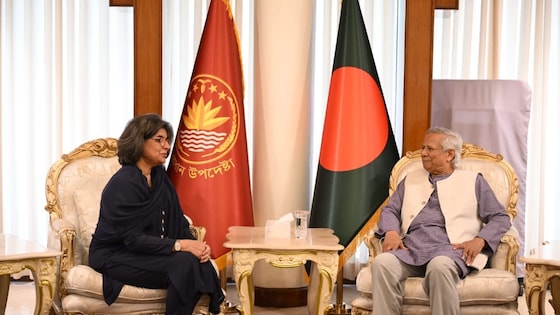
Now, shift focus eastward- to Bangladesh. In recent years, there’s been a noticeable tilt in Dhaka’s diplomatic and economic posturing toward Beijing. Chinese investors are already making inroads, acquiring factories, participating in infrastructure upgrades, and modernizing Mongla Port, which lies uncomfortably close to the strategic “Chicken’s Neck” or the Siliguri Corridor – India’s narrow land link to its northeastern states.
What should concern Indian policymakers is that this increased Chinese footprint in Bangladesh is not happening in isolation. Parallel to this, New Delhi has responded by reinforcing military readiness along this very corridor. The deployment of the S-400 air defense system and Rafale squadrons in the region is not coincidental. India clearly anticipates threats from this axis, understanding well that this corridor, if compromised, can fracture India’s territorial integrity.
Further west, China continues deepening its military cooperation with Pakistan – reportedly even planning to launch Pakistani astronauts into space. Symbolic, perhaps. Strategic, definitely. This level of defense coordination is not just about optics; it reinforces an entrenched China-Pakistan nexus.
Put together, these moves indicate a textbook case of strategic encirclement, a geopolitical maneuver aimed at boxing India in from all sides. To the north, border tensions persist in Ladakh and Arunachal Pradesh. To the west, there’s Pakistan. To the east, a more China-aligned Bangladesh. And in the southern waters of the Indian Ocean, China’s expanding maritime presence looms large.
But what’s the endgame?
Not necessarily war – but disruption. Delay. Diversion. China’s goals may be to stretch India’s military bandwidth, to impede its strategic rise, and to complicate its ambitions of becoming the next manufacturing and supply chain hub in a post-China world.
Visiting the global trade front again – with the U.S. slapping punitive tariffs – 245%, no less – on Chinese goods, China is under serious pressure. America was China’s largest consumer, and now that tap is drying up. Some manufacturing has returned to the U.S., but much of it is rerouting to India.

Enter Pakistan’s Army Chief and the Poison of Religious Rhetoric
In this context, one cannot ignore the chilling remarks made on April 7th by Pakistan’s Army Chief, General Asim Munir. In a public address, he urged Pakistanis to educate their children about the “difference between Hindus and Muslims” and reminded them of Pakistan’s foundational ideology of 1947.
Was this mere ideological posturing? Or was it a psychological operation designed to rekindle dormant militancy?
When such rhetoric is followed weeks later by a brutal attack in Pahalgam – where innocent Hindu civilians were allegedly the prime targets – it becomes hard to view the terror strike as isolated. It becomes a calculated act of provocation. And if this was orchestrated with state support, it raises serious alarms.
Why Now? Strategic Silence Broken – What Changed?
Pakistan had been largely quiet in Kashmir for some time. Why break the silence now?
Let’s break down potential motives through a process of elimination and deduction:
Disrupting Elections?
There are no national or regional elections underway in India or Jammu & Kashmir. So electoral disruption seems unlikely to be the primary goal.
Internal Pressure on Pakistani Army?
The military is indeed under internal criticism post-Imran Khan. But would provoking India – a stronger military and economic power – be a logical outlet for that pressure? Unlikely, unless there’s an external power bankrolling the risk.
This brings us to the most plausible explanation.
Geopolitical Signaling
As India gains traction globally – strengthening ties with the U.S., Israel, and key Gulf nations – Pakistan and its strategic partner China may view this ascent as a direct threat. An attack like the one in Pahalgam may be meant as a warning shot: a reminder to global investors that India is not yet the safe haven it’s projected to be.
Is this also why we saw no immediate claim of responsibility? A strike to send a message, without revealing the messenger?

Sleeper Cell Activation After Long Dormancy
Pahalgam is not just another location -it’s a key hub in Kashmir’s tourism and pilgrimage circuit. Targeting it is an attack on India’s soft power and domestic psyche. While the damage is tragic, the symbolism is even more piercing: if terror can strike here, it can strike anywhere.
One can reasonably infer that local collaboration may have played a role – how else would attackers know the timing and location of specific tour groups? It warrants urgent investigation into whether insiders, possibly tour guides or hotel staff, tipped off the attackers.
Proxy War via Non-State Actors
And this brings us to the next layer – the long-standing use of non-state actors to wage asymmetric warfare. Pakistan’s playbook of plausible deniability is well-documented. But in 2025, are we seeing a reactivation of this proxy network, perhaps under Chinese encouragement, to stall India’s geopolitical rise?
Now let’s talk about the most predictable part of this entire episode: Pakistan’s denial.
As expected, Pakistan quickly washed its hands of any involvement. Their government, as always, claims the attackers were “independent militants” – as if that line still fools anyone.
But here’s the thing, this is a strategic ambiguity. By not officially taking responsibility, Pakistan avoids triggering a full-scale war, while still allowing proxy groups to do their dirty work.
The Pakistani Defence Minister came out and flatly rejected India’s claims. No surprises there. But India didn’t wait for confirmation or an apology. The Indian government has already responded by suspending the Indus Waters Treaty arrangements – a bold step. India has also restricted the flow of Indus river water into Pakistan, which could potentially squeeze their already crumbling economy.
But here’s where the trap lies.
Pakistan knew this was coming. And they were prepared with a ready-made response, if India diverts Indus waters, they’ll label it an “act of war.” Imagine that. You send terrorists into another country, kill civilians, and then when that country pushes back using formal diplomatic levers, you cry victim.
It allows Pakistan to keep tensions simmering, never boiling over. And at the same time, they get to walk into global forums and say, “India’s the aggressor,” while continuing to fund and harbor terror networks.
Why hasn’t India directly struck back at Pakistan’s military or terror infrastructure yet?
Because that’s not a decision taken emotionally. It’s calculated, diplomatically, strategically, and militarily. A direct strike could escalate things to an all-out war. But more importantly, it forces us to ask – Is Pakistan even in a condition to go to war?
Let’s be brutally honest – Pakistan’s economy is in tatters. They don’t have the money to run their own country, let alone fight a war. So why would they take such a big risk?
Because someone is funding them.
And who could that be?
Only two players fit that bill –
China, who sees Pakistan as a convenient pawn in its broader Indo-Pacific game.
The United States, which has historically supported the Pakistani military for strategic access and regional leverage.
Now, with America clamping down on China, and India rising as a manufacturing alternative, China is nervous. Very nervous. And the timing of all this from Mongla Port modernization to coordinated propaganda in Pakistan points to something deeper.
What we’re seeing is a geo-strategic predator game, where Pakistan is the tool, but China is the puppeteer.
And what began as a cowardly attack on Indian tourists in Pahalgam has the potential to snowball into something bigger.
The terrorists didn’t target soldiers this time, they targeted innocent families, kids, honeymooners. The visuals were heart-wrenching. And as the nation mourns, that pain is slowly turning into rage.
How will India respond?
So far, the response has been two-fold:
1. Military Readiness
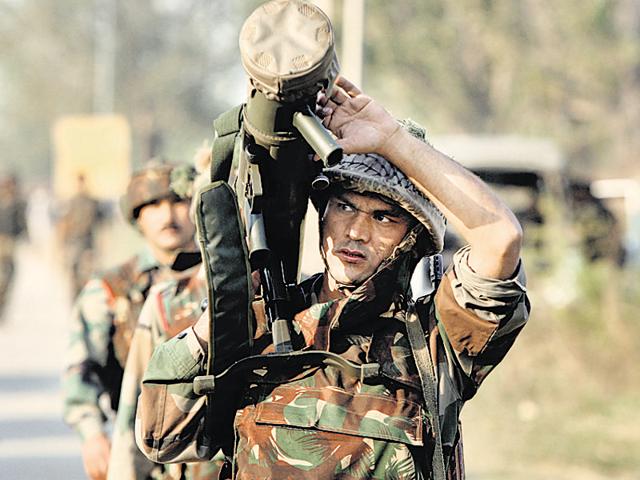
Search and Destroy: Special forces are on aggressive anti-terror operations across J&K. Every known hideout is being flushed. Terrorists are being hunted down, not just chased.
Naval Muscle: The recent interceptor missile test from INS Surat sends a crystal-clear message — India is ready from land, air, and sea.
Strike on the Table: Analysts like Gen. GD Bakshi have hinted at a limited missile strike on terror camps in PoK. If it happens, it won’t be a surprise — it’ll be payback.
2. Diplomatic Offensive
United Political Front: Rajnath Singh convened a rare all-party meeting on national security.
Global Briefings: India’s foreign secretary is personally updating G20 nations – including friends and rivals – about Pakistan’s role.
Modi’s Message — Loud & Global: From Bihar, PM Modi addressed the world in English:
“India will identify, track, and punish every terrorist and their backers. We will pursue them to the ends of the earth.”
When Modi speaks in English, it’s for international ears. He’s not just reassuring Indians. He’s warning the global community, no more blind eyes. Countries can no longer ignore how Pakistan shelters and breeds terrorists.
Now, suspending the Indus Waters Treaty is more to than just water, it’s about hitting Pakistan where it hurts the most – its struggling agriculture, its fragile economy, and its crumbling public morale.
Surgical Strikes 2.0 — Targeted, Precise, Deep
India has done this before. After the 2016 Uri attack, our Special Forces crossed the LoC and took out terror launchpads in PoK. That wasn’t just retaliation – it was a message.
This time, it could be bigger.
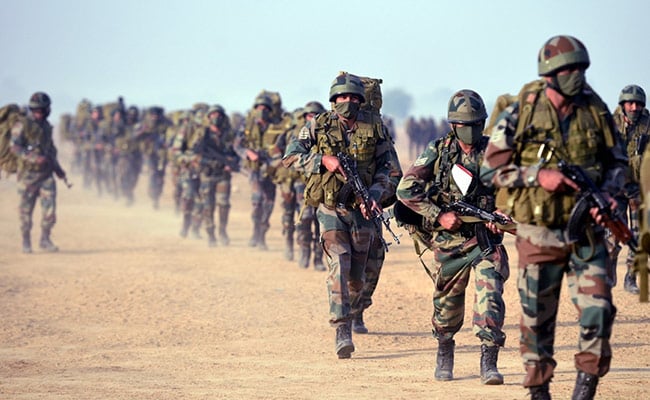
Defense intel suggests launchpads in Lipa and Neelum Valleys have been reactivated. A second wave of cross-border precision strikes by Para SF and MARCOS units could dismantle them, and more importantly, destroy the myth of ISI control.
A successful hit would crush the morale of terror backers sitting comfortably in Rawalpindi.
Balakot-Style Air Strikes — Strategic and Symbolic
Remember 2019 Pulwama? India flew jets across the LoC and bombed a terror camp in Balakot. The world took notice.
Today, with intelligence flagging new camps near Muzaffarabad and Chakothi, a repeat airstrike using Sukhois, Mirages or even LCA Tejas could be on the cards.
It would hit the enemy where it hurts, and show that Pakistan’s so-called “nuclear shield” won’t protect terror havens.
Support Internal Dissent — Baloch, Sindhi, Pashtun Movements
Let’s flip the script.
Balochistan has been simmering for years. The Balochistan Liberation Army (BLA) has launched over 1,000 attacks on Pakistan’s army. Then there’s the Sindhi resistance and the increasingly loud Pashtun Tahafuz Movement (PTM).
India could offer covert support – not officially, but strategically – through intelligence, international advocacy, or moral backing.
It would stretch Pakistan’s forces internally and send a clear signal: You destabilize us, we’ll turn up the heat inside your own borders.
Operation to Retake PoK — The Boldest Move
It’s been said for decades – PoK is India’s.
India’s map shows it. Parliament passed a resolution on it in 1994. Modi and Shah have echoed it multiple times.
Now, with infrastructure upgrades in J&K and increased military presence in Leh and Ambala, some believe India might finally take real steps to reclaim parts of PoK – targeting terror hubs like Mirpur and Muzaffarabad.
Yes, it would be historic. And yes, it would invite global attention. But if done with precision and backed by ironclad diplomacy, it could reset the Kashmir story entirely.
Naval Blockade — Strategic Chokehold in the Arabian Sea
Here’s the soft-kill option with a big impact.
Over 90% of Pakistan’s trade goes through the Arabian Sea. A partial naval blockade – like India did in 1971 – would paralyze Pakistan’s supply chain.
With warships, submarines, and INS Vikrant patrolling the Western seas, India holds the cards here.
No direct shots fired, but maximum pressure applied. Economically, it’s a slow strangle.

The Last Bit
Indians are fed up.
No more “condemn and move on.” People want real action. Action that creates fear. Action that ends this vicious cycle of terror.
This isn’t just about Pahalgam anymore, it is a defining moment – to reshape India’s national security posture, to assert its red lines, and to show both terrorists and their backers that India will not be passive anymore.
As Prime Minister Modi declared: “Those who orchestrate terror will not escape.”
So whether it’s a stealth raid, a missile strike, a diplomatic freeze, or a strategic blockade – India is preparing to act. And this time, it won’t just be symbolic.