Elon Musk Chainsaws His Way Out Of Trump’s Washington. Why The World’s Richest Man Just Ghosted The Trump Team

When Elon Musk signed on as a “special government employee” in the early days of the Trump administration, few knew what to expect. Musk, known for shooting cars into space and tweeting stock prices into oblivion, wasn’t exactly a natural fit for the buttoned-up corridors of Washington D.C.
But for a brief, chaotic period in 2025, he stepped into the belly of the beast, trying to transform it from within and wound up proving just how allergic Silicon Valley’s crown prince was to D.C.’s dysfunction.
The Appointment, Elon Musk Joins the Trump Administration
Elon Musk, a serial entrepreneur, space visionary, and disruption’s most outspoken prophet, stepped into the most unexpected role of his career: a special government employee under President Donald Trump. This was not a full-time position but rather a temporary appointment that placed him on the President’s Strategic and Policy Forum and the Manufacturing Jobs Initiative.
The Trump White House, eager to brand itself as a pro-business regime, saw Musk as a trophy recruit, someone who could lend credibility with the innovation economy while symbolizing a break from status quo governance. For Musk, it was an opportunity to shake up a system he often accused of being bloated, antiquated, and allergic to progress.
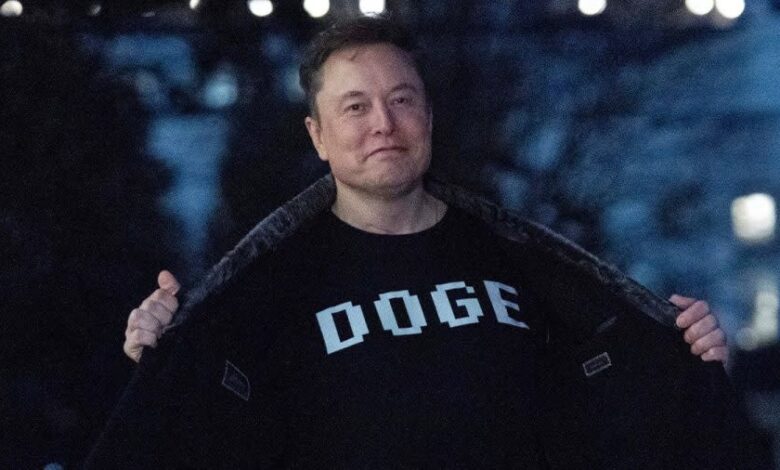
He was brought on to lead a quirky new initiative dubbed the Department of Government Efficiency (DOGE), a title Musk himself reportedly coined, riffing on the meme cryptocurrency he helped popularize. Though unofficial and symbolic, DOGE had real goals: audit federal agencies, reduce wasteful spending, and introduce innovative, tech-driven solutions. But the marriage between Musk’s velocity-driven ideology and Washington’s glacier-paced machinery was doomed from the start.
His acceptance of the role sparked immediate controversy. Critics accused Musk of cozying up to a president known for climate denial and protectionist policies, values diametrically opposed to Musk’s pro-sustainability and globalist ethos. But Musk defended the decision, arguing that “engagement on critical issues, even with people you disagree with, is essential to effect change.”
2. Musk’s Swift Criticism of Trump’s “Big Beautiful” Spending Bill
If Trump expected loyalty, Musk delivered the opposite. Within months, Musk publicly slammed the administration’s $1.2 trillion federal spending bill, mockingly dubbed by Trump as the “big, beautiful budget.” Musk saw it as a catastrophic endorsement of inefficiency, an unfiltered letter to lobbyists and special interests.
He was especially incensed by what he perceived as a failure to invest in future-oriented technologies – AI, renewable energy, modern infrastructure – while bloating defense budgets and propping up legacy programs with minimal ROI. In a tweetstorm that captured national headlines, Musk compared the bill to “slathering duct tape on a crumbling dam” and claimed it “rewards failure and punishes innovation.”
Behind the scenes, reports emerged that Musk confronted top administration officials during closed-door meetings, challenging them on why billions were being spent without data-driven accountability. His private frustration soon spilled over into the public domain, fueling the first serious rift between Musk and the Trump administration.
3. Leading DOGE: The Department of Government Efficiency—Musk Style
To solve what he saw as a systemic disease, Musk spearheaded the Department of Government Efficiency (DOGE), a temporary task force born from Trump’s executive order to “modernize and streamline the executive branch.”
The name was no accident; Musk reportedly quipped it was a nod to the Dogecoin cryptocurrency, a jab at both bureaucratic absurdity and meme culture colliding in Washington.
DOGE’s mission was ambitious, bordering on utopian: eliminate waste, digitize processes, and apply Silicon Valley-style agility to federal systems that still relied on fax machines and floppy disks.
Musk proposed a radical agenda:
—Automating repetitive processes in federal agencies using AI-based workflow systems.
—Consolidating overlapping agencies, such as merging departments with duplicated regulatory oversight.
—Introducing blockchain-powered transparency tools to track public spending in real time.
—Overhauling the procurement system, which Musk described as “Kafkaesque” and “designed for inertia.”
Initial reports indicated some early wins, digital audits unearthed millions in redundant IT contracts, and pilot projects in the Department of Veterans Affairs shaved weeks off application processing times. But larger systemic reforms hit a wall.
As one anonymous official told The Washington Post, “Musk expected change at the speed of SpaceX. We operate at the speed of congressional calendars.”
Even before his resignation, Musk’s style ruffled feathers in the Trump Cabinet. Treasury officials bristled at his calls for crypto-powered tax collection. Energy Secretary Rick Perry reportedly viewed Musk’s criticism of fossil subsidies as “hostile and grandstanding.” Meetings with the Department of Transportation reportedly devolved into tense confrontations, with Musk accusing officials of “20th-century thinking.”
Musk’s uncompromising tone, executive impatience, and disdain for “government speak” made him a polarizing figure. White House aides, according to leaked memos, referred to him as “the Martian”, a term both mocking and begrudgingly admiring.
In one particularly fiery exchange, Musk is said to have told a group of cabinet deputies:
“If you ran a startup this way, you’d be bankrupt in a week.”

More On DOGE’s Mission
When Elon Musk took on the role of heading the Department of Government Efficiency (DOGE), it marked one of the most audacious shake-ups in modern U.S. governance. Designed as a flagship initiative under Donald Trump’s second term, DOGE was tasked with slashing waste, dismantling inefficiencies, and rooting out bureaucratic excesses across the federal system. But Musk’s vision for a leaner, faster, tech-savvy federal government collided head-on with political reality and the scars are visible across his business empire, the halls of Capitol Hill, and even international markets.
The Beginning: A Vision With Teeth
DOGE was born out of a shared ideology between Trump and Musk, an anti-establishment zeal and a promise to drain the swamp in D.C. Musk’s appointment came with much fanfare, bolstered by his cult-like tech following and his open admiration for Trump.
“The more I’ve gotten to know President Trump, the more I like the guy. Frankly, I love him,” Musk once declared. Trump returned the flattery, hailing Musk as “a truly great American.”
The mission was ambitious: cut $2 trillion in federal spending over a few years, eliminate redundancies, and make government run like a start-up. Within weeks, DOGE announced high-profile moves, shutting down USAID offices, slashing foreign aid, and proposing mass layoffs across federal departments. Around 260,000 federal civilian jobs were either terminated or vacated through voluntary exit packages.
But as the bold headlines faded, the reality set in.
In interviews Musk confessed the undertaking was far tougher than anticipated.
“The federal bureaucracy situation is much worse than I realized,” he admitted. “It’s an uphill battle trying to improve things in D.C., to say the least.”
Many of DOGE’s cost-cutting efforts ran aground. Federal judges blocked the termination of thousands of employees, citing procedural violations and wrongful dismissals. One particularly alarming incident involved erroneous cuts to departments tied to U.S. nuclear programs, prompting widespread outrage and even bipartisan criticism.
Musk, increasingly frustrated, accused critics of scapegoating DOGE.
“DOGE is just becoming the whipping boy for everything,” he said. “Something bad would happen anywhere, and we would get blamed for it even if we had nothing to do with it.”

Tesla Tanks, Boycotts Surge
Back in the private sector, Tesla began showing deep cracks. By April 2025, the electric carmaker reported a staggering 71% drop in quarterly profits. Sales had plummeted 13% in early 2025 alone, and the stock lost nearly half its value before a slight recovery.
Meanwhile, the government’s “Big Beautiful Bill”(a cornerstone of Trump’s economic reform) scrapped the $7,500 EV tax credit and introduced a new $250 annual fee for electric vehicle owners. These measures directly hit Tesla’s bottom line.
Musk, who once argued for the removal of subsidies, now faced the wrath of both markets and his consumer base. Protests erupted, charging stations were vandalized, and activists launched coordinated boycotts. Even the U.S. Attorney General had to label such acts as “domestic terrorism” due to their scale.
Adding to Tesla’s woes, Musk’s political alignment appeared tone-deaf. As marketing professor Scott Galloway put it bluntly on the Pivot podcast:
“He’s alienated the wrong people. Three-quarters of Republicans would never consider buying an EV. So he’s cozied up to the people who aren’t interested in EVs.”
Galloway noted Tesla’s brand reputation fell from 8th to 95th between 2021 and 2025, with European sales down by over 50% for four consecutive months.
Global Repercussions and a European Fallout
Musk’s controversial political posts on X (formerly Twitter), especially regarding German elections and UK social issues, did not go unnoticed in key EV markets. According to reports, Tesla sales nosedived: down 59% in France, 81% in Sweden, 74% in the Netherlands, and nearly wiped out in other EU nations. Chinese rival BYD outsold Tesla in Europe for the first time in April 2025, signaling a clear shift.
The Exit: “I Think I’ve Done Enough”
On a stormy Wednesday night, the White House formally initiated Musk’s removal. The news broke, confirming what many had already suspected – his days in Washington were over. Musk publicly declared he would now focus solely on his companies and “scale back” political donations after pouring nearly $300 million into Republican campaigns in 2024.
Trump offered a tepid endorsement from the Oval Office: “I’m not happy about certain aspects of [the bill], but I’m thrilled by others.” House Speaker Mike Johnson praised DOGE’s intent but warned against further amendments to the bill, calling it “a very delicate balance.”
Meanwhile, the White House proposed new budget rescissions, including eliminating $1.1 billion in public broadcasting and $8.3 billion in foreign aid – moves some see as carrying DOGE’s ideological torch forward, even as its architect retreats.

A Return to Mars and Rockets
Within days of his exit, Musk was back where he belongs – at SpaceX’s Starbase in Texas. Dressed in an “Occupy Mars” T-shirt, he resumed preparations for the next Starship test flight, now clearly reinvested in his dream of interplanetary colonization.
“I’m physically here. This is the focus,” he told journalists. “If we’re not ultra hardcore, how are we going to get to Mars?”
Despite the setback in Washington, Musk insisted he hadn’t abandoned DOGE entirely. The next phase, he said, would focus on upgrading government computer systems and eliminating outdated infrastructure. “There are departments where they literally print out data and manually re-enter it into another computer,” he said, shaking his head in disbelief.
Reflection: A Government Too Big to Hack?
In the final analysis, Elon Musk’s stint in government was as disruptive as it was divisive. He promised to make government run like a start-up. What he found instead was that politics, unlike rockets, doesn’t always respond to engineering. The entrenched nature of D.C. power structures, coupled with legal landmines and political egos, ultimately outmaneuvered even the most determined tech titan.
His departure leaves a trail of questions: Did DOGE lay the groundwork for long-term reform or simply serve as a cautionary tale of Silicon Valley arrogance? Either way, Musk is back in his natural element—building rockets, chasing Mars, and, for now, steering clear of the Beltway.
The Last Bit, A Martian Among Mortals
Elon Musk’s foray into government reform was brief, chaotic, and in many ways doomed from the start. His was a vision of agility, data, and zero tolerance for bureaucratic inertia – qualities that made him a revolutionary in business but an alien in politics.
He came to drain the swamp, brought a flamethrower, and left before the alligators noticed. And in the end, perhaps that’s the biggest lesson – even the world’s richest disruptor couldn’t hack the OS of Washington.