From Silicon Glory To Senate Scrutiny; How Nvidia’s $4 Trillion Moment Comes With A Side Of Geopolitics Even As Huang’s Fortune Now Rivals Buffett
As Steve Jobs once said, “Innovation distinguishes between a leader and a follower.” So, as Nvidia wears its $4 trillion crown and Huang joins the elite club of the world’s richest individuals, the celebration comes with caveats - regulators are circling, lawmakers are pressuring, and rivals are catching up.

Yes, Nvidia took nearly three decades to become a $1 trillion company but then it did the unthinkable, it quadrupled that valuation in just two years. In one of the most staggering wealth creation stories in Wall Street’s history, Nvidia on Thursday officially became the first public company ever to touch a $4 trillion market capitalization, leaving behind even the most legendary names in tech (Apple, Microsoft, and Amazon) in terms of growth velocity.
The chipmaking behemoth’s stock ended the day trading just above $164 per share, catapulting its market value into the history books. And in doing so, Nvidia not only crossed a financial milestone it stamped its authority as the face of the artificial intelligence revolution.
A Trillion-Dollar Sprint Fueled by AI Dreams
Without a doubt, what Nvidia has accomplished is nothing short of a modern financial phenomenon. Its rise from $1 trillion to $4 trillion in under 24 months is a case study in how market, investor sentiment, and technological shifts can converge into a supercharged growth story.
Wall Street believes AI is the new electricity, and Nvidia is its most critical utility. The boom in AI has already helped chipmaker Broadcom break the $1 trillion barrier. Meanwhile, Amazon and Alphabet have surged beyond $2 trillion, and Apple and Microsoft danced around the $3 trillion club.
But Nvidia, it leapfrogged the rest. And how did it get here – two words: Jensen Huang.
Betting Big Before the World Noticed
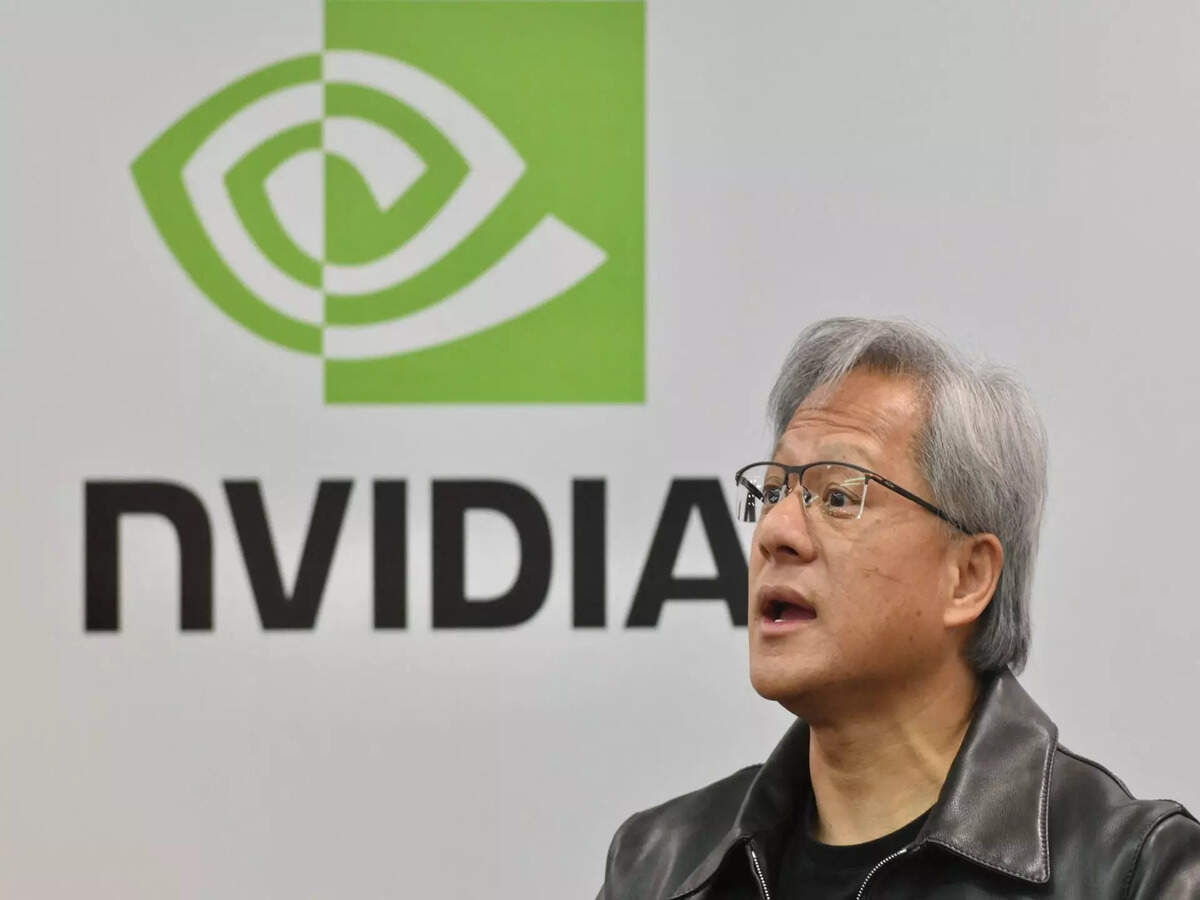
Over a decade ago, Nvidia’s CEO and co-founder Jensen Huang made a bold bet. He believed that graphics processing units (GPUs) (originally built for gaming) would become the lifeblood of artificial intelligence systems. Hence essentially he was laying down the plumbing for a future tech economy and not merely making chips.
That gamble paid off in 2022 when OpenAI’s ChatGPT kicked off the AI arms race. Almost overnight, every tech giant scrambled to build faster, smarter AI products and they all wanted Nvidia’s GPUs to do it.
Suddenly, Huang became the godfather of AI infrastructure and not just a chip executive with tech titans literally lining up and throwing money at him.
Just ask Larry Ellison, Oracle’s co-founder, who recently recalled a dinner in Palo Alto with Elon Musk where both billionaires begged Huang to supply more chips. “Please take our money,” Ellison reportedly said. “We need you to take more of our money.”
Demand Explosion and Profit Windfalls
The AI boom is more than just speculative talk, it is backed by unprecedented capital deployment.
Companies like Meta, Amazon, Microsoft, and Google are expected to spend a combined $320 billion this year on infrastructure, much of it going toward AI compute power and Nvidia is at the center of that gravitational pull.
That’s translated into eye-popping financials. Nvidia’s net income skyrocketed from $4.4 billion in FY 2023 to a projected $73.88 billion in FY 2025. Its market cap, once at a modest $330 billion in 2022, zoomed past $3 trillion last fall before smashing the $4 trillion ceiling this week.
With this incredible growth, Jensen Huang’s personal net worth has gone through the stratosphere. Thanks to his 3.5% stake in Nvidia, Huang now sits on a fortune exceeding $143 billion, putting him neck-and-neck with Warren Buffett himself.
He’s been steadily offloading some of his shares recently selling $36.4 million worth as part of a pre-planned schedule but still retains more than 858 million shares through various trusts and holdings.
At just 62, Huang is not only one of the richest men alive but also a celebrity tech visionary, with more than 15,000 fans showing up at a recent AI event in San Jose just to hear him speak about the future.
Storm Clouds – Competition, Caution, and Washington’s Watch
But Nvidia’s dream run isn’t without its shadows; as Nvidia soars, Washington is watching, and closely!
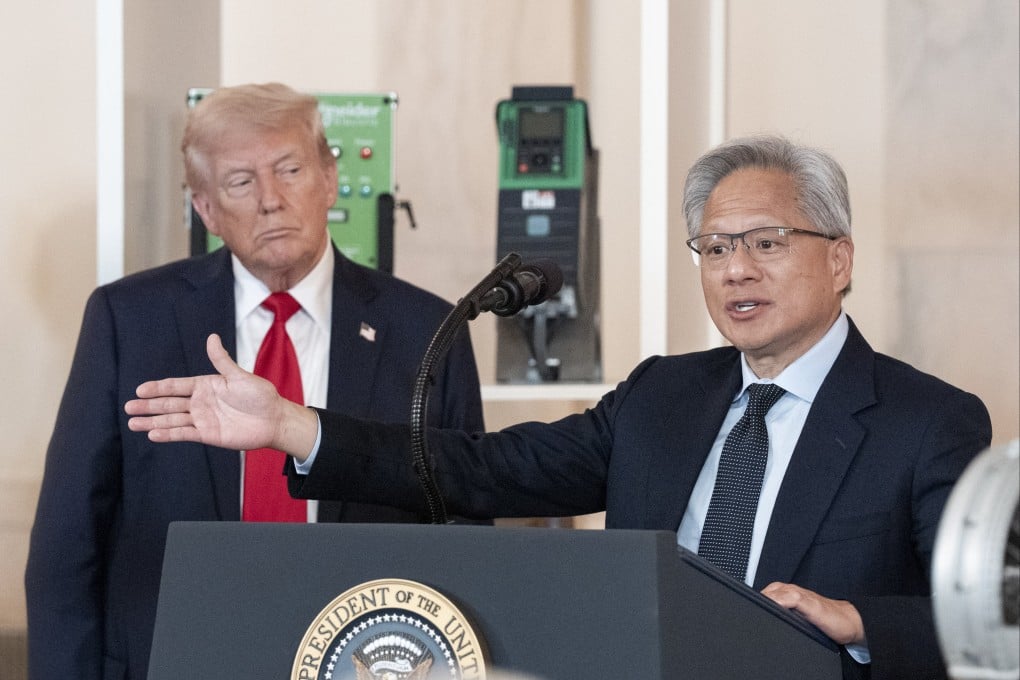
In fact, U.S. Senators Elizabeth Warren and Jim Banks in a strongly worded letter, urged Huang to avoid engaging with any Chinese firms suspected of undermining U.S. chip export controls, or those connected to the People’s Liberation Army or intelligence apparatus. The letter specifically asked Huang to steer clear of entities on the U.S. government’s restricted export list.
“We are worried that your trip to the PRC could legitimize companies that cooperate closely with the Chinese military,” the senators wrote, adding concerns about any discussions that could expose loopholes in U.S. export controls.
An Nvidia spokesperson responded by defending its global strategy, saying “America wins” when U.S. technology becomes the global standard and that AI software should “run best on the U.S. tech stack,” incentivizing other countries to choose American systems.
Huang has long walked a diplomatic tightrope. At the Computex trade show in Taipei earlier this year, he openly applauded President Donald Trump’s rollback of some AI chip export restrictions, calling previous control regimes a failure. But that hasn’t shielded Nvidia from the bipartisan pressure cooker building in Washington.
In April, the administration imposed fresh restrictions on Nvidia’s modified AI chips intended for China. Huang warned that the move could slash Nvidia’s revenue by $15 billion, a serious dent even for a company this large. Meanwhile, new legislative proposals in Congress could force companies like Nvidia to verify exactly where their AI chips end up, closing off any indirect sales through shell firms or intermediaries.
Recent intel suggests those fears may be justified. A senior U.S. official recently revealed that Chinese AI firm DeepSeek reportedly linked to China’s military intelligence operations tried to evade chip sanctions using front companies. Nvidia’s new Shanghai research center, along with rumors of a cheaper Blackwell chip variant tailored for China, only add fuel to the fire.
Hence, in the age of AI, selling chips is more than pure business its about national security too!
Meanwhile, rivals like AMD are making inroads, and Big Tech players, Microsoft, Meta, Alphabet, and Amazon are all developing their own in-house AI chips to reduce dependency on Nvidia.
A 20-Year Era?
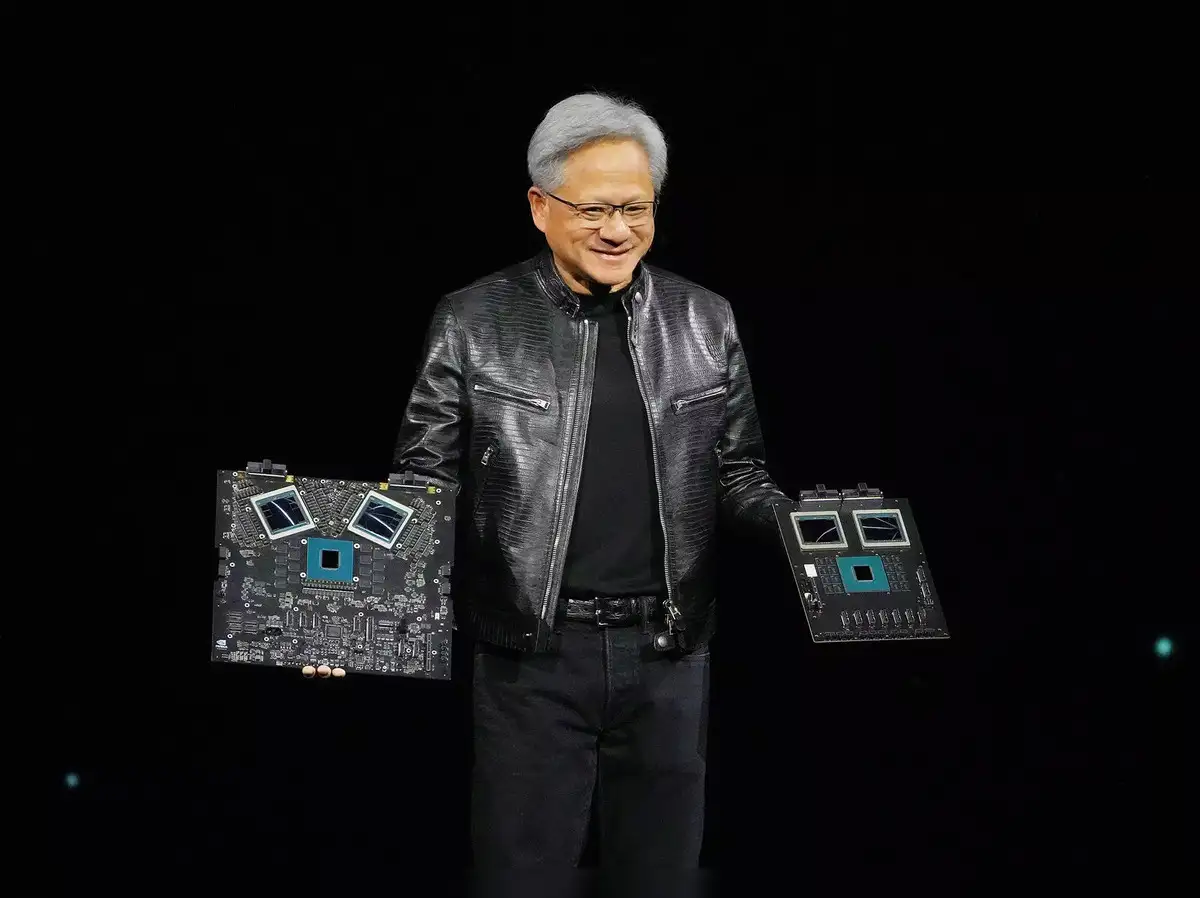
Despite the challenges, many analysts believe Nvidia has already won this phase of the AI game. Evercore ISI’s Mark Lipacis put it plainly: “Nvidia is to AI what Apple was to smartphones.”
He believes Nvidia could eventually make up 16% of the entire S&P 500, which would be more than double Apple at its peak. If history is any guide, as Lipacis notes, such transformative tech eras usually last about 20 years.
And in this AI revolution, Nvidia has emerged as both architect and gatekeeper.
Mirroring Buffett
In an SEC filing made public this week, Huang sold 225,000 Nvidia shares worth approximately $36.4 million, part of a pre-arranged trading plan that allows him to offload up to six million shares over 2024. This is his second big sale this year, following a $15 million tranche in June, and comes after unloading a whopping $700 million in shares in 2023.
But make no mistake, Huang still holds a towering stake in Nvidia. Through direct and indirect holdings, partnerships, and trusts, he controls over 858 million shares of the company he co-founded.
That sizable stake, combined with Nvidia’s meteoric stock price, has sent his net worth soaring by over $29 billion since January 2025 alone. According to Bloomberg’s Billionaires Index, Huang is now worth $143 billion, placing him in a neck-and-neck race with none other than Warren Buffett, the Oracle of Omaha.
Fortune’s real-time tracker even briefly placed Huang ahead of Buffett, marking a symbolic moment where the face of AI overtook the face of traditional value investing.
And it doesn’t stop there. Nvidia board member Brooke Seawell, who’s been with the company since 1997, also joined the selling spree, offloading roughly $24 million worth of shares, according to his own SEC filing.
Who Can Compete with Nvidia in the AI Race?
Nvidia is currently the king of AI chips. Its powerful GPUs (graphics processing units) are the engines behind many AI tools we use today, from healthcare and finance to ChatGPT-style chatbots. But now, others are catching up fast.
Who’s Trying to Compete?
AMD – Under CEO Lisa Su, AMD has grown quickly, especially in AI and data centers. Their MI series GPUs are strong competitors.
Intel – With its Gaudi chips and past investments in AI, Intel is still in the game, though it’s facing challenges.
Google, Amazon, and Microsoft – These tech giants are now making their own custom AI chips (like Google’s TPU, Amazon’s Trainium, and Microsoft’s Athena) to reduce their dependency on Nvidia.
Startups – Companies like Graphcore, Cerebras, and Tenstorrent are building new, creative kinds of AI chips that could shake things up.
How Did Nvidia Become So Dominant?
Nvidia didn’t get here overnight. Here’s how it built its empire:
A Long-Term Vision: Over the years, Nvidia spent billions building software (like CUDA) and educating developers. This created a loyal community.
Early Bet on AI: Nvidia realized early on that GPUs were perfect for AI. Unlike CPUs, GPUs can handle many tasks at once which is great for training AI.
The CUDA Advantage: Nvidia’s CUDA software made its hardware easier to use. Switching away from it now would be expensive and complex.
Non-Stop Innovation: Nvidia keeps launching powerful and energy-efficient chips. Its latest, the Hopper series, is one of the best in the world.
Smart Partnerships: Nvidia works closely with cloud companies, universities, and businesses to stay at the center of AI development.
All-in-One Solutions: With its DGX systems and software tools, Nvidia offers a complete package — no need to buy from multiple vendors.

The AI Chip Battle Is Heating Up
Although Nvidia is strong, still the AI chip market is becoming more competitive:
Custom Chips (ASICs): Google and Amazon are designing chips made for very specific AI tasks. These could be faster and cheaper in some cases.
Chip Supply Problems: Nvidia relies heavily on TSMC (a Taiwanese manufacturer). If that supply chain breaks, it could face delays.
Regulations and Scrutiny: Governments are starting to look closely at Nvidia’s power. China is even investigating Nvidia’s dominance.
Energy Efficiency: As AI grows, so does the demand for power. Any chip that can offer high performance with less energy will be in high demand.
The Last Bit,
Nvidia is still in the lead, but it can’t relax. AMD, Intel, and others are investing heavily to catch up. Big tech companies want more control, and startups are thinking outside the box.
On top of that, regulations, supply chains, and energy needs are becoming big challenges; but on thing’s for sure: the next few years in AI will be shaped by who can build faster, cheaper, and greener chips and Nvidia will have to keep innovating if it wants to stay on top.
As Steve Jobs once said, “Innovation distinguishes between a leader and a follower.” So, as Nvidia wears its $4 trillion crown and Huang joins the elite club of the world’s richest individuals, the celebration comes with caveats – regulators are circling, lawmakers are pressuring, and rivals are catching up.
The next few months may test Nvidia’s balancing act: satisfying Wall Street, managing Washington’s expectations, and staying indispensable to Silicon Valley.
All while keeping the trust of global markets because in the world of AI, even kings of silicon are only as safe as the next chip or the next Congressional hearing.