Congratulations, You Are Paying For 5G Rollout, While Ambanis Are Enjoying Their Lavish Weddings!

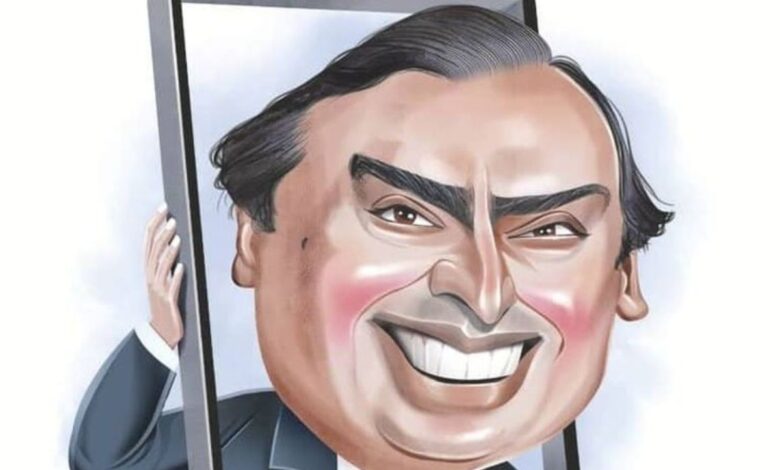
Congratulations, dear consumer! Every time you recharge your mobile plan or pay your taxes, you might just be paying in for a slice of someone else’s extravaganza. It’s as if with each rupee spent on a data pack or each taxpayer bailout, you’ve mailed a gold plated invitation reading: “Enjoy on us!” In India, the latest 5G rollout has customers digging deeper into their pockets; and one telecom giant’s owners, the Ambani family, aren’t exactly throwing frugal tea parties with the proceeds.
This tale doesn’t stop at one family or one country. From Mumbai to Manhattan, and from corporate boardrooms to luxury yachts, there’s a pattern: when costs go up or bailouts roll in, the rich and powerful often celebrate in style; funded indirectly by us.
In this article, we’ll start with Reliance Jio’s recent maneuvers and the Ambani family’s opulent celebrations, then journey through a gallery of other eye-popping examples, both Indian and global; where you, the customer or taxpayer, footed the bill for someone else’s champagne baths. Grab your popcorn (hopefully you can still afford it), if you could pay the caramel popcorn tax; and then, let’s dive in.
Reliance Jio: Tariff Hikes, 5G Dreams, and Lavish Weddings
Reliance Jio, India’s largest telecom operator, has been on a mission to bring ultra-fast 5G to every corner. Admirable goal, isn’t it? But here’s the fun part: they’d like you to pay for it; or at least that’s what recent changes suggest. In August 2025, Jio quietly pulled the plug on its most affordable 1 GB per day prepaid plans (priced at ₹209 for 22 days and ₹249 for 28 days) on most online platforms.
Now, unless you go out of your way to use Jio’s own app or find a physical store, the cheapest monthly pack available online is ₹299. That’s a neat upsell, forcing many users to shell out more each month for an extra 0.5 GB of daily data they never asked for. It also raises the industry-wide minimum price to ₹299 for a monthly plan, since rivals Airtel and Vodafone Idea had already moved to that floor. In one swift move, Jio aligned with competitors and effectively said “Squeeze a little more from everyone.”
Why would a company that built its empire on ultra-cheap data now nudge prices upward? According to industry analysts, this is a harbinger of yet another round of tariff hikes expected between late 2025 and early 2026. The reason given, with a straight face, is that telecom operators are “under pressure to improve cash flows to support their ongoing 5G rollout”.
In plain English: laying 5G fiber and installing towers costs a fortune, and someone’s got to pay for it. Instead of digging entirely into their own deep pockets or trimming some executive bonuses, the telecom honchos figure it’s easier to nudge prices up for millions of customers. After all, what’s an extra ₹50 here or there from each user? It adds up to billions for the 5G war chest.
Now, none of this would be quite so poignant if not for the delicious irony of who is asking for your money. Reliance Jio is the crown jewel of Mukesh Ambani’s business empire. Mukesh Ambani, for the uninitiated, is not exactly clipping coupons to make ends meet. In fact, he’s Asia’s richest man, worth around $120 billion. His family literally resides in what’s touted as the world’s most expensive home, a 27-story private skyscraper in Mumbai. And when this family throws a party, they make Great Gatsby look like child’s play.
Consider the wedding of Mukesh’s daughter, Isha Ambani, in 2018. The multi-day affair had global celebrities gawking and Beyoncé brought in as a performer. The estimated price tag? A casual $100 million (around ₹700 crore), according to Bloomberg. It was, at the time, the most expensive Indian wedding ever, until the Ambanis decided to outdo themselves. In 2023-24, as Mukesh’s youngest son Anant Ambani prepared to marry, the family embarked on a five-month festival of excess that one might mistake for a royal saga. How excessive, you ask? It is upwards of $600 million in costs; an eye-watering sum, though merely 0.5% of Ambani’s net worth.
This marathon celebration featured a private concert by Rihanna (at a rumored $6 million fee), a 800-guest cruise around the Mediterranean with performances by global pop stars, and a sangeet where Justin Bieber flew in to croon for a reported $10 million. Bollywood superstars, British royals, and business magnates all rubbed shoulders at events so elaborate that Mumbai’s traffic had to be rerouted and hundreds of private jets cluttered the airports. If there was ever a real-life example of “money is no object,” this was it.
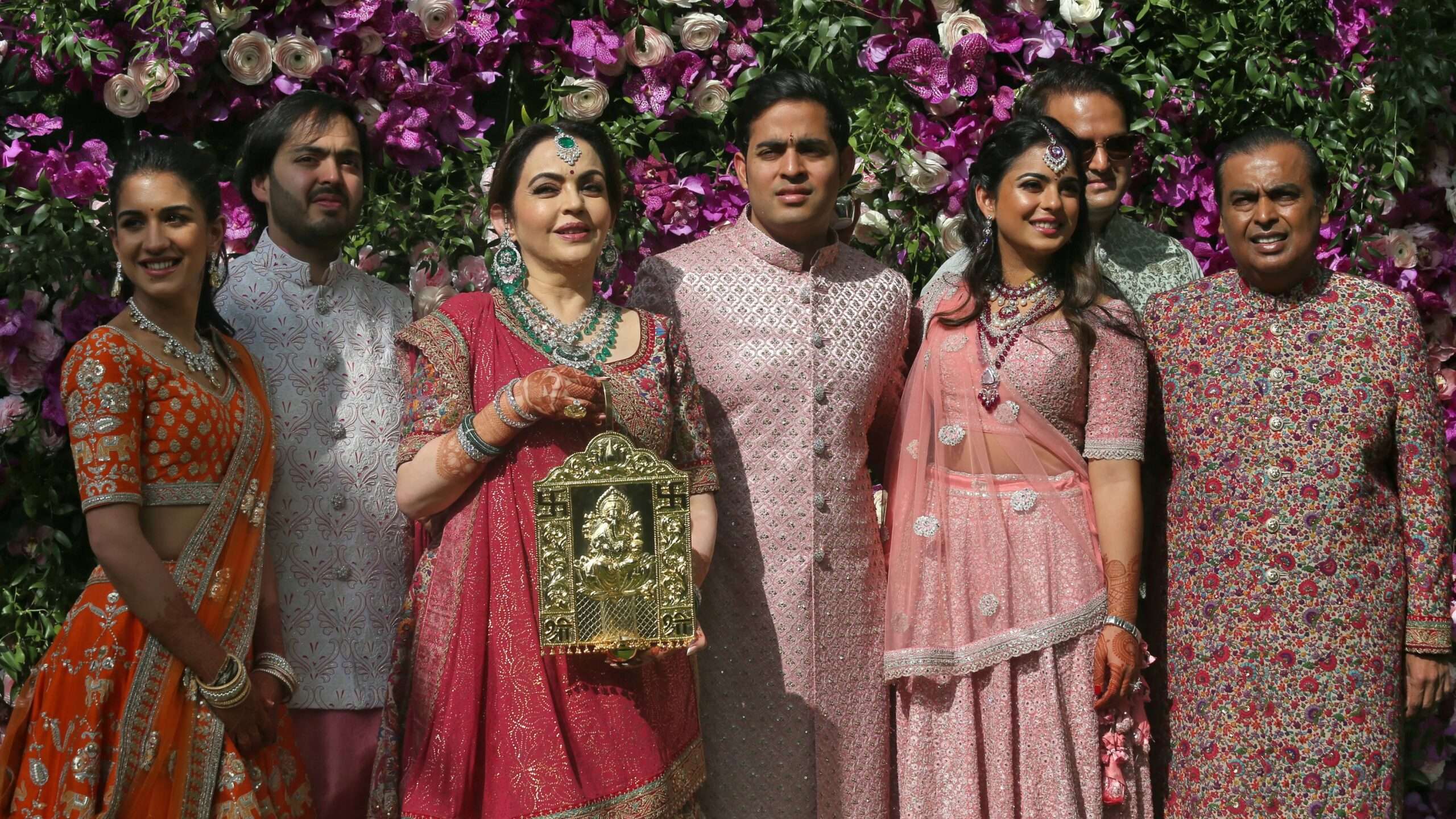
And here’s the kicker: while these jaw-dropping private events were unfolding, Reliance Jio was busy nudging up the cost of 4G/5G connectivity for the average Indian. As consumers, we are told that higher tariffs are necessary “to sustain network expansion” and achieve the 5G dream. Perhaps it is indeed necessary as 5G infrastructure isn’t cheap. But the optics of it all are something out of a dark comedy.
Imagine an average Jio user in a small town, grudgingly paying the extra ₹50 for data so that Jio can fatten its margins; meanwhile, an Ambani wedding features thousands of kilos of flowers, a banquet of 100 dishes, Beyoncé belting out “Crazy in Love,” and British aristocracy dancing to Bollywood tunes. It’s almost as if your higher phone bill this month helped pay for a few sequins on Beyoncé’s dress or the fuel for one of those private jets.
Now, satire aside, let’s be clear: Mukesh Ambani didn’t send out a memo saying “please raise tariffs, I need to fund another Beyoncé concert.” The Ambani family’s wealth is their own, amassed through decades of business (and arguably, some monopoly-like tactics in telecom). However, the contrast between the belt-tightening expected of consumers and the belt-loosening indulgence of the billionaire class is impossible to ignore.
The Ambanis’ extravagance has even drawn comparisons to old Maharajas, with one commentator noting that they are “the only family who could get away with such conspicuous consumption on this scale” in India. For the masses facing rising prices, knowing that the beneficiary is a company controlled by people who spend more on a week’s festivities than most of us would in a thousand lifetimes adds a special flavor of resentment. It’s a bit like being asked to donate for a public cause, and then finding out your donation went to gold-plating the benefactor’s toilet.
So the next time you get a message that your plan validity is ending and the recharge costs a tad more than before, feel free to indulge in a little dark humor: “I hope at least the Ambanis will raise a toast to my contribution.” Congratulations, you’re (indirectly) a patron of both cutting-edge telecom infrastructure and some of the most lavish parties on earth.
But Reliance Jio and the Ambanis are just the opening act. Sadly, the notion of public paying the price while the elite play is a global phenomenon, with many encore performances. Let’s shift the spotlight to a few other famous (or infamous) cases where corporate titans and wealthy moguls lived it up on others’ dime, be it customers, taxpayers, or hapless investors.
Vijay Mallya: “King of Good Times” and King of Defaults
India’s corporate landscape offers a textbook example in Vijay Mallya, once self-styled as the “King of Good Times.” Mallya inherited and built a liquor empire (you might have heard of Kingfisher beer) and then branched out into an airline, Formula 1 racing, and even an IPL cricket team. His lifestyle was the stuff of legend; mega yachts, mansions, parties with models and movie stars, and everything. In the mid-2000s, Mallya was flying high, literally and figuratively. Kingfisher Airlines was known for its flashy services (red-uniformed models as air hostesses, in-flight entertainment even in economy) and Mallya was known to say that his airline gave passengers a taste of the “good times” that he so cherished.

Well, those good times didn’t last; at least not for the people who loaned Mallya money. By 2012, Kingfisher Airlines had collapsed spectacularly, leaving behind over ₹90 billion in unpaid loans (roughly $1.1–1.4 billion) to a consortium of 17 banks. Crucially, a lot of this was public money – loans from government-owned banks that are backed by taxpayer funds.
In 2016, as the house of cards fell, Mallya quietly slipped out of India and headed to Britain, just days before lenders and regulators could stop him. It soon emerged that not only had his airline failed, but there were allegations that he diverted chunks of those loans for personal use abroad. Indian authorities and courts, enraged at how he thumbed his nose at them, have been chasing him through extradition hearings in the UK ever since.
What makes Mallya’s story rich with irony is how brazenly lifestyle and corporate optics diverged. Even as Kingfisher Airlines employees went unpaid and investors saw their money vanish, Mallya was living it up overseas. He was spotted at yacht races and English country estates, enjoying the spoils of what he claims was his money.
Back home in India, he left behind a trail of unpaid debt that public sector banks had to write off or recover via painful legal processes, essentially a huge bill for the Indian financial system and, by extension, the taxpayer. The Indian government had to recapitalize banks partly to offset giant bad loans like these (recapitalization uses taxpayer money to shore up banks). So in a real sense, everyday Indians paid for Mallya’s misadventures, either through reduced public funds or simply as citizens of a banking system that suddenly had a massive hole.
Mallya epitomized extravagance. He reportedly owned a private island in Europe, a fleet of 250 vintage cars, multiple lavish residences, and a 95-meter superyacht aptly named the Indian Empress. He threw a 60th birthday bash in 2016 in Goa with fireworks and international performers; at a time when he was already defaulting on loans. As one news outlet drily noted, once called the “King of Good Times” due to his extravagant lifestyle, Mallya and his companies have been embroiled in financial scandals since 2012. That about sums it up: great times for him, terrible times for those who financed him.
A billionaire playboy takes huge loans from banks, plasters his airline’s tagline “Fly the Good Times” everywhere, literally races cars and yachts on the global stage, and when the bill comes due, he disappears, leaving the public holding the bag. It’s like a dark fairy tale where the king throws a never-ending party at the castle, then sneaks out the back door when the villagers come asking for the money he borrowed to buy the champagne.
As of this article, Vijay Mallya remains in the UK, fighting extradition and tweeting occasionally about how he’s been misunderstood, in a podcast! Meanwhile, Indian banks have recovered only a fraction of the money (a large portion was recovered by selling off collateral and assets, but taxpayers had to infuse fresh capital into banks to keep them stable). If you ever sipped a Kingfisher beer, you indirectly contributed to his empire. And if you pay taxes in India, you indirectly contributed to cleaning up the mess when that empire crumbled.
Nirav Modi: Diamonds Are Forever, Debt is for Suckers
From beer and airlines, let’s move to diamonds, deceit, and one very expensive ostrich-hide jacket. Meet Nirav Modi, once a celebrated jeweler to the stars, now better known as the fugitive at the center of India’s largest bank fraud in history. If Mallya was the King of Good Times, Nirav Modi was the Prince of Bling; running a global diamond jewelry empire that sold necklaces and earrings to Hollywood actresses and Indian elite alike. His upscale boutiques from New York to Hong Kong dazzled customers, until early 2018, when the whole operation was revealed to be built on fraudulent bank guarantees.
In a nutshell, Nirav Modi and his uncle Mehul Choksi managed to scam Punjab National Bank (PNB), a major state-owned bank, by getting fake “letters of undertaking” to siphon out loans worth over ₹13,000 crore (about $2 billion) over several years. They didn’t repay, obviously. When the scheme finally came to light, Nirav Modi did the classic billionaire thing: he vanished from India faster than you can say “freeze my accounts.” He eventually landed in London, where for a while he lived quite openly despite India seeking his extradition.
And here’s where it gets infuriatingly absurd: even as PNB (and by extension the Indian taxpayer) was swallowing the massive losses from his fraud, Nirav Modi was spotted strolling around London’s tony West End, living in a swanky £8 million flat and apparently running a new diamond business on the side. A British newspaper’s reporter found him and described his lifestyle in almost admiring detail; he occupied half a floor of an upscale apartment tower, paying an estimated £17,000 per month in rent. That’s roughly ₹17 lakh a month just on rent, the kind of money most ordinary Indians won’t see in a year or even a decade.
When confronted on the street by journalists asking about the Indian charges, Nirav, sporting a handlebar mustache and a $10,000 ostrich-leather jacket, smirked and said “no comments”. Yes, you read that right. A man accused of defrauding a public bank to the tune of $2 billion was nonchalantly wearing the hide of an exotic bird worth ₹8 lakh, probably bought with our money!
Meanwhile, PNB’s books were so wrecked by the fraud that the government had to inject funds to stabilize the bank. The scam had ripple effects on the entire banking sector, causing stock market tremors and a loss of confidence for a while. Ultimately, who pays for such bank bailouts or recapitalizations? The public, either through taxes or the opportunity cost of money that could have been spent on development instead.
To add insult to injury, Indian authorities did freeze and seize a lot of Nirav’s assets back home, including ultra-luxury cars, high-end artwork, and a beachfront mansion, and auctioned them off. But much of the money was already gone. Some of it likely financed the lifestyle that allowed Nirav Modi to rub shoulders with celebrities, throw lavish parties at international jewelry shows, and snap up properties abroad. It’s a classic case of privatized luxury, socialized losses.
The customers who bought diamond rings from Nirav Modi’s boutiques paid hefty sums; only to discover later that the glittering brand was a mirage propped up by fraud. The bank that unwittingly bankrolled his operation had to be rescued with public money. And Nirav himself? He’s in a London prison as of the last update, fighting extradition on the grounds that Indian prison conditions aren’t up to his standards.
If there’s an image that sums up this saga, it’s that of Nirav Modi parading in London in an uber-expensive outfit while literally on the run from a massive financial crime. It’s almost as if he were saying: “Thanks for the £8 million flat, India. I really like the view from here.” The diamantaire who took a fortune and then spent a fortune, leaving everyone else to clean up the dirt!

For Indians who saw news clips of him hiding his face with that jacket’s collar, it was a moment of collective rage and dark comedy. You could practically hear the groans: We can’t afford to buy onions this month because prices are high, and this guy is walking around in a ₹10 lakh coat bought with our bank’s money! There’s cruel humor in it, of course, but it’s the kind that leaves a bitter aftertaste.
Subrata Roy Sahara: The Emperor of Masses and His ₹550 Crore Wedding
No tour of Indian corporate extravagance on others’ money would be complete without Subrata Roy, the founder of the Sahara Group. If you’re not from India, you might not know Sahara; but it was once a gigantic conglomerate with interests from finance to real estate to media, and even owned a popular cricket team and an F1 team sponsorship.
Sahara took money from the public through deposit schemes that were later deemed illegal, and by the early 2010s Subrata Roy was in hot water with regulators. He eventually landed in jail for defrauding millions of small investors (basically, not paying them back), and was ordered to refund ₹24,000 crore (about $3.7 billion) to people. As of a few years ago, a huge sum was still unpaid, and the Supreme Court of India got so fed up that it ordered the auction of Sahara’s crown jewel property; a lush 8,900-acre township called Aamby Valley, valued at ₹39,000 crore to recover funds.
Why is this story in here? Because Subrata Roy, for a time, lived like a maharaja, arguably using the enormous sums collected from common man, and threw one of the most extravagant weddings India has ever seen. In February 2004, when Sahara was at its peak (and long before the downfall), Subrata Roy hosted a double wedding for his two sons in Lucknow. It was the stuff of legend: a ₹550 crore extravaganza with 11,000 guests. Let’s put ₹550 crore in perspective; that’s over $120 million in 2004 (and a lot more in today’s money when adjusted for inflation).
This was personal money being spent on a personal event, but one has to wonder how Sahara’s coffers flush with public deposits, made that possible. Private jets were arranged to ferry guests to the venue. A four-day celebration ensued with 100 different dishes on the menu and Bollywood stars and political bigwigs in attendance. The decor featured the kind of opulence usually reserved for fairy tales: expensive flowers, crystal chandeliers, and fantasy-like set pieces. It was covered breathlessly by the media as the great Indian wedding to beat all weddings.
To Sahara’s credit, they did blend some philanthropy into it, by funding mass weddings for 101 underprivileged girls at the same time, and feeding 15,000 poor people, which is commendable. But one cannot ignore that ₹550 crore figure. That money didn’t fall from the sky. It was generated from Sahara’s businesses, a big chunk of which involved taking small investors’ money with promises of high returns.
Those investors later struggled to get their principal back, let alone returns, leading to a prolonged legal battle. By 2014, Subrata Roy was arrested for failing to refund people, and he famously spent two years in Delhi’s Tihar Jail, at one point even trying to sell Aamby Valley to raise the repayment money (a sale that never fully materialized). The Supreme Court, exasperated, basically said: “Pay up or go back to jail.”
So here’s the tragicomic contrast: One day you’re flying in movie stars on private jets for your sons’ $120 million wedding bonanza; a decade later, you’re behind bars because you can’t come up with $5,000 crore to pay back small-town grocery shop owners and farmers who invested in your schemes. It’s almost Shakespearean.
During the heyday, Subrata Roy liked to be called “Saharasri” and was treated by employees like a demigod. He had a sprawling personal estate and went around in convoys of luxury cars. He projected himself as a messiah of the middle-class by offering them investment products (which turned out to violate securities laws). And all the while, he didn’t shy away from conspicuous consumption. The 2004 weddings remain a talking point; even a 2023 news article reminisced that it’s “considered one of the most expensive Indian weddings of all time”.
If one were to be satirical about it: “Ladies and gentlemen, welcome to the grand Sahara circus! On Day 1, watch 101 poor girls get married with donated funds; applaud the generosity! On Day 2, marvel at the 100-dish feasts for the rich and powerful, financed by your investments! By the end, the ringmaster might vanish with the cash, but hey, at least you got a great show.” It’s harsh, but not entirely unfair. Thousands of small investors indeed got a “show”, in the form of endless court proceedings, when they tried to get their money back from Sahara. And the regulators ended up seizing and auctioning Sahara properties to reimburse people, a process still ongoing.
Subrata Roy’s saga underscores a broader point: when corporate chieftains treat publicly-raised money as their personal kitty, the celebrations might be grand, but the hangover can last for years for everyone else. The Sahara case was a watershed in India; a reminder that even if you brand yourself as a people’s billionaire, you don’t get to use the people’s money to pretend you’re a king. Or at least, not without consequences, eventually.
AIG’s Spa Getaway: Thank You, Taxpayers, for the Manicures
Lest you think this issue is uniquely Indian, fear not; the global corporate world has plenty of its own “party at others’ expense” episodes. Let’s hop over to the United States and dial back to 2008, the year of the Great Financial Crisis. Many financial firms were in meltdown, and the U.S. government stepped in with enormous bailouts to prevent total economic collapse.
One of the big names bailed out was AIG (American International Group), a huge insurance company. AIG got an $85 billion emergency loan from the Federal Reserve, essentially taxpayer money to stay afloat. Now, if you or I were saved from bankruptcy by the skin of our teeth, we might lay low and show some humility, right? But if you were an AIG executive apparently the first thing you’d think is: “This calls for a celebration at a luxury resort!”
I’m not even exaggerating. Less than one week after the U.S. government committed $85 billion to rescue AIG, company executives headed to a week-long luxury retreat at the St. Regis Resort in California. This was a beachside five-star resort with all the trimmings, and AIG’s tab for the outing was over $440,000. That included about $200,000 for rooms (at over $1,000 a night per room), $150,000 for meals and banquets, and wait for it, $23,000 for spa services.
Yes, AIG’s leaders literally billed massages, manicures and pedicures to the company right after being saved by public funds. As U.S. Congress members later fumed, essentially “the American people are paying for that” spa treatment. The outrage was so intense that it became a major scandal. Congressional hearings featured incredulous lawmakers grilling AIG’s CEO: “What were you thinking?”
One Congressman, Elijah Cummings, memorably said, “They’re getting their pedicures and manicures and the American people are paying for that.” Another, Rep. Mark Souder, called it “unbridled greed” and an “insensitivity” to how taxpayer dollars were being spent. The public reaction was sheer fury; here were families losing homes, unemployment soaring, everyone tightening belts, and then these guys who screwed up their company so badly it needed a bailout decide to go have fun at a posh spa resort as if it’s business as usual.
From a satirical lens, the AIG retreat is almost too on-the-nose. It’s the kind of plot you’d reject in fiction for being too obvious a caricature of corporate excess. Picture a sketch comedy: a CEO testifying in Congress with cucumber slices still on his eyes, saying, “Senator, I absolutely understand the public’s concern, but those hot stone massages were critical to our talent retention.” In reality, AIG at least had the sense (or fear) to cancel future luxury outings once caught, and some heads rolled. But the damage was done; AIG became a poster child for bailout abuse.
The AIG incident speaks volumes about a certain mindset: that entitlement among some corporate elites that public money lacks personal accountability. When it’s shareholders’ money or taxpayers’ money, a few think, “hey, it’s not directly out of my pocket, so why not indulge?” This mindset was also seen when financial firms paid out billions in bonuses to executives in the same year they were bailed out, technically from other revenue, but effectively underwritten by government support.
And AIG wasn’t alone. During that crisis, there were reports of executives from other rescued banks flying on private jets to plead for bailouts (tone-deaf much?), or Merrill Lynch’s CEO expediting billions in bonus payouts to staff even as the firm was imploding. Public anger led to new laws and clawback provisions, but one has to wonder if the lesson ever really sticks. A decade later, in 2020, something similar played out with pandemic relief funds (as we’ll see next).
So, next time someone says “we must bail out X company for the sake of the system,” you might quip in response: “Sure, but maybe put the spa trips on hold, huh?” The AIG spa fiasco will forever remain a go-to example of how not to behave after receiving taxpayer charity.
“Pharma Bro” Martin Shkreli: Patients Pay, Wu-Tang Albums Play
Sometimes it’s not public bailout money at stake, but customers (or patients) being price-gouged so that an executive can pad his personal collection of toys. Enter Martin Shkreli, infamously dubbed “Pharma Bro.” Shkreli became the face of pharmaceutical greed in 2015 when his company obtained the rights to a decades-old drug, Daraprim (used for treating parasitic infections in HIV patients), and promptly hiked its price from $13.50 to $750 per pill, a more than 5,000% increase. Patients, hospitals, and insurers were aghast; overnight a lifesaving treatment became a luxury item. Shkreli, however, relished his villain status, smirking in TV interviews and arguing that as a CEO his job was to maximize profit.
What did Shkreli do with those profits? Well, aside from funding a very punchable grin on his face, he did something so absurd it enters the realm of dark comedy legend: he paid $2 million to buy the world’s only copy of a Wu-Tang Clan album. Yes, while patients were scrambling to figure out how to afford their now-$750 pills, Shkreli was dropping seven figures on a one-of-a-kind hip-hop album (Once Upon a Time in Shaolin), presumably to listen to while twirling his metaphorical mustache.
In 2018, as Shkreli was being sentenced to prison for unrelated securities fraud, the judge ordered him to forfeit some of his assets including that very Wu-Tang Clan album. Court documents noted that Shkreli’s $2 million purchase of the album was an extravagance made possible by the fortune he amassed from jacking up drug prices.
It’s hard to overstate how much Shkreli seemed to relish being the villain. He live-streamed himself gleefully mocking those who questioned him. He even promised to destroy the Wu-Tang album or keep it from the public as some sort of trolling statement. (The album was eventually seized by the U.S. government and sold to pay his debts – talk about poetic justice.)
But beyond the cartoonish behavior, there’s a serious reality: real people suffered so that Shkreli and his company could make outrageous profits. Patients who needed Daraprim faced bankruptcy or had to rely on charity after the price hike. The healthcare system, meaning insurance premiums and taxpayer-funded programs like Medicaid bore the brunt as well, since they had to cover the inflated costs. In essence, sick people and the public health purse were footing the bill for Shkreli’s personal indulgences.
A satirical angle practically leaps out here when a 32-year-old exec in a hoodie decides he wants a quick fortune, so he turns a medicine into a luxury item with a stroke of a pen. Then he uses the loot to buy, of all things, a luxury music collectible. It’s like some twisted Robin Hood in reverse – steal from the sick, give to… yourself. One could imagine an Onion headline at the time: “Pharma CEO Raises Drug Price 5000%, Buys Golden Earplugs to Avoid Hearing Complaints.” Except it wasn’t satire, it was real.
Shkreli’s case did have a comeuppance of sorts. He went to prison (for fraud unrelated to the drug price, it was basically for misleading investors in hedge funds he ran; hiking drug prices, sadly, is legal in the U.S. to a large extent). But the image of him smugly sipping champagne (figuratively) while patients writhed in pain stuck in the public consciousness. He became the enduring symbol of pharmaceutical excess and lack of empathy.
And while Shkreli is an extreme case, the underlying scenario isn’t unique: we often see pharmaceutical companies raise prices of essential drugs citing R&D costs or supply issues, only for their CEOs and shareholders to enjoy record profits. The public outrage over Shkreli helped spur some reforms and a lot of soul-searching about drug pricing. Yet, to this day, insulin, a century-old drug, and many other medicines remain exorbitantly priced in the U.S., supporting hefty executive compensation and marketing budgets.
So the next time you see a news piece about a pharma CEO getting a $50 million bonus, you might wonder: how much of that came out of grandma’s increased prescription co-pay? In Shkreli’s case, we know the answer: quite a lot, and it bought him a very expensive piece of pop culture memorabilia. If that isn’t a modern-day fable about greed, I don’t know what is.
Pandemic Aid: When Public Lifelines Became Private Paydays
A more recent chapter in the saga of “public pays, private plays” unfolded during the COVID-19 pandemic. Governments worldwide rolled out massive relief packages to keep economies afloat; loans, grants, bailouts. The intention was noble: protect jobs, keep companies from collapsing, ensure vital services continue. But inevitably, some corporations treated these lifelines as just another pot of money to dip into, with minimal shame about continuing to reward themselves or their investors.
Take the United States: in 2020, as the pandemic recession hit, the U.S. government approved trillions in stimulus and the Federal Reserve opened lending facilities. Big corporations like airlines, oil companies, hotels, and others lined up for relief – and many got it. Then, quite a few promptly turned around and did things like laying off thousands of workers anyway, issuing dividends to shareholders, or paying executives handsomely. It was AIG 2.0, writ large.
For example, ExxonMobil, the oil giant, quietly benefited from Fed actions (a form of backdoor bailout through debt markets) to the tune of $9.5 billion in liquidity. In 2020, Exxon paid its CEO over $10 million and even spent $14.9 billion on shareholder dividends and buybacks, while simultaneously announcing layoffs of about 1,900 U.S. employees.
In the same vein, Boeing – the aerospace company – secured a whopping $25 billion in government support and loans. It then cut over 26,000 jobs. Boeing’s CEO did symbolically forgo his salary in 2020 (about $1.4 million), but he was granted stock awards worth $21 million that year, effectively postponing his massive payday rather than losing it. Hotel chain Marriott took a $3.6 billion bailout, furloughed or sacked tens of thousands of workers, yet still paid its CEO $8.9 million in 2020.
What do these numbers tell us? The pandemic was an unprecedented crisis, but even under the glare of public scrutiny, old habits died hard. Companies could have said, “We’ll take public help and in return, everyone tighten belts – no bonuses, no dividends until we’re stable.” Some did refrain from dividends for a bit, but many could not resist rewarding shareholders (many of which were wealthy investors) and ensuring their top brass were kept very comfortable.
Now, to add a satiric sprinkle: Imagine a press conference in 2021 where a CEO stands with a firefighter (representing taxpayer aid) who just saved his house from burning down. The CEO pats the firefighter on the back and then promptly hands wads of cash to his buddies standing by a limousine, saying “Thanks for the rescue! Now, where’s my champagne?” That’s essentially what happened. The public acted as a firefighter for the economy, and some corporations treated it like a catered event.
In some countries like the US, this fuelled debates about strings-attached bailouts. In Japan and parts of Europe, companies that took state aid had stricter rules (like no layoffs or pay cuts at the top). But loopholes abounded. For instance, some US airlines took taxpayer money intended to keep paying workers – which they did for a while – but once that period expired, they laid off tens of thousands anyway, and still didn’t shy from executive bonuses or stock awards a year later.
To put a cap on it, let’s recall what happened to Big Oil in 2021-22. As global supply chain issues and war drove fuel prices sky-high, everyday consumers paid through the nose at the gas pump. In 2022, the five largest oil companies (Exxon, Chevron, Shell, BP, Total) together raked in over $200 billion in profits, breaking all records. Rather than significantly lowering prices or at least holding off on price hikes (which, arguably, a competitive market didn’t allow them to do easily), they largely passed costs to consumers. And their executives?
In 2021, while gas prices were rising sharply, 28 major oil & gas companies gave a combined $394 million to their CEOs, which was $45 million more than the previous year. Exxon’s CEO got a $7 million raise, taking home $23 million, and others similarly saw multi-million bumps. One watchdog group’s president summed it up: “When Americans were struggling to fill their tanks, oil and gas companies made record profits and decided to give that money to wealthy executives and shareholders rather than stabilizing gas prices.” It’s a familiar pattern: the consumer bleeds, the executive feeds.
There is a bit of karmic humor here if you think about it.Oil execs and shareholders probably used some of that profit to gas up their yachts and private jets, essentially burning the money (or rather fossil fuel) that everyday folks had no choice but to give them to commute to work.
At the end :A Toast (and a Bill) to the Paying Public
After this world tour of corporate indulgence on others’ tab, one could either laugh or cry. Satire is our tool to cope with the absurdity, but the underlying issue is serious. What we’ve seen is a recurring theme: profits are privatized, costs are socialized. When things are going well, the champagne flows in executive suites and at billionaire weddings. When things go south or big investments are needed (like 5G rollouts), the strategy often is to pass the cost to the consumer, or plead for taxpayer help – and then, sometimes, still break out the champagne.
It would be unfair to paint all business leaders with the same brush – many do act responsibly, and not every rich person’s luxury comes at someone else’s direct expense. But the examples we covered are not isolated bad apples; they reflect a systemic imbalance of accountability. Reliance Jio raising tariffs to fund expansion isn’t illegal or even unexpected; but coupling that with the sight of an Ambani extravaganza creates a cognitive dissonance for the public.
Vijay Mallya and Nirav Modi outright broke the law or rules, which is a different category, yet their stories serve as warnings of what happens when oversight is weak: the public ends up literally financing fraudsters’ flights of fancy (and flight from justice). Subrata Roy’s saga reminds us that even a self-styled patriot-businessman might misuse public trust (and money) to live like a king, and only a decade later face the music. The global cases like AIG and pandemic bailouts show that even in well-regulated environments, the temptation to treat relief money or consumer price hikes as personal piggy banks is ever-present.
So, what’s the takeaway? As consumers, perhaps it’s healthy to maintain a bit of skepticism and ask questions. The next time a telecom company justifies a price hike, or a bank CEO preaches austerity while taking a bonus, or a government bails out a corporation, we’d do well to follow the money. Who ultimately benefits, and who ultimately pays? Often it’s heads I win, tails you lose with these titans – if business booms, they win; if business busts, you lose (your job, your affordable service, your tax money).
The tone of this article was satiric, but the intent isn’t just to mock; it’s to highlight a real imbalance and perhaps inspire a bit of outrage (the constructive kind). After all, satire has a rich history of sparking dialogue and reform. Maybe, just maybe, if enough people roll their eyes and say “we see what you’re doing there” the powers that be, whether in corporate boardrooms or corridors of power will think twice before pushing the costs of their luxuries onto the rest of us.
In the meantime, the least we can do is raise a sarcastic toast to ourselves: Here’s to you, hardworking consumer and taxpayer! You toil away, tighten your belt, pay your bills, and occasionally, unbeknownst to you, buy a billionaire a second yacht or pay for a millionaire’s massage. It’s not the celebratory toast we dream of, but it’s the one we’ve got. And with any luck, by shining a light on these absurdities, someday we might change the menu, so that we’re not always stuck with the bill for someone else’s party.