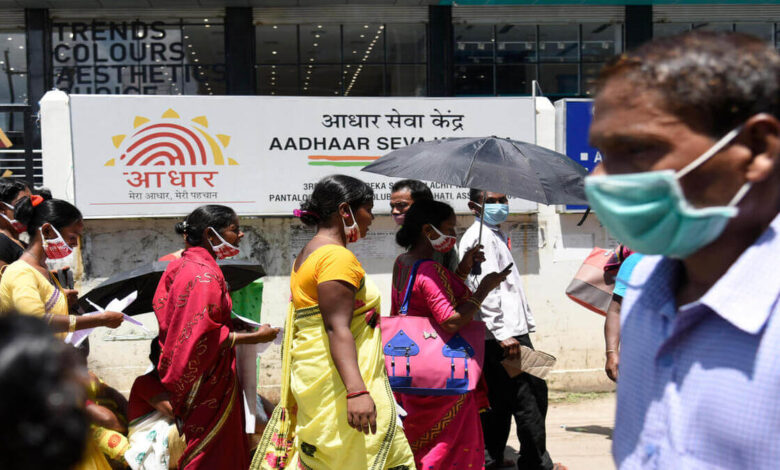
BLS International Services Ltd., a Delhi‐based outsourcing firm recently won a ₹2,055.35 crore contract from India’s Unique Identification Authority (UIDAI) to establish and run district-level Aadhar Seva Kendras (ASKs) over six years. The contract calls for appointment, and walk-in-based Aadhaar enrolment, updates and related services at ASKs across India. According to official releases, BLS will handle the “complete end-to-end responsibility” under close UIDAI supervision.
What are ASKs? District ASKs are citizen service centers focused on Aadhaar (India’s digital identity system). They are meant to provide convenient local access for Aadhaar enrolment and modifications (biometric updates, address changes, etc.). The government frames this as improving service delivery. Critics, however, note that Aadhaar cannot serve as standalone proof of identity or citizenship. Indeed, the Supreme Court recently reaffirmed that “the Aadhaar number shall not, by itself, confer any right of, or be proof of, citizenship or domicile.”. In short, Aadhaar remains only an identity/document for government schemes, not a civil ID.
This raises questions why massive spending on ASKs is justified when, legally, Aadhaar cannot substitute for a passport, voter ID, or similar proof of identity?
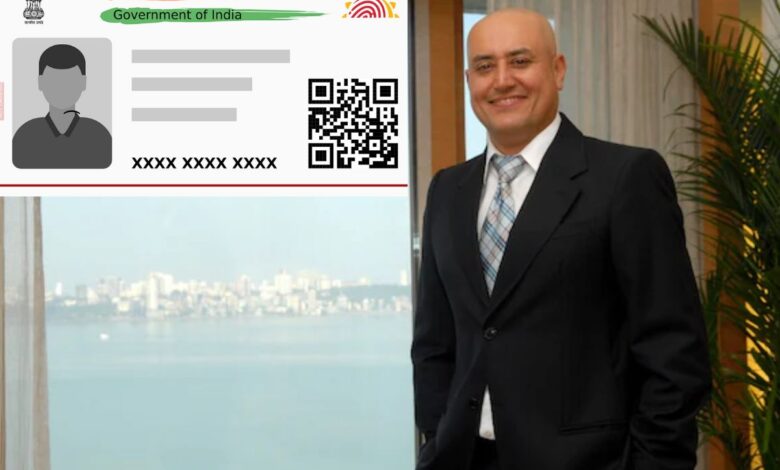
This skepticism about Aadhaar is echoed by critics like Hotmail co-founder Sabeer Bhatia, who has criticized Aadhar’s cost. Bhatia calculated the entire Aadhaar system cost about \$1.3 billion (≈₹10,000 crore) and claimed a similar system could have been built for ~$20 million using voice/video recognition. “This is money ill spent. \$1.3 billion! Are you kidding me?” he exclaimed. He labeled Aadhaar an “expensive misstep,” arguing fundamentally that government expenditure was wasteful. His remarks, while outsider commentary, encapsulate public doubt about pouring more funds into an ID project whose utility is legally capped.
Against this backdrop, questions arise: Why was BLS, a company known for visa‐outsourcing, given this domestic contract? Did BLS’s promoters or shareholders have connections to the ruling NDA/BJP that influenced the award? Is taxpayer money being misused on a project of dubious value?
BLS International: Company Profile and Scope
BLS International is a global visa and citizen services provider, not a startup. Founded around 2005 by Diwakar Aggarwal (now Chairman), it has grown into a major player. (Diwakar’s son Shikhar Aggarwal is Joint MD.) The company is publicly listed on India’s stock exchanges (symbol BLS, listed in 2016). A BusinessIndia profile notes BLS is a “nearly 20-year-old” firm with a worldwide footprint.
In practice, BLS handles visa application centers (VACs) and related services for many countries. For example, a 2023 PTI report notes BLS “works with over 46 client governments, including diplomatic missions, embassies, and consulates,” processing millions of applications. Its global network is vast. a Times of India article reports BLS operates 27,000 centers across the world with 20,000+ staff. (Another source claims over 50,000 centers.) BLS has longstanding contracts e.g. with Spain’s government since 2016, renewed in 2023, to outsource visa processing. Thus, BLS has extensive experience running citizen-facing service centers internationally.
This background suggests BLS is one of the largest global visa‐outsourcing firms, not a neophyte. It was well-positioned to bid for government contracts. Its entry into Aadhar kiosks is new only in function, not in scale or operations. In fact, BLS recently launched a related subsidiary (BLS E-Services) for domestic citizen services (like PAN, banking, etc.), raising funds in a 2024 IPO, indicating strategic intent to enter government-to-citizen (G2C) services.
The UIDAI Contract Details
On Aug 25, 2025, BLS International announced (to the stock exchange) that it had secured the ASK contract. Multiple news agencies reported the same. According to Economic Times (PTI), BLS “has been awarded a work order of Rs 2,055.35 crore from UIDAI for establishing and running district-level Aadhaar Seva Kendras”. The contract is domestic (all-India) and spans six years.
Under the terms, BLS must set up ASKs in every district, handling Aadhar enrolment and update services (with both appointments and walk-ins). The ET report emphasizes BLS’s global scale and government credentials, noting “BLS International Services works in the domain of visa, passports, consular, citizen, e-governance, attestation, biometric, e-visa, and retail services since 2005.”. The firm said it will take “complete end-to-end responsibility” for the project under “close supervision of UIDAI”.
Company filings reaffirm this is an open tender. In the Moneycontrol coverage, BLS stated explicitly that “The project does not involve any interest from the promoter/promoter group/group companies in the entity that awarded the order nor does it fall within related party transactions.”. In plain terms, BLS is assuring regulators that neither its owners nor affiliates had any stake or special dealmaking with UIDAI. If BLS owners had clandestine links, this disclosure would be false; the company officially attests the contrary.
So factually: BLS won a government contract in 2025 worth ₹2,055 cr to run Aadhaar centres. The company is long-established, experienced in citizen services worldwide. It claims this contract is a normal commercial arrangement with no promoter-side conflict. Then why aadhaar Seva Kendra is a topic of controversy for many?
The Supreme Court on Aadhaar’s Limits
The Supreme Court of India has ruled several times that Aadhaar is not proof of citizenship or domicile. For instance, Section 9 of the Aadhaar Act expressly states an Aadhaar “shall not, by itself, confer any right of or be proof of, citizenship or domicile.” On Sep 2, 2025, a bench reaffirmed this, saying “we cannot enhance the status of Aadhaar beyond what is ascribed to it by the Aadhaar Act”. It echoed Puttaswamy (2018), which held Aadhar couldn’t be used by private entities or to deny rights.
In plain language: Aadhaar is just one piece of ID, primarily for welfare subsidies and government services, not a constitutional ID card. Thus skeptics ask: if Aadhaar cannot determine who is a citizen, why spend 2000+ crores on new enrollment offices? Critics argue the project’s value is questionable after such court pronouncements.
Indeed, in a separate case (Bihar voter rolls, Aug 2025), the Supreme Court said Aadhaar could not be accepted as the sole proof of citizenship for electoral purposes. That judgment explicitly cites Section 9’s language (same quote above). Observers read these rulings as limiting Aadhaar’s use. So the timeline: as of Sep 2025 (today), the highest court has curtailed Aadhaar’s scope as evidence of identity or citizenship. The government, however, continues to push its use for convenience (Aadhaar is indeed used widely for bank accounts, SIM cards, etc., despite the rulings).
In this light, the ASK expansion can seem contradictory. What is the need for more Aadhaar kiosks if Aadhaar isn’t “proof” of much? The official answer may be that Aadhaar still needs to be updated and issued to the last person for welfare efficiency. But critics view it as potentially wasteful. Supporters would say ASKs serve billions of authenticating transactions; detractors say it’s reinforcing an identity system of limited utility.
Aadhaar Policy vs. Expenditure Debate
As noted, Aadhar’s constitutionality was narrowly upheld (2018) with restrictions. Now, critics point to continuing expansion (ASKs, mandatory linking demands, etc.) as contradictory to court rulings.
Between 2009–2012, Indian government invested heavily to enroll over a billion residents. The cost was eventually pegged at ~$1.3 billion. This was justified as essential for efficient subsidy delivery and banking inclusion. But even proponents admit that the ROI and necessity have been questioned. For example, an earlier TechLaw complaint argued biometric data could be accomplished for far less cost.
The Supreme Court’s recent stance (Sep 2025) reiterates Aadhaar cannot override constitutional rights or be the sole ID. Thus, further infrastructure spending on Aadhaar might seem paradoxical. If Aadhaar is only one piece of ID, critics ask, why upgrade kiosks? Perhaps because Aadhaar authentication still simplifies certain services (banking, mobile SIMs, subsidies), and the government may want to promote it.
What we do see is that Aadhar remains heavily used (billions of authentications). But whether the ASK rollout is cost-effective is debatable. For instance, the Tribune/Punjab audit suggests citizen services centers can be money-losers if underutilized. If district ASKs in some areas see few visitors, funds will outstrip benefit. On the other hand, with dozens of crore Aadhaar holders, enough demand might exist nationwide.
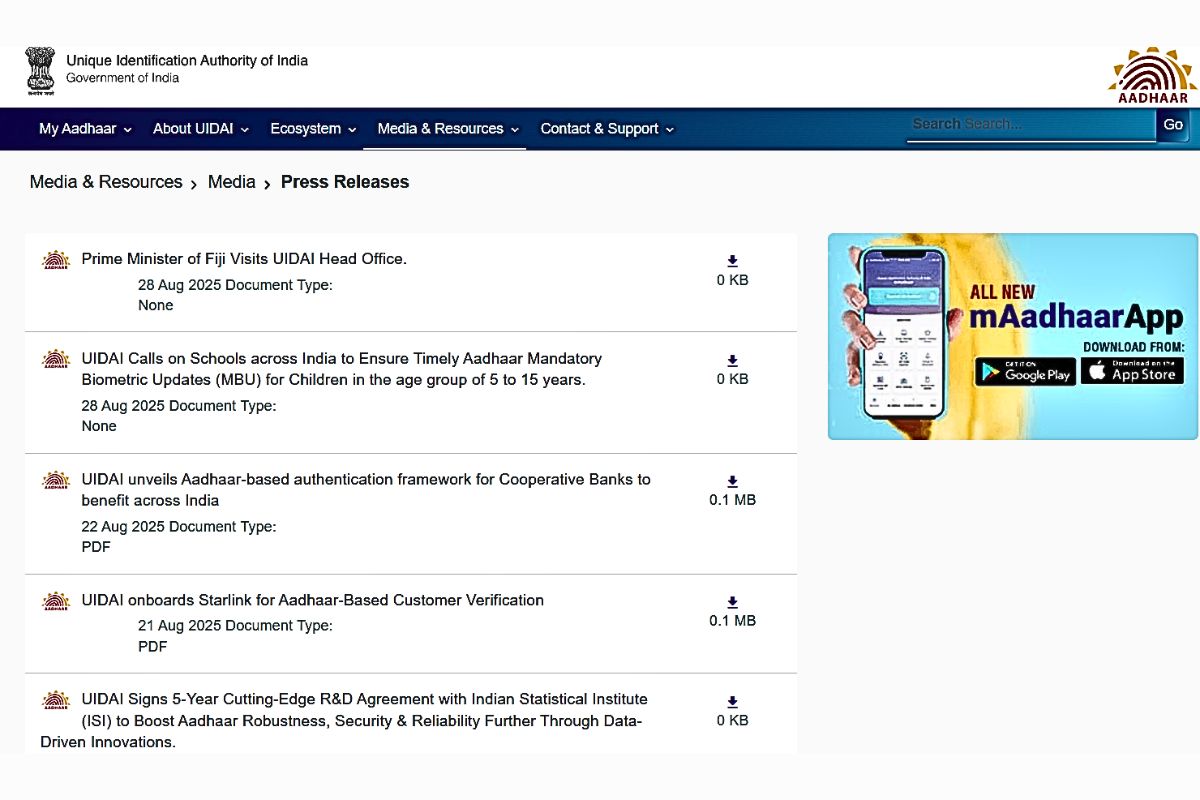
Notably, UIDAI itself gave no public press release about awarding BLS this work. Its press release archive around Aug 2025 lists many updates (children’s Aadhaar biometrics, new authentication pilots, etc.), but nothing on the ASKs or the BLS contract. This absence is curious but not conclusive; press releases often focus on policy news, not every vendor deal. Still, the lack of official announcement may suggest the government did not deem this a high-profile, politically sensitive contract. It simply processed it per normal channels.