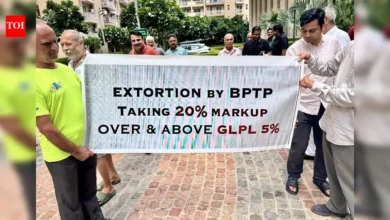
Systematic Extortion Of Money In The Name Of Aadhaar Update Through BLS International Aadhaar Sewa Kendra Project
The Perpetual Drain on India's Public Coffers – Aadhaar as a Symbol of Governmental Hubris and Waste

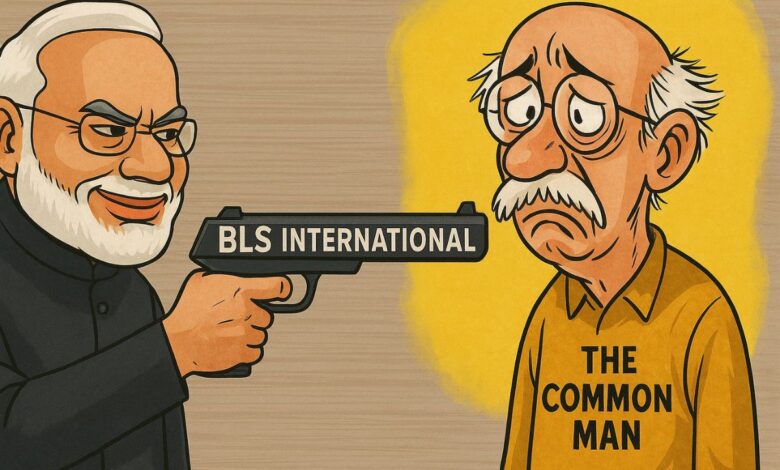
In the sprawling tapestry of India’s public policy landscape, where grand visions often clash with harsh realities, the Aadhaar project stands as a towering symbol of misguided ambition, bureaucratic inefficiency, and outright financial extortion imposed on the nation’s 1.4 billion residents. Launched in 2009 by the Unique Identification Authority of India (UIDAI), Aadhaar was initially pitched as a revolutionary biometric identity system designed to streamline welfare delivery, eliminate corruption, and promote financial inclusion.
By assigning a unique 12-digit number backed by fingerprints, iris scans, and facial photographs to over 1.3 billion individuals, it promised to eradicate “ghost beneficiaries” in programs like the Public Distribution System (PDS), Mahatma Gandhi National Rural Employment Guarantee Scheme (MGNREGA), and direct benefit transfers. Enrollment rates have exceeded 99% among adults, marking it as one of the world’s largest biometric databases. Yet, after more than 15 years and cumulative expenditures surpassing Rs 11,385 crore, Aadhaar has not only failed to deliver on its promises but has transformed into a perpetual machine of exclusion, surveillance, data vulnerabilities, and coerced financial contributions from the very citizens it claims to serve.
The latest chapter in this troubling narrative is the Rs 2,055.35 crore work order awarded to BLS International Services Ltd on August 25, 2025, for the establishment and operation of approximately 300 district-level Aadhaar Seva Kendras (ASKs) across India. This contract, disclosed on August 26, 2025, through a regulatory filing in compliance with the Securities and Exchange Board of India (SEBI) Listing Obligations and Disclosure Requirements (LODR) Regulation 30, designates BLS as the exclusive service provider for end-to-end responsibilities.
These include setting up facilities, staffing them with trained personnel, managing appointment-based and walk-in services for fresh enrollments, biometric authentications, demographic and biometric updates, renewals, and miscellaneous citizen-centric activities such as name corrections, address verifications, and document uploads. The project, described by BLS Joint Managing Director Shikhar Aggarwal in a CNBC-TV18 interview on August 28, 2025, as a “landmark and golden project of UIDAI,” involves transitioning from the existing network of around 70 ASKs to 300 new exclusive centers.
These centers will operate on a per-transaction revenue model, with a minimum guaranteed volume ensuring the full contract value over a six-year tenure, averaging about Rs 342 crore annually. Projections indicate upwards of 2 crore transactions per year, driven by factors like regulatory changes (e.g., mandatory updates for welfare linkages), population dynamics, and increasing digital adoption under initiatives like Digital India.
Geographical allocation for the 300 centers will be determined by UIDAI, prioritizing high-need areas to maximize penetration in rural and underserved districts. Setup timelines are estimated at six months to one year per center, requiring BLS to invest in infrastructure, technology (such as iris scanners, fingerprint devices, encryption systems, and real-time monitoring), and human resources. A key highlight is the employment of approximately 3,000 personnel, including enrollment operators, biometric technicians, and administrative staff, all undergoing rigorous training to comply with UIDAI’s stringent data security protocols.
The deal is purely domestic, with no involvement from promoters or related parties, as confirmed in the disclosures. For BLS, a New Delhi-based firm established in 2005 with a global footprint spanning over 50,000 centers in 70 countries and a workforce exceeding 60,000, this contract aligns seamlessly with its diversification strategy from core visa and consular services (contributing 60%+ to revenue) into e-governance and digital domains.
The company’s robust Q1 FY26 results—consolidated revenue up 44% to Rs 710 crore, EBITDA up 53% to Rs 204 crore (28.7% margin), and profit after tax up 50% to Rs 181 crore—provide a strong backdrop, fueled by 11% growth in visa services (Rs 461 crore, 11.4 lakh applications processed) and 218% in digital services (Rs 250 crore). With a net cash position of Rs 1,126 crore as of June 30, 2025, and market capitalization at Rs 15,222 crore (shares at Rs 369.95 on NSE, up 1,654% over five years despite recent volatility), analysts view this as a growth catalyst, offering revenue visibility for 4-7 years and targeted 20-25% CAGR in profitability.
However, this narrative of progress and synergy is overshadowed by a glaring coincidence: Just weeks after the contract award, UIDAI issued an Office Memorandum (F. no. HQ-16033/1/2020-EU-I-HQ-Part (2)) on September 19, 2025, revising fees for Aadhaar services in two cycles. Effective October 1, 2025, to September 30, 2028, demographic updates (changes to name, address, date of birth, gender, mobile, or email) cost Rs 75 (free if combined with biometric), biometric updates Rs 125, document submissions Rs 75 (free online via myAadhaar until June 14, 2026), and printouts Rs 40.
The second cycle (October 1, 2028, to September 30, 2031) increases these to Rs 90, Rs 150, Rs 90, and Rs 50 respectively. Home enrollment is Rs 700 for the first resident (Rs 350 additional), including GST. Waivers include free Aadhaar generation for all, mandatory biometric updates for children at 5-7 and 15-17 years, and biometric updates for 7-15 years until September 30, 2026. Media outlets like NDTV, Times of India, Business Standard, and Moneycontrol reported this as the first major hike in five years, aimed at covering inflation, technology upgrades, and operational sustainability, but emphasized practical advice: Use online portals for savings, avoid home services unless necessary, and combine updates to minimize costs.
This fee increase, perfectly timed with BLS’s transaction-based model, raises suspicions of collusion to ensure private profits at public expense. This article provides a detailed, point-by-point dissection of the Aadhaar project’s failings, critiquing its coercive usage as a tool for surveillance and control, its judicially restricted validity that limits it to mere identity verification, its shattered credibility due to rampant fraud, data breaches, and misidentification, and its botched implementation leading to widespread exclusions, hunger, and deaths.
We explore the government’s baffling persistence in pouring crores into this “useless and dead” venture, which has no positive impact on the common man’s life, drawing parallels to the 2016 demonetization catastrophe. In that episode, old Rs 500 and Rs 1,000 notes were scrapped overnight, new Rs 2,000 bills introduced at a cost of Rs 7,965 crore for printing and logistics, only to be banned in 2023 without achieving any objectives.
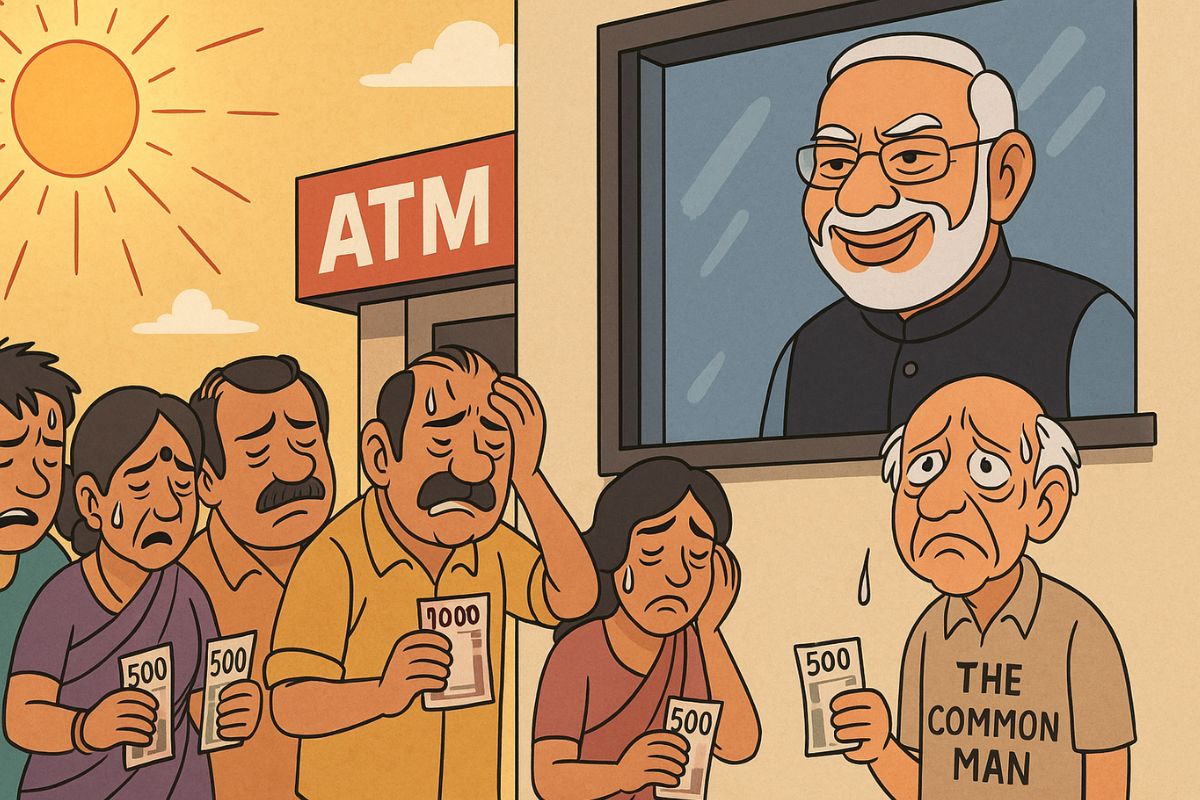
Did black money returned? Corruption ended? And similar questions remains unanswered and Indians suffered over 100 deaths in queues, economic slowdown, and massive job losses in the informal sector.
To broaden the critique, we incorporate findings from Comptroller and Auditor General (CAG) reports, which expose billions squandered on “useless” projects: Rs 19.15 crore on unfruitful road construction in Odisha due to poor planning and lack of feasibility studies, major irregularities in Jharkhand’s urban local bodies for solid waste management from 2016-2022, including non-functional plants and unutilized funds, and uncollected taxes amounting to Rs 21.3 trillion across the country, representing a massive loss to the exchequer.
We delve into how projects are awarded at inflated prices, often through a nexus revealed by electoral bonds, where companies like Megha Engineering donated Rs 1,232 crore to political parties (primarily BJP) and secured contracts worth Rs 14,400 crore in infrastructure, or lottery firms topping donor lists with Rs 1,368 crore while facing raids.
Lavish spending on non-essentials further aggravates the issue: The Rs 3,000 crore Statue of Unity, criticized as a “waste of tax money” with no direct benefit to locals amid farmer distress, the Rs 4,000 crore Central Vista redevelopment deemed “irrelevant” during COVID when hospitals lacked oxygen, parliament sessions costing Rs 2.5 lakh per minute while adjourning discussions on public issues, and Rs 20,000 crore farmer loan waivers labeled “wasteful” without structural reforms.
Social sector allocations lag at 0.9% of GDP, far below needed for poverty alleviation, while external debt balloons and taxes—GST on essentials, unchanged income slabs—squeeze the middle class. In a country where millions sleep hungry, hospitals are rat-infested and medicine-scarce, schools have leaking roofs, the judiciary lacks judges with over 5 crore pending cases, and colleges lack infrastructure, such experiments are not just wasteful—they are a betrayal. The government must halt this cycle; redirect resources to genuine welfare, not crony-enriching schemes that burden the common man with taxes and meaningless expenditures.
1. Is There Any Single Document Which Aadhaar Has Replaced? Unpacking the Redundancy and Bureaucratic Bloat in India’s Identity Ecosystem
From its inception, Aadhaar was marketed as a panacea for India’s fragmented identity system, a single biometric ID that would consolidate and replace multiple documents, reducing duplication and enhancing efficiency. Proponents claimed it would render voter IDs, PAN cards, passports, ration cards, and driving licenses redundant, streamlining access to services and minimizing fraud. However, this promise has proven to be a mirage. After enrolling over 1.3 billion people at enormous cost, Aadhaar has not replaced a single document, instead adding another layer to an already cumbersome bureaucracy. This failure is rooted in poor planning, inadequate integration, and a disregard for existing systems’ strengths, all while squandering public funds that could address pressing national crises like poverty, healthcare, and education.
Let’s examine key documents. The voter ID, issued by the Election Commission of India (ECI), remains indispensable for electoral processes. The Supreme Court has repeatedly clarified that Aadhaar is a valid proof of identity under the Representation of the People Act but cannot establish citizenship, date of birth, or residence, which are governed by the Citizenship Act of 1955. In the September 2025 Bihar Special Intensive Revision (SIR) of voter rolls, Aadhaar was accepted as the 12th document for identity verification, but ECI officials must verify its authenticity, and citizenship inquiries can still be made if doubts arise about eligibility.
Other documents are required for comprehensive proof, forcing citizens to maintain both IDs. This redundancy is exacerbated by Aadhaar’s high failure rates—12% for biometric authentication due to worn fingerprints in manual laborers, fading iris scans in the elderly, or scarred hands in leprosy patients. Overrides like OTPs are scarce in rural areas, leading to disenfranchisement.
The PAN card, essential for taxation and financial transactions, is issued independently by the Income Tax Department with its own verification protocols. Linking Aadhaar to PAN was upheld by the Court for welfare but has not supplanted it; mismatches freeze accounts, delaying tax filings or subsidies. Passports, handled by the Ministry of External Affairs, require rigorous background checks that Aadhaar cannot fulfill, as it lacks proof of citizenship.
Driving licenses from state transport authorities involve skill tests and medical certifications beyond Aadhaar’s scope. Ration cards for PDS continue as primary proofs for food security, despite Aadhaar linkages intended to eliminate duplicates. In practice, these linkages have caused more harm than good: False negatives exclude legitimate beneficiaries, with half of surveyed households in Jharkhand facing PoS glitches, turning PDS shops into sites of desperation.
The implementation of Aadhaar has been marred by haste and errors from the outset. Initial enrollments prioritized quantity over quality, resulting in widespread inaccuracies in biometrics and demographics. Saturation rates exceeding 140% in some Bihar districts indicate duplicates and fakes rather than consolidation. Enrollment falters for vulnerable groups: Visually impaired children in Odisha denied access, bedridden elders like Kapil Paikra unable to reach centers, and updates for address changes post-marriage requiring distant offices, costing the poor dearly. The Aadhaar Payment Bridge’s “Last Aadhaar Linked Account” rule diverts funds, as in the Airtel wallet scam, while e-KYC freezes accounts amid mismatches, delaying pensions for months.
The impacts on citizens are profound and disproportionately harsh on the marginalized. In three states representing 150 million people, two million miss PDS grains monthly due to glitches. Jharkhand recorded 42 hunger deaths since 2017 linked to Aadhaar failures; women have delivered babies in parking lots without ultrasound due to unlinked cards, and children have been barred from mid-day meals. Voter impacts are acute: Bihar’s SIR excluded 65 lakh, skewing against women and migrants. Welfare woes include misrouted MGNREGA wages and halted pensions for unlinked accounts, with elderly carried to shops for scans and bribes (Rs 2,000 for withdrawals) entrenching inequality.
This redundancy is emblematic of broader governmental waste, as detailed in CAG reports. In Odisha, Rs 19.15 crore was wasted on unfruitful road construction due to lack of feasibility and poor planning, with no utilization of built infrastructure. Bihar failed to submit utilization certificates for projects worth Rs 70,877 crore, indicating unaccounted expenditure and potential misappropriation. Maharashtra’s inflated fertiliser procurement led to Rs 87 crore loss, with prices 20-30% higher than market rates due to cartelization.
Aadhaar’s consolidation could have been achieved by digitizing existing systems like voter IDs (90% coverage) at a fraction of the cost—Hotmail co-founder Sabeer Bhatia estimated Rs 136 crore versus the billions spent. Contracts for Aadhaar expansions are awarded at inflated prices, often to donors via electoral bonds, as seen with 41 probed companies contributing Rs 2,471 crore to the BJP.
Lavish spending on non-essentials, such as the Rs 3,000 crore Statue of Unity or Rs 4,000 crore Central Vista, diverts from welfare, where allocations remain low despite promises. In a nation where external debt surges and taxes multiply without relief, this failure to replace documents is fiscal malpractice, ignoring the common man’s struggles with hunger, poor healthcare, and crumbling education infrastructure for digital delusions that enrich private players.
2. Supreme Court Has Declined the Constitutional Validity of Aadhaar Yet Government Is Spending Crores of Tax Payers Money on Such Dead Project: Defiance of Judicial Mandates Amid Rampant Waste
The Supreme Court’s encounters with Aadhaar have been a series of rigorous examinations that, while not completely invalidating the project, have severely restricted its scope, exposing its constitutional vulnerabilities and disproportionate intrusions into privacy. In the 2017 Justice K.S. Puttaswamy (Retd.) v. Union of India ruling, a nine-judge bench unanimously held privacy as a fundamental right under Article 21 and Part III of the Constitution, requiring any state intrusion to satisfy the triple test of legality (a valid law), legitimate state aim, and proportionality (least intrusive means).
The 2018 sequel upheld Aadhaar’s validity for welfare schemes but struck down mandatory linkages to bank accounts, mobile SIMs, and private entity uses under Section 57, deeming them disproportionate and surveillance-prone. Justice D.Y. Chandrachud’s dissent was vehement, warning that passing the Aadhaar Act as a “Money Bill” under Article 110 to sidestep Rajya Sabha scrutiny constituted a “fraud on the Constitution” and debased parliamentary institutions.
Recent rulings further delimit Aadhaar: It cannot be standalone proof of citizenship, as emphasized in the September 2025 Bihar voter roll case, where it was accepted as one of 12 identity documents but with mandatory verification and no conferral of citizenship rights. In education, the 2024 N. Hemabindu v. Union of India barred Aadhaar as age proof in accident claims, prioritizing school certificates. Karnataka’s 2023 admissions mandate was struck down to protect the right to education. Data retention was capped at six months, and private exploitation read down to prevent commercial misuse.
Despite these constraints, the government defies the spirit of these judgments by allocating Rs 2,055 crore to BLS for ASKs, expanding a system prone to breaches: 21 leaks by 2017 exposing millions, including MS Dhoni’s details and 1.6 million Jharkhand pensioners’ bank info; a 2018 Tribune exposé of Rs 500 WhatsApp access to Aadhaar data; and 815 million records on the dark web in 2023, flagged by Moody’s for centralization risks.
Validity is undermined by surveillance perils: Authentication logs capture timestamps and devices, enabling “dataveillance” and behavioral reconstruction, as critics like Sunil Abraham warn. The absence of a comprehensive data protection law, despite the Court’s 2018 mandate, allows broad “national security” clauses for data sharing, lacking “right to be forgotten” or robust redress.
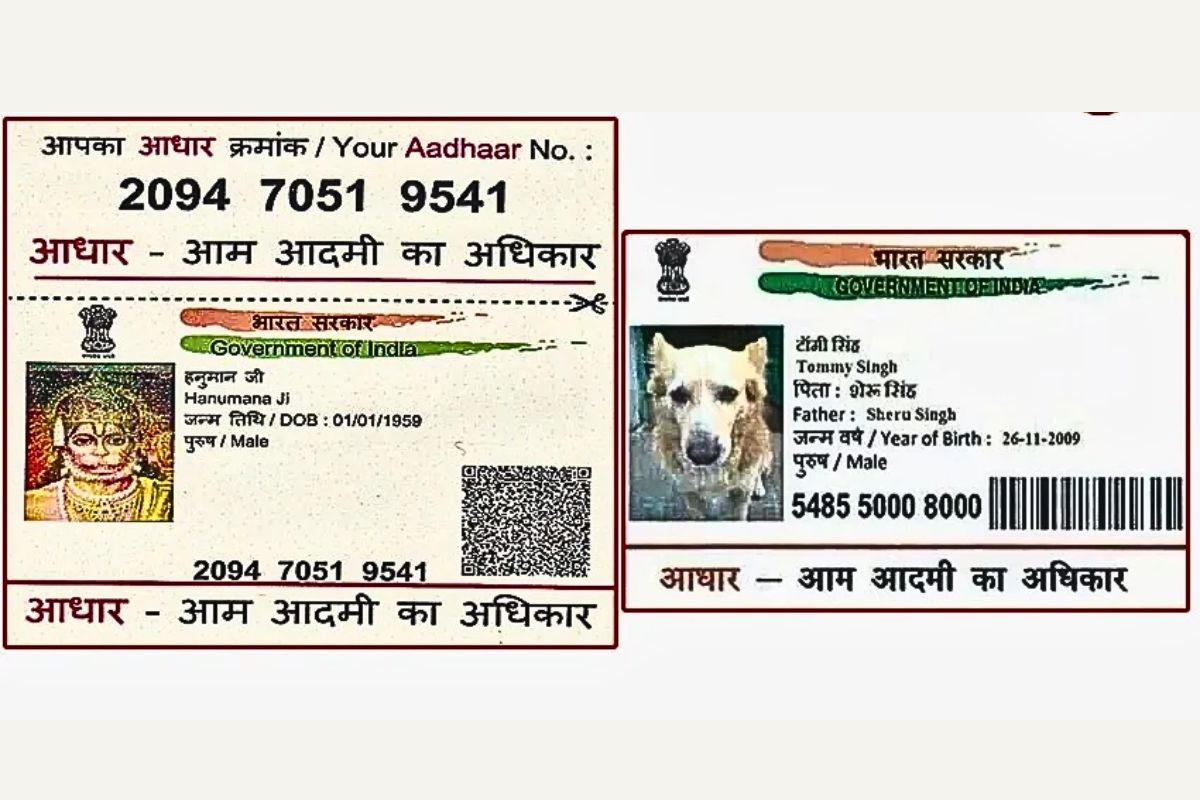
Implementation ignores limits: De facto mandates for welfare, banking, and education persist, leading to exclusions—65 lakh nearly disenfranchised in Bihar, disproportionately affecting the poor, women, and migrants. Credibility is shattered by fakes: Duplicates for deities (Lord Hanuman’s 2014 card) or dogs (Tommy Singh’s 2015 issuance), and 140% saturation in Bihar districts signaling fraud. Private misuse continues: E-commerce and rentals demand scans, stored insecurely, fueling identity theft (nearly 300 cases reported).
Impacts are devastating: Denial of benefits violates dignity, as Chandrachud noted, with women delivering in parking lots sans Aadhaar, children barred from mid-day meals, and 42 hunger deaths in Jharkhand. This defiance mirrors systemic waste in CAG reports: Uttar Pradesh’s solid waste management lapses from 2016-2022, with non-functional plants and unspent funds, Gujarat’s Rs 2,414 crore unnecessary supplementary provisions, and Karnataka’s Rs 14 crore excess on idle chapati machines.
Lavish expenditures like the Rs 3,000 crore Statue of Unity or Rs 4,000 crore Central Vista redevelopment are decried as “waste of tax money” during crises when hospitals lacked oxygen and farmers faced distress. Parliament sessions cost Rs 2.5 lakh per minute while adjourning public debates, and Rs 20,000 crore farmer loan waivers are labeled wasteful without systemic reforms. In debt-laden India, with rising taxes and social spending at 0.9% of GDP, persisting with Aadhaar’s expansion is unconscionable abuse, favoring digital control over citizen rights and fiscal responsibility.
3. Absolute Misuse and Abuse of Power and Wasting Public Hard Earned Money: Aadhaar as a Vehicle for Cronyism and Citizen Subjugation
Aadhaar epitomizes the absolute misuse and abuse of power by the government, channeling hard-earned taxpayer money into a vortex of inefficiency, surveillance, and private enrichment while the nation grapples with acute poverty, healthcare crises, and infrastructural decay. With total costs exceeding Rs 11,385 crore and the BLS contract adding Rs 2,055 crore for 300 centers employing 3,000, the project has become a symbol of fiscal recklessness, prioritizing bureaucratic expansion over public welfare. This abuse is amplified by broader patterns of extravagance, as CAG audits reveal billions lost to corruption and poor planning, diverting resources from essential services.
The usage of Aadhaar is inherently abusive and coercive. While the Supreme Court emphasized “voluntariness,” government policies have made it quasi-mandatory: Linkages to subsidies, LPG, MNREGA payments, PDS rations, and even school admissions are enforced through incentives or threats of benefit cuts, pushing vulnerable populations into compliance despite judicial strikes on mandatory private uses. This undermines consent, especially for the illiterate or marginalized who may not comprehend biometric implications.
The validity of Aadhaar is severely compromised by “mission creep” and function creep, extending its role beyond welfare to financial services, taxation (PAN linkage), telecom, health records, and more, creating a universal identifier that enables profiling, state oversight, and social control. Health data linking raises acute privacy concerns, as medical information is sensitive and confidentiality paramount.
Credibility is nonexistent: Fake Aadhaar cards from bogus agencies lead to misidentification in electoral rolls and sensitive processes, with duplicates for deities (Lord Hanuman’s 2014 card) or dogs (Tommy Singh’s 2015 issuance), and 140% saturation in Bihar districts signaling fraud. Lacking holograms or chips, e-Aadhaar invites Photoshop forgeries, as RS Sharma’s 2018 tweet of his number demonstrated. AePS enables extortion by roaming agents tricking elders into scans, as in Jharkhand’s scholarship scam.
Implementation is a litany of failures: Probabilistic biometrics with 99.76% claimed accuracy crumble under scrutiny, with 12% failure rates yielding “false negatives” for laborers, elderly, or leprosy patients. Enrollment barriers exclude the visually impaired, bedridden, or remote residents; updates are labyrinthine, with address changes requiring distant offices. The system’s over-centralization ignores fixes, yielding “pain without gain” per EPW analyses.
The impacts on citizens are catastrophic and disproportionate. Exclusions devastate the marginalized: In three states, two million miss PDS grains monthly due to glitches; Jharkhand saw 42 hunger deaths since 2017; others perished from denied healthcare or pensions. Women delivering in parking lots sans Aadhaar-linked ultrasounds, children barred from mid-day meals—these violate dignity, as Chandrachud noted: “Denial of benefits… is a violation of dignity”.
Voter disenfranchisement in Bihar’s SIR affected 65 lakh, skewing against women and migrants. Welfare woes include misrouted MGNREGA wages, halted pensions (e.g., Mangri Pahnain’s 13-month loss), elderly carried for scans, and bribes entrenching inequality. Yet, positives like reduced PDS leakages (from 73% to lower) are undermined by exclusions, creating a “digital caste” via data divides.
This abuse reflects broader fiscal waste in CAG reports: Uncollected taxes at Rs 21.3 trillion, Gujarat’s Rs 2,414 crore unnecessary provisions, Odisha’s Rs 148.75 crore suspected misappropriation in welfare schemes. Contracts inflate through corruption, as electoral bonds reveal: Probed firms donated Rs 2,471 crore to BJP, securing inflated deals like the Maharashtra irrigation scam with 200% cost escalations for kickbacks.
Lavish spending includes the Rs 3,000 crore Statue of Unity, Rs 4,000 crore Central Vista, Rs 20,000 crore farmer waivers, and parliament’s Rs 2.5 lakh per minute costs— all “waste of tax money” amid hunger and crises. In a nation where 800 million rely on free rations and social spending is 0.9% of GDP, Aadhaar’s continuation is not governance—it’s exploitation, ignoring the common man’s plight for elite and private gains.
4. Similar Things Happened in Demonetization: A Parallel Tale of Suffering, Waste, and Unlearned Lessons
The Aadhaar project’s relentless waste and citizen hardship find a striking parallel in the 2016 demonetization policy, another grand experiment that inflicted immense pain on Indians for illusory benefits, highlighting the government’s pattern of reckless, meaningless initiatives. On November 8, 2016, Prime Minister Narendra Modi announced the invalidation of Rs 500 and Rs 1,000 notes, representing 86% of circulating currency, to eradicate black money, corruption, and terrorism financing. The move was touted as a bold strike against the shadow economy, but it unraveled into a catastrophe of economic disruption, human suffering, and fiscal futility.
The immediate fallout was chaotic: Long queues at banks and ATMs led to over 100 deaths from heart attacks, exhaustion, and suicides amid financial ruin. The informal sector, employing 90% of the workforce, ground to a halt as cash shortages crippled small businesses, farmers, and daily wage laborers. GDP growth dipped to 6.6% in 2016-17, industrial output plummeted, and agriculture suffered from inability to buy seeds or sell produce. Millions lost jobs, with the Centre for Monitoring Indian Economy estimating 1.5 million unemployment increase in the first four months. The poor and rural populations, reliant on cash, were hit hardest, with reports of weddings canceled, medical treatments delayed, and families going hungry.
New Rs 2,000 notes were introduced at a staggering cost of Rs 7,965 crore for printing and logistics, only to be withdrawn in 2023—a senseless loop that achieved nothing. Why introduce notes destined for ban? Black money recovery was minimal; 99.3% of demonetized notes returned to banks, indicating hoarding rather than destruction. Corruption persisted, digital payments rose temporarily but cash circulation rebounded to pre-demonetization levels by 2018. Terrorism financing continued unabated, as evidenced by ongoing incidents. The exercise solved no purpose but inflicted widespread misery, with no positive outcomes for the common man.
Indians suffered on this useless exercise: Farmers committed suicide over unsold crops, workers migrated back to villages in distress, and the economy lost an estimated 1-2% GDP. This mirrors Aadhaar’s exclusions, where biometric glitches deny rations and pensions, causing hunger deaths and dignity loss. In a poor country like India, where millions sleep empty-stomached, healthcare is the “poorest” with rats “trolling” hospitals lacking basic medicines and amenities, roofs of schools are “washing away” during monsoons, the judiciary lacks judges leading to over 5 crore pending cases, and schools and colleges lack infrastructure, can the government afford to spend on such useless projects?
More to add, the government is continuously adding more taxes on the public—GST on essentials like food and medicine, unchanged income tax slabs amid inflation—and our external debt is increasing day by day to over Rs 50 lakh crore. CAG reports echo this waste: Bihar’s unaccounted Rs 70,877 crore in project funds, Maharashtra’s Rs 87 crore inflated fertiliser procurement, and Odisha’s Rs 148.75 crore misappropriation.
Contracts inflate through corruption, as electoral bonds show probed firms donating to secure deals. Lavish spending like Rs 3,000 crore Statue of Unity or Rs 4,000 crore Central Vista diverts from welfare. Government must stop experimenting with such useless and meaningless projects while Indians are forced to live in such bad conditions; prioritize real needs over vanity.
5. Despite Not a Single Use of Aadhaar Card, Government Is Once Again Awarding Aadhaar Sewa Kendra Projects in the Name of Aadhaar Maintenance and Updation: Perpetuating a Valueless Behemoth
Despite Aadhaar’s lack of a single irreplaceable use—the government itself admits it is not proof of citizenship, date of birth, or residence—the administration continues to award massive contracts like the Rs 2,055 crore to BLS for ASKs, under the pretext of maintenance and updation. Aadhaar’s purported role in welfare has proven illusory: Linkages meant to eliminate fraud have instead caused exclusions, with NITI Aayog reporting 28% diverted maternity payments and audits showing no significant leakage reduction. Financial inclusion via Jan Dhan accounts predated Aadhaar, and digital delivery remains hampered by glitches.
Usage is coercive, turning voluntary enrollment into mandatory for services; validity is limited to identity verification, as per Court rulings. Credibility is eroded by breaches and fakes, with 815 million records leaked. Implementation requires perpetual updates for errors like biometric changes or initial inaccuracies, now charged at hiked rates. Impacts: Financial burden on families, who pay for corrections that add zero value, amid exclusions causing hunger and disenfranchisement.
This persistence mirrors useless projects like the Rs 3,000 crore Statue of Unity or Rs 20,000 crore loan waivers, “waste of tax money” without lasting impact. CAG’s FY23 fiscal lapses of Rs 3.17 lakh crore underscore the pattern. Government invests in “dead” Aadhaar amid crises—absolute abuse.
6. The Hilarious Part Is As Soon As the Government Awarded the Project, UIDAI Increased Their Fees on Aadhaar Card Updating: A Suspicious Synchronicity Suggesting Collusion
The “hilarious” irony is the immediate fee hike by UIDAI post-BLS award: Demographic Rs 75, biometric Rs 125, home Rs 700, print Rs 40—framed as cost alignment but aligning perfectly with BLS’s transaction model to guarantee profits. Media highlighted the first revision in five years, but flagged political sensitivity for routine corrections adding up for families.
Implementation overlooks transitional free windows; credibility suffers from overlaps with exemptions. Impacts: Modest but real increases burden the poor, who pay for valueless updates amid exclusions. This coincides with waste like parliament’s Rs 2.5 lakh/minute costs or Central Vista’s Rs 4,000 crore, “irrelevant” during crises.
7. Why Citizens Are Being Charged for Updating a Document Which They Have No Single Use in Their Life? The Injustice of Coerced Payments for a Useless ID
Charging citizens for Aadhaar updates is an outrageous imposition, given the document’s lack of unique use—it doesn’t replace any ID, prove citizenship, or guarantee services without exclusions. Validity is curtailed; impacts: Loss of dignity through denials. This extortion in tax-heavy India contrasts lavish spending on Statue of Unity or loan waivers.
8. Why Will Anyone Want to Spend on Anything Which Adds Zero Value to Their Life? The Coercive Economics of Aadhaar Maintenance
No rational person invests in valueless items, yet Aadhaar coerces spending through linkages, with zero value amid failures and exclusions. Government experiments like demonetization waste, ignoring real needs.
9. What Is the Sole Use and Purpose of Aadhaar Card and What Other Documents Cant Be Used at the Place of Aadhaar: Demystifying the Hollow Claims
Aadhaar’s “sole” purpose—unique identity for welfare—fails; alternatives like voter ID, PAN suffice for all functions. No irreplaceable role.
10. Why Aadhaar Cards Were Not Issued Thoroughly When They Were Issued, Why Aadhaar Still Needs Modifications After 10 Years of Launch? The Legacy of Hasty Rollout and Perpetual Fixes
Hasty issuance caused errors; modifications persist after 15 years. Credibility low; impacts: Ongoing costs amid waste like unfruitful projects.
11. What Is the Credibility of Aadhaar Card When We Find That Even People from Pakistan, Bangladesh and Other Countries Living in India Have Fake Aadhaar Card: Fraud Undermining National Security
Fakes by foreigners enable scams; credibility zero.
12. The Another Fun Fact Is That Government Has Issued Aadhaar Card in the Name of Dogs and Gods In India for eg Aadhaar Card of Tommy Singh and Aadhaar Card of Hanuman
Absurd enrollments: Tommy Singh’s dog linked to gas, Hanuman’s card—farce.
13. If the Project Has So Much Lapse, Why Government Still Want to Continue and Why Government Still Want to Invest: Ignoring Failures for Control and Cronyism
Lapses ignored for surveillance and contracts; investment despite waste.
14. This Is Simply a Case of Systematic Extortion Where Government Is Awarding High Value Projects to Some Private Players and Everyone in India Knows How These Private Players Gets Such Project: The Electoral Bonds Revelation
Electoral bonds expose donations for contracts: Probed firms Rs 2,471 crore to BJP, lottery companies Rs 1,368 crore. Inflated awards like irrigation scam.
15. Government Is Awarding the Projects to the Companies Which Are Already a Nuisance, Notorious Companies and Have Been Blocked by the Government. What Is Government Getting From All This- Political Donations Without Worrying for the Welfare of the Public and Common Man and Comman Man Is Still Burdened Under Taxes and Spending Their Life Earning in Taxes
The government’s pattern of awarding lucrative projects to notorious companies with histories of blacklisting, inefficiencies, and controversies reveals a deep-seated cronyism that prioritizes political donations over public welfare, leaving the common man burdened under taxes and deprived of essential services. Take BLS International, the recipient of the Rs 2,055 crore Aadhaar contract: The company has faced severe backlash in Canada, where Indian diaspora petitions highlighted long waits, poor service, and unethical practices in visa processing, urging the Indian Ministry of External Affairs to intervene.
In Punjab, BLS’s Sewa Kendra contract was terminated in 2018 for inefficiencies and complaints, effectively blacklisting it from similar operations. Reports accuse BLS of cheating customers in the US and Canada through opaque visa processes and hidden fees. A major controversy involved a data breach in Estonia, where BLS was implicated in compromising sensitive information, leading to international scrutiny. Additionally, BLS has been embroiled in sexual harassment allegations at its centers, further tarnishing its reputation. Despite this, BLS secured the Aadhaar deal, raising questions about due diligence.
Similarly, Eduquity (formerly Educomp) has been blacklisted in four states, including by the Directorate General of Training in 2020 for paper leaks, cheating, and irregularities in exams. In Madhya Pradesh, Eduquity’s involvement in patwari exams led to leaks and protests, yet it was awarded SSC 2025 contracts by the National Testing Agency (NTA) despite public outcry and its murky history. Eduquity’s parent Educomp was debarred by the World Bank for fraud and booked by CBI for Rs 360 crore bank fraud.
Aptech Limited, blacklisted in J&K, Rajasthan, and Assam for corruption and leaks, was hired for JKSSB exams amid mass protests. What is the government getting from all this? Political donations without worrying for the welfare of the public and common man, as electoral bonds reveal raided companies contributing heavily to ruling parties to secure projects, while the common man is still burdened under taxes and spending their life earning in taxes, with no relief in sight for poverty or infrastructure.
Conclusion: A Urgent Call to Dismantle the System of Waste and Extortion – Prioritizing People Over Policies
Aadhaar’s systematic extortion must end; scrap coercive linkages, reverse fee hikes, and redirect funds to healthcare, education, and poverty alleviation. Cease meaningless experiments like demonetization and Aadhaar; the government must learn from CAG reports and judicial rebukes, ending the nexus of donations and inflated contracts. Indians deserve governance that uplifts, not burdens, the common man—stop the waste, focus on welfare.