India’s electric vehicle (EV) boom is matched by a growing focus on safety. Since the launch of the Bharat NCAP crash-test program, manufacturers have strived for top ratings. Bharat NCAP subjects cars to a 64 km/h frontal offset test, a 50 km/h side barrier test, and a 29 km/h side pole test. Vehicles earn up to 32 points for Adult Occupant Protection (AOP) and 49 for Child Occupant Protection (COP). Remarkably, every Indian EV tested so far has achieved a 5-star rating.
In particular, five models stand out as the “safest EVs” with perfect or near-perfect scores:
– Mahindra XEV 9e – AOP 32/32, COP 45/49
– Mahindra BE.6 – AOP 31.97/32, COP 45/49
– Tata Harrier EV – AOP 32/32, COP 45/49
– Tata Punch EV – AOP 31.46/32, COP 45/49
– Tata Nexon EV – AOP 29.86/32, COP 44.95/49
Each of these EVs earned five stars by excelling in crash tests. Below we examine them in detail – highlighting crash results, safety features and technologies, build and battery safety, ADAS aids, as well as buyer-oriented specs like price, range, and variants.
Bharat NCAP Crash Tests: What the Numbers Mean
All five EVs above scored near-perfect crash results. Bharat NCAP’s scoring table (see inset) shows that the Harrier.ev, XEV 9e, and others all scored 32/32 in AOP or very close, and 45/49 in COP. For context, 32 is the maximum Adult Occupant score; 45+ (out of 49) is essentially full marks on Child Occupant. In practice this means the tested models with 5-star ratings provided excellent protection in both frontal and side crashes for adults and children.
For example, the Harrier EV scored 16/16 in both the frontal and side barrier tests, with ‘good’ protection of driver and passenger (head, neck, pelvis etc) in front and side impacts. In all these EVs, structural integrity and restraint systems kept crash forces well managed. According to NDTV, “the electric SUV has scored a five-star rating…with 32 points out of 32 for AOP and 45 out of 49 for COP”. In short, among EVs, these five lead the pack in crashworthiness.
1. Mahindra XEV 9e
Mahindra’s XEV 9e is a large luxury electric SUV built on the new INGLO electric platform. It earned a perfect 5-star Bharat NCAP score: Adult Occupant Protection 32/32 and Child Occupant 45/49. Mahindra’s press release confirms the XEV 9e “chalked up a perfect score with a 32/32 tally” in adult tests. In the crashes, the XEV 9e’s body structure showed exceptional rigidity.
The INGLO platform was engineered for global crash standards: the battery pack is integrated into the underbody as a protective cage, and ultra-high-strength boron steel reinforces the front end. This steel cage design ensures that crash forces are absorbed by structure rather than the cabin. Indeed, Mahindra notes that the INGLO architecture “prioritizes battery safety” and that the battery pack itself was “subjected to rigorous tests to ensure… safety”. As a result, crash tests found only minor deformations and excellent occupant survival space.
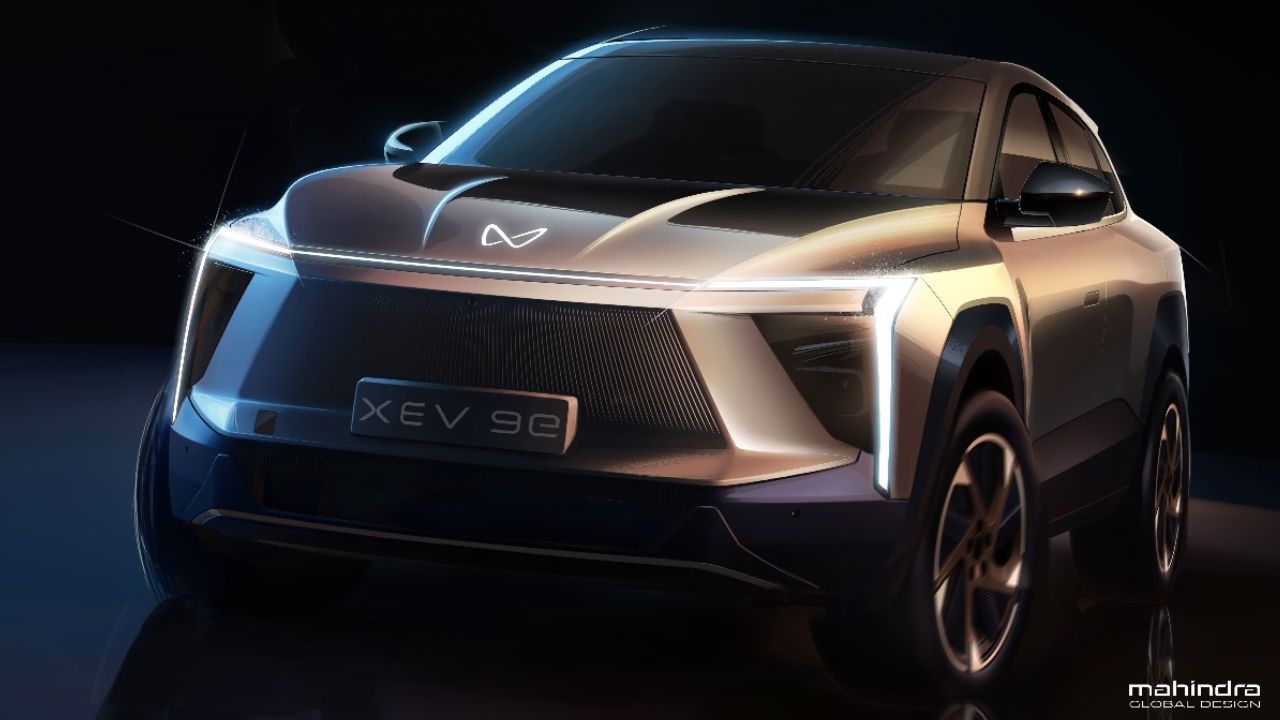
Key Safety Features: The XEV 9e comes loaded with passive and active safety equipment. It has seven airbags (including front, side and curtain) as standard. Electronic aids include Anti-lock Braking System (ABS) with EBD, Electronic Stability Control (ESC) and Traction Control to prevent skidding. A 360-degree camera system and a vision-based blind spot monitor provide all-round awareness. The XEV 9e also features an “intelligent electronic brake booster” and electric parking brake for optimal braking performance. Mahindra highlights that its XEV 9e/BE6 pair have “seven airbags” plus a VisionX AR heads-up display and Tyre Pressure Monitoring System (TPMS). In short, it’s a top-tier safety package.
ADAS and Driver Aids: The XEV 9e offers a very advanced Level-2+ ADAS suite. It uses five radars and a vision camera to power features like adaptive cruise control, lane-centering, lane-change assist, blind-spot detection, rear cross-traffic alert, front collision warning and Automatic Emergency Braking (AEB). Even “emergency steering assist” helps keep the car from leaving its lane. This multi-sensor setup – rare among Indian EVs – means the XEV 9e can autonomously handle many highway scenarios. Together with its robust cage, the ADAS tech greatly enhances crash avoidance.
Powertrain, Range & Variants: The XEV 9e is offered with a large 79 kWh LFP battery (plus a smaller 59 kWh pack in lower trims). Mahindra claims a certified MIDC range of about 656 km for the long-range model. Acceleration is brisk (0–100 km/h in ~6.8 s), befitting its flagship status. Fast charging is supported – Mahindra says 20–80% in under 20 minutes on a 175 kW charger. The XEV 9e is priced between ₹21.90–31.25 lakh (ex-showroom) across its multiple variants (which include RWD and AWD versions). Top trims add luxury touches (leather interiors, panoramic roof) to complement the safety gear. The XEV 9e competes with premium EVs like the Tata Harrier EV and BYD Atto3 on both luxury and safety.
2. Mahindra BE.6
The Mahindra BE.6 is a closely related sibling of the XEV 9e, sharing the INGLO underpinnings but targeting a sportier profile. It too earned a full 5-star Bharat NCAP rating: 31.97/32 AOP and 45/49 COP. As the Hindustan Times notes, the BE.6 rides on the same INGLO platform (notably designed to “global crash standards” and “superior battery safety”) and “shares the platform and underpinnings with the XEV 9e”.
In fact, Mahindra’s press release explicitly reports the BE.6’s score of 31.97/32 AOP. Structurally, the BE.6 benefits from the same reinforced chassis: integrated LFP battery pack, high-strength steel, and a bolstered frame for frontal impacts. Crash behaviour is virtually identical to the XEV 9e – in tests, the BE.6 gave up little, yielding excellent passenger protection.
Key Safety Features: The BE.6 shares almost all the safety hardware of the XEV 9e. It has seven airbags, ABS with EBD, ESC, TPMS, hill-hold and hill-descent control, and all-wheel disc brakes with auto-park assist. A 360° camera and vision-based blind spot monitor are also standard. Mahindra’s announcement highlights that both BE.6 and XEV9e include features like 360° camera, VisionX AR HUD, TPMS, blind view monitor, electronic brake booster, and seven airbags. The only notable difference is in tuning: the BE.6’s structure is the same, but its programming emphasizes dynamic driving stability.
ADAS and Driver Aids: Like its XEV9e cousin, the BE.6 sports an advanced ADAS suite (sometimes called Level-2+). Using five radars plus a camera, it offers adaptive cruise control with stop-and-go, lane-centering, automatic lane-change assist, emergency steering assist, blind-spot detection, rear cross-traffic alert, and forward collision warning with AEB. Such automation reduces collision risk in traffic. The BE.6 also has a multi-view camera system and cornering lamps to improve low-speed maneuver safety.
Powertrain, Range & Variants: Mahindra positions the BE.6 as the sportier variant in its new “Electric Origins” lineup. It uses the same battery options as the XEV9e – notably the 79 kWh LFP pack – and shares its powertrain (210 kW motor via a 3-in-1 unit). Claimed MIDC range is 682 km for the BE.6 long-range model (making it India’s longest-range EV). Acceleration is roughly 0–100 km/h in ~6.7 s (similar to XEV9e). The BE.6’s pricing runs from ₹18.90–27.79 lakh, slightly below the XEV9e, reflecting its more performance-oriented (and less opulent) tuning. It comes in several trims (AWD is standard on top versions) with features like dual-motor AWD, rally-inspired suspension, and multimedia geared to enthusiasts.
3. Tata Harrier EV
The Tata Harrier EV is Tata Motors’ flagship electric SUV, introduced in mid-2025. Already it has impressed by earning a full 5-star Bharat NCAP rating (32/32 AOP, 45/49 COP). The Harrier EV is built on Tata’s new acti.ev+ (OmegaArc) architecture – a heavily reinforced version of the ICE Harrier’s platform. In crash tests, it demonstrated “good” protection in all areas. NDTV reports that in the frontal barrier test the Harrier EV “offers ‘good’ protection to all parts of the occupants”. It scored 16/16 in both frontal and side barrier crashes.
Structurally, the Harrier EV uses high-strength steel and a strong safety cage, with anti-intrusion rails (as in the ICE Harrier) and thick A-pillars. Test dummies showed minimal head or chest injuries – the only slight penalty was a marginal rating on one side pole test. Overall the strong monocoque shell passed all tests without breaches, giving it a perfect crash score.

Key Safety Features: Tata’s safety suite on the Harrier EV is very comprehensive. It comes with seven airbags (driver and passenger, side and curtain) – six of these are standard across trims. Other passive aids include ABS with EBD, Electronic Stability Program (ESP), hill-hold and hill-descent control, and ISOFIX child-seat anchors on the rear seats. Rear parking sensors and camera are standard, while top trims add a 360-degree camera. Electric parking brake with auto-hold is also fitted for convenience.
ADAS and Driver Aids: The Harrier EV is notable for offering a Level-2 ADAS suite. Tata has equipped it with adaptive cruise control, lane-keeping assist, automatic emergency braking (with pedestrian/cyclist detection), forward collision warning, blind-spot monitoring (with alerts in mirrors), and rear cross-traffic alert. A digital (camera-based) rear-view mirror and 360° surround-view camera aid visibility. In fact, Tata notes that the EV “offers a digital inside rearview mirror (IRVM) with inbuilt dashcam and auto park assist” that even the ICE Harrier lacked. The Harrier EV also includes features like rain-sensing wipers, auto headlamps, TPMS, and an Acoustic Vehicle Alert System for pedestrians. All of these systems contribute to crash avoidance and occupant safety.
Powertrain, Range & Variants: The Harrier EV offers 65 kWh and 75 kWh lithium-iron-phosphate (LFP) battery packs. Tata claims up to 627 km of certified range (MIDC cycle) with the larger pack. A dual-motor AWD setup (390 bhp/504 Nm) is optional for higher trims; base models are single-motor RWD. Charging is fast: DC 120 kW input can do 20–80% in 25 minutes. The Harrier EV launched at ₹21.49–30.23 lakh (ex-showroom), reflecting its premium positioning. It comes in multiple variants (Adventure, Fearless, Empowered, and a special Stealth Edition) with features like leather seats, 14.5″ touchscreen, JBL audio, and more. In summary, the Harrier EV delivers flagship build quality and tech, matching Mahindra’s new SUVs in safety while offering Tata’s own luxury touches.
4. Tata Punch EV
The Tata Punch EV is a subcompact crossover (sibling of the ICE Punch) aimed at urban buyers. It too has achieved a 5-star NCAP rating – 31.46/32 AOP and 45/49 COP. Given its light weight (~1,300 kg), this is an impressive result, underlining the strength of Tata’s design. In tests, the Punch EV’s rigid steel structure protected occupants well; only minor penalty points were lost. Child occupant protection was full marks (45/49).
Key Safety Features: Tata has equipped the Punch EV with a “safety cocoon” approach. It offers six airbags (dual front, dual side, dual curtain) as standard. Additional passive safety items include Anti-lock Brakes with EBD, Electronic Stability Control (ESC), and even Electronic Parking Brake (EPB) on higher trims. ISOFIX child anchors and corner-impact sensors on doors add to child safety.
The Punch EV also gets features uncommon in its segment: hill-start assist, hill-descent control, and even all-wheel disc brakes (top models) for shorter stopping distances. A 360° surround-view camera is available on Adventure trims, along with front and rear parking sensors. Cruising stability is aided by features like speed-sensing door locks and seatbelt reminders. In sum, Tata has given the Punch EV a rich safety kit for its class.
ADAS and Driver Aids: The Punch EV includes many Level-1/2 driver-assist aids. Standard across trims are Forward Collision Warning with Automatic Emergency Braking (AEB) and Lane Departure Warning/Lane Keep Assist. It also has Adaptive Cruise Control, Blind Spot Collision Avoidance Assist, Rear Cross-Traffic Alert and Traffic Sign Recognition. These systems use forward and rear radar/camera sensors to warn the driver or intervene. For example, the Punch EV will automatically brake if it detects an imminent frontal crash. While not as extensive as the Harrier’s or Mahindra’s Level-2 suites, Punch EV’s ADAS is among the best in its segment.
Powertrain, Range & Variants: The Punch EV comes in two battery variants: a 25 kWh pack (standard) and a 35 kWh long-range pack. The 25 kWh version offers about 315 km (ARAI) of city range, while the 35 kWh version climbs to 421 km (both figures per MIDC). Motor output is 120.7 bhp (90 kW) on the 35 kWh models and 80.4 bhp on the 25 kWh cars. Charging from 10–80% takes about 50–60 minutes on a 50 kW DC fast charger.
Tata has priced the Punch EV very competitively at ₹9.99–14.29 lakh, making it one of the most affordable 5-star EVs. There are many trim levels (Smart, Adventure, Empowered, and “Long Range” versions), with higher models adding features like a larger 10.25″ touchscreen, sunroof, and ventilated seats. Overall, the Punch EV combines city-friendly size and efficiency with top-tier safety in its class.
5. Tata Nexon EV
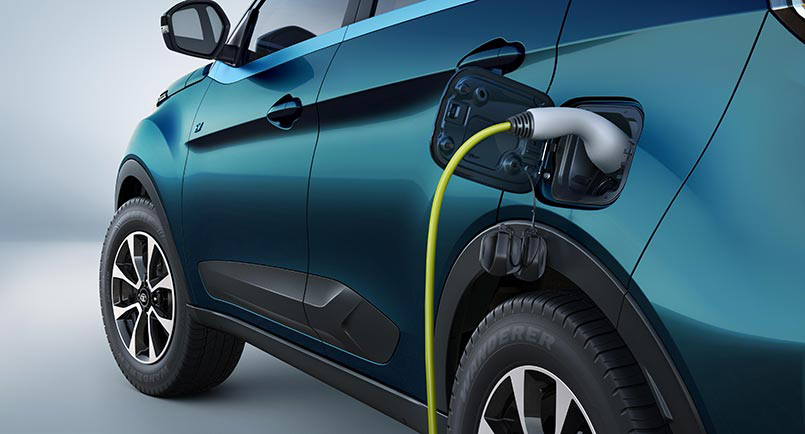
The Tata Nexon EV is India’s long-time best-selling electric SUV. After a recent safety update, it continues its safety legacy with a 5-star Bharat NCAP rating (29.86/32 AOP, 44.95/49 COP). While its AOP score is slightly lower than the others above, the Nexon EV still provided excellent crash protection and retained occupant space. Its steel monocoque and thick side beams gave it a strong safety cage – no structural weaknesses emerged in the NCAP crash. The Nexon EV’s crash results were essentially as good as the Harrier’s on the side tests, with only the driver’s chest area rated marginal in one frontal impact (similar to the ICE Nexon’s performance).
Key Safety Features: In recent updates Tata has bolstered the Nexon EV’s safety kit. All models now come with six airbags (dual front, side, and curtain), up from four in earlier versions. Electronic aids include ABS with EBD, ESC, and hill-hold control as standard. Entry-level variants have front parking sensors and reverse camera.
Higher trims add 360° surround cameras, blind view monitor (C-pillar camera), and all-wheel disc brakes with EPB and auto-hold. Recent long-range “A” trims also introduced an auto-dimming IRVM, rain-sensing wipers and a TPMS. ISOFIX mounts are provided on rear seats for child seats, and front and rear parking sensors are standard on mid and top variants. In short, the Nexon EV now matches even SUVs above it in terms of passive safety gear.
ADAS and Driver Aids: The Nexon EV was updated in late 2025 to include Level-2 ADAS on top models. The new Empowered+ A variant (45 kWh long-range) adds features like Adaptive Cruise Control (with stop-and-go), Forward Collision Warning with AEB, Lane Keep Assist, and Traffic Sign Recognition. Lower variants still include basic aids: driver attention alert, speed alert, and cornering fog-lamps for night safety. Overall, the Nexon’s safety systems are now on par with or better than most compact SUVs.
Powertrain, Range & Variants: The Nexon EV is offered in a 30 kWh (mid-range) pack and a 45 kWh (long-range) pack. Tata claims 275 km of certified range for the 30 kWh version and 489 km for the 45 kWh (both MIDC). Real-world ranges are lower, but even so the long-range Nexon can reliably do 400+ km with careful driving. Both versions use a single rear-mounted motor (127–142 bhp). Charging is fast: DC 60 kW input can do 10–100% in about 40 minutes.
The Nexon EV starts at ₹12.49 lakh and tops out at ₹17.49 lakh (ex-showroom). There are 13 variants ranging from the base Creative MR (mid-range battery) up to the Empowered+ (long-range) in a dark-themed special edition. Notably, the Nexon EV offers many premium features: a JBL sound system, sunroof, wireless charging, and a solid connected-car system. It remains one of the best value 5-star EVs on sale.
Comparative Overview
- Crash Performance: All five models achieved 5 stars. The Mahindras (XEV 9e and BE.6) and the Harrier EV maxed out adult protection (32/32), while the Punch and Nexon were just shy (31.46 and 29.86). Child-protection scores were nearly identical (≈45/49) for all. In crash tests, occupants in each SUV experienced “good” protection across all body regions, underscoring their robust structures.
- Structural Rigidity: Mahindra’s INGLO platform (XEV9e/BE6) and Tata’s acti.ev platforms (Harrier/Punch/Nexon) are both extremely rigid. Mahindra’s press kit highlights boron-steel framing and integrated battery cages; Tata’s ICE Harrier platform has similar high-strength reinforcements. In all cases, the cabin acted as a strong survival space. The Tata Punch EV, despite being compact, has a surprisingly stiff frame with anti-intrusion beams (the 5-star rating proves its metal).
- Safety Equipment: Every model offers at least 6 airbags, ESC, ABS with EBD, and ISOFIX mounts. All have front and rear parking aids, and electric parking brakes on higher trims. The XEV9e/BE6 stand out with premium extras: 360° cameras, HUD, and even headlamp cornering assist. Tata’s EVs (especially higher Nexon and Harrier trims) now also include 360° cameras, blind-spot cameras, rain-sensing wipers, and TPMS. In short, safety hardware is exhaustive across the board.
- ADAS Features: Mahindra’s models boast the most advanced ADAS suites, with five radars enabling autonomous lane changes, lane centering, emergency steer assist, adaptive cruise and full AEB. Tata’s Harrier EV offers Level-2 ADAS too (adaptive cruise, lane-keep, AEB). The Nexon EV recently gained similar ACC/AEB in top trims. Even the Punch EV, in its segment, includes forward-collision warning, AEB, adaptive cruise, and lane-keep. Thus all five cars help prevent accidents, not just survive them.
- Battery Safety: Mahindra has designed its INGLO chassis with a low center of gravity and battery pack cage. The BE6/XEV9e use LFP chemistry (less flammable) and rigorous BMS. Tata’s Harrier and updated Nexon EV also use LFP cells, improving thermal stability. Passive battery protections (fuses, cooling) are standard. In crash tests, none of these EVs showed battery damage or fire – a testament to the robust design in all five.
- Price and Range: There is a wide span. The Punch EV is the cheapest (₹9.99–14.3 L), with city-friendly range (315–421 km). The Nexon EV is mid-range (₹12.49–17.49 L), with 275–489 km range. Mahindra’s BE.6 (₹18.90–27.79 L) and XEV9e (₹21.90–31.25 L) occupy the luxury end, offering ~656–682 km range. The Harrier EV (₹21.49–30.23 L) sits between them, with up to 627 km. Thus buyers trade off budget vs range: the Punch is city-short and cheap; the BE.6/XEV9e are pricey but ultra-long-range; Harrier and Nexon fill the middle ground.
- Variants and Usage: All models come in multiple trims for different needs. The Punch and Nexon focus on practicality and urban driving (Punch offers base/Adventure/Empowered trims, Nexon has Creative/Fearless/Empowered levels). The Harrier, BE.6 and XEV9e have more luxury/performance variants (e.g. AWD options, premium interior packs). Each maker also bundles more tech at higher prices (sunroofs, sound systems, etc.), but safety features are often universal.
In summary, the Mahindra XEV 9e and BE.6 currently lead as India’s safest EVs, with perfect crash scores and bleeding-edge ADAS. The Tata Harrier EV matches their safety in a more traditional luxury package, while the Tata Punch EV achieves similar crash robustness in a subcompact hatch. The Tata Nexon EV remains one of the most balanced choices – very safe and reliable, with practical range and price. Buyers seeking top safety will find any of these five models to be an excellent choice.