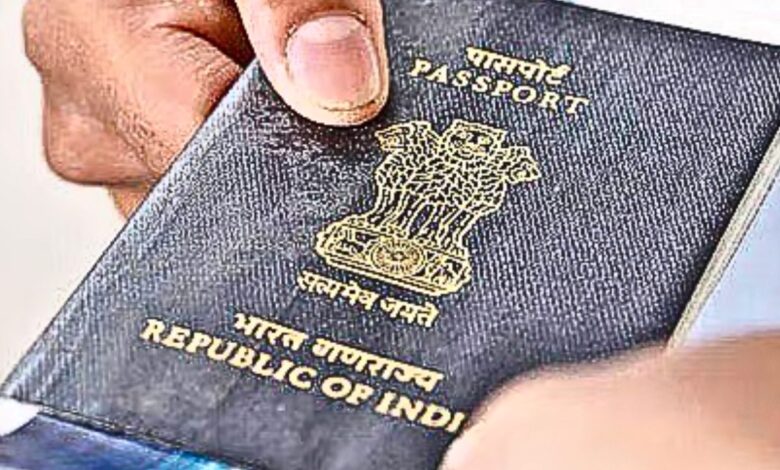
Indian passport has been on a roller-coaster ride. As of late 2025, the Henley Passport Index ranks it a mediocre 85th in the world, tied with tiny Mauritania, down sharply from 77th just months earlier. Indian travellers can now enter only 57 countries without a prior visa. (In 2024 it was 80th, and its all-time best was 71st in 2006.) This plunge reflects changing global travel rules more than any sudden misfortune of Indians, but it is still a wake-up call. For a nation of India’s size and aspirations, this passport’s power seems to have lost some of its shine.
Global Rankings: A Decade of Decline
A look at the past ten years underscores the slide. From the early 2010s’ ranks in the 70s, India drifted into the 80s and 90s. In 2015 India was 88th; it fell to a low of 90th in 2021. There was a brief rebound (rank 80th in 2024), but the latest index shows another fall to 85th. In contrast, global leaders have surged ahead. Singapore (193 visa-free countries), South Korea (190), and Japan (189) top the list. Even fellow democracies have slipped from their former glory. For example the U.S. and U.K. recently dropped out of the top 10 for the first time in two decades, yet India remains far below the high table of travel freedom.
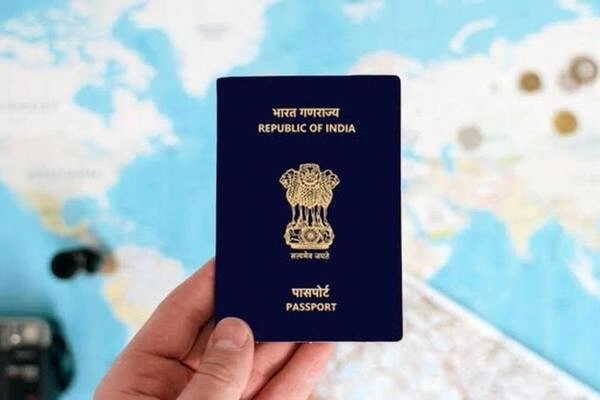
Comparing Passports Worldwide
To understand India’s situation, it helps to see where others stand. Asia’s rising powers have vaulted ahead. China’s passport has rocketed from 94th in 2015 to 64th in 2025, gaining dozens of new visa-free agreements in recent years. The UAE recently jumped from 10th to 8th place (now granting visa-free entry to 184 destinations) by striking trade and travel deals. By contrast, India’s counterparts in BRICS and neighbours enjoy much greater mobility. For instance, Brazil, an economy similar in size has a #11 passport, with 109 visa-free countries (mobility score 163). Even India’s smaller neighbours often outpace it. Bhutan’s passport outranks India’s, and Sri Lanka and Bangladesh, while not high, still do not share India’s dramatic slide.
All these illustrate the gap. In Brazil (another BRICS nation), citizens enjoy visa-free access to 109 countries, which is almost double India’s 57. The Brazilian passport’s mobility score is 163 (rank 11) versus India’s score of only 74 (rank 67). China’s, as noted, has climbed into the top third of passports. Even tiny Pakistan ranks far lower (near the bottom of all passports) due to its own isolation. These comparisons show India is lagging many peers.
Different Indices, Different Stories
One subtlety is that how you measure a passport’s strength matters. The Henley index cited above counts “visa-free” or visa-on-arrival destinations per passport. But other rankings add more dimensions. For example, the Nomad Capitalist Passport Index (a libertarian-minded ranking) scores travel freedom and factors like taxation, global reputation, dual-citizenship options, and personal freedom.
By that broader metric, India plummets to 148th out of 199 countries, tied with Comoros, a tiny African nation of 850,000 people! (Even Bhutan’s score is better, at #140.) Similarly, the Arton Passport Index gives India a global rank of #67 with 26 visa-free destinations (mobility score 74). These chasms highlight that India’s passport underperforms not just in sheer travel count, but also in the softer measures of global perception and policy attractiveness.

Key Factors Behind the Decline
Experts point to a mix of direct and indirect causes:
- Global Border Squeeze: In recent years, many countries tightened visa requirements worldwide. The pandemic and security worries led to stricter entry rules everywhere. As one report noted, India’s fall “reflects changing global mobility agreements and tightening border policies among several nations”. In other words, it’s not only India; travel freedom has generally contracted for developing-country passports.
- Slow Diplomatic Gains: India’s foreign policy has not kept pace with competitors in negotiating new visa waivers. China added roughly 30 visa-free deals in the last year alone, pushing its citizens into dozens of new countries. The UAE’s government similarly struck numerous pacts to vault its rank up. By contrast, India still only has about 26 visa-free agreements and 40 visa-on-arrival deals worldwide (plus many e-Visas). This is far fewer than what a country of India’s clout might expect.
- Domestic Challenges: Home-grown issues filter into passport power. India faces stubborn employment problems. Unemployment inched up to about 3.2% in 2024 prompting many citizens to seek jobs abroad. Indeed, India has the world’s largest diaspora (over 35 million overseas Indians), with about 2.5 million emigrating each year. While remittances are a boon, large-scale emigration can create foreign suspicions about future migration waves. Destination countries sometimes tighten visa rules on nationals of emigrant-heavy countries to prevent unwanted settlement. In sum, a “brain drain” narrative and domestic pressures can indirectly weaken India’s negotiating hand on mobility.
- Index and Perception Factors: Modern passport indexes penalize issues beyond travel. In the Nomad index, India’s global perception and taxation policies drag it down to 148th, on par with Comoros, which is a rather embarrassing comparison. India’s income-tax regime and lack of dual-citizenship options hurt that score. The Passport Index gauge similarly shows India’s reach is moderate: a mobility score of only 74 (world reach 37%), whereas Brazil’s is 163. In plain terms, India’s passport is weaker not just because it can’t enter many countries visa-free, but because factors like international standing and ease of doing business abroad lag behind peers.
Diplomatic Moves and Official Reactions
The government is certainly aware of the issue. In a recent parliamentary reply, the External Affairs Ministry pointed out that “no widely accepted global standard for ranking passports” exists, stressing that private indices use their own criteria. It touted efforts to “increase the number of countries that offer visa-free, visa-on-arrival, and e-Visa facilities to Indian citizens”. The official data are telling, as of mid-2025, only about 26 countries grant visa-free entry to Indians, 40 offer visa-on-arrival, and 58 allow e-Visas (and an updated count in July 2025 shows 25, 39, and 63 respectively). These modest figures underline that despite high-level dialogue, new visa waivers remain few. For context, many top passport countries have well over 100 visa-free arrangements.
At home, voices urge action. Critics argue that Indian diplomacy should bargain for more travel deals during trade talks and global summits. Meanwhile, Indians are increasingly buying “second passports” or citizenships abroad to escape mobility constraints. In jest, one might note that India’s passport now shares company with Caribbean islanders and African microstates – a far cry from a symbol of global clout.
At the end: The Long Haul to Recovery
The decline of the Indian passport’s power is a complex tale of global trends and domestic realities. It cannot be fixed overnight by a PR campaign. True improvement will require shrewd diplomacy (cutting more visa waiver pacts), robust economic reforms (to ease migration pressures), and perhaps patience as travel rules relax in the post-pandemic era. For now, Indians must recognize that even as “Brand India” grows in technology and trade, its travel brand has room for improvement. Otherwise, despite golden lettering on its cover, the passport’s real-world access will remain less than golden.