Budget 2026 Misses The Moment India Cannot Afford. Sensible, Safe, And Strategically Dangerous
Budget 2026 looks competent on paper but collapses under the weight of the moment. In a world reshaped by geopolitical rupture, technological warfare, and economic strain at home, India has chosen fiscal caution over strategic courage - managing balance sheets while ignoring security, consumption, and human capital realities.

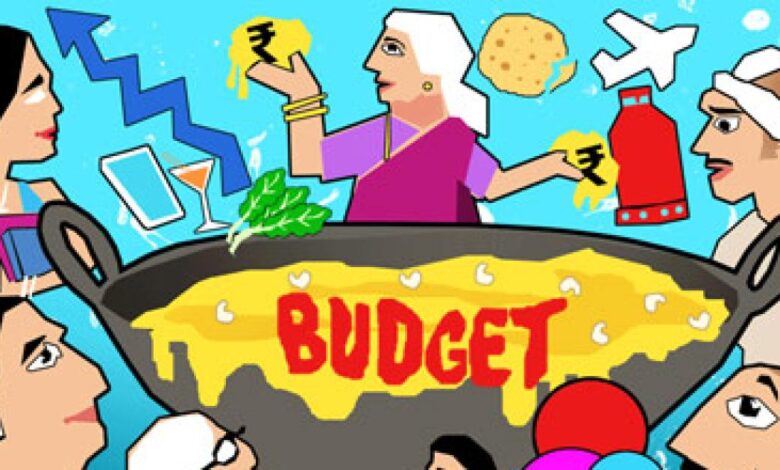
By conventional yardsticks, Budget 2026 is competent. It raises some outlays, introduces a few new schemes, tidies up select duty distortions, contains the fiscal deficit, and commits to devolution as recommended by the Finance Commission. In calmer times, this would have merited a polite thumbs-up. But these are not normal times.
India is currently undergoing an era of deep global rupture – strategic, economic, and technological. In such a moment, competence is not enough. A business-as-usual budget, however well-balanced on paper, becomes a strategic failure. Budget 2026 does not collapse under scrutiny; it simply fails to rise to the moment history demands.
The World Has Changed, India’s Budget Hasn’t
The global order that underpinned India’s economic and security assumptions for decades is fraying. At Davos, Mark Carney described it accurately as a rupture. The return of Donald Trump to the White House has demolished long-held certainties about alliances, deterrence, and intervention.
No former US ally – European, West Asian, or Asian – can today assume that American Marines will arrive if hostilities break out. The world’s most powerful military has signalled restraint, unpredictability, and transactionalism. Every nation is now scrambling to build its own defensive and strategic capacity.
India, while never a formal US ally, had grown accustomed to seeing itself as a strategic partner – through the Quad, Indo-Pacific cooperation, and an implicit understanding that India’s rise was essential to balancing China peacefully. Those assumptions have been buried deep.
Russia, long a dependable partner, is now economically and strategically beholden to China. Beijing, meanwhile, continues to stall on the border dispute with India, arms Pakistan as a force multiplier, and steadily courts India’s neighbours to box New Delhi in diplomatically. This is the environment in which India must budget.
Strategic Capacity Is No Longer Optional
In this new reality, fiscal choices are national security choices.
India must rapidly build strategic capacity – military, technological, and informational. This means accelerating indigenous defence production, securing communications and weapons systems against Chinese electronics, and deploying satellite constellations in low-Earth orbit capable of real-time surveillance, targeting, and battlefield communications.
Modern warfare is no longer fought only by tanks and fighter jets. It is fought by drones operated by small patrol units, by AI-enabled targeting systems, by secure data links that cannot be disrupted or corrupted by hostile actors.
This brings India face-to-face with its most dangerous vulnerability: technological dependence.
Artificial intelligence is now both an economic multiplier and a military weapon. Indian companies can and should build commercial AI applications atop global foundation models, whether Western or open-source. But for defence and national security, dependence is fatal. India cannot rely on models that can be throttled, denied, or subtly compromised by external actors.
To build sovereign AI, India needs two things it currently lacks: massive computing capacity and deep semiconductor capability. It does, however, possess abundant talent and the potential to build both if policy shifts from optics to ambition.
Budget 2026 barely acknowledges this strategic imperative. That silence is its loudest failure.
The Semiconductor Illusion
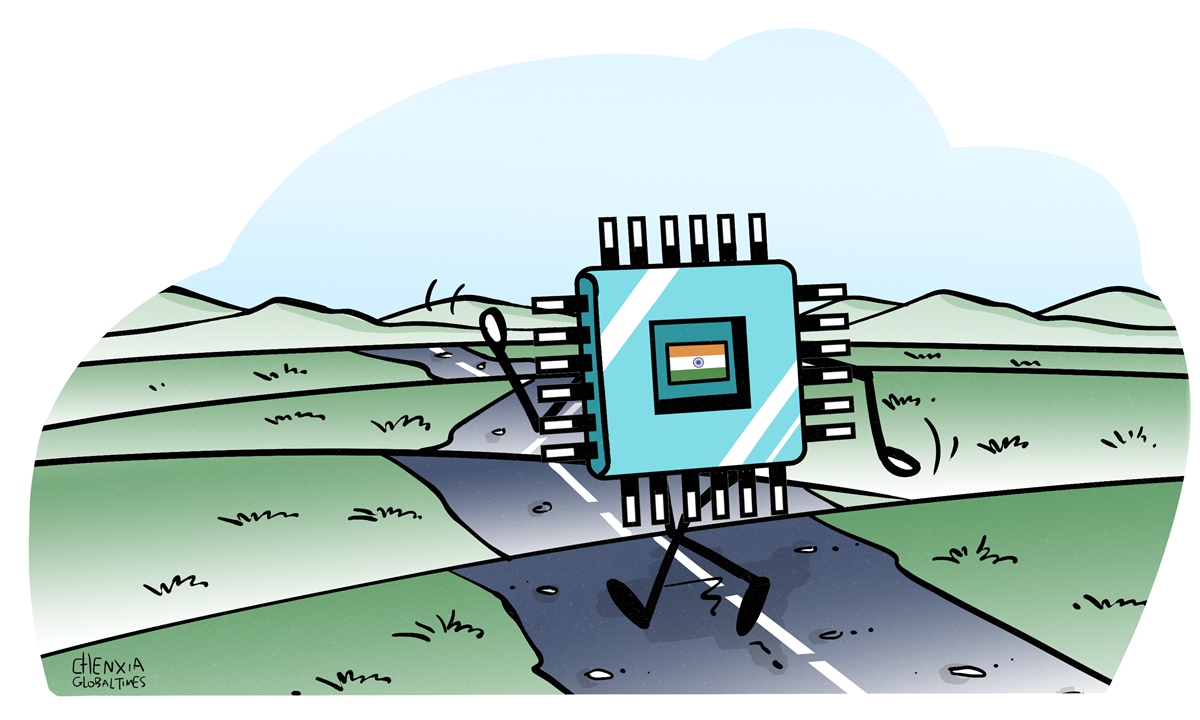
India’s semiconductor mission, as it currently stands, borders on strategic naïveté.
The only defensible reason to manufacture chips domestically (rather than import them at lower cost) is strategic insulation. The United States has demonstrated, with brutal clarity, how technology access can be weaponised. China learned this lesson the hard way. India seems determined to learn it slowly.
Yet the present approach does little to advance genuine technological sovereignty. Handing out billions of dollars in incentives to foreign chipmakers to set up low-end fabs in India may create headlines and photo-ops, but it does not shield the country from supply-chain coercion. These fabs remain dependent on foreign machinery, foreign intellectual property, foreign upstream suppliers—and foreign political decisions.
A serious semiconductor strategy would start at the opposite end.
It would map the entire chip-making ecosystem – every subsystem, every sub-assembly, every critical component. From extreme ultraviolet lithography machines and ultra-precise lenses to deposition tools, cleaning equipment, testing systems, and software stacks. Then it would fund multiple Indian startups to attempt each piece of this puzzle, fully aware that many will fail.
Yes, some money would be wasted. Yes, some funds would be cornered by the well-connected. But in the process of reinventing the wheel, India would acquire the capability to keep innovating beyond existing technological frontiers. That is how strategic autonomy is built.
China has done exactly this. So have Taiwan, South Korea, and, earlier, the United States itself. India already hosts high-end R&D centres of global technology giants, staffed by Indian engineers working at the cutting edge. What prevents Indian enterprise from doing the same? Not talent. Not intelligence. Only missing vision, courage, and patient capital.
Instead of luring foreign chipmakers to assemble yesterday’s technology in India, the government should be luring Indian technologists from around the world to lead startups that deliver Indian AI on Indian silicon.
Budget 2026 does neither.
Funding the Strategic Leap, Why Business-as-Usual Won’t Work
All of this – defence modernisation, AI sovereignty, semiconductor capability – requires money on a scale that cannot be found within a business-as-usual budget.
That is the uncomfortable truth policymakers avoid.
Extraordinary moments demand extraordinary fiscal choices. Yet the government continues to fritter away resources on populist trespass into state subjects and economically perverse subsidies. The urea subsidy remains unreformed, depressing nutrient efficiency and blocking the adoption of balanced fertilisers. The ethanol-blending programme continues as a policy farce – diverting grain away from food and feed, pushing up prices of maize, poultry, eggs, and chicken, all while consuming subsidised water, power, and fertiliser.
These are not marginal inefficiencies. They represent strategic misallocation in an era that demands ruthless prioritisation.
History offers a reminder. When Lal Bahadur Shastri called upon Indians to hand over their gold to finance a war thrust upon the nation, the public responded. Not because sacrifice is easy, but because it was shared, transparent, and purposeful.
India today faces a quieter but no less existential challenge. Citizens will respond to calls for sacrifice again – provided the burden is shared across classes and capital, and funds are deployed with honesty and discipline. That requires political courage, not accounting cleverness.
Hence, reorienting a budget at this scale is not an economic problem. It is a political one.
The Middle-Class Betrayal
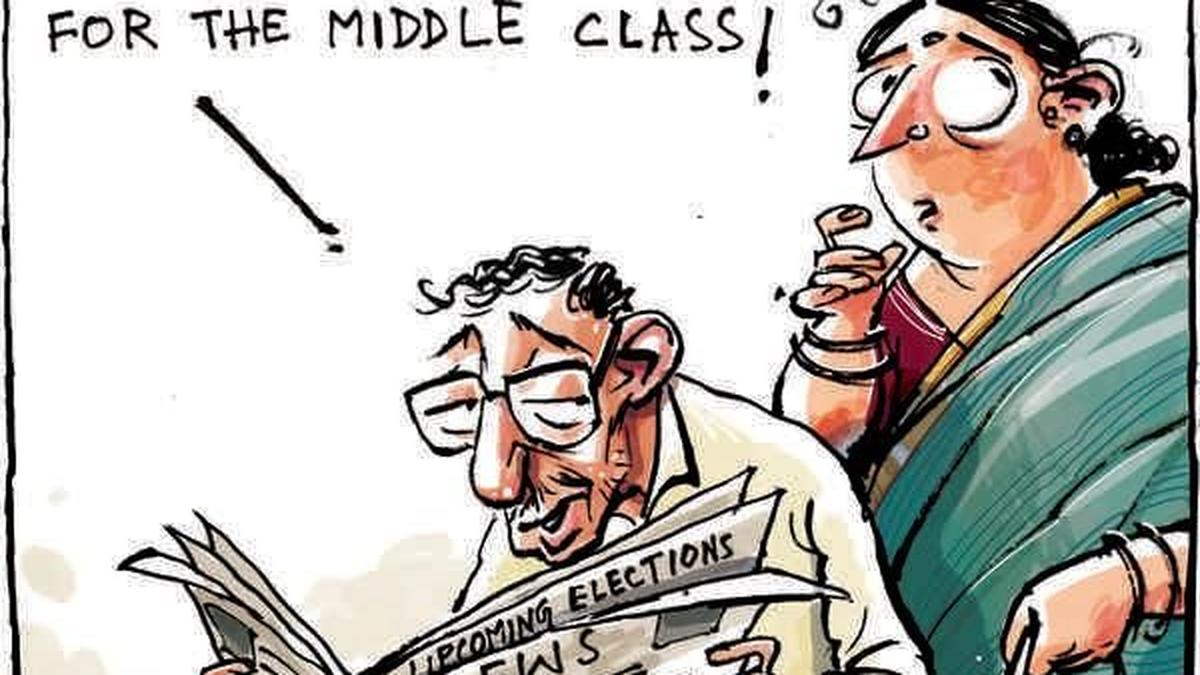
If strategic ambition was missing, economic empathy was absent altogether.
The middle class entered Budget 2026 with cautious hope. Rising living costs, anaemic salary hikes, layoffs in the IT sector, and lacklustre returns from equity markets had already tightened household finances. After last year’s tax relief, when the tax-free threshold was raised from ₹7 lakh to ₹12 lakh, many expected at least modest follow-through.
There was none. No increase in the standard deduction. No recalibration of slabs. No acknowledgement of middle-class fatigue. The message was blunt: last year’s relief was enough; don’t ask again.
Markets reacted instantly. The sharp sell-off – over 1,500 points on the Sensex and a steep fall in the Nifty – was not mere investor petulance but reflected a deeper anxieties about consumption, earnings, and growth durability.
The government’s defence is familiar: a ₹1 lakh crore tax “bonanza” was already given last year; GST revenues are under pressure; fiscal discipline must be preserved. All technically valid but all economically incomplete. In a consumption-driven economy, squeezing the middle class is not prudence but self-sabotage.
India’s Consumption Paradox
India is often spoken of in the same breath as China, but the similarity ends quickly. China is an export-driven economy; India is not. India’s growth story rests overwhelmingly on domestic consumption.
Private Final Consumption Expenditure (PFCE) accounts for over 60% of India’s GDP. For nearly a decade, private investment has remained stubbornly stuck at around 12% of GDP. What has kept the engine running is household spending, particularly by the urban middle class.
That engine is now sputtering. For nearly five years, between 2019 and 2024, nominal wage growth in large parts of the formal sector ranged between 1–5%, barely keeping pace with inflation and often falling short. Real incomes stagnated. Purchasing power quietly eroded. Consumption held up only because households dipped into savings and cheap credit.
Budget 2026 offered no relief to this fragile equilibrium. By refusing to put more disposable income in the hands of consumers, the government has weakened the single most reliable pillar of India’s growth model. You cannot speak of high growth while systematically draining the class that sustains demand.
GST 2.0: Promise vs Reality
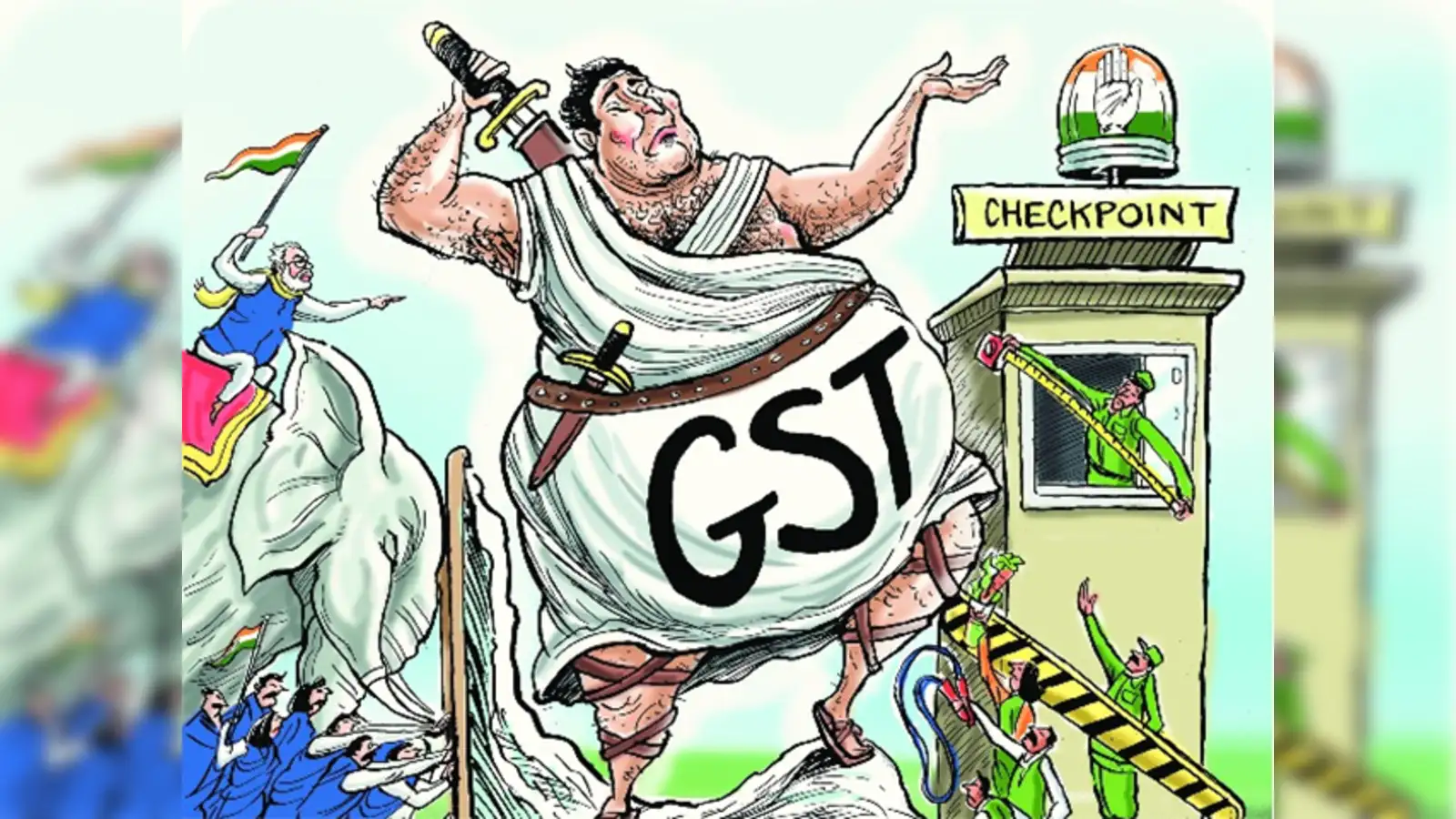
When GST was introduced, it was sold as India’s most ambitious tax reform – simpler slabs, lower prices, and efficiency gains passed on to consumers. GST 2.0 revived that promise but reality tells a different story.
Surveys, including those by LocalCircles, show that nine out of ten Indians have seen no meaningful reduction in the prices of essentials such as food and medicines. Tax cuts, where they exist, appear to have been absorbed quietly by retailers through unchanged MRPs, margin protection, and opaque pricing practices.
Ironically, visible benefits are largely confined to discretionary goods – cars, appliances, electronics – while everyday household expenses remain stubbornly high. The relief intended for the common consumer has evaporated somewhere along the supply chain.
The Tax Burden Anomaly
Perhaps the most revealing feature of India’s fiscal architecture is this: personal income tax collections now exceed corporate tax collections. In a country where barely 2% of the population pays income tax, this is alarming.
Between FY 2024–25 and FY 2026–27, personal income tax collections are projected to rise from ₹12.35 lakh crore to ₹14.66 lakh crore. Corporate tax collections, over the same period, rise from ₹9.86 lakh crore to ₹12.31 lakh crore. In effect, individuals will contribute nearly 18% more than corporations to the exchequer.
This imbalance would be troubling even in boom times. In a year when equity markets delivered near-zero returns and fixed deposit rates remain depressed, it becomes indefensible.
Corporations pay tax on profits. Individuals pay tax on income, regardless of whether their real purchasing power has grown or shrunk. Yet policy continues to protect capital while leaning harder on labour. This is not accidental. It is a structural choice. And it is not sustainable.
Inflation: The Data vs Daily Reality
On paper, inflation appears benign. The Reserve Bank of India’s projections suggest that India remains in a “Goldilocks zone” – high growth, low inflation, even amid global turbulence. Headline CPI numbers look comfortable. Forecasts have been tweaked, but not alarmingly so.
Yet for households, inflation is not an abstract average but a lived experience.
The cost of essentials tells a harsher story. Food, healthcare, education, transport, and housing continue to bite into household budgets. Precious metals may explain revisions in RBI projections, but for families, inflation shows up in grocery bills that refuse to soften, school fees that climb relentlessly, and healthcare expenses that remain largely out-of-pocket.
This is the central disconnect of Budget 2026. Policymaking is anchored to aggregate indicators, while households operate in a far less forgiving reality. Low headline inflation does not automatically translate into economic comfort, especially when wages have stagnated and taxes keep rising.

Human Capital Neglect
The most consequential failure of recent budgets, including this one, lies in the quiet neglect of human capital.
Education and health allocations are routinely announced with fanfare, yet their share of GDP (the only honest measure of priority) remains stubbornly stagnant. School education hovers around 2.9% of GDP, far short of the 6% commitment made under the National Education Policy. Higher education fares no better, despite rising demand and mounting quality gaps.
India is attempting to build a knowledge economy on a weakened public education system.
Health expenditure tells an equally sobering story. Public spending remains stuck near 1.8% of GDP, among the lowest globally. Expanding insurance coverage through schemes like Ayushman Bharat may improve access at the margins, but it does little to strengthen the crumbling public health infrastructure on which universal healthcare ultimately depends.
Rural livelihoods have not been spared either. The dilution and underfunding of employment guarantees – through rebranding, altered funding ratios, and allocations that fall short of actual demand – signal a shift away from legal entitlement toward discretionary support. This is not reform; it is retreat by stealth. A country that underinvests in its people cannot compensate with highways and ports alone.
The Great Fiscal Reversal
Taken together, these choices point to a deeper structural shift – a great fiscal reversal.
Over the past decade, India has steadily moved the tax burden away from capital and toward consumption and labour. Corporate tax as a share of gross tax revenue has declined sharply, while indirect taxes, especially GST, now dominate the revenue mix.
GST, by design, is regressive. It taxes essentials consumed by the many more heavily than luxuries consumed by the few. In a country marked by deep inequality, this architecture ensures that those with the least shoulder a disproportionate burden.
Meanwhile, extreme wealth remains largely untouched. Capital gains, dividends, and inherited wealth enjoy preferential treatment. The absence of wealth or inheritance taxation is not a technical oversight – it is a policy choice. The result is widening inequality, suppressed demand, and growing social fragility.
Fiscal consolidation achieved by burdening the many while sparing the few is neither equitable nor durable.
The Implementation Chasm: Announcements vs Delivery
Even where intentions appear sound, execution remains the budget’s weakest link.
Year after year, Budget Estimates for key ministries are framed with the full knowledge that they are inadequate. Agriculture allocations, in real terms, show stagnation or decline. Rural employment funding is calibrated not to demand, but to fiscal optics. This sets up a predictable cycle: either emergency mid-year revisions are forced, or programmes limp along with delayed payments and unmet needs.
Schemes like Special Assistance to States for Capital Investment come layered with rigid conditionalities. States with weaker administrative capacity – the very ones that need support the most – often fail to access these funds. The result is a quiet perpetuation of regional inequality, masked by aggregate expenditure numbers.
The government’s rhetorical emphasis on “ease of living” clashes with its spending priorities. Capital expenditure on roads, ports, and physical infrastructure continues to dominate, while social infrastructure—schools, clinics, local institutions—remains underfunded. Concrete is visible. Human capability is not. But it is the latter that ultimately determines whether growth is inclusive, resilient, and politically sustainable.
What Budget 2026–27 Should Have Been
If Budget 2025–26 entrenched continuity, Budget 2026–27 should have initiated correction. A serious reorientation would rest on three pillars.
First, legislate human capital as a fiscal priority.
India needs a binding, five-year roadmap to raise combined public spending on health and education to at least 8% of GDP. This cannot rely on incremental reallocations. It requires progressive taxation – beginning with a modest annual tax on extreme wealth.
A 2% levy on net wealth above ₹100 crore could generate ₹1–1.2 lakh crore annually, ring-fenced for public education and primary healthcare. This is not ideological redistribution; it is investment in productivity, social stability, and long-term growth.
Second, restore employment guarantees as economic stabilisers.
Rural employment programmes must be treated as counter-cyclical tools, not fiscal irritants. Funding should reflect demand, wages must be indexed to credible rural inflation, and programmes integrated with land, water, and ecological regeneration. This builds durable assets while protecting consumption at the bottom of the pyramid.
Third, enforce fiscal transparency and accountability.
India needs a real-time public dashboard tracking Budget Estimates against actual expenditure for major schemes. An independent Fiscal Council should be empowered to audit and report quarterly, closing the gap between announcement and delivery. Credibility in budgeting is not achieved by speeches, but by measurable outcomes.
The Last Bit, A Moment of Choice
India cannot build a high-income nation on the foundations of a lower-middle-income state – one marked by fragile health systems, uneven education, and rising inequality. Strategic power, economic growth, and social cohesion are inseparable. Neglect one, and the others hollow out.
Budget 2026 chose continuity over courage. It managed the present but failed to prepare for the future. In a world defined by geopolitical rupture, technological rivalry, and domestic economic stress, that is not prudence, it is procrastination.
Budget 2026–27 still offers a choice. Another year of regressive stability, or the beginning of a great fiscal reversal that places India’s citizens (not just its balance sheets) at the heart of development.
The data is clear, the lived reality is clearer, and the time for correction is now.