Hungary, Ukraine And The Oil Pipeline That Became Political. Hungary Accuses Ukraine Of ‘Blockade’ As EU Fractures Deepen
Four years into war, Europe’s energy map remains unsettled. Hungary now accuses Ukraine of turning oil into leverage, alleging a political blockade of the Soviet-era Druzhba pipeline. Kyiv denies the charge. But with elections looming and EU unity strained, this oil dispute is about far more than damaged infrastructure.

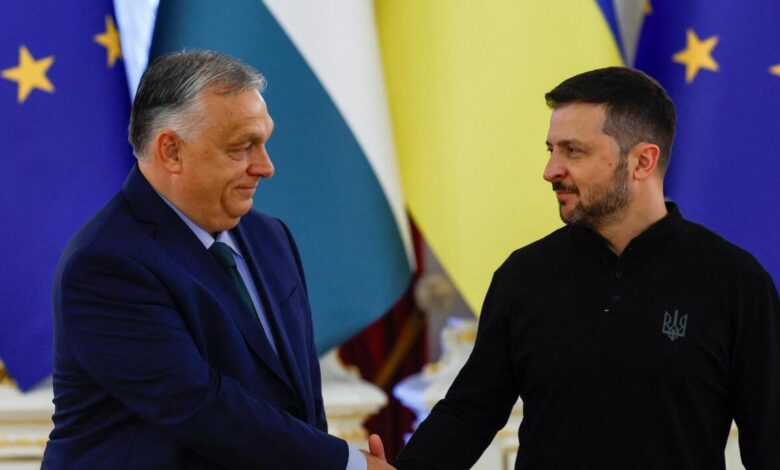
Four years into Russia’s war in Ukraine, Europe’s energy map is still being redrawn – and not without friction. The latest rupture comes in the form of accusations from Hungary that Ukraine has imposed an “oil blockade” by delaying the restart of the Soviet-era Druzhba pipeline. Kyiv denies the charge. But the dispute has already spilled into troop deployments, EU vetoes and rising political temperature ahead of Hungary’s April elections.
At first glance, this appears to be a technical disagreement over repairs. In reality, it reflects something far deeper: how energy security, domestic politics and Europe’s strained unity continue to intersect long after the initial shock of war.
The Immediate Trigger: A Pipeline Goes Quiet
Shipments through the Druzhba pipeline’s southern leg have been stalled since January 27. According to Ukrainian officials, a Russian drone strike damaged infrastructure along the route, necessitating repairs. Budapest and Bratislava contest that explanation, insisting that there is no physical barrier preventing flows from resuming.
Hungarian Prime Minister Viktor Orban accused Kyiv of exerting pressure through what he called an “oil blockade,” alleging political motives rather than technical constraints. He went further, claiming without evidence that Ukraine was preparing additional steps to disrupt Hungary’s energy system.
The accusation did not stop at words. Orban announced that soldiers would be deployed to safeguard critical energy infrastructure. Police patrols around power plants and distribution stations were stepped up. Drone activity was banned in Hungary’s north-east border region with Ukraine.
Slovakia echoed similar concerns. Prime Minister Robert Fico described the outage as a political decision aimed at blackmailing his country over its position on the war. He threatened to suspend emergency electricity supplies to Ukraine unless oil transit resumes.
Ukraine, for its part, denies responsibility. Kyiv maintains that the damage was caused by Russia and says repair work is ongoing. Ukrainian officials have pushed back strongly against what they call ultimatums and provocative statements from their Central European neighbours.
The Druzhba Pipeline: A Soviet-Era Lifeline
To understand the gravity of the dispute, one must understand the infrastructure at its centre.
The Druzhba pipeline (whose name translates as “Friendship”) was opened in 1964. It remains one of the world’s largest oil pipeline networks, transporting Russian crude from West Siberian fields through Belarus and Ukraine into Central Europe.
The system splits into two major branches. The northern leg supplies Poland and Germany. The southern leg serves Slovakia, Hungary and the Czech Republic.
Though designed with a capacity exceeding two million barrels per day, actual deliveries have fallen sharply since Russia’s full-scale invasion of Ukraine in February 2022. Most European nations have sought to reduce or eliminate dependence on Russian fossil fuels. Yet Hungary and Slovakia remain notable exceptions.
For the two landlocked countries, Druzhba is not just a relic of Cold War engineering – it is an operational artery.

How Dependent Are Hungary and Slovakia?
Hungary and Slovakia are among the last significant importers of Russian oil within the European Union. Both secured exemptions from EU sanctions covering pipeline-delivered crude, arguing that their geographic position and refinery configurations leave them with limited short-term alternatives.
Their reliance is substantial. Estimates suggest that Moscow accounts for between 86% and 100% of their oil supply. In 2024, Russian crude deliveries through Druzhba’s southern branch reportedly totalled 9.7 million metric tons, with Slovakia receiving nearly 4.9 million tons and Hungary approximately 4.35 million.
A 2025 report by the Center for the Study of Democracy and the Center for Research on Energy and Clean Air estimated that since the start of the war, Hungary and Slovakia have paid Russia roughly €5.4 billion for crude oil alone.
For Kyiv, that money represents continued financial oxygen for Moscow’s war machine. For Budapest and Bratislava, it represents economic stability and relatively affordable fuel.
This tension – moral argument versus economic calculus – has defined much of the friction between the two EU members and Brussels over the past four years.
Elections And Escalation
The timing of the dispute is politically sensitive.
Hungary heads to parliamentary elections on April 12. After 16 years in power, Orban faces one of his most competitive challenges yet. Independent polls suggest his Fidesz party is trailing, while former insider-turned-opposition figure Peter Magyar has gained traction.
In this context, energy security becomes more than policy, it becomes campaign terrain.
Orban has accused Ukraine of seeking to influence the election outcome by driving up fuel prices. Analysts argue that he is attempting to frame domestic economic pressures as externally driven. Maximilian Hess of the Foreign Policy Research Institute suggested that the Hungarian leader may be leveraging the pipeline dispute to consolidate support ahead of the vote.
Slovakia’s Fico, who returned to power on a more Russia-friendly platform, also faces domestic pressures. Both leaders have cultivated relatively warmer ties with Moscow compared to other EU governments, positioning themselves as defenders of national sovereignty against what they portray as overreach from Brussels.
A Fractured European Union
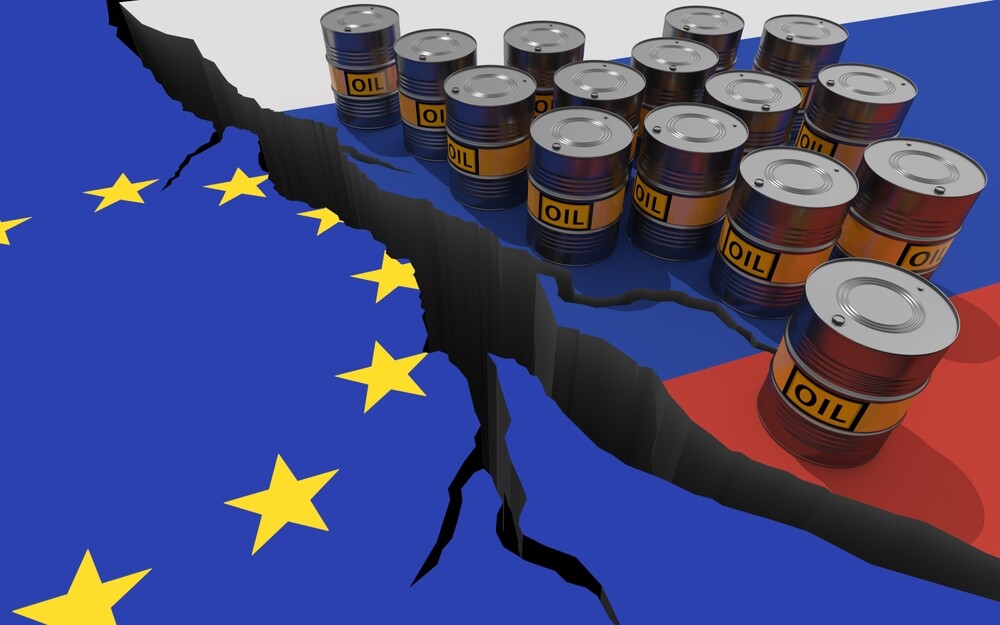
The dispute has not remained bilateral. It has reverberated through the European Union’s decision-making machinery.
Hungary vetoed a proposed €90 billion EU loan package for Ukraine and blocked progress on a broader sanctions package targeting Moscow. Because EU foreign policy decisions require unanimity, Budapest’s move effectively stalled the measures.
The European Council simultaneously imposed sanctions on eight Russian judicial and penal officials accused of human rights abuses. Yet the failure to agree on a wider sanctions package underscored the bloc’s internal divisions.
EU foreign policy chief Kaja Kallas described the impasse as a setback. Ukraine’s foreign minister warned against allowing two member states to hold the entire Union hostage.
For Brussels, the situation exposes a structural vulnerability: unanimity gives individual governments significant leverage, especially when domestic political calculations intersect with geopolitical crises.
Competing Theories Around Sabotage
The posturing has also touched on broader allegations of energy infrastructure sabotage. Hungary’s Foreign Minister Péter Szijjártó suggested that Europe had overlooked incidents allegedly involving Ukrainian actors, including damage to the Nord Stream gas pipelines linking Russia to Germany.
Ukraine has denied involvement in those incidents. German investigators have said suspects were Ukrainian nationals, but definitive conclusions remain complex and politically charged.
Such accusations, made without publicly presented evidence, contribute to an atmosphere in which energy infrastructure becomes both a physical and rhetorical battleground.
Are There Alternatives?
Ukraine has proposed alternative transit routes to ensure supply continuity until Druzhba flows resume. Options reportedly include rerouting through Ukraine’s broader oil transportation network or maritime shipments potentially linked to the Odesa-Brody corridor.
Another possibility is the Adria pipeline, which connects Croatia’s Adriatic coast to inland Central Europe. Orban has described it as a limited backup option. Fico has argued that its capacity remains untested and costs could be significantly higher than Druzhba transit.
However, the CREA report contends that phasing out Russian oil is fully feasible for Hungary and Slovakia, asserting that the Adria pipeline could meet their combined needs if utilised properly.
The debate therefore hinges not purely on physical feasibility, but on cost, timing and political will.

Energy As Leverage
Energy has long been a strategic instrument in European geopolitics. Before 2022, Russian gas and oil underpinned large segments of the continent’s industrial economy. The invasion of Ukraine accelerated diversification efforts, but not uniformly.
For Kyiv, reducing Europe’s purchases of Russian energy is integral to weakening Moscow’s war capacity. For Budapest and Bratislava, abrupt disengagement carries domestic economic consequences.
The Druzhba dispute illustrates how even residual energy dependence can translate into political vulnerability. A disruption – whether technical or contested – quickly cascades into diplomatic standoffs and policy paralysis.
Beyond The Pipeline
The core question is not simply whether repairs are delayed or whether flows will resume next week. It is what the episode reveals about Europe’s internal cohesion.
Four years into war, fatigue is visible. Economic pressures linger. Inflation has eased compared to the immediate post-invasion spike, but voters remain sensitive to energy prices and cost-of-living concerns. Governments facing tight elections may be tempted to externalise blame.
Hungary’s troop deployments around energy facilities may ultimately prove precautionary rather than necessary. The pipeline may reopen, tensions may cool, and EU negotiations may resume their slow grind.
Yet the episode leaves a residue.
It indicates that Europe’s energy transition away from Russia remains incomplete. It highlights how unanimity rules can amplify national political strategies. And it reveals how the war’s fault lines increasingly run not just along battlefields in eastern Ukraine, but through pipelines, parliaments and polling booths across the continent.
In that sense, the Druzhba pipeline is no longer just infrastructure. It is a barometer of Europe’s strategic patience, of domestic political resilience, and of how deeply the war continues to shape the Union’s internal balance.
Whether this is an oil blockade, a technical delay, or a politically convenient escalation may depend on whom one asks. What is undeniable is that energy remains one of the war’s most enduring features and Europe is still negotiating its way through it.