Durand Line Ignites, Why Pakistan And Afghanistan Are Drifting Toward Conflict
Pakistan’s airstrikes on Kabul, Kandahar and Paktia mark more than another border flare-up - they expose a deep strategic rupture between Islamabad and the Taliban regime. Beneath the rhetoric of “open war” lies a volatile mix of militant sanctuaries, disputed borders and shifting regional power calculations.

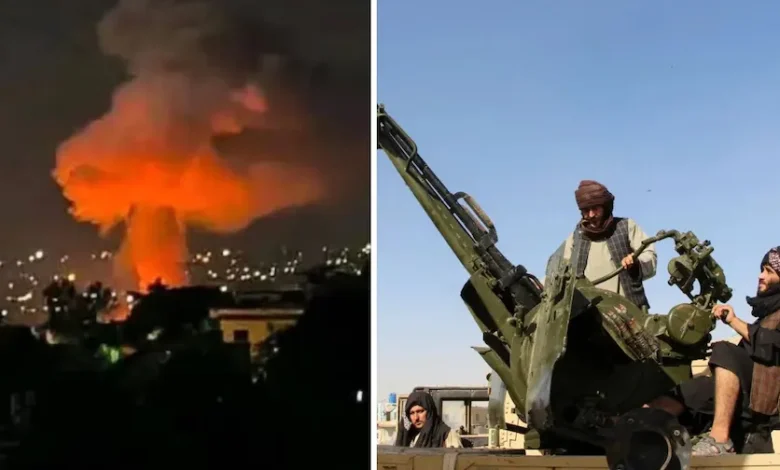
Overnight airstrikes across Kabul, Kandahar and Paktia have pushed Pakistan and Afghanistan into their most serious military confrontation in years. When Pakistan’s defence minister described the situation as “open war,” it signalled something deeper than border skirmishes, a rupture in an already fragile regional balance.
For two countries bound by geography, history and militant entanglements, escalation is never contained. It spills. And along the 2,611-kilometre frontier separating them, containment has always been an illusion.
The Immediate Escalation: From Strikes to Counter-Strikes
According to Pakistani security sources, the strikes involved air-to-ground missile attacks targeting Taliban government military offices and installations in Kabul, Kandahar and Paktia. Ground clashes were simultaneously reported along multiple sectors of the border.
The Taliban confirmed that Pakistani forces carried out airstrikes but offered limited operational details. In response, Kabul claimed it launched retaliatory attacks on Pakistani military installations along the frontier, including operations across six provinces near the border.
Casualty figures vary sharply and remain unverifiable. Pakistan claims more than 130 Taliban fighters were killed and dozens of posts destroyed or captured. Taliban officials claim dozens of Pakistani soldiers were killed and several military posts seized. Both sides insist they inflicted heavier losses.
The verbal escalation was just as sharp. Pakistan’s Defence Minister, Khawaja Muhammad Asif, declared that “our cup of patience has overflowed,” describing the confrontation as open war. Such language matters. It transforms what could be framed as limited cross-border strikes into something politically harder to dial back.
The strikes on Kandahar – the Taliban’s spiritual and political heartland and base of supreme leader Haibatullah Akhundzada – were particularly significant. Targeting Kandahar carries symbolic weight. It signals that Pakistan is willing to strike not just peripheral militant outposts, but the nerve centre of Taliban authority.
What makes this escalation dangerous is not merely the scale of the strikes, but their geography. Hitting multiple Afghan cities moves the conflict beyond isolated border incidents and into sovereign urban space. That shift alters the strategic calculus.

The Core Trigger: The TTP Problem
At the heart of this confrontation lies a long-running accusation: that Afghanistan harbours the Tehreek-e-Taliban Pakistan (TTP), the militant group responsible for attacks inside Pakistan.
Islamabad argues that TTP leadership and fighters operate from Afghan territory, launching cross-border assaults on Pakistani military posts and urban targets. Kabul denies this, insisting that Pakistan’s security failures are internal and that Afghan soil is not used for such operations.
The tension between the Afghan Taliban and the TTP is layered and complicated. The two groups are ideologically aligned and historically intertwined, but not identical. Pakistan had initially welcomed the Taliban’s return to power in 2021, hoping that a friendly regime in Kabul would curb anti-Pakistan militants. Instead, Islamabad found itself facing a resurgence of TTP attacks.
Pakistan’s earlier airstrikes this week – which it said targeted TTP and Islamic State camps in eastern Afghanistan – reportedly killed civilians, according to Kabul and the United Nations. The Taliban warned of a strong response. That warning has now materialised in cross-border confrontation.
This is not a conventional state-versus-state dispute over territory. It is a struggle over sanctuary and sovereignty.
From Pakistan’s perspective, allowing TTP fighters to operate from across the border undermines state authority and fuels instability in Khyber Pakhtunkhwa and Balochistan. From the Taliban’s perspective, cracking down aggressively on ideological allies risks internal fractures and challenges to their authority.
Thus, the conflict is not merely bilateral. It is triangular:
- Pakistan vs TTP
- Taliban vs TTP
- Pakistan vs Taliban
The inability to disentangle these relationships keeps the frontier perpetually volatile.
The Durand Line
The physical and political fault line between the two countries is the Durand Line — a 2,611-kilometre boundary drawn in 1893 between British India and the Emirate of Afghanistan.
Afghanistan has never formally recognised it as an international border.
For Islamabad, the Durand Line is settled and sovereign. For Kabul, it remains historically imposed and politically contested. The frontier slices through Pashtun tribal areas, creating cross-border familial, tribal and militant networks that predate both modern states.
Geography compounds politics. The border is mountainous, porous and difficult to police. For decades, it has served as a corridor for insurgents, refugees, smugglers and fighters. During the U.S.-led war in Afghanistan, Taliban fighters moved across this frontier with relative ease. Now, Pakistan alleges that TTP militants are doing the same in reverse.
Every clash along the Durand Line is therefore layered with unresolved history.
Border fencing efforts by Pakistan have triggered previous skirmishes with Taliban forces. Each post constructed, each crossing tightened, carries symbolic meaning. To Islamabad, fencing secures sovereignty. To many in Afghanistan, it entrenches a disputed division.
The latest strikes and retaliatory operations must be understood in this broader structural context. This is not an accidental flare-up. It is the product of a border that was never mutually legitimised, a militant ecosystem that never fully dismantled, and a relationship built more on tactical convenience than strategic trust.
When artillery fires along the Durand Line, it is not just a military exchange. It is the resurfacing of a century-old dispute layered over modern militant warfare.
Military Asymmetry
On paper, the imbalance between the two sides is solid.
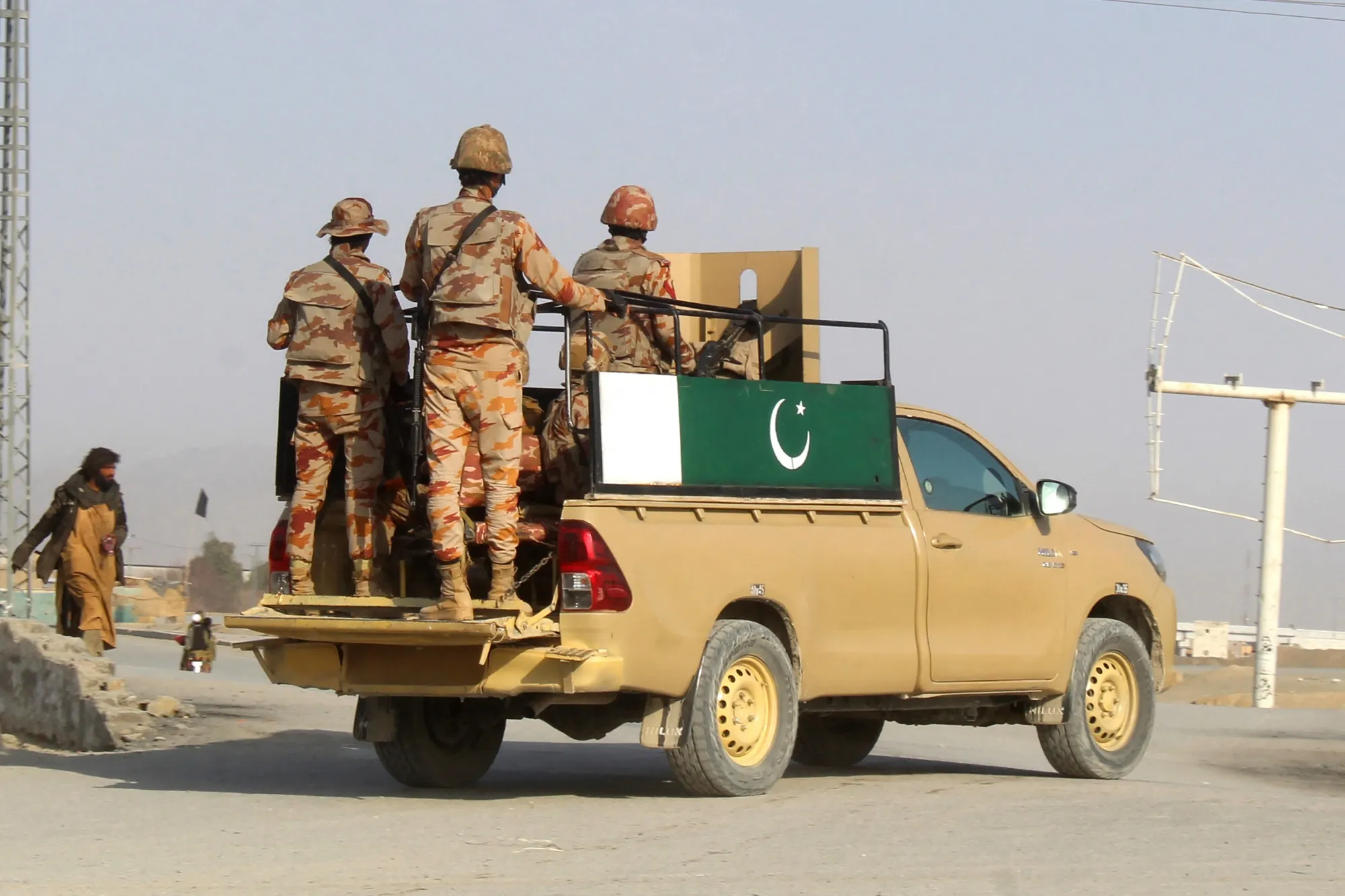
Pakistan is a nuclear-armed state with an estimated 170 warheads and one of the most structured militaries in the Muslim world. Its armed forces number roughly 660,000 active personnel – with a standing army, a functioning air force and a navy. The Pakistan Air Force operates hundreds of combat aircraft and attack helicopters, supported by Chinese technical assistance and continued procurement.
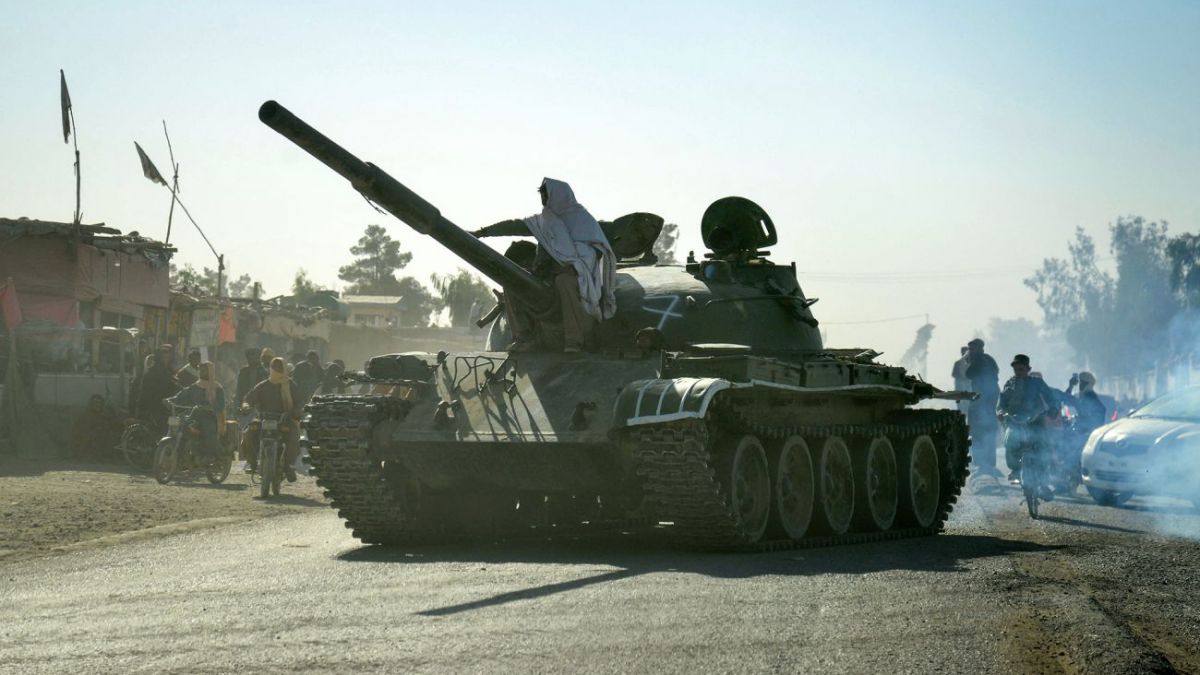
The Taliban’s forces, by contrast, are not a conventional military in the traditional sense. Afghanistan has no operational air force capable of contesting Pakistani airspace. The Taliban reportedly possess a small number of legacy aircraft and helicopters – some dating back decades – but questions remain over their operational readiness and maintenance capacity.
Pakistan also holds overwhelming superiority in artillery, armour and air defence systems. In a conventional war scenario, the Taliban would struggle to match sustained aerial bombardment or coordinated mechanised offensives.
Yet conventional metrics do not tell the whole story.
The Taliban are hardened by two decades of insurgency against a technologically superior U.S.-led coalition. They understand irregular warfare, cross-border mobility and guerrilla tactics. Terrain favours them in many sectors. Prolonged asymmetrical retaliation – ambushes, targeted raids, cross-border harassment – could impose political costs on Pakistan even if battlefield losses favour Islamabad.
This dynamic creates a layered escalation risk: Pakistan can escalate vertically – airstrikes, artillery, precision targeting. The Taliban can escalate horizontally – spreading instability, facilitating militant activity, and prolonging friction along the border.
The presence of nuclear weapons does not make this a nuclear confrontation. But it does change international perception. Any sustained Pakistan conflict attracts immediate global scrutiny, particularly from China, the Gulf states and Western powers concerned about instability in a nuclear-armed country.
Thus, while the military balance is clear, the conflict’s trajectory is less predictable. Superior firepower does not guarantee political resolution.
External Stakeholders
This confrontation does not unfold in isolation. Regional and global actors are watching closely and some are already positioning themselves.
Russia, notably the only country to formally recognise the Taliban government, has called for restraint and indicated it could mediate if both parties request it. Moscow’s recognition gives it a unique diplomatic channel to Kabul, while it maintains working ties with Islamabad.
Saudi Arabia and Qatar have historically played quiet but influential roles in Afghan diplomacy. Qatar hosted Taliban negotiations with the United States prior to the 2021 withdrawal and has maintained communication lines since. Saudi Arabia’s foreign minister has reportedly discussed de-escalation with Pakistani counterparts, signalling concern about regional spillover.
Turkey, too, has previously facilitated discussions during earlier flare-ups.
China’s position is less vocal but equally significant. Beijing has deep strategic ties with Pakistan and growing economic interests in both countries. Stability along the China–Pakistan Economic Corridor (CPEC) routes is critical for Beijing. Any widening insurgency in Pakistan’s western provinces threatens those investments.
The United Nations, meanwhile, faces a humanitarian concern. Previous airstrikes reportedly caused civilian casualties. Prolonged escalation risks displacement along an already fragile frontier.
The key geopolitical question is this: Will external actors push for immediate de-escalation, or will they allow calibrated confrontation to pressure Kabul over militant sanctuaries?
For Russia and China, stability matters more than ideological alignment. For Gulf states, regional calm and counter-extremism remain priorities. None benefit from an uncontrolled war.
But mediation requires political space – and both Islamabad and Kabul must be willing to step back from rhetoric that frames the situation as “open war.”
Pakistan’s Internal Calculus
Understanding Islamabad’s strategy requires looking inward.
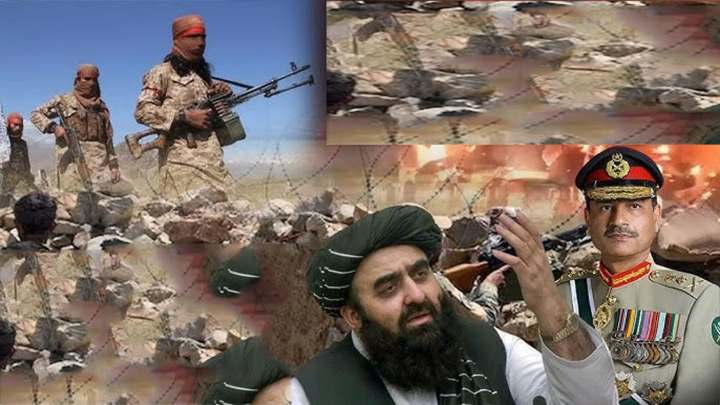
Pakistan has witnessed a surge in militant violence in recent years, particularly in Khyber Pakhtunkhwa and Balochistan. Urban centres remain on alert. Punjab authorities have reportedly heightened security and conducted operations against suspected militants and undocumented Afghan nationals.
The state’s credibility rests on its ability to control internal security. Cross-border attacks attributed to TTP strain that credibility. A forceful military response may serve multiple purposes:
- Deter militant safe havens across the border
- Signal resolve to domestic audiences
- Reinforce military authority amid internal political tensions
There is also a psychological dimension. If Pakistan believes that the Taliban leadership is unwilling or unable to restrain TTP elements, Islamabad may conclude that direct strikes are the only remaining lever of pressure.
However, escalation carries risk. Retaliatory attacks inside Pakistani territory – especially in major cities – could deepen instability rather than suppress it. Moreover, large-scale deportations of Afghan nationals risk fuelling resentment and cross-border hostility.
Thus, Pakistan’s approach appears to be a mix of deterrence and coercive signalling – an attempt to redraw red lines without committing to full-scale war. Whether that signalling is interpreted as strength or provocation in Kabul remains uncertain.
The Taliban’s Strategic Dilemma
For the Taliban government, the confrontation poses a delicate strategic challenge.
Since returning to power in 2021, the Taliban have struggled for international recognition and economic normalisation. With limited diplomatic legitimacy and constrained financial resources, Afghanistan’s leadership cannot afford prolonged external war.
Yet it also cannot afford to appear weak.
Strikes on Kabul and Kandahar strike at the symbolic core of Taliban authority. Failing to respond risks internal fractures, especially among hardline factions that view confrontation with Pakistan as a defence of sovereignty.
At the same time, openly aligning with TTP militants could isolate Afghanistan further and undermine attempts at diplomatic engagement with Russia, Gulf states and regional powers.
This places the Taliban in a narrow corridor:
- Crack down on TTP and risk internal dissent
- Tolerate TTP and risk sustained Pakistani military action
- Escalate militarily and risk economic and political collapse
The Taliban’s strength lies in guerrilla resilience. But governing a country requires more than battlefield adaptability. It requires stability.
The irony is sharp. Pakistan once sought “strategic depth” in Afghanistan through influence over the Taliban. Today, that depth appears to be collapsing into strategic friction. If both sides miscalculate, the conflict could harden into a long-term shadow war – punctuated by airstrikes, border raids and militant retaliation.
And along the Durand Line, history suggests that shadow wars rarely remain contained for long.
What Happens Next? Three Strategic Scenarios
At this stage, the trajectory of the Pakistan–Afghanistan confrontation hinges less on battlefield capability and more on political restraint. Several pathways are possible – none without risk.
Scenario One: Controlled Escalation, Managed De-escalation
Under this scenario, both sides continue limited strikes and border skirmishes for a short period before external mediation takes hold. Countries such as Qatar, Saudi Arabia or Turkey could revive backchannel negotiations, while Russia leverages its recognition of the Taliban to facilitate quiet diplomacy.
The objective would not be a grand settlement of the Durand Line dispute or a comprehensive security pact. Instead, it would likely focus on practical mechanisms:
Intelligence sharing on TTP movements
- Border coordination
- Limited confidence-building measures
This outcome preserves face for both sides. Pakistan demonstrates resolve. The Taliban demonstrate retaliation. Escalation pauses before it spirals.
Historically, this has been the pattern: sharp flare-ups followed by uneasy ceasefires.
Scenario Two: Prolonged Border War
A more dangerous path would see sustained artillery exchanges, repeated airstrikes and expanded cross-border raids.
Pakistan’s conventional superiority would likely dominate in open engagements. However, the Taliban could respond asymmetrically – facilitating or turning a blind eye to TTP operations inside Pakistan. Urban attacks in Peshawar, Quetta or even deeper within Punjab would dramatically raise stakes.
This scenario would stretch Pakistan’s internal security apparatus and risk investor anxiety, particularly given the country’s economic fragility. It would also further isolate Afghanistan diplomatically.
Neither side may formally declare war, but a cycle of retaliation could become entrenched – a grinding, low-intensity conflict with periodic spikes of violence.
Such conflicts rarely remain geographically contained. Refugee flows, militant spillovers and economic disruption could destabilise border provinces on both sides.
Scenario Three: Militant Spillover and Hybrid Escalation
The most destabilising scenario is one in which the confrontation morphs into a hybrid conflict.
Instead of sustained conventional fighting, Pakistan increases targeted strikes against suspected militant camps. In response, TTP-linked attacks escalate inside Pakistan’s cities. The Taliban deny direct involvement while refusing to decisively curb militant networks.
This would transform the confrontation into something more ambiguous and harder to diplomatically resolve. Attribution becomes murky. Responsibility blurs. Retaliation becomes continuous.
In such an environment, miscalculation is almost inevitable.
Is This Truly “Open War”?
When Pakistan’s defence minister described the situation as “open war,” the phrase carried weight but it may reflect political signalling more than formal military doctrine.
Full-scale war between Pakistan and Afghanistan would require sustained mobilisation, clear territorial objectives and prolonged offensive operations. None of these have yet materialised.
What we are witnessing instead appears to be coercive escalation — a demonstration of force designed to alter behaviour across the border.
Yet coercive escalation is inherently unstable. It assumes the other side will interpret force as deterrence rather than provocation.
The deeper issue is structural. The Durand Line remains contested in Afghan political consciousness. Militant networks remain entangled across the frontier. Pakistan’s internal security concerns remain acute. The Taliban’s legitimacy remains fragile.
These pressures are cumulative.
For decades, the relationship between Islamabad and Kabul oscillated between tactical cooperation and strategic suspicion. After 2021, Pakistan may have expected a compliant neighbour. Instead, it faces a government that shares ideological DNA with the very militants threatening Pakistani territory.
This is not simply a border crisis. It is the collapse of strategic assumptions.
If both sides choose restraint, the current confrontation may settle into another uneasy ceasefire – tense, unresolved, but contained.
If pride overrides pragmatism, the frontier could slide into a prolonged shadow conflict – one defined not by decisive battles, but by attrition, distrust and recurring violence.
In South Asia’s most volatile corridor, the line between signalling and escalation has always been thin. And along the Durand Line, it is thinner than ever.