Claims Of Rs 2983 Crores Against ADAG Companies Settled For Rs 26 Crores In IBC Proceedings. The Ambani Effect – Sirf Naam Hi Kafi Hai!
When claims of ₹2,983 crore against companies linked to Anil Ambani are settled for ₹26 crore, even as financial distress coexists with visible affluence, the issue stops being about insolvency and becomes something far more unsettling. who really pays when such “resolutions” are signed off? Whether India’s recovery framework delivers justice, or quietly accommodates outcomes that defy logic. And who is the system really designed to protect?


What has now come under the scanner is not just another routine insolvency resolution buried deep within financial filings, but a staggering case where claims amounting to nearly ₹2,983 crore against companies linked to the Anil Dhirubhai Ambani Group were reportedly settled for a mere ₹26 crore, a number so disproportionately small that it does not just raise eyebrows but fundamentally challenges the very purpose for which India’s insolvency framework was created.
This startling revelation did not emerge from speculation or market chatter, but from findings placed on record by the Enforcement Directorate, which pointed towards a pattern of transactions and structured proceedings – referred to as “Project Help”-that allegedly enabled the extinguishing of massive financial claims for what can only be described as a fraction of their stated value, effectively wiping out thousands of crores while leaving behind a trail of deeply uncomfortable questions.
The matter escalated further when the Supreme Court of India itself took note of these findings, with the bench openly expressing shock at the scale of the write-off and the manner in which such settlements were being executed, making it abundantly clear that this was not being viewed as an isolated financial adjustment but as a case that warranted closer judicial scrutiny.
And that is precisely where this stops being a technical financial story and turns into something far more serious – because when claims of this magnitude are reduced to almost nothing, the question is no longer about recovery efficiency or business failure, but about whether the system is functioning as intended or quietly being bent in ways that allow outcomes like these to pass off as legitimate resolutions.
Because let’s call it what it is – this is not a haircut, this is near-erasure, and when thousands of crores can vanish so neatly within a legal framework that was designed to protect creditor value, the real issue is not the number, but the precedent it sets.

The Law Meant To Fix The System Or Quietly Work Around It?
At the heart of this entire episode lies the Insolvency and Bankruptcy Code (IBC), a legislative framework that was introduced with much promise and urgency to address India’s mounting bad loan crisis, streamline insolvency proceedings, and most importantly, ensure that creditors recover maximum possible value from distressed assets within a strict, time-bound process.
The intent behind the IBC was clear and, at least on paper, difficult to fault – replace endless legal delays with structured resolution, prevent value erosion of stressed companies, and create a system where financial discipline is enforced not through rhetoric but through credible consequences; in short, a law designed to bring order to what was once a chaotic and inefficient recovery ecosystem.
However, cases such as the one involving companies linked to the Anil Dhirubhai Ambani Group begin to expose a far more uncomfortable possibility – that the very framework meant to safeguard creditor interests may, under certain circumstances, be leveraged in ways that achieve the exact opposite, where instead of maximizing recovery, the process appears to facilitate exits at deeply discounted values that raise serious questions about intent, structure, and oversight.
Because the moment a resolution under the IBC results in claims worth ₹2,983 crore being settled for ₹26 crore, the discussion can no longer remain confined to legal technicalities or procedural correctness, it inevitably shifts to a more fundamental question – whether the system is being used as a tool for genuine resolution or as a carefully framed pathway to minimize liabilities at a scale that borders on implausible.
And this is where the discomfort intensifies, because the IBC does not operate in isolation – it involves lenders, resolution professionals, committees of creditors, and regulatory oversight at multiple levels – meaning that outcomes of this nature are not accidental, they are produced within a system that either permits, overlooks, or fails to adequately question them.
So the real issue is not whether the IBC allows haircuts – because it does, and rightly so in many cases – the issue is whether it also allows outcomes that make those haircuts look less like economic reality and more like engineered outcomes, where the letter of the law is followed just enough to validate the process, while the spirit of the law quietly disappears somewhere along the way.
Because if a law designed to recover value ends up legitimizing its near-total disappearance, then the problem is no longer with a single case – it is with the credibility of the system itself.

The Mechanism – How ₹2,983 Crore Was Reduced To ₹26 Crore
If the numbers raise suspicion, the structure behind them raises far more serious questions – because what has been flagged is not merely a steep haircut under the IBC, but a sequence of actions and arrangements that, taken together, begin to resemble a process that may have been shaped well before it formally began.
At the center of this is what has been referred to as “Project Help,” a framework illuminated in findings placed before the Supreme Court of India, which allegedly points to insolvency proceedings being triggered not organically by distressed lenders seeking recovery, but through “unrelated lenders,” an element that is critical because in the IBC process, the entity that initiates insolvency often influences the direction, pace, and ultimately, the outcome of the resolution.
And that is where the first crack appears – because if insolvency is not a consequence of financial distress alone, but a strategically initiated step, then the entire process begins to look less like resolution and more like orchestration, where entry into the system itself becomes part of a larger design.
Layered onto this is the role of a network of eight Non-Banking Financial Companies (NBFCs), which, as per the observations, were involved in arranging funding for acquisitions under the IBC process, effectively enabling resolution plans that resulted in massive claim extinguishments, raising the uncomfortable possibility that these entities were not acting as independent financial participants, but as structured intermediaries within a larger financial arrangement.
Because let’s be clear – when funding for acquisition, initiation of insolvency, and resolution outcomes begin to intersect within a tightly connected ecosystem, the line between market-driven resolution and pre-arranged outcomes starts to blur, and that is not a grey area any system can afford to ignore.
And then comes the number that refuses to sit quietly – ₹2,983 crore reduced to ₹26 crore – which in isolation could be explained away as an extreme but permissible outcome within insolvency proceedings, but when viewed alongside the structure of “Project Help,” the involvement of multiple NBFCs, and the manner in which proceedings were allegedly triggered, begins to look less like an unfortunate economic reality and more like a result that fits a pattern.
Because haircuts are expected, distress does destroy value, and not every rupee can be recovered, but when over 99% of claims effectively disappear within a system designed to prevent exactly that, the question is no longer about how much was recovered, but about how the process allowed so much to be written off so cleanly.
And that is the point where this stops being a financial outcome and starts becoming a structural concern – because if the mechanism itself can be aligned to produce such results, then what is being witnessed is not just a one-off case, but a template that, if left unquestioned, could be repeated.

When The Supreme Court Steps In, It’s No Longer Routine
What transforms this from a controversial financial arrangement into a matter of serious institutional concern is the fact that the Supreme Court of India itself chose to step in, and more importantly, the language it used while doing so makes it abundantly clear that this was not being treated as just another insolvency outcome passing through the system.
The trigger, once again, was the material placed before the court by the Enforcement Directorate, which outlined how claims amounting to approximately ₹2,983 crore were extinguished for a settlement value of ₹26 crore under what was described as “Project Help,” a structure that allegedly involved the deliberate initiation of insolvency proceedings through unrelated lenders and funding arrangements routed via a network of eight NBFCs, a combination that the court found serious enough to warrant deeper scrutiny.
But what truly stands out is not just the fact that the court took cognizance of these findings, but the tone it adopted – openly expressing shock at the scale of the write-offs and taking note of what it described as a “sluggish” response from investigative agencies, a remark that goes beyond procedural observation and directly questions the urgency, or lack of it, in dealing with a matter of this magnitude.
The bench, led by the Chief Justice, did not stop at observation; it went on to underline that this is a case where senior functionaries of investigative agencies must come together to uncover any irregularities, illegalities, or possible connivance involving financial institutions or public functionaries, making it clear that the concern here is not limited to corporate conduct alone, but extends to the broader ecosystem that enables such outcomes.
And then came the directives (because courts do not express concern in isolation, they act on it) ordering a time-bound investigation to be carried out by agencies including the Central Bureau of Investigation and the ED, with a clear expectation that the probe must be fair, transparent, independent, and completed within a defined timeline, an instruction that, in itself, signals the court’s lack of confidence in the pace at which things were moving.
The formation of a Special Investigation Team (SIT), comprising senior ED officials, investigating officers, forensic experts, and even personnel from banking institutions, further reinforces the seriousness with which the matter is now being approached, as does the fact that multiple investigations – spanning several cases – are already underway, with transaction audits and asset attachments reportedly in progress.
And then there are the courtroom exchanges (the kind that do not just add detail but reveal the underlying tension) where questions were raised about the absence of arrests in a case of such scale, with arguments put forth by Prashant Bhushan suggesting that only minor players had been targeted, while Tushar Mehta defended the pace and nature of the investigation, stating that arrests must follow evidence, not expectation, a response that may be legally sound but does little to quieten the larger concern.
Even more telling was the court’s own remark when discussions turned to potential settlements with banks, with the observation that financial institutions might “happily” enter into such arrangements as a way to wriggle out of consequences, a statement that cuts through the formalities and hints at a deeper skepticism about how accountability is often negotiated in high-stakes financial cases.
Because when the highest court in the country not only intervenes but also questions the pace, intent, and direction of investigations, this is no longer about interpreting numbers or debating technicalities – this is about whether the system, in its current form, is capable of investigating itself without hesitation, or whether it needs to be pushed into action every single time something this glaring comes to light.

The Loss Doesn’t Disappear; It Just Changes Hands
What often gets lost in the complexity of insolvency proceedings and legal terminology is a simple, inconvenient truth – when thousands of crores are written off, the loss does not vanish into thin air, it is merely transferred, absorbed, and ultimately borne by someone else, and in cases involving large institutional lending, that “someone else” is rarely an abstract entity.
Banks, particularly public sector banks, do not operate in isolation; they are custodians of deposits, managers of public capital, and extensions of a financial system that is deeply intertwined with taxpayer money, which means that when claims worth ₹2,983 crore are settled for ₹26 crore, the gap is not just a number on a balance sheet – it is a real economic loss that finds its way back into the system through recapitalizations, provisioning, and ultimately, the burden carried by the broader economy.
And this is where things begins to shift from corporate restructuring to public consequence, because while such resolutions may be justified within the technical framework of the Insolvency and Bankruptcy Code, the impact of these outcomes extends far beyond the confines of legal compliance, raising a far more direct question – who is actually paying for these “resolutions”?
Because every rupee that is not recovered is a rupee that has to be accounted for somewhere, whether through reduced lending capacity, higher costs of capital, or direct fiscal support, and over time, these losses accumulate quietly, rarely attracting the same attention as the headline-making defaults that created them in the first place.
And yet, when viewed through this lens, the discomfort becomes difficult to ignore – because if the system allows for outcomes where thousands of crores can be written off with minimal recovery, while the cost is diffused across institutions and, by extension, the public, then what is being protected here is not financial discipline, but the ability to absorb losses without immediate accountability.
Because let’s not dress this up – this is not just a balance sheet adjustment, this is a redistribution of loss, and the further one moves away from the transaction itself, the harder it becomes to trace who ultimately bears the cost, which is precisely why outcomes like these rarely face the level of scrutiny they deserve.
And that is the real problem – because when losses can be socialized while decisions remain concentrated, the system does not just fail to deter such outcomes, it quietly begins to accommodate them.
Is The System Being Used Or Being Played?
By this point, the issue can no longer be framed as an isolated insolvency outcome or an unusually large haircut justified by market realities, because when the entry into insolvency, the structure of financing, and the eventual resolution begin to align in a manner that consistently produces outcomes of extreme value erosion, the question is no longer about what the law permits, but about how the process is being navigated.
The uncomfortable possibility that emerges is this – are insolvency proceedings under the **Insolvency and Bankruptcy Code being triggered as a last resort to resolve distress, or are they, in certain cases, being used as a starting point for a pre-aligned outcome, where the journey through the system is less about discovery and more about execution?
Because if insolvency can be initiated through entities that are not the primary lenders, if funding for resolution can be arranged through a closely connected network, and if the end result consistently reflects a massive erosion of creditor value, then the process begins to look less like a mechanism of correction and more like a route that can be designed, timed, and controlled.
And that is not a technical concern – it is a structural vulnerability.
Because the strength of any legal framework does not lie in what it allows on paper, but in how resistant it is to being shaped around desired outcomes, and if the IBC can be managed in a way where entry, control, and exit all appear to align too conveniently, then the system is not just being used, it is being understood well enough to be worked around.
This is where the idea of pre-planned insolvencies begins to surface – not as a proven fact in every case, but as a pattern that cannot be ignored when similar elements keep appearing together, raising the possibility that financial distress may, in some instances, be followed by a resolution pathway that is far more predictable than it should be.
And once that possibility enters the conversation, the entire premise of the system begins to weaken – because a framework designed to enforce discipline loses its credibility the moment it can be anticipated, structured, and executed with such precision that the outcome starts looking less like a result and more like a pre-determined destination.
Because let’s be blunt – if a process meant to recover value can be turned in a way that ensures its near-total disappearance, then the problem is not misuse at the margins, it is a system that is quietly being played at its core.
Two Rulebooks – One For The Powerful, Another For Everyone Else
At some point, this stops being a technical discussion about insolvency frameworks, financial restructuring, or legal interpretation, and begins to look like something far more uncomfortable – a system that appears to operate differently depending on who is inside it.
Because while cases like those involving the Anil Dhirubhai Ambani Group seem to slip through structured resolutions that result in massive claim reductions and negotiated exits, the experience for smaller borrowers, mid-sized businesses, and individual defaulters tends to look very different – far more aggressive, far less forgiving, and almost always immediate in its consequences.
For large corporate groups:
—Insolvency becomes a process of negotiation
—Debt reduction becomes a structured outcome
—Time becomes a manageable variable
For everyone else:
—Default triggers swift recovery action
—Assets are seized, auctioned, or attached
—Negotiation is often limited, if not absent
And this contrast is not theoretical – it is visible, repeated, and increasingly difficult to ignore.
And this is where the discomfort sharpens – systems are not judged merely by the rules they create, but by the consistency with which those rules are enforced, and when outcomes begin to diverge this sharply based on the scale or stature of the borrower, it stops looking like flexibility and starts looking like selectivity.
Let’s not pretend this is subtle – when one section of borrowers gets time, restructuring, and negotiated exits, while another gets notices, attachments, and enforcement, what emerges is not a balanced system, but a dual-track reality, where the experience of the law depends less on the law itself and more on who is subject to it.

Why Does This Keep Happening – Coincidence, Systemic Loopholes, Or Something More?
By now, the facts are not in dispute – the ₹2,983 crore versus ₹26 crore settlement, the reference to “Project Help,” the involvement of multiple entities, and the intervention of the Supreme Court of India – all of it exists on record, all of it has been acknowledged, and all of it has triggered a time-bound investigation.
But once the facts settle, the far more uncomfortable question begins to surface – why does an outcome like this even become possible in the first place?
And this is where the conversation inevitably drifts into territory that many would rather avoid.
The “Ambani” Factor – Is The Name Doing The Heavy Lifting?
There is no denying that the Anil Dhirubhai Ambani Group is not just another corporate entity – it carries one of the most recognizable surnames in Indian business, a name that has historically commanded influence, access, and attention across financial and political circles.
Because let’s not pretend otherwise – when the name “Ambani” enters any equation, it does not enter quietly.
And that raises a blunt but necessary question:
- Would a similar structure, a similar haircut, and a similar outcome have passed through the system with the same ease if the borrower did not carry that name?
Because if the answer is even remotely uncomfortable, then the issue is not legal – it is structural bias.
The Political Proximity Question – Unanswered, But Unavoidable
There have been past allegations and political accusations around perceived proximity between business interests linked to Anil Ambani and the government led by Narendra Modi, particularly in high-profile deals such as defence offsets -allegations that have been denied, but never fully disappeared from public discourse.
Now, to be clear – there is no judicial finding here that establishes wrongdoing on this front. But that does not make the question irrelevant.
Investigations appear delayed, outcomes appear disproportionately favourable and accountability appears selective. Hence, the perception of proximity begins to matter as much as proof. And perception, in financial systems, is not a side issue – it is everything.
The Business Reality – A Collapsing Empire, Yet Not Quite Gone
What makes this case even more layered is the current state of Anil Ambani’s business empire.
Once the sixth richest man in the world, his fortune has seen a dramatic erosion over the years, with several key companies – such as Reliance Communications, Reliance Capital, and Reliance Home Finance – either undergoing insolvency, restructuring, or asset sales.
Even today – core businesses like Reliance Power and infrastructure assets remain. The group is attempting a pivot towards: Defence, Infrastructure and Energy. But the reality remains – this is not the empire it once was. And yet, despite this decline, structures and outcomes such as the one under question continue to emerge.
Which raises another uncomfortable thought: Is the system responding to financial reality or still responding to legacy influence?

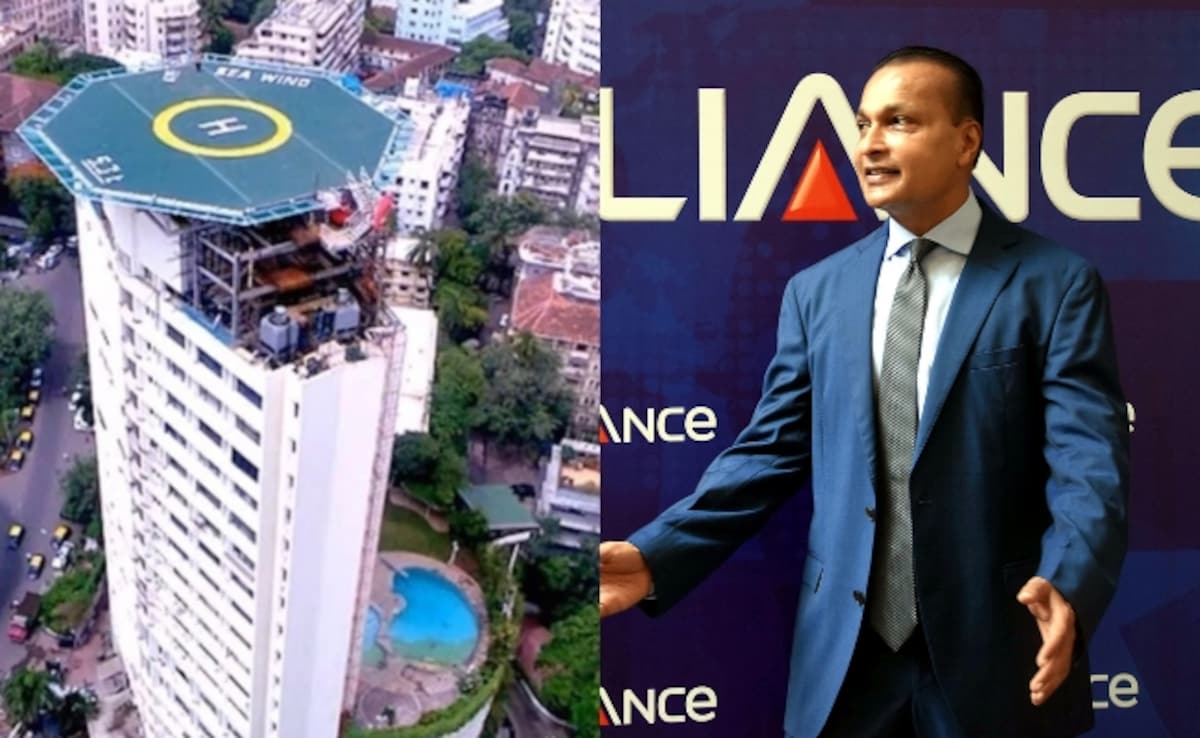
The Personal Optics – Bankruptcy On Paper, Luxury In Reality?
On record, Anil Ambani has stated in court proceedings that his net worth had effectively fallen to negligible levels during his financial distress phase.
And yet:
- He continues to reside in a multi-storey luxury residence in Mumbai
- His lifestyle remains associated with high-value assets and legacy wealth structures
- His family continues to operate within elite business and social circles
This is not illegal.
But it is contradictory enough to raise questions. Because when financial distress coexists with visible affluence, the line between inability and structuring becomes increasingly blurred.
The Next Generation – Continuity Of Influence
His sons: Jai Anmol Ambani – actively involved in business, board-level roles, and reportedly possessing significant personal wealth.
Jai Anshul Ambani – also part of the broader family ecosystem.
The elder son, Jai Anmol, has already been positioned within the group’s financial structures and is associated with a high-value lifestyle and wealth bracket. Which means – the story does not end with financial distress – it continues with continuity.
So What Are We Really Looking At?
A pattern where:
- Massive financial erosion is normalized
- Systems appear navigable
- Accountability appears delayed
- And influence (whether real or perceived) continues to hover in the background.
Because let’s stop pretending this is just about numbers. When ₹2,983 crore can be settled for ₹26 crore, when agencies need to be pushed by the court to act,
and when the same names keep appearing in outcomes that defy common sense.
The question is no longer what happened.
The question is: why does it keep happening and for whom?
The Political Undercurrent – What Isn’t Said Often Matters More
There is a reason why cases like these never remain confined to balance sheets, legal filings, or courtroom arguments – because beyond the numbers and the process lies an undercurrent that is rarely documented formally, but is always present in perception, discussion, and public memory.
The involvement of a group as prominent as the Anil Dhirubhai Ambani Group, combined with the scale of financial erosion and the delayed pace of investigative response flagged by the Supreme Court of India, inevitably invites questions that go beyond procedural lapses and begin to touch upon influence, access, and the comfort with which certain outcomes appear to pass through the system.
Now, to be precise – there is no judicial conclusion that establishes political interference or direct favouritism in this case. But that is not the point. Because systems are not judged only by what can be proven in court – they are judged by what they repeatedly allow to happen without resistance.
And when outcomes of this nature occur: At scale, with delay in scrutiny
and with limited immediate accountability – the absence of proof does not eliminate doubt – it amplifies it. Because if everything is above board, then why does it consistently look like it isn’t?
And that is the discomfort that refuses to go away.

The Last Bit, When A System Meant To Recover Value Ends Up Writing It Off
At its core, this is not just a story about one corporate group, one insolvency process, or one controversial settlement – it is a reflection of how a system designed to enforce financial discipline can, under certain conditions, produce outcomes that appear to undermine the very objective it was built to achieve.
The Insolvency and Bankruptcy Code was introduced to restore confidence in the financial ecosystem, to ensure that defaults carried consequences, and to create a framework where value could be preserved, not quietly erased – when cases emerge where claims of ₹2,983 crore are reduced to ₹26 crore, the conversation inevitably shifts from intent to outcome.
Because intent does not matter if outcomes consistently contradict it.
And that is where the real concern lies – not in the existence of loopholes, but in the possibility that those loopholes are understood well enough to be navigated, structured, and repeated.
This is not about denying that businesses fail or that restructuring requires compromise – those are realities of any financial system – but when compromise begins to resemble capitulation, and resolution begins to look like exit at negligible cost, the system does not just bend, it begins to lose credibility.
And credibility, once lost, does not return easily. When large-scale financial erosion becomes explainable, defensible, and ultimately acceptable, the message that travels far beyond boardrooms and courtrooms is simple and deeply damaging:
- That accountability is negotiable.
- That consequences are flexible.
And that sometimes – just sometimes – Ambani, sirf naam hi kaafi hai!