Governance Before Financial Health: Is The New Financial Year Starts The Beginning Of A New Trend Where Leadership Is More Loud Than Leverage?
FY27 Begins With a Question: Has India's Financial Sector Finally Reached the Point Where Governance Failure Is Priced Faster Than Profit Growth?

“The explicit mention of ethical incongruence by an Independent Director is highly unusual and warrants immediate investigation.” — All India Bank Employees’ Association, letter to Finance Minister Nirmala Sitharaman, March 31, 2026
The Need of Governance- A New Financial Year, A New Reckoning!
India’s new financial year began on April 1, 2026, with a question hanging over Dalal Street that no quarterly earnings forecast, no NIM projection, and no loan growth target had prepared the market for: can a bank’s balance sheet be trusted if its own chairman doesn’t trust its boardroom?
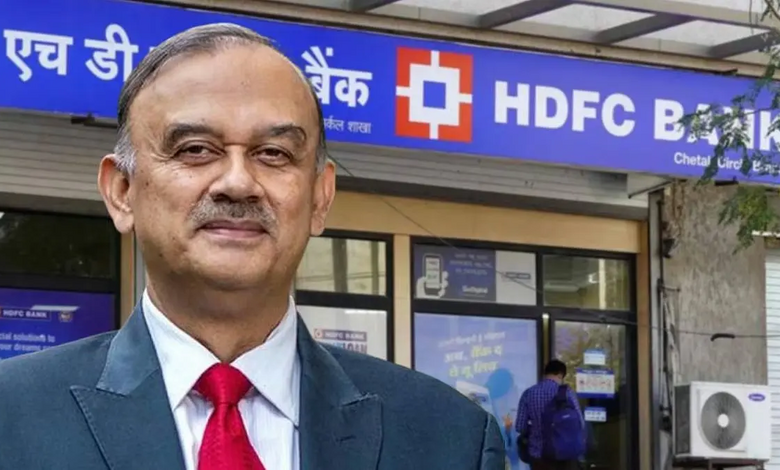
The question is not philosophical. It has a rupee value, and that value is approximately ₹1 lakh crore — the market capitalisation erased from HDFC Bank’s books in the fortnight following March 18, 2026, when Atanu Chakraborty, a former Economic Affairs Secretary of India and non-executive part-time chairman of the country’s largest private sector bank, resigned citing “certain happenings and practices within the bank” that conflicted with his personal values and ethics.
By March 30, the stock had hit a 52-week low of ₹727. By early April, shares had declined approximately 33 percent year-to-date, dramatically underperforming not only the broader market but also peers including ICICI Bank, which declined 8 percent over the same period. The stock now trades at a 16-year low of 1.5x price-to-book on a forward basis; a multiple last seen when the bank was a fundamentally different institution, before its ₹40 billion merger with HDFC Limited.
Here is the most important thing about those numbers. They cannot be explained by anything on HDFC Bank’s balance sheet. As of December 31, 2025, the bank’s Gross Non-Performing Assets ratio stood at a healthy 1.24 percent. Net Interest Margins, though compressed by the post-merger integration of HDFC Limited’s higher-cost borrowings, have stabilised in the 3.3 to 3.5 percent range. The Loan-to-Deposit Ratio, a critical post-merger concern has been moderated from its peak of 110 percent to approximately 96 percent by March 2026. Analysts forecast Q4 net profit after tax of approximately ₹19,200 crore, a 9 percent year-on-year rise.
The bank’s fundamentals, in other words, remain broadly intact. And yet the stock has destroyed more wealth in a fortnight than some entire banks are worth. This is the market’s verdict on something that the balance sheet cannot capture: the worth of leadership integrity, the value of boardroom trust, and the cost of its absence.
Welcome to FY27 — Is governance and leadership is louder than leverage?
The AIBEA Letter — When Bank Employees Sound the Alarm That Regulators Won’t
On March 31, 2026, the All India Bank Employees’ Association, not a regulator, not a rating agency, not a securities commission, wrote to Finance Minister Nirmala Sitharaman, demanding a comprehensive government enquiry into HDFC Bank’s affairs. The letter, signed by General Secretary CH Venkatachalam and shared with media on April 2, made four specific demands- a comprehensive inquiry into governance, compliance, and risk management practices; an independent probe by the Central Bureau of Investigation or Central Vigilance Commission if warranted; parliamentary committee examination of the matter; and public disclosure of findings to maintain depositor confidence.
The statistics AIBEA cited explain why it considers this a matter of public interest and not merely internal corporate friction. HDFC Bank serves over 120 million customers, operates more than 9,600 branches, employs approximately 2.15 lakh people, and has a total business exceeding ₹53 lakh crore, with deposits crossing ₹27 lakh crore. The bank is designated a Domestic Systemically Important Bank by the Reserve Bank of India — the Indian regulatory equivalent of “too important to allow to fail silently.”
That an employees’ association, whose members include bank branch staff, clerks, officers is the body demanding accountability while the primary securities regulator has yet to initiate a formal public investigation, is itself a commentary on the state of Indian financial governance. The AIBEA’s letter said it plainly: “The explicit mention of ethical incongruence by an Independent Director is highly unusual and warrants immediate investigation.” What makes it highly unusual is precisely what makes it alarming: independent directors are, by design, the last institutional firewall between a bank’s management and the public that trusts it with their deposits. When that firewall resigns citing ethics, the presumption must be that something behind it was not fireproof.
The New Topic Is “The Governance Risk Premium”, A New Market Language
The phrase that most usefully summarises the HDFC Bank situation’s broader significance is “governance risk premium”, the additional discount that markets apply to a company’s stock when its leadership structure is considered unstable, opaque, or ethically compromised, even when the underlying financials remain sound. This concept is not new in global markets. But in India’s banking sector, it has historically played second fiddle to earnings momentum. The Yes Bank collapse and its aftermath began to change that. The HDFC Bank crisis, in 2026, may complete the shift.
JPMorgan upgraded HDFC Bank to ‘Overweight’ from ‘Neutral’ on March 29, while simultaneously cutting its 12-month price target from ₹1,090 to ₹1,010, citing the 24 percent year-to-date share price correction that had pushed the bank’s forward price-to-book ratio to a 16-year low. The upgrade is a value call. JPMorgan is effectively saying the governance discount has overshot. But the simultaneous target cut acknowledges that the governance uncertainty creates a ceiling on recovery. You cannot fully reprice a bank upward when you cannot fully assess what its departing chairman was worried about.
Macquarie’s response was the starker signal. Removing HDFC Bank from its buy list entirely, not downgrading, but removing, communicates that Macquarie’s analysts are unwilling to recommend the stock to clients while the governance questions remain unanswered. That is a materially different conclusion than a valuation downgrade. A valuation downgrade says “the price is too high.” A buy-list removal says “the story is too unclear.” And a story that is too unclear for sophisticated institutional investors is a story that retail investors, who lack the analytical resources to navigate that ambiguity, are carrying the most risk from.
The market’s governance risk premium on HDFC Bank, in other words, is not being shared equally. The investors most capable of assessing and pricing that risk are stepping back. The investors least capable, the millions who hold HDFC Bank in their mutual funds, insurance policies, and direct equity portfolios are holding the exposure while the underlying uncertainty remains unresolved. That asymmetry is not merely a market phenomenon. It is a regulatory failure.
This Is Not New — The Leadership Crisis Pattern That India Refuses to Break
What makes the HDFC Bank governance crisis particularly significant is not its uniqueness. It is its familiarity. Three of India’s most prominent private sector banks, Yes Bank, Kotak Mahindra Bank, and IDFC First Bank, have each in the recent past demonstrated, in different ways and at different scales of severity, that leadership stability and governance culture are material financial risks, not soft considerations to be mentioned in annual report preambles and then forgotten.
Yes Bank: The Definitive Cautionary Tale. The collapse of Yes Bank in March 2020 is the benchmark against which every subsequent Indian banking governance failure is measured. Rana Kapoor, the bank’s founder and CEO, had been building what the RBI’s Asset Quality Review in 2015 would eventually reveal to be a house of financial fiction, with non-performing loans approximately seven times higher than disclosed in the bank’s audited accounts.
The RBI ordered Kapoor to vacate his position in September 2018, three years after its own internal audit had identified the scale of the problem. When the moratorium finally came in March 2020 and the ED arrested Kapoor for money laundering, the cost was ₹8,415 crore in AT1 bonds written off, SBI forced to inject ₹10,000 crore in a government-brokered rescue, and withdrawal limits imposed on millions of ordinary depositors.
The critical governance lesson of Yes Bank, reinforced by every subsequent crisis, is this, that the balance sheet looked bad in 2015, and the damage from waiting until 2020 was catastrophic. The gap between early warning and regulatory action is where the harm is done.
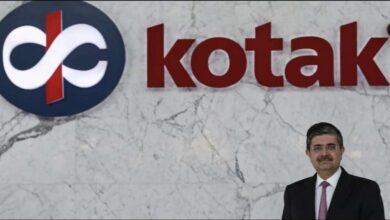
Kotak Mahindra Bank: The Founder Concentration Problem. Kotak Mahindra Bank’s governance saga with the RBI spans nearly two decades and centres on a single, structural question that India’s banking regulator has consistently struggled to answer: how do you regulate an institution that is, in effect, inseparable from the personality of its founder? The RBI’s attempt to reduce Uday Kotak’s shareholding below prescribed thresholds triggered over letters between the regulator and the bank, litigation, and a decades-long standoff that was only partially resolved when Kotak resigned with immediate effect as CEO in September 2023, reportedly an attempt to ease RBI concerns about the outsized influence he wielded over the institution.
What followed was not a clean break. Kotak remained on the board as a non-executive director, raising questions about whether the spirit of the regulatory intent, which was genuine independence of leadership from founder control had been observed or merely its letter.
Then, in April 2024, the RBI found “serious deficiencies” in Kotak Mahindra Bank’s IT systems, including patch management, user access management, and data security, and barred the bank from onboarding new customers through online and mobile banking platforms and from issuing fresh credit cards. The IT compliance reports that the bank had submitted to the RBI were found by the regulator to be, in its words, “incorrect, inadequate and not sustained.” KVS Manian, one of the two senior executives in the running to succeed Kotak as CEO and one of the directors with disclosed IT expertise, resigned six days after the RBI’s censure.
The pattern is the same as at Yes Bank and HDFC Bank: a leadership structure so heavily personalised, or so resistant to genuine independent oversight, that when the compliance culture fails, there is no internal mechanism strong enough to catch it before the regulator has to.
IDFC First Bank: The Identity Governance Failure. IDFC First Bank’s governance challenge is of a different kind; not fraud, not founder concentration, but the failure to resolve the fundamental identity question at the heart of a merger. When IDFC Bank and Capital First combined in 2018, they created an institution whose credit culture, risk appetite, and strategic philosophy were unresolved from the moment of combination. The legacy IDFC Bank culture was infrastructure finance — large-ticket, long-duration government lending.
Capital First was a retail NBFC — small-ticket consumer credit. Merging these under a single banking licence without a definitive resolution of which thesis would govern the combined entity created a governance vacuum at the leadership level. The institution’s long-term profitability thesis, built around V. Vaidyanathan’s retail transformation strategy, has faced persistent questions about capital adequacy and the pace at which the legacy portfolio can be reshaped. The governance lesson here is distinct: it is not enough for a bank’s leadership to be individually capable. The governance framework, the strategy, culture, and board-level alignment, must also be coherent.
What FY27 Has Changed — And Why This Time Is Different
The question this new financial year poses to India’s banking sector is whether the HDFC Bank crisis represents a one-off governance shock that markets will eventually price past, or whether it marks a structural inflection point in how Indian investors, analysts, and regulators assess private sector bank risk.
The case for inflection is compelling. For most of the past two decades, India’s private sector banking premium, the higher valuation that HDFC Bank, ICICI Bank, and Kotak commanded over public sector peers, was justified primarily on the basis of asset quality, NIM expansion, and digital capability. Governance was assumed, not verified. It was the invisible foundation on which valuation multiples rested. When HDFC Bank’s chairman resigned citing ethics, that assumption became visibly untenable. And once a market assumption becomes visibly untenable, it does not quietly revert. It reprices.
The repricing is already underway. HDFC Bank now trades at 1.5x forward price-to-book, its lowest level in 16 years. The governance risk premium that analysts previously applied hypothetically — “if there were a boardroom crisis, here is what the discount would be” — has been empirically established. Going forward, every Indian private sector bank will be implicitly assessed against that benchmark. Boards that cannot demonstrate genuine, tested independence will carry a higher cost of capital. Managements whose reappointment is contested by the institution’s own chairman will face market scrutiny of a kind that balance sheet metrics alone cannot answer.
The AIBEA’s demand for parliamentary committee examination of HDFC Bank’s governance is, in this context, not merely union politics. It is an articulation of something the market has already priced: that a bank’s governance failure is a matter of public consequence, not private board management. A bank that holds ₹27 lakh crore in deposits, money belonging to 120 million customers, cannot claim that its boardroom dynamics are an internal matter when those dynamics demonstrably move the national stock index.
The Regulatory Gap — Who Is Watching the Watchmen?
The most troubling dimension of the HDFC Bank governance crisis is not what happened inside the bank — the AT1 mis-selling in Dubai, the departure of the compliance officer and internal auditor, the delayed accountability that Chakraborty explicitly named — it is what has not happened outside it. As of the first days of FY27, no regulator has publicly initiated a formal investigation into the governance practices that Chakraborty described. The RBI has issued reassurances about capital adequacy. SEBI has not publicly commented. The Finance Ministry has received the AIBEA’s letter but has not publicly responded. The bank has appointed external law firms to review the resignation letter.
External law firms reviewing an ethics-based resignation letter, reporting to the same board whose practices prompted the ethics-based resignation, is not independent investigation. It is institutional self-examination with a legal letterhead. The Yes Bank parallel is instructive here: the gap between the 2015 AQR findings and the 2020 arrest of Rana Kapoor was filled with exactly this kind of internal management of an external problem. What filled that gap, for depositors and retail investors, was compounding losses and a national financial crisis.
Chakraborty was careful and deliberate in describing what he saw. He said the bank delayed action on the AT1 mis-selling. He described the characterisation of regulatory lapses as “technical” as failing to meet his standards of ethics. He noted that the conduct dated back approximately eight years, before Credit Suisse’s collapse, before the DFSA action, before any external pressure forced the issue internally. A former senior IAS officer, former Economic Affairs Secretary, appointed and re-approved by the RBI itself — this is not a man who uses the word “ethics” carelessly or publicly unless he has exhausted every private avenue for raising it.
The RBI approved his original appointment. The RBI re-approved his reappointment in May 2024, extending his term to May 2027. If the RBI’s own approved chairman found the bank’s ethical practices incompatible with his continued presence, fourteen months before his approved term ended, then the RBI’s due diligence on HDFC Bank’s governance culture is itself a subject that demands examination. Either the RBI was not given full visibility into the practices Chakraborty was observing, in which case HDFC Bank’s reporting to its regulator is the question. Or the RBI had visibility and considered the practices acceptable, in which case the RBI’s governance standards are the question.
Neither question has been publicly asked by any regulatory authority. The AIBEA, to its credit, has asked both, in language that is plain, documented, and publicly available.
At the end: A New Year, A New Standard, Or The Same Old Silence?
As India’s banking sector enters FY27, the question that Atanu Chakraborty’s resignation has placed on the table is whether the country’s financial governance framework has matured sufficiently to answer it proactively, or whether it will once again answer it retrospectively, in the post-mortem of a crisis that was visible, signalled, and ultimately preventable.
The market’s response has already established something important: governance failure at a systemically important bank is now priced in real time, not in retrospect. The ₹1 lakh crore erased from HDFC Bank’s market capitalisation in a fortnight is not an overreaction to a single resignation. It is the market’s rational repricing of an institution whose governance premium — the invisible foundation of its 16-year valuation superiority — has been publicly, irreversibly challenged.
The lesson from Yes Bank, Kotak Mahindra, and IDFC First Bank, each of which experienced leadership and governance dissonance that eventually forced external intervention is identical: markets discount governance problems slowly at first, and then all at once. Regulators who move only at the “all at once” moment have failed the depositors and investors they exist to protect.
Whether FY27 marks the beginning of a new standard, where governance is verified before it is assumed, where independent directors are protected rather than pressured, and where regulatory action follows warning signals rather than confirmed catastrophes, depends on whether India’s financial authorities choose to treat Atanu Chakraborty’s resignation as the signal it clearly is. The AIBEA has written the letter. The market has delivered the verdict. The balance sheet is, for now, intact. The governance infrastructure, however, is visibly under strain. And in banking, governance is the balance sheet that matters most — because it is the one whose collapse you cannot reverse with a capital infusion.