Is Atanu Chakraborty’s Resignation The Hint For Another Yes Bank Type Collapse? Will The AT1 Bond Curse Return To Haunt HDFC?

“Certain happenings and practices within the bank that I have observed over the last two years are not in congruence with my personal values and ethics.” — Atanu Chakraborty, ex-HDFC chief, wrote in March 18, 2026
There is an instrument in the world of finance so engineered for catastrophe when things go wrong that its very acronym has become, in the Indian investment consciousness, perhaps, a synonym for institutional betrayal. AT1 bonds, Additional Tier 1 bonds, were introduced after the 2008 global financial crisis as a mechanism for banks to absorb their own losses without calling on taxpayers. The idea was elegant in theory, that if a bank crosses the “point of non-viability,” these perpetual, no-maturity-date bonds are written down first, before any taxpayer rescue becomes necessary. They carry higher interest rates precisely because they carry higher risk. They are Basel III instruments, designed for institutional investors who understand what they are buying.
In India, they were sold to senior citizens as “super FDs.” That betrayal, systematic, documented, and prosecuted by SEBI, is what ended Rana Kapoor’s reign at Yes Bank and wiped out ₹8,415 crore of investor wealth in March 2020. It is what SEBI fined, what courts litigated, and what regulators promised would never be allowed to happen again.
And yet, in March 2026, the chairman of India’s largest private sector bank walked out of his position over what reports say was one of the same instrument, the same mis-selling, the same delayed accountability, and this time the victims were not domestic retail investors but Non-Resident Indians who were allegedly persuaded to transfer their foreign-currency deposits from India to Bahrain in order to buy Credit Suisse AT1 bonds marketed, once again, as safe, high-return investments.
The instrument is different. The bank is different. The chairman who finally said “enough” is different. But the script, possibly hinting towards selling a dangerous instrument to trusting, under-informed retail investors, obscure the risks, profit from the transaction, and delay accountability. And that is not a coincidence. It is an indictment.
Let’s Start With The ‘Red Letter’- The Resignation That Shook India’s Markets
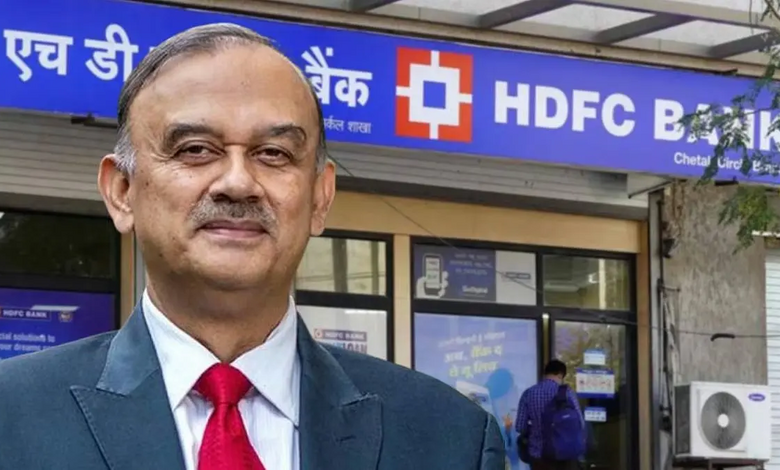
Shortly before midnight on March 18, 2026, HDFC Bank filed an exchange notification that stunned every corner of India’s financial establishment. Atanu Chakraborty, a 1985-batch IAS officer from the Gujarat cadre, former Secretary of the Department of Economic Affairs, and part-time non-executive chairman of HDFC Bank since May 2021, had resigned with immediate effect, 14 months before the expiry of his term. His resignation letter cited “certain happenings and practices within the bank, that I have observed over the last two years” that were “not in congruence with my personal values and ethics.” It named nothing specific. It blamed no individual.
The market’s verdict was immediate and brutal. In three days, HDFC Bank’s stock fell approximately 12 percent, from ₹843 to around ₹735 per share, wiping approximately ₹1 lakh crore, $21 billion, from the bank’s market capitalisation. The Reserve Bank of India issued a rare public reassurance. HDFC veteran Keki Mistry was rushed in as interim chairman. CEO Sashidhar Jagdishan said the board had asked Chakraborty to reconsider, both the resignation and the language of the letter, and failed on both counts. Analysts at Jefferies and Macquarie reportedly took the bank off their buy lists, signalling a reassessment of the governance premium HDFC Bank had spent decades building.
Two days later, on March 21, the other shoe dropped. HDFC Bank confirmed it had terminated three senior executives, Sampath Kumar, Group Head of Branch Banking; Harsh Gupta, Executive Vice President for the Middle East, Africa and NRI Onshore Business; and Payal Mandhyan, Senior Vice President. Gupta and Mandhyan had already been placed under suspension in January 2025 when an internal probe was first initiated. Kumar, according to reports, was held accountable as the executive under whose supervision the lapses occurred, even if he was not directly involved in the mis-selling.

The thread connecting the chairman’s exit and the three terminations: Credit Suisse AT1 bonds, allegedly sold to NRI clients through HDFC Bank’s Dubai International Financial Centre (DIFC) branch as safe, high-return alternatives to fixed deposits.
Then Follows The The Dubai Scandal — What Actually Happened?
To understand the gravity of what Chakraborty was objecting to, it is necessary to trace the scandal’s timeline with precision, because the timeline itself is the most damning element.
The underlying product, Credit Suisse AT1 bonds, became globally toxic in March 2023, when Credit Suisse collapsed and was forcibly taken over by UBS in a Swiss government-brokered rescue. As part of that rescue, AT1 bonds worth approximately $20 billion were written off entirely, a decision that triggered losses for investors worldwide. The Swiss Federal Administrative Court subsequently ruled that this write-off was unlawful, that a decision that FINMA and UBS have appealed to Switzerland’s Supreme Court, but this legal challenge does not retroactively recover losses for individual investors who relied on the instrument’s apparent safety when they invested.
The HDFC Bank-specific allegation is that NRI clients were allegedly persuaded to transfer their Foreign Currency Non-Resident (FCNR) deposits from India to Bahrain specifically in order to invest in these bonds. The bonds were allegedly marketed as “safe-haven” investments, a characterisation that is, for an AT1 instrument, not merely misleading but categorically false by the instrument’s own design. AT1 bonds are explicitly structured to absorb losses first. Calling them safe-haven is the financial equivalent of labelling a parachute as life insurance.
The Dubai Financial Services Authority (DFSA) flagged these lapses in September 2025, barring HDFC Bank’s DIFC branch from onboarding new clients while its investigation was ongoing. The compliance officer and chief internal auditor both exited the bank in connection with the fallout. The bank’s internal probe, initiated in January 2025, concluded on March 18, 2026, the same day Chakraborty resigned, leading to the termination of the three executives.
Here is the detail that converts a compliance failure into a possible governance scandal. As recently as October 2025, two years after Credit Suisse collapsed and more than a year after the mis-selling allegations first emerged, HDFC Bank goes: “With reference to the sale of Credit Suisse AT1 bonds, the bank has not come across any instances of mis-selling till now.” By March 2026, the bank had completed its review, acknowledged “gaps in client onboarding requirements,” and fired three executives. From “no mis-selling found” to “three senior executives terminated” in five months is (perhaps) not the trajectory of a bank that was honestly investigating itself.
And Chakraborty said it plainly in an interview broadcast on March 30, 2026 that HDFC Bank had delayed taking action against officials involved in the AT1 bond mis-selling. The eight-year gap between the date the original lapses allegedly began and the date action was finally taken was, in his view, not a timing inconvenience, it was an ethical failure. That eight-year observation window, across which governance mechanisms apparently failed to convert awareness of a problem into action against those responsible for it, is what drove the incongruence between Chakraborty’s personal values and the bank’s institutional conduct.
The Yes Bank AT1 Playbook — An Uncomfortably Familiar Script That We Have Seen Earlier…
To understand why Chakraborty’s resignation carries the weight it does, and why the AT1 thread running through it demands serious regulatory attention, it is necessary to revisit what happened in history at Yes Bank in forensic detail, because the parallels are not metaphorical. They are structural.
Yes Bank issued AT1 bonds in three tranches in 2013, 2016, and 2017, in compliance with applicable Basel III regulations. These were legitimate instruments issued to institutional investors. What happened next is what SEBI documented, with devastating specificity, in two separate orders. Between December 1, 2016 and February 29, 2020, Yes Bank’s private wealth management team, operating under the direct instructions of CEO Rana Kapoor, who took regular updates on sales progress and issued instructions to accelerate them, systematically resold these institutional AT1 bonds to individual retail investors.
The selling technique involved describing the bonds as “super FDs”, aka the instruments as safe as a bank fixed deposit, offering higher returns, with no linkage to market risk. Several distributors and agents explicitly told clients that “AT1 bonds are better than fixed deposits.”
SEBI found that 1,346 individual investors had placed approximately ₹679 crore in the AT1 bonds. Of these, 1,311 were existing Yes Bank customers who invested around ₹663 crore, people who trusted their own bank. As many as 277 customers had prematurely closed their existing fixed deposits and reinvested approximately ₹80 crore into the AT1 bonds, chasing higher yields, entirely unaware that they were exchanging guaranteed deposits for instruments that Basel III explicitly designates as the first instruments to be extinguished in a crisis. SEBI found that the bank had also failed to conduct risk-profiling of individual clients, including senior citizens aged 70, 80, and 90 years who invested their entire life savings.
When Yes Bank collapsed in March 2020 and the RBI imposed its moratorium, the administrator wrote off the 2016 and 2017 AT1 bond tranches entirely. Total write-off of ₹8,414 crore. The retail investors who had been sold these as super FDs lost everything. The human cost was not abstract.
One family described how a father invested his entire life savings of ₹1.3 crore in the bonds in 2017. When they were written off, his son hid the news from him for a year, fearing a heart attack, transferring money from his own account to maintain the pretence that interest was still being paid. In another documented case, a man invested over ₹1 crore, his entire savings, needed to fund his daughter’s medical treatment.
The regulatory response was that SEBI imposed a ₹25 crore penalty on Yes Bank in April 2021 under Section 15HA of the SEBI Act. It separately fined Rana Kapoor ₹2 crore, a number so small relative to the damage caused that it barely registers as accountability. SEBI subsequently banned retail investors from directly purchasing AT1 bonds in the primary market. The Bombay High Court later quashed the administrator’s write-off order on technical grounds, finding that the administrator had exceeded his powers once the bank had already been reconstructed, providing some legal relief, but the matter remains sub-judice in the Supreme Court as both Yes Bank and the RBI have appealed.
Six years after the Yes Bank AT1 disaster, every element of this script seems reappear at HDFC Bank- a complex instrument designed for institutional buyers, resold to retail clients as a safe high-yield alternative to deposits, without adequate risk disclosure, through the bank’s own relationship network, in a geography with regulatory oversight gaps. The mechanism of institutional instrument, retail investor, safety misrepresentation, delayed accountability, all is identical.
The AT1 Bond Is Not the Disease, But Can Definitely Be A Symptom
What the parallel between Yes Bank and HDFC Bank reveals is not that AT1 bonds are unusually dangerous financial instruments, yet they are, but that is not the point. The point is that they reveal something specific and serious about the cultures of institutions that mis-sell them.

AT1 bonds offer unusually high commissions to the intermediaries who place them. The incentive to sell them, and the temptation to obscure the risks in order to make the sale, is therefore built into the instrument’s economics. An institution with a strong compliance culture, robust internal audit, and genuinely independent board oversight will resist that temptation. An institution where sales pressure exceeds compliance discipline, where senior executives override risk-profiling requirements, and where boards are either unaware of what is happening or aware but silent, will yield to it.
Yes Bank yielded. Rana Kapoor personally instructed his private wealth management team to escalate sales. And the YES Bank board, for years, either did not know or did not stop it. The RBI, which had been conducting Asset Quality Reviews that revealed Yes Bank’s actual NPA position was seven times worse than reported as far back as 2015, waited three years before acting. The resulting collapse required a taxpayer-backed rescue worth ₹10,000 crore from SBI and a consortium of other public institutions.
At HDFC Bank, the critical unresolved question, the one that Chakraborty’s resignation demands be answered, and that ED and SEBI must investigate is, who knew, and when? The bank’s internal probe was initiated in January 2025. The DFSA flagged the lapses in September 2025. The bank told October 2025 that it had found no instances of mis-selling. By March 2026, three executives were terminated and the chairman had resigned.
Chakraborty himself said the mis-selling conduct dated back approximately eight years, which would place its origins around 2018, before Credit Suisse’s collapse, suggesting the mis-selling was of AT1 bonds generally, not only Credit Suisse instruments specifically, and that the bank was aware of, or should have been aware of, problematic practices for years before the DFSA escalation forced the issue.
If that timeline is accurate, then HDFC Bank’s October 2025 statement, “we have not come across any instances of mis-selling”, was either dishonest or the product of an internal investigation so superficial that it functioned as cover rather than audit. Neither possibility is acceptable in the chairman of an institution that holds deposits from millions of Indians.
At the end, Is Another Yes Bank Collapse Possible?
This is the question that markets are now pricing, that analysts are now modelling, and that retail investors, who collectively hold enormous exposure to HDFC Bank’s stock, bonds, and deposits, deserve a direct, honest answer to.
At the balance sheet level, HDFC Bank is not Yes Bank. Its combined balance sheet post the 2023 merger with HDFC Limited exceeds ₹18 lakh crore. Its capital ratios, by all publicly disclosed metrics, remain within regulatory requirements. The RBI’s public statement affirming the bank’s operational soundness is not without basis. A systemic liquidity collapse of the Yes Bank type is not an imminent, foreseeable outcome at HDFC Bank as of the currently documented evidence.
But that framing misses the more important question, which is not about the balance sheet, but it is about the governance culture that produces the balance sheet numbers that investors are shown. Yes Bank’s balance sheet, as reported, looked broadly sound until the RBI’s AQR found that its NPAs were seven times higher than disclosed. The gap between the reported narrative and the documented reality at Yes Bank was not a sudden surprise, but it was years of accumulating misrepresentation, enabled by exactly the institutional capture of the disclosure and oversight mechanism that Chakraborty’s resignation implies may be present, in some form, at HDFC Bank.
The AT1 mis-selling at HDFC Bank, as currently documented, represents a bounded compliance failure at a specific branch, involving a specific product, affecting a specific client category. It does not, on its own, indicate a systemic threat to the institution. But Chakraborty’s resignation letter did not say “certain happenings and practices at the Dubai branch.”
It said “certain happenings and practices within the bank”; it is the broader language that points to observations across the institution, over two years, that he found ethically incompatible with his continued presence. What those broader observations encompass remains undisclosed. That undisclosed territory is precisely what a forensic investigation by ED and SEBI should map, not to assume the worst, but to verify whether the disclosed AT1 issue is the full picture or the visible edge of something larger.
Governance premium is fragile and non-recoverable once lost. HDFC Bank’s stock has historically commanded a significant valuation premium over peers precisely because India’s investors have treated it as the gold standard of private sector banking governance. InGovern’s Shriram Subramanian was direct about this, that “HDFC Bank will lose its governance premium or people will start questioning it if the bank doesn’t proactively do something about this matter.” Once that premium is gone, once investors begin applying the same discount to HDFC Bank that they apply to institutions with governance questions, the financial consequences are significant, sustained, and largely irreversible.
Isn’t This Similar; The Same Instrument, The Same Silence, The Same Question?
There is something deeply instructive about the fact that AT1 bonds, the instrument India’s regulators explicitly regulated more stringently after the Yes Bank catastrophe, the instrument SEBI banned from direct retail sale in October 2020, have resurfaced as the central element of the governance crisis at India’s largest private sector bank. The regulation changed. The instrument found a different pathway, but, perhaps, the script remained the same.
The Yes Bank AT1 disaster cost 1,346 individual retail investors ₹679 crore, destroyed the savings of pensioners and the seriously ill, required a ₹10,000 crore public sector rescue, and ended with Rana Kapoor in jail, followed by bail. The accountability, when it finally came, was measured in years, and the penalties, measured against the damage, were tokens.
HDFC Bank’s AT1 scandal, if the full scope of what Chakraborty observed is ultimately confirmed, may not approach the scale of Yes Bank’s catastrophe. But a chairman of a systemically important institution resigned citing ethics, named the AT1 issue publicly as a central concern, and specifically identified delayed accountability as the failure that made the ethical incongruence unbearable. These are not the complaints of a bureaucrat having a bad day. They are the observations of a man who spent his career inside India’s financial regulatory architecture, who knows precisely what he is saying, and who chose to say it at maximum public cost to himself and to the institution.
India’s depositors, NRI investors, and retail shareholders in HDFC Bank deserve to know whether this is the full picture or the beginning of one. The Enforcement Directorate and SEBI have the mandate, the tools, and the precedent to find out. The Yes Bank script had years of early warning signals that, had they been acted upon decisively and immediately, would have prevented a national financial crisis. That lesson has been written, in the losses of thousands of ordinary Indians, in the most expensive ink available. The only question is whether India’s regulators read it, or whether, five years from now, they will be writing the next version of it.