India Needs More Judges, More Doctors And Not More Parasites Who Live On Tax Payers Money
How freebie politics, collapsing educational standards, and a paralysed judiciary are quietly hollowing out the Indian republic!

India- A Nation Slowly Eating Itself
There is a particular kind of rot that does not announce itself with a bang. It seeps in, through policy papers filed in haste, through cutoff scores quietly lowered in the dead of night, through election manifestos that promise the moon and leave the treasury picking up the rubble. India, in 2025, is a nation in the grip of precisely this kind of rot.
From the exam halls of NEET-PG to the overflowing dockets of its high courts, from the fiscal wreckage of Maharashtra to the Employment Exchange queues of its cities, a disturbing pattern is emerging; where a republic that once dared to dream of becoming a global knowledge superpower is now, systematically and with political intent, dismantling the very standards that could take it there.
This is not a polemic against the poor. Let that be stated clearly, loudly, and without equivocation. This is a polemic against the powerful — the politicians who manufacture dependency as electoral currency, the bureaucrats who confuse welfare with permanent subsidy, and the policy architects who, in a craven bid to fill hospital seats, have decided that a doctor who scores minus 40 out of 800 is fit to treat a human being.
The question this article asks is one that even the Supreme Court of India, in a moment of startling candour, asked from the bench in February 2025: “Rather than promoting them to be a part of the mainstream of the society by contributing to the nation’s development, are we not creating a class of parasites?” Why we need to answer this question, lies below the lane.
The NEET-PG Scandal: When the Bar Is the Floor, and the Floor Collapses
In January 2026, the National Board of Examinations in Medical Sciences (NBEMS) made a decision that should have shaken every Indian with a stake in public health. For candidates in the Scheduled Caste, Scheduled Tribe, and Other Backward Classes categories, the qualifying percentile for NEET-PG counselling was reduced to zero, meaning even candidates with a score as low as -40 marks, due to negative marking, can now participate in postgraduate medical counselling. This marked the first time that the qualifying percentile has been reduced to zero for reserved categories in NEET-PG counselling.
A candidate who answered questions incorrectly, whose net score is in the negative, is now eligible to pursue an MD or MS degree and, eventually, to operate on, diagnose, and treat patients. For candidates in the general and Economically Weaker Section categories, the qualifying percentile was reduced from the 50th to the 7th percentile, corresponding to a cutoff score of approximately 103 out of 800 marks.
The government’s justification was characteristically bureaucratic that the seat wastage must be prevented and the training opportunities must not go unfilled. The government justifies these moves by stating that NEET-PG is a ranking exercise for already-qualified MBBS doctors, and that leaving seats vacant results in a loss of training opportunities and affects the future availability of specialist doctors.
It is a justification that sounds reasonable until you apply it to any other field. Would we appoint a bridge engineer who failed his licensing exam? Would we certify a commercial pilot who failed instrument checks? The answer, in any sane republic, is no. But in India’s medical education policy, we are willing to hand a scalpel to someone who could not correctly answer even the most elementary questions about the discipline they are about to practise.
This is not a new crisis manufactured overnight. Drastic cutoff reductions have occurred in previous years to prevent seat wastage. In 2023, the Health Ministry reduced the qualifying percentile to zero across all categories including the General category; in 2024, the cutoff was lowered to the 5th percentile for all categories. What we are witnessing, then, is not an anomaly but a trend; a systematic, year-on-year capitulation to the logic of seat-filling over standard-setting.
Each time the bar is lowered, it becomes harder to raise it. Each concession to institutional profitability — for it is largely private medical colleges with high tuition fees that benefit from this expansion of eligibility — chips away at the idea that medical education is a meritocratic and rigorous enterprise.
The advocates of these reduced cutoffs speak of “equity” and “access.” But equity cannot mean the right to become an incompetent doctor. Access cannot mean access to a qualification that has been watered down to the point of meaninglessness. The patients who will be treated by doctors who qualified at the 0th percentile are, overwhelmingly, the poor — the same communities that these policies claim to serve. There is nothing equitable about sending the most vulnerable patients to the least qualified doctors. There is only a quiet, sustained betrayal dressed up in the language of inclusion.
Then Comes The Unemployable Republic.
When Half of India’s Graduates Cannot Do What Their Degree Says They Can
The NEET-PG crisis does not exist in a vacuum. It is the apex expression of a broader educational catastrophe, one that the Economic Survey of India 2024-25 has documented with a frankness that should embarrass every education minister who has held office in the last two decades. According to the Economic Survey 2024-25, a mere 8.25% of graduates are employed in roles that align with their qualifications, while over 50% of graduates are currently employed in “elementary” or “semi-skilled” jobs, roles that do not require the educational qualifications they possess.
Think about what that means structurally. India produces millions of graduates every year, invests enormous public and private resources in universities, colleges, and examination systems, and the end product is a workforce in which fewer than one in twelve degree-holders is actually doing work that requires a degree. This underemployment trend is also prevalent among postgraduates, with 44% in similar low-skill roles. The findings suggest a massive, systemic disconnect between what the education system produces and what the economy actually needs.
The COVID-19 pandemic, which closed campuses for nearly two years and forced a generation of students through the purgatory of online education with unreliable internet and makeshift study environments, has only deepened this crisis. A generation that lost its formative laboratory sessions, its clinical rotations, its campus debates and seminars, now walks into professional life carrying degrees whose practical content was hollowed out by circumstance.
World Bank data shows unemployment among those with advanced education at 13.47% in 2024, while among the illiterate, unemployment is near zero. The paradox is damning as the more educated you are in India, the more likely you are to be unemployed. Education, which should be the great equaliser, has become a lottery ticket, which is expensive to buy, and overwhelmingly likely to pay out nothing.
India’s education sector has failed to equip students with industry-relevant skills, rendering a large number of graduates unemployable. For example, 80% of India’s 1.5 million engineering graduates lack employable skills. If that is true of engineering — historically the most job-linked stream of Indian higher education — the situation in humanities, social sciences, and even medicine must be considered equally dire. When NEET-PG cutoffs are slashed to accommodate candidates who have demonstrably failed to master basic postgraduate medicine, what we are doing is not expanding healthcare; but we are manufacturing a new, legitimised category of under-qualified professionals and releasing them into a health system that can barely cope as it is.
The Comes The Most Biggest Bottleneck in the growth of Indian Economy- The Freebie State and the Fiscal Funeral
Maharashtra’s Cautionary Tale: When an Election Scheme Becomes a Fiscal Bomb
On a cold morning in October 2024, Maharashtra’s Finance Department issued an internal note that read like an epitaph for fiscal prudence. The fiscal deficit in Maharashtra for 2024-25 had reached ₹1,99,125.87 crore due to the additional budget and supplementary demands. The context was a proposal for a relatively modest sports infrastructure outlay, but the note made clear that the state’s finances were under extraordinary strain, and the proximate cause was not hard to identify.
Under the Mukhya Mantri Mazhi Ladki Bahin Yojana, eligible women between 21 and 60 years of age were to receive ₹1,500 per month, with the scheme expected to cost ₹46,000 crore every year. Launched as a pre-election promise by the Mahayuti government before the November 2024 state assembly elections, the scheme had a nakedly transactional character, where, there was a monthly payment in exchange for votes. It worked, in the narrow electoral sense. The Mahayuti won.
But the morning after the election, the bills arrived. Maharashtra’s debt is projected to reach ₹9.3 lakh crore in 2025-26, marking its highest-ever level. A steep revenue deficit of ₹45,891 crore has further limited fiscal maneuverability, and the Maharashtra government has since slashed the scheme’s budget by ₹10,000 crore while subjecting beneficiaries to stricter scrutiny.

The promised hike from ₹1,500 to ₹2,100 per month, a poll manifesto commitment, was quietly abandoned. The scheme, which had been presented to millions of women as a lifeline, was already being rationed and trimmed within months of the election it was designed to win. This is the cynical mathematics of freebie politics, where the ‘neta’ will announce an unaffordable scheme before an election, win the election, then cut the scheme after it, while blaming fiscal constraints — the very fiscal constraints the scheme created. The women of Maharashtra were not empowered; they were used as instruments of electoral mobilisation and then handed a reduced cheque.
But the damage to Maharashtra’s fiscal health is not just a local problem. Maharashtra is India’s most industrialised state, contributing approximately 15% of national GDP and nearly a third of all direct tax revenues. When Maharashtra’s finances buckle, the tremors are felt across the federation. Narrating his personal experience, Supreme Court Justice BR Gavai noted, “I come from an agricultural family. Because of the freebies in Maharashtra which they just announced prior to the elections, the agriculturists are not getting labourers.
Everybody is getting free (ration and money) at home.” Here was a sitting Supreme Court judge, testifying from personal, lived experience that freebie culture was actively disrupting agricultural labour markets. When farmers cannot find workers because the state is subsidising inactivity, the economic distortion is not theoretical. It is real, measurable, and deeply harmful.
The Broader Freebie Epidemic: How Political Alms Are Poisoning the Economy
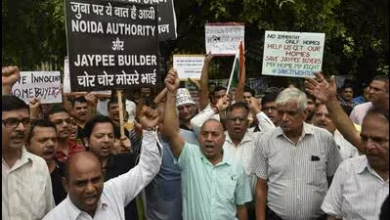
Maharashtra is the loudest example, but it is far from the only one. Across India, state governments of every political stripe have discovered that the path to electoral victory runs through the welfare cheque. Free electricity, free gas cylinders, free bus rides, free monthly cash transfers — the freebie arms race has become so intense that the Supreme Court of India felt compelled to intervene in it from the bench. A bench of Justices BR Gavai and Augustine George Masih asked, “Rather than promoting them to be a part of the mainstream of the society by contributing to the nation’s development, are we not creating a class of parasites?“
The Supreme Court went further, observing that “unfortunately, because of these freebies, which are declared just on the anvil of election like ‘Ladki Bahin’ and some other schemes, people are not willing to work. They are getting free ration, amounts without doing any work.” These are not the words of a conservative think-tank or an opposition politician. These are the words of the highest court in India, delivered from the bench while hearing a case about the right to shelter for homeless persons — a case, notably, that was itself about the state’s failure to adequately support its most vulnerable.
It is important to distinguish here, as critics of Justice Gavai’s remarks rightly have, between the dignity of welfare and the dysfunction of politically weaponised handouts. Over three hundred concerned citizens wrote that the statement was “symptomatic of the callousness and insensitivity that is often a mark of the powerful and the privileged,” while 71 retired civil servants and diplomats issued an open letter emphasising that “homeless people do not choose the streets of their own volition” and that homelessness is a symptom of the state’s failure. This counterpoint deserves to be heard seriously.
A welfare state that provides food, shelter, and healthcare to its most marginalised citizens is not creating parasites, but it is fulfilling its constitutional obligations. The problem is not welfare. The problem is the weaponisation of welfare — the cynical deployment of transfer payments not as a floor of dignity but as an electoral tool, deployed just before elections and withdrawn just after them, leaving the poor more dependent and the treasury more depleted than before. The distinction matters enormously.
A permanent, well-designed social safety net like a MGNREGA, a PDS, a national health insurance scheme, is an investment in human dignity and productivity. An election-eve cash transfer that pushes a state’s fiscal deficit to ₹1,99,125 crore is something else entirely. One strengthens the republic; the other hollows it out for the sake of five more years in power.
When state exchequers haemorrhage money on schemes designed to win elections rather than build capacity, the money that should be spent on schools, hospitals, courts, roads, and research is diverted or borrowed. Pendency of cases costs India more than 2% of GDP. Yet states continue to slash judicial infrastructure budgets while doubling down on transfer payments that produce no lasting economic value. India cannot simultaneously afford to build a 21st-century state and run a 21st-century patronage machine. Hence, it must choose.
Justice Delayed, Justice Buried
5 Crore Pending Cases and a Judiciary on Its Knees
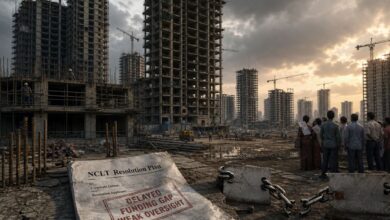
If the rot in education and fiscal policy is visible to the careful observer, the rot in India’s judiciary is visible to everyone, and it has been visible for decades, during which almost nothing substantive has been done about it. India’s judicial system is buckling under an unprecedented weight, with the total number of pending cases across high courts and subordinate courts surging past the five crore mark by the end of 2024, representing an increase of over 30% in the backlog across all court levels since 2020.

Five crore. Fifty million. It is a number so large it has ceased to function as a number and has become instead a metaphor for institutional failure. Behind every one of those fifty million cases is a human being — a widow fighting for her husband’s insurance, a farmer disputing a land boundary, an undertrial prisoner languishing in a cell without conviction. Nearly 76% of India’s prison inmates are undertrials — people not yet convicted, stuck in limbo behind bars, many of whom have already spent longer in jail than the maximum sentence for their alleged offence.
Based on current analysis, by 2030, subordinate court pendency could swell towards 5.12 crore, while high court pendency could approach 61 lakh. The trajectory is not merely one of stagnation, but it is one of accelerating decline. And the primary driver is one that any honest policy-maker could have identified and addressed years ago: there are simply not enough judges.
Vacancies continue to hover around 21% in subordinate courts and a critical 33% in high courts, meaning roughly one in three high court positions and one in five subordinate court positions remain unfilled. India has a ratio of 15 judges for every million Indians, compared to roughly 65 judges per million people in Canada. The Law Commission of India has, for years, recommended raising the judge-to-population ratio, but these recommendations collect dust while case numbers climb. The Law Commission of India and the Justice VS Malimath Committee had recommended raising the number of judges to 50 judges per million population, or one judge per 20,000 population. India is currently at less than a third of that target.
According to a 2018 Niti Aayog strategy paper, at the then-prevailing rate of disposal of cases in the courts, it would take more than 324 years to clear the backlog. That paper was written when pending cases stood at 29 million. They now stand at 50 million-plus. The curve has only steepened. The Rule of Law Index 2025, published by the World Justice Project, ranked India at 114 out of 143 countries in civil justice and 89 out of 143 in criminal justice. These are not rankings that a nation aspiring to be a $10 trillion economy can afford to ignore.
The human cost is not abstract. In April 2022, a court in Bihar acquitted a man of murder for lack of evidence after he had spent 28 years in jail. In 2023, India’s oldest pending case, a bank liquidation lawsuit filed in November 1948, was finally disposed of, for the absurd reason that nobody showed up to the final hearing. A case that had been in the system for 75 years. Cases that last longer than a human life are not a curiosity; they are an indictment of an entire system of governance.
The persistence of these issues, despite the national push towards e-courts, virtual hearings, and the NJDG data portal, highlights a critical point: technology is a tool, not a panacea. Without addressing the fundamental shortages in judges and streamlining processes, technology’s impact remains limited. This is a point that bears repeating to every digital-India enthusiast who believes that an app can substitute for a courtroom, and a dashboard can substitute for a judge. It cannot.
The Architecture of Decline- How These Crises Feed Each Other
What makes the convergence of these three crises, collapsing educational standards, the freebie economy, and judicial paralysis is so alarming is not merely that they coexist, but that they actively reinforce each other in a feedback loop that is difficult to break.
A population that is educated poorly produces fewer qualified professionals; fewer doctors, fewer engineers, fewer judges and hence creating shortages that the state then tries to solve not by improving education, but by lowering the standards for qualification. Lowered standards produce professionals who are less effective, leading to greater public dissatisfaction and a greater demand for state-provided services, which in turn creates political incentives for more freebie schemes. Freebie schemes drain fiscal resources that could be invested in education and judicial infrastructure. Judicial delays mean that corruption, regulatory violations, and contractual disputes go unresolved, discouraging investment and perpetuating the economic conditions that make people dependent on state handouts in the first place.
It is a closed loop. Each crisis deepens the other. And at the centre of it all is the political class, which benefits from educated incompetence (easier to manage), freebie dependency (easier to buy), and judicial delay (easier to escape accountability), and which has, therefore, every incentive to maintain the system exactly as it is.
India’s education sector fails to equip students with industry-relevant skills, rendering a large number of graduates unemployable, with 80% of India’s 1.5 million engineering graduates lacking employable skills. When this crisis is met not with educational reform but with lower examination cutoffs and more transfer payments, what the state is implicitly saying is: we do not believe you can be made competent, so we will manage your incompetence with subsidies. It is a profound and insulting act of pessimism disguised as compassion.
But, At The End, What India Actually Needs?
India does not need more doctors who scored below the 7th percentile. It needs medical colleges that produce doctors who can score in the 90th. India does not need more graduates who cannot perform work matching their qualifications. It needs universities that are honest about what they teach and rigorous about what they certify. India does not need more election-eve cash transfers that leave state treasuries in ruins and agricultural fields without workers. It needs a permanent, well-funded, well-administered social protection system built on fiscal responsibility and long-term thinking.
And, perhaps most urgently, India needs more judges. At the current pace, experts say it would take several hundred years to clear the court docket completely. No democracy can function when justice is measured in generations rather than months. No economy can grow when contracts cannot be enforced, property rights cannot be protected, and the innocent cannot be freed.
The Supreme Court, in a rare moment of institutional self-awareness, has identified the freebie crisis for what it is. The top court had on July 5, 2013, declared that freebies promised in poll manifestos vitiated the electoral process and asked the Election Commission to frame guidelines to check it in consultation with political parties. However, no substantive progress has been made on the issue. Twelve years later, the court is still asking the same question, and India is still providing the same non-answer.
The stakes could not be higher. A country that cannot train its doctors properly will bury its patients. A country that cannot employ its graduates will waste its demographic dividend. A country that cannot deliver justice within a human lifetime will lose its citizens’ faith in the institutions that hold civil society together. And a country that buys votes with borrowed money and lowered standards will eventually find that it has mortgaged not just its treasury, but its future.
India is not short of ambition. It is not short of talent. What it is dangerously short of, and what no freebie scheme, no percentile reduction, and no digital initiative can substitute for, is the political will to tell its citizens the truth: that a republic is built not on handouts, but on standards; not on dependency, but on capability; and not on the manufacture of grateful recipients, but on the cultivation of competent, dignified, and self-reliant citizens.
The nation needs more judges. It needs more real doctors. What it emphatically does not need is more of the same.