Raheja Developers Ltd Is Currently Involved In One Of The Largest Ongoing Real-Estate Enforcement Actions In India.

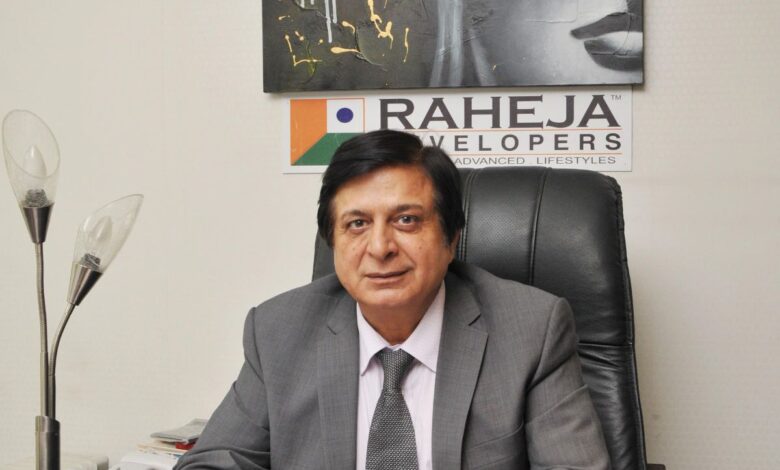
In the crowded and often opaque landscape of Indian real estate, few names have become as synonymous with both ambition and controversy as Raheja Developers Ltd. Once a prominent player in the National Capital Region’s housing market, the company now stands at the centre of one of the largest ongoing enforcement actions against a private builder in recent years. What began as scattered complaints from homebuyers has evolved into a multi-agency dragnet involving the Economic Offences Wing, the Enforcement Directorate, insolvency tribunals, RERA authorities, and civil courts. The numbers alone are staggering: roughly 4,600 homebuyers, approximately ₹2,426 crore collected, and provisional attachments of assets now approaching ₹2,400 crore under the Prevention of Money Laundering Act.
This is not merely another delayed-project story. It is a case study in how alleged diversion of homebuyer funds, prolonged non-delivery of units, and the complex interplay of criminal, civil, and insolvency proceedings can dismantle a developer’s financial and reputational edifice.
The Scale of the Allegations
According to official Enforcement Directorate press releases, Raheja Developers Ltd. mobilised nearly ₹2,425.99 crore from around 4,600 allottees across multiple residential projects. The central allegation is that substantial portions of these funds were diverted through related companies, shell entities, and family-linked assets rather than being deployed for construction and completion. The ED’s investigation under the Prevention of Money Laundering Act (PMLA) treats the underlying Economic Offences Wing FIRs—based on homebuyer complaints of cheating, criminal breach of trust, and non-delivery—as the predicate offences.
The projects in question span the Delhi-NCR region, with particular focus on schemes such as Raheja Revanta, Krishna Housing Scheme, Raheja Shilas, and others. Homebuyers have repeatedly alleged that they paid substantial amounts over years, only to face indefinite delays, incomplete infrastructure, and, in some cases, the resale of units already allotted to them. A Delhi court in April 2022 ordered the registration of FIRs against the company on complaints by Paramount Infratek Pvt. Ltd. and Choraria Securities Ltd., citing prima facie offences under Sections 406, 420, and 120B of the Indian Penal Code—criminal breach of trust, cheating, and conspiracy. Those orders centred on the allegation that flats already sold to the complainants had been transferred to third parties.
The Enforcement Directorate’s Expanding Footprint
The ED’s involvement has been the most consequential development. Searches under Section 17 of the PMLA were conducted on 27 June 2025 at approximately 13 locations linked to the company, its directors, and associates. A second round of searches followed on 25 April 2026 across roughly seven premises in Delhi, Noida, Greater Noida, Sainik Farms, and New Friends Colony.
The financial consequences have been severe. On 28 April 2026, the ED issued a provisional attachment order covering immovable properties valued at ₹1,113.81 crore belonging to related entities and family members of promoter-director Navin M. Raheja. A second order on 15 June 2026 attached further assets worth ₹503.48 crore. A third order dated 31 July 2026 added another ₹782.36 crore. The cumulative provisional attachment now stands at approximately ₹2,399.65 crore—one of the largest such actions linked to alleged diversion of homebuyer funds in the real-estate sector.
During the April 2026 searches, the agency also recovered jewellery and bullion valued at around ₹15.82 crore along with foreign currency. The ED’s narrative is consistent across its releases: funds collected for residential projects were allegedly routed away from construction, leaving thousands of buyers without homes while related parties and connected entities accumulated assets.
Insolvency as Parallel Pressure
Alongside the criminal and money-laundering probes, Raheja Developers has faced multiple Corporate Insolvency Resolution Processes under the Insolvency and Bankruptcy Code. NCLT orders dated 19 November 2024, 21 August 2025, and 8 June 2026, among others, have admitted petitions by homebuyer groups. Significantly, the National Company Law Appellate Tribunal has repeatedly confined these CIRPs to specific projects rather than the company as a whole—Krishna Housing Scheme, Raheja Shilas (Low Rise), and Raheja Revanta being notable examples. This project-specific approach reflects the tribunal’s recognition that real-estate insolvencies often involve distinct sets of stakeholders tied to individual schemes.
The insolvency proceedings have triggered a statutory moratorium, which in turn has led Haryana RERA authorities to adjourn numerous complaints against the company sine die. Public records show a substantial volume of RERA matters, with one frequently cited example being Complaint RERA-GRG-4120-2023 and others similarly stalled. Civil litigation continues in the Delhi High Court, commercial courts, and arbitration forums, adding further layers of complexity.
Cheque-bounce proceedings under Section 138 of the Negotiable Instruments Act also feature in the public record. At least one Delhi court decision addresses dishonoured cheques carrying the endorsement “payment stopped by drawer,” arising from builder-buyer disputes, along with interim compensation under Section 143A.
Critical Analysis: Systemic Failures and Individual Accountability
The Raheja case illuminates deeper structural weaknesses in India’s real-estate ecosystem. First is the chronic mismatch between funds collected and funds deployed. When thousands of buyers transfer money over years into escrow-like arrangements that prove porous, the regulatory architecture—RERA, bank monitoring, and project registration—appears insufficient to prevent alleged diversion. Second is the slow pace of criminal investigation relative to the scale of alleged harm. Multiple FIRs, court-ordered registrations, and years of complaints preceded the full force of the ED’s attachment machinery. Third is the tension between project-specific insolvency and the holistic reality of a developer’s finances. Confining CIRP to individual projects may protect other schemes in theory, yet it can leave overall group-level fund flows insufficiently scrutinised.
From an investigative standpoint, the pattern of related-party transactions and family-linked asset holdings—central to the ED’s attachment orders—raises classic red flags associated with money-laundering investigations in the real-estate sector. Whether these will ultimately result in confirmed proceeds of crime and successful prosecution remains to be determined by the adjudicating authorities and courts. What is already clear is the severity of the provisional measures: nearly ₹2,400 crore in attached assets represents a significant freeze on the economic capacity of the company and its promoters.
The human cost is equally stark. For the approximately 4,600 homebuyers cited by the ED, the case represents years of financial stress, opportunity cost, and emotional exhaustion. Many paid significant portions of the sale consideration expecting timely possession. Instead, they confront incomplete projects, legal uncertainty, and the prospect that recovery—if any—will be mediated through insolvency resolution or eventual PMLA adjudication.
The Company’s Position and Recent Developments
Raheja Developers has publicly denied wrongdoing. In responses to earlier searches and media queries, the company has stated that it has invested more funds into projects than it collected from customers, attributing delays primarily to the absence of essential government infrastructure despite payment of external and internal development charges. It has pointed to RERA-supervised forensic audits as evidence that funds were not diverted. These claims remain contested terrain between the company and the investigating agencies.
As of early August 2026, a Saket Court granted interim protection from arrest to Navin M. Raheja and his son Nayan N. Raheja in the ED matter, while directing them to join and cooperate with the investigation. The protection is interim; the agency continues to press its case.
Broader Implications
The Raheja Developers saga is more than the story of one builder. It is a mirror held up to the Indian real-estate industry’s persistent vulnerabilities: the ease with which homebuyer money can be treated as working capital rather than project-specific trust property; the lag between complaint and effective enforcement; and the difficulty of achieving timely resolution for ordinary allottees once multi-agency proceedings begin. It also tests the effectiveness of the PMLA as a tool for recovering alleged proceeds of crime in the housing sector, and of the IBC’s project-specific approach in delivering practical relief.
Whether the attached assets will ultimately be confirmed, whether criminal charges will crystallise into convictions, and whether homebuyers will see meaningful recovery are questions that only the coming months and years of adjudication will answer. What is already established on the public record is the extraordinary scale of the enforcement response. In the contested space between alleged diversion and claimed commercial difficulty, Raheja Developers has become one of the most closely watched real-estate cases of its time—an extensive, multi-front legal and financial confrontation whose outcome will carry lessons far beyond the company’s own balance sheet.