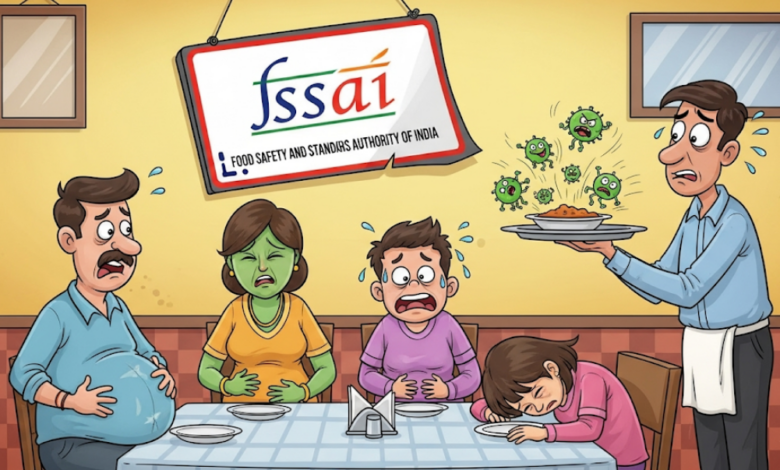
Imagine, you walk into any Indian supermarket and the shelves speak a confident language: “100% Pure.” “100% Natural.” “100% Organic.” “100% Purity Guaranteed.” These words are not decoration. They are persuasion, engineered to shortcut a shopper’s due diligence with the promise of absolute certainty in a market otherwise defined by fine print and disclaimers- But this is a story of the past.
Because the regulator responsible for policing exactly this kind of language has, in its own published material, said the term “100 per cent” is not defined anywhere under Indian food law, and that using it can create a false impression of absolute purity or superiority in a consumer’s mind. That is not a claim made by a rival company or a consumer activist. It is FSSAI’s own documented position.
Which raises the question: if the regulator knew this, when did it know it, and what did it do about it in the years before it finally acted?
What Actually Happened
On August 3, 2026, the Food Safety and Standards Authority of India issued a prohibition order against Dabur India Limited, reportedly under Section 36 of the Food Safety and Standards Act, 2006, directing the company to immediately stop selling a list of products carrying “100 per cent” claims, including Dabur Honey, Dabur Honey Squeezy, Dabur Sundarbans Honey, Dabur Himalayan Apple Cider Vinegar, Dabur Virgin Coconut Oil, Dabur Cold Pressed Sesame Oil, Dabur Cow Ghee, Real Activ 100% Tender Coconut Water, Dabur Hommade Coconut Milk, and Dabur Organic Honey, among others. The order gave the company 15 days to report compliance.
Dabur moved swiftly, filing a writ petition before the Delhi High Court. On August 7, 2026, Justice Amit Mahajan stayed FSSAI’s order, observing that the prohibition “ought not to have been passed without giving an opportunity of hearing.” Dabur’s senior counsel had argued that the company had been selling these products under the same labels for decades, that no show-cause notice had preceded the order, and that the Designated Officer who issued it may not have had the statutory power to prohibit sales in this manner.
The Central Government’s standing counsel countered that Dabur had previously received “improvement notices” and advisories about the claims. The court was not persuaded that this was sufficient process, and listed the matter for further hearing on August 24, 2026, directing FSSAI and the Centre to file their response in the interim.
It is worth being precise about what this stay does and does not mean. It does not mean the court has found Dabur’s “100% Pure” claims to be legally valid — that underlying question remains open. It means the court found, at a preliminary stage, that the manner in which FSSAI acted — without a hearing, without an apparent show-cause process — raised a strong enough procedural concern to justify pausing enforcement until the full matter is argued.
The “100%” Problem, Explained
Why does a phrase this simple generate this much regulatory friction? Because “100% Pure” is doing more interpretive work than most consumers realize. Pure in what sense — no additives? No processing? No blending? No contamination? A reasonable buyer might assume all of the above; a manufacturer might mean only one.
FSSAI’s own reasoning, as reflected in its public communications, is that this ambiguity is precisely the harm: the term conveys an impression of absolute superiority that the underlying regulatory framework has no mechanism to define or verify. Under the Food Safety and Standards (Advertising and Claims) Regulations, 2018 — which establish that claims must be truthful, unambiguous, and not misleading — FSSAI has previously taken the position that there is simply no regulatory provision that permits a “100 per cent” claim to be made on a packaged food product at all.
This is an important distinction for readers to hold onto: the question at the heart of this dispute is not necessarily whether Dabur’s honey or ghee is unsafe. It is whether the label accurately conveys to a consumer what they are actually buying, in a regulatory sense as much as a factual one.
FSSAI’s Own History of Warnings
The Dabur order did not emerge from nowhere. FSSAI’s position on “100 per cent” claims has a documented paper trail stretching back at least two years.
In mid-2024, FSSAI issued a directive specifically targeting “100% Fruit Juice” claims, instructing all food business operators to remove the term from labels and advertisements with immediate effect, and to exhaust existing pre-printed packaging by September 1, 2024. The regulator’s stated reasoning at the time was direct: such claims were misleading, “particularly under conditions where the major ingredient of the fruit juice is water” and the actual fruit content was present only in limited concentration, or where the juice had been reconstituted from concentrate. FSSAI stated plainly that no provision existed under the 2018 Advertising and Claims Regulations for making a “100 per cent” claim in the first place.
This was not a one-off intervention. In November 2025, FSSAI directed states to remove fruit-based beverages marketed under the “ORS” (Oral Rehydration Solution) label from the market, again citing misleading terminology as the justification — a separate but structurally similar action, showing a regulator willing to act against specific ambiguous or unauthorized terms when it identifies them, at least in some product categories.
So by the time FSSAI turned its attention to Dabur’s honey, ghee, and oil labels in August 2026, the regulator had already spent roughly two years publicly establishing, through its own directives, that “100 per cent” as a category of claim sat outside what the law permitted. That timeline is the crux of the investigative question here: the specific legal reasoning FSSAI used against Dabur in 2026 was not new. It was the same reasoning the regulator had already applied to fruit juice manufacturers in 2024.
Where Was FSSAI, All These Years?
This is the section where fairness to the regulator matters as much as scrutiny of it. Food regulation, at its best, is meant to be preventive rather than reactive — a system where problematic claims are identified and corrected before million of purchases have already been made on the strength of them, not after. Judged against that standard, FSSAI’s track record on “100 per cent” claims looks less like negligence and more like a slow, uneven escalation: advisory, followed by a narrow category-specific directive (fruit juice, then ORS-labelled beverages), followed — years later — by a sudden, sweeping prohibition order against one of India’s largest FMCG companies, covering an entirely different set of product categories (honey, ghee, edible oils, coconut products).
The fairer, more defensible criticism is not that FSSAI “closed its eyes.” It is that FSSAI’s enforcement model appears to move from advisory to isolated category-specific action to sudden company-specific prohibition, without an apparent intermediate stage of systematic, industry-wide audit. If the regulator’s underlying legal position — that “100 per cent” claims are unauthorized under the 2018 Regulations — was established as early as 2024 for fruit juice, the natural next question is why that same legal logic was not extended, methodically and publicly, across every other food category using comparable language, well before 2026.
Not Just a Dabur Story
This is arguably the most consequential unanswered question raised by this case, and it deserves to be asked directly rather than assumed: how many other Indian food brands — honey, ghee, cooking oils, packaged juices, dairy products — currently carry “100% Pure,” “100% Natural,” or “100% Organic” claims on their packaging, their e-commerce listings, or their advertising, and how many of them have received a comparable notice from FSSAI?
The Central Government’s counsel told the Delhi High Court that Dabur had previously received “improvement notices” specific to its fruit juice claims — suggesting Dabur itself was not an entirely unwarned first-time target. But the broader industry picture remains, on the evidence publicly available, unclear. If dozens of brands across honey, ghee, and edible oil categories carry similar “100 per cent” language and have not received equivalent prohibition orders, that would suggest an enforcement pattern that is reactive and selective rather than systematic — a criticism that would apply well beyond this single company.
This is not an allegation this article can currently substantiate; it is a question that a genuinely investigative accounting of FSSAI’s enforcement record — ideally through RTI disclosures of notices issued, audits conducted, and products recalled — would need to answer.
The Procedural Question the Court Actually Ruled On
It bears repeating, because it is easy to conflate: the Delhi High Court’s intervention was not about whether “100 per cent” is a legitimate marketing claim. It was about process. Dabur’s argument, which the court found persuasive enough for interim relief, centred on the absence of a show-cause notice or hearing before a prohibition order was issued — and on whether the Designated Officer who signed the order possessed the statutory authority to impose an immediate, blanket sales prohibition of this kind under Section 18 of the Act, which Dabur’s counsel characterized as laying down guiding principles rather than an independent enforcement power.

This distinction matters for how the broader public should read this episode. An advisory telling an industry to stop using a term is fundamentally different, in both legal weight and practical fairness, from an overnight order halting the sale of products a company has manufactured and marketed for decades. Whether FSSAI’s underlying concern about “100 per cent” claims is correct is a separate question from whether the specific procedure it used to enforce that concern against Dabur met the standards of natural justice. The court’s stay speaks only to the latter.
The Consumer-Rights Paradox
There are two distinct risks in play here, and both carry real costs. The first is the risk of allowing potentially misleading “100 per cent” claims to persist on supermarket shelves indefinitely, shaping purchasing decisions on the strength of an undefined and unverifiable term. The second is the risk of a regulator issuing sudden, sweeping prohibition orders against long-running products without adequate procedural safeguards — creating commercial uncertainty not just for the company in question, but for every other food business now unsure whether its own labelling could face similar overnight action without warning.
Both risks harm consumers, in different ways: the first through potentially misleading information at the point of purchase; the second through the market disruption, and possible price or supply volatility, that follows abrupt regulatory action against a major national supplier of household staples like honey and ghee. The lesson this case points toward is not simply that India needs a stricter food regulator. It is that India needs a more procedurally predictable one — where companies know, well in advance, what claims are permitted, what evidence is required to defend them, and what process will be followed before enforcement escalates to an outright sales prohibition.
What FSSAI Should Do Differently
A more preventive, transparent enforcement model would plausibly include a few concrete elements: a public, searchable registry that lets food businesses check whether a proposed claim is compliant before they print packaging; industry-wide audits of common claim categories rather than one-company enforcement actions; standardized compliance notices with clear timelines and stated reasons; monitoring extended explicitly to e-commerce listings and digital advertising, not just physical packaging; and regular publication of enforcement statistics — how many notices issued, how many claims removed, how many prohibition orders followed — so that the public and the industry alike can judge whether enforcement is happening at the scale the problem actually requires.
Conclusion
The Dabur case may ultimately turn on a narrow legal question: whether “100% Pure” is a permissible claim on a single-ingredient product like honey, and whether FSSAI followed the correct procedure in prohibiting it. But the more durable question this episode raises has little to do with Dabur specifically. It is why Indian consumers needed a court battle in 2026 to force clarity on a labelling ambiguity that the country’s own food regulator had already flagged, in writing, at least two years earlier — and why, when enforcement finally arrived, it arrived in a form procedurally shaky enough to be stayed within days.
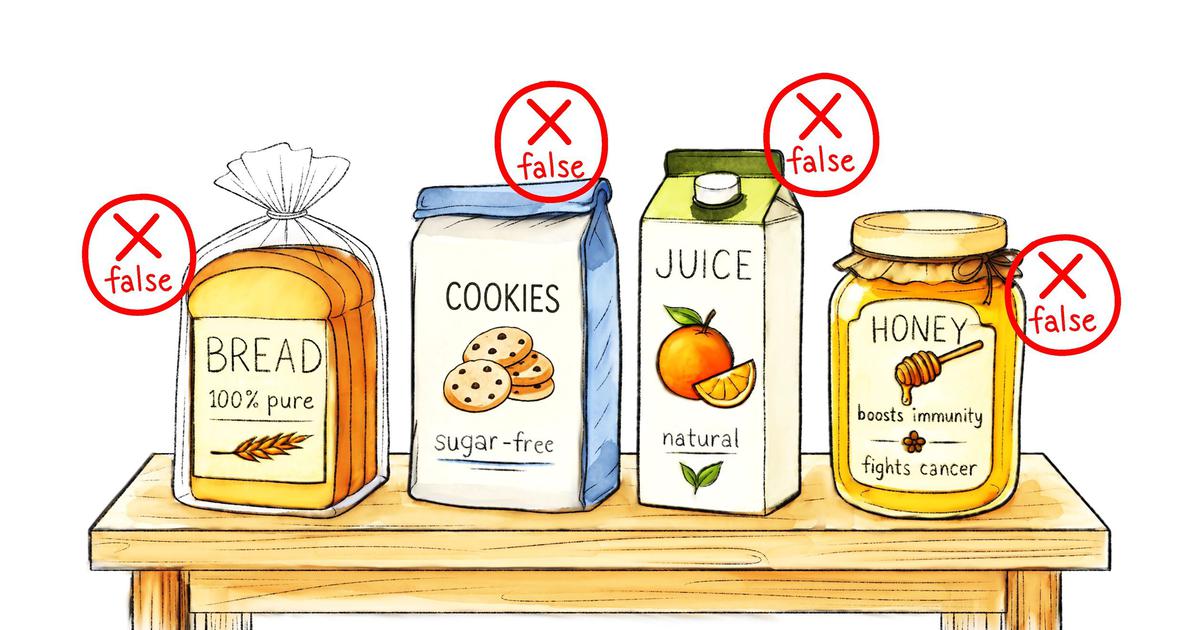
A food regulator’s job is to catch a misleading claim before it reaches the supermarket shelf, not to discover the scale of the problem only once a major company becomes a litigant. The next hearing, on August 24, will address whether “100% Pure” survives legal scrutiny. The more important verdict — on whether India’s food regulator can enforce its own stated standards consistently, systematically, and with due process, rather than in sudden bursts years apart — is one that no single court date is likely to resolve.