Revivo’s Deficiency In Service: Cigarette Butt In Ironed Clothes Raises Questions About Laundry Quality
Revivo presents itself as a professional laundry and dry-cleaning brand promising garment care, convenient pickup and delivery, and quality-focused services. But a customer's alleged discovery of a cigarette butt inside ironed clothes raises a basic question about service quality: what happens when garments entrusted to a professional cleaner return with an unexpected foreign object? This article examines the reported deficiency, other customer-service concerns, Revivo's advertised promises, its contractual terms and the financial figures available for Vikhush Enterprises Private Limited. The focus is the customer experience, documentary evidence and the importance of establishing whether the service delivered matched the service paid for.

Revivo’s Deficiency In Service: Cigarette Butt In Ironed Clothes Raises Questions About Laundry Quality
When Customers Entrust Their Clothes To A Professional Service
Laundry is one of those services that people often outsource because they expect a professional outcome. A customer hands over clothes, pays a fee and expects the garments to return clean, properly handled, neatly ironed and ready to wear.
The entire purpose of paying a professional laundry company is to avoid the inconvenience and uncertainty of handling the process personally.
For a brand such as Revivo, which markets itself as a professional laundry and dry-cleaning company, that expectation is particularly relevant. The company’s website advertises dry cleaning, laundry, premium laundry, ironing, shoe care, and carpet and upholstery cleaning. It also promotes free pickup and delivery, organic chemicals and German machinery and detergents.
But what happens when a customer receives ironed clothes containing a cigarette butt?
That is the service-deficiency question at the centre of this article. The purpose of this article is not to declare that Revivo’s entire business is defective. It is to examine the reported service experience, the additional concerns raised by the customer and the company’s own published policies. It raises questions about how the garment was handled before being returned to the customer. The issue is not merely whether the clothes were ironed. It is whether the service delivered matched the service paid for.
The Cigarette Butt In Ironed Clothes: A Specific Customer Complaint
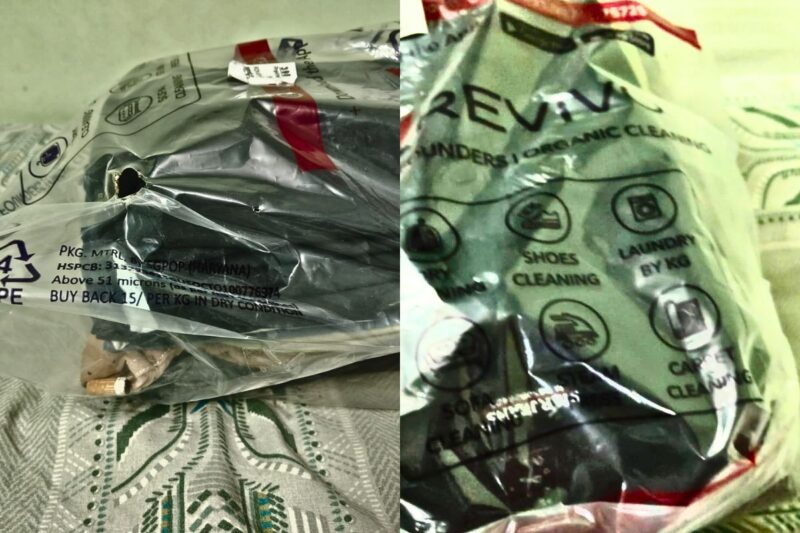
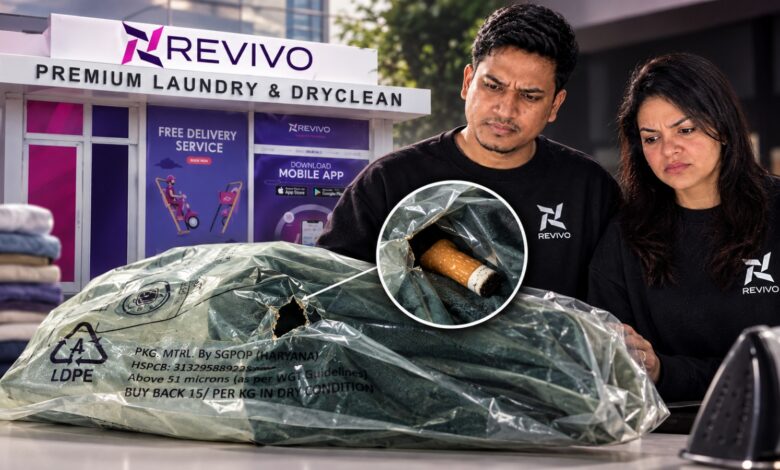
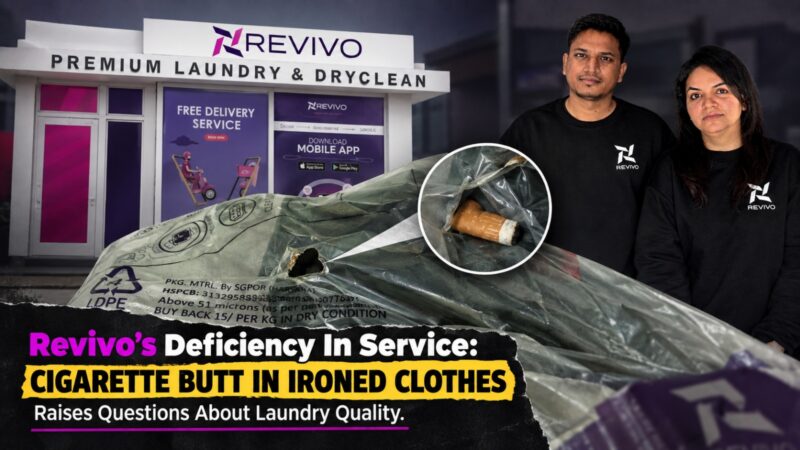
The most important allegation in the present matter is straightforward: a cigarette butt was found inside clothes that had been ironed by Revivo. The question is how the object came to be there. If the garment was returned after ironing and the cigarette butt was found inside it, the customer would reasonably expect the company to explain how such an object came to be present and what steps would be taken to prevent a recurrence. This service deficiency would concern the condition in which the garment was returned and the company’s responsibility for handling it.
Why This Matters For Ironing Services
Ironing is not merely a cosmetic service. It involves handling garments, preparing them for delivery and presenting them to the customer in a usable condition. A customer who pays for ironing expects the garment to be returned in an appropriate state. The discovery of a foreign object inside the garment could raise questions about whether the garment was properly inspected and handled before delivery.
Revivo’s Own Service Promises
Revivo’s official website describes a customer journey involving scheduling, pickup, cleaning and delivery. It says the company will pick up clothes at the customer’s preferred time and ensure timely delivery as promised. The website also lists ironing as one of its services. That creates a straightforward comparison between the service promised and the service received.
The company’s website promotes professional garment care, pickup and delivery and quality-focused processing. These are advertised claims; we ask whether every order meets those standards? In other words, the relevant question is whether the service delivered to the customer matched the applicable promise?
If a customer paid for ironing and received clothes containing a cigarette butt, the customer may reasonably ask whether the service was performed with the required level of care. The company owe an explanation.
The Other Reported Service Deficiencies
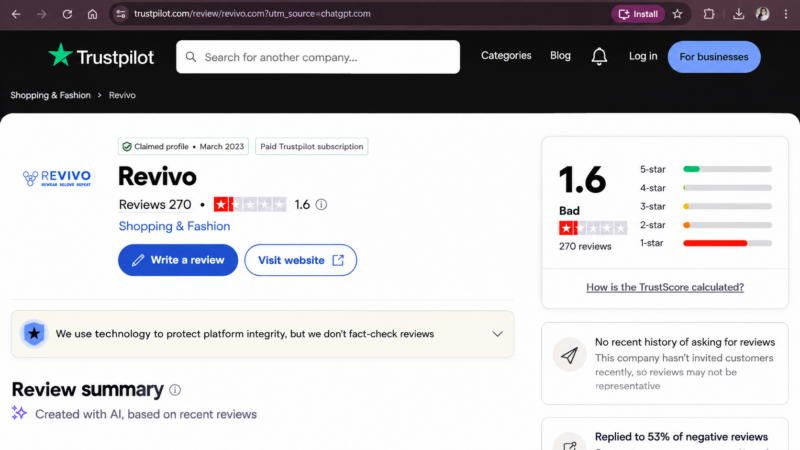
The broader customer-service concerns associated with the Revivo matter include alleged delays, poor garment handling and inadequate customer support. These issues should not be treated as established facts about every Revivo order. They are allegations that require evidence.
Garment Handling
The reported cigarette butt incident is directly relevant to garment handling. A customer entrusts clothes to a service provider with the expectation that they will be returned in a condition consistent with the service purchased. If the clothes are returned with a foreign object, the customer may reasonably ask whether the garment was inspected before delivery.
The question is not whether every foreign object can always be prevented. Garments may arrive with objects inside pockets or folds. The relevant question is what the service provider’s handling process requires and whether the company responded appropriately after the customer raised the issue.
What Revivo’s Terms And Conditions Say
The company’s published terms and conditions are particularly relevant to the service-deficiency question.
Revivo states that it has a grievance window of 24 hours for issues involving dirty or uncleaned clothes, improper pressing, packaging-related concerns, delivery delays and other unsatisfactory aspects of service. This is important because it shows that the company itself recognises several categories of customer grievance. Improper pressing and packaging concerns are directly relevant to an ironing complaint involving a cigarette butt.
The terms also state that customers should count the articles at delivery and that concerns about missing or lost articles may not be addressed later. They specify that compensation claims must be made within 15 days of an offer. These terms should be read carefully in any customer complaint.
The Financial Picture: Growth In Revenue, Continued Losses
The financial figures supplied in the screenshot add another dimension to the article.
The screenshot shows financial statements of Revivo displayed for Vikhush Enterprises Private Limited. The figures are shown in Indian rupees and cover FY 2022–23, FY 2023–24 and FY 2024–25.
According to the supplied screenshot, the company reported the following revenue and net profit/loss figures.
For FY 2022–23, revenue was shown as ₹45 lakh and net loss as ₹37.4 lakh.
For FY 2023–24, revenue was shown as ₹1.9 crore and net loss as ₹92.6 lakh.
For FY 2024–25, revenue was shown as ₹3.5 crore and net loss as ₹84.5 lakh.
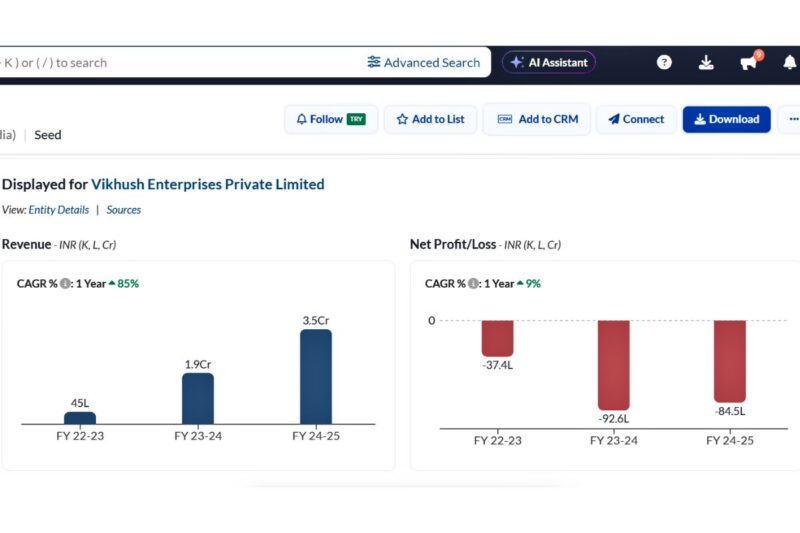
The figures show substantial revenue growth over the three years. Revenue increased from ₹45 lakh in FY 2022–23 to ₹3.5 crore in FY 2024–25. At the same time, the company reported net losses in all three years shown. This is important context, but it should not be misinterpreted.
A young company may incur losses while investing in expansion, technology, staff, equipment, marketing and operations. Revenue growth and continued losses can coexist, particularly during a scaling phase. The financial figures do not prove that the company is financially unstable or that it cannot provide adequate services. They do show that the company was not yet reporting net profits in the years shown.
What The Numbers Do And Do Not Establish
The revenue figures indicate growth in reported business income. The net losses indicate that expenses exceeded income in each of the years shown. The company has reported continued net losses despite significant revenue growth.
Revenue Growth Is Not The Same As Service Quality
This is an important distinction. A company can grow revenue while facing customer complaints. It can also have losses while delivering excellent service. Financial performance and service quality are related business concerns, but one does not automatically establish the other. The present article is centred on service deficiency.
A customer who pays for ironing is entitled to expect the service to be delivered according to the applicable agreement and law, regardless of whether the company is profitable.
Why A Foreign Object In A Garment Deserves A Response
The cigarette butt allegation deserves a specific response because it concerns a physical object allegedly found inside a garment after professional service. The question for Revivo is not necessarily whether the company intended for the object to be there.
The question is how the company handles such a complaint.
A customer who finds a foreign object in an ironed garment may reasonably expect acknowledgement of the complaint, an explanation of the possible cause, an opportunity for the company to inspect the garment, a clear statement about what the company will do and appropriate redress if a service deficiency is established.
This is especially important because the company markets itself around garment care. The official website says the company knows customers love their clothes and that it takes care of them. That marketing language creates an expectation of care. It does not establish a legal guarantee that every garment will be returned without any foreign object. But it does make quality control a relevant issue.
The Difference Between A Complaint And A Proven Deficiency
A responsible investigation must distinguish between a complaint and a proven deficiency. The customer may have strong evidence. The cigarette butt is photographed inside the garment. The delivery record establishes how Revivo handled the clothes. The complaint may have been made immediately after delivery.
What The Customer Should Preserve
For the cigarette butt complaint, the most important evidence is the original garment and the object itself, if still available.
The customer should preserve photographs showing the cigarette butt in the garment, a video showing the garment and object if available, the original invoice or order confirmation, the pickup and delivery dates, any photographs taken before the garment was handed over, WhatsApp messages or emails with Revivo, any customer-care response and any refund or compensation offer.
The company’s terms and conditions applicable to the order should also be preserved.
The evidence should be preserved in its original form where possible.
Screenshots should retain dates and the identity of the sender. Photographs should not be edited in ways that obscure the relevant details.
If the garment is still available, it should be kept safely rather than discarded.
These steps are useful whether the customer intends to seek a refund, pursue a consumer complaint or simply ask the company for an explanation.
The Legal Question: Could This Amount To Deficiency In Service?
The Consumer Protection Act, 2019 defines “deficiency” in relation to a service as a fault, imperfection, shortcoming or inadequacy in the quality, nature or manner of performance required under law or contract.
Whether a particular incident amounts to deficiency in service depends on the facts.
For the cigarette butt allegation, relevant questions include whether the garment was entrusted to Revivo, whether the object was present when the garment was returned, whether the object was introduced during the service, whether the company failed to perform the service with the required care, whether the customer reported the issue within the applicable grievance period and what the contract or service policy says.
A court or consumer commission would examine the evidence and applicable law.
The existence of a complaint is not enough to establish liability. But if the evidence proves that the garment was returned in a deficient condition, the customer may have grounds to seek an appropriate remedy.
The company’s terms and conditions should be considered, but contractual terms do not automatically determine every legal issue.
The Financial Numbers Should Be Read In Context
The screenshot’s financial figures are relevant because they show the stage of the business.
Revenue increased significantly over the three years shown. Losses also remained present.
That is a common feature of some young businesses, particularly those investing in expansion.
However, a company’s financial stage does not remove the need for service quality.
A customer who pays for ironing is entitled to expect the service to be delivered according to the applicable agreement and law, regardless of whether the company is profitable.
At the same time, the company’s financial losses should not be used to imply that it is unable to pay compensation or that it is failing because of this complaint.
The screenshot does not establish those conclusions.
A precise article should therefore say that the company has reported continued losses while expanding revenue, and separately examine whether the customer’s service was deficient.
Conclusion: The Customer’s Garment Is The Starting Point
The central issue in the Revivo matter is not whether the company is a startup or whether it has reported losses. It is whether the service provided to the customer matched the service promised. The allegation that a cigarette butt was found in ironed clothes is a specific and serious service-quality concern.
Revivo’s website advertises professional garment care, ironing, laundry and delivery services. Its terms and conditions contain provisions dealing with grievances, delivery timelines and compensation. Those published promises and policies provide a framework for assessing the customer’s experience.
The financial figures supplied in the screenshot show revenue growth from ₹45 lakh in FY 2022–23 to ₹3.5 crore in FY 2024–25, alongside net losses in each of the three years. Those numbers provide context about the company’s business stage, but they do not establish service quality or legal liability.