Raheja Developers Took The Money. The Homes Never Came. The System Paused. The ₹2,400 Crore Question And The Comfort Of Staying Out Of Jail
Raheja Developers is at the centre of a ₹2,400 crore money laundering probe - yet its top leadership has secured interim protection from arrest. The case captures a familiar tension in India’s real estate sector, where massive allegations, delayed homes, and due process collide, leaving thousands of homebuyers still waiting.

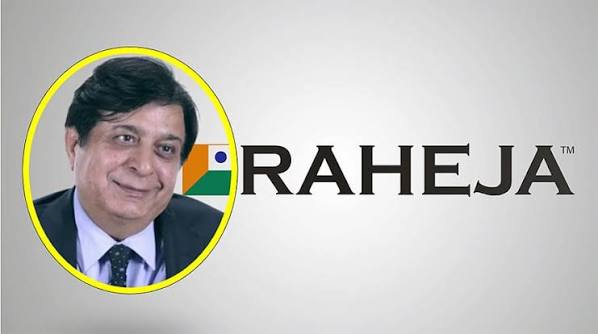
Raheja Developers took the money. The homes are still missing. And now, the story has moved exactly where it often does in India’s real estate cycle – into courtrooms.
So here’s the question: when you think of buying a home in India, what comes to mind – the brochures, the promises, the timelines… or the years of waiting, the EMIs that never stop, and the court cases that follow?
Because for thousands of homebuyers who put their money into Raheja projects, the answer isn’t theoretical. It’s lived reality. Despite a ₹2,400 crore money laundering probe, thousands of homebuyer complaints, and one of the largest provisional asset attachments in recent real estate investigations, a Delhi court has granted interim protection from arrest to the company’s top leadership.
And that’s where the story really begins – what happens when massive financial allegations collide with due process – and where that leaves the people who paid for homes that still don’t exist.

The Trigger Event
On 4 August 2026, a Saket Court in Delhi granted interim protection from arrest to Navin M. Raheja, Chairman and Managing Director of Raheja Developers Ltd., and his son Nayan N. Raheja.
The order came while the court was hearing the Enforcement Directorate’s request for non-bailable warrants against the duo in an ongoing money laundering investigation.
But this wasn’t a clean chit.
The court made it clear that the protection is temporary – valid until the next hearing – and conditional on full cooperation with the investigation. It also underlined a key principle: non-bailable warrants are not to be issued mechanically, and the purpose of legal process is to secure presence, not to punish in advance.
In other words, the court chose restraint over immediate coercion. Which sets up the central tension of this case – a massive financial probe on one side, and judicial caution on the other.
The Core Allegation
Strip away the legal language – Raheja Developers collected approximately ₹2,425.99 crore from nearly 4,600 homebuyers across multiple residential projects. The expectation was simple – those funds would go into construction and delivery.
Investigators now believe that didn’t fully happen.
According to the Enforcement Directorate, a substantial portion of this money was diverted – moved away from the projects it was meant to fund and routed through a network of related entities and shell companies instead of being used for construction.
And this is where it gets important, because this is no longer just about delayed projects or missed timelines. It’s about whether the very foundation of those projects (the money paid by buyers) was used for something else entirely.
The case itself is rooted in multiple FIRs filed by the Economic Offences Wing, triggered by complaints from homebuyers who paid for homes that either stalled indefinitely or failed to materialise as promised.
And once that many complaints converge into a single financial trail, the scale stops looking like a series of isolated project failures.
The Money Trail
The Enforcement Directorate’s case doesn’t stop at saying funds were diverted – it attempts to map how.
Investigators allege that money collected from homebuyers did not remain within project accounts. Instead, it was routed through a network of related entities and shell companies, creating layers of transactions that obscured where the funds ultimately landed.
According to the probe, these financial movements weren’t incidental. They point to a pattern – funds moving away from construction-linked use and into entities connected to promoters, family members, and associates.
To back this, the agency has conducted multiple searches.
Operations across Delhi-NCR and Mohali in 2025 and 2026 led to the recovery of documents, digital records, and financial data that investigators say trace these transactions. Alongside that, assets including jewellery and bullion worth approximately ₹15.82 crore and foreign currency were also seized.
Then comes the most visible part of enforcement – the attachments.
Under the Prevention of Money Laundering Act, the ED has provisionally attached assets in multiple phases, cumulatively reaching nearly ₹2,400 crore. These attachments are meant to prevent the dissipation of what the agency believes could be proceeds of crime while the investigation continues.
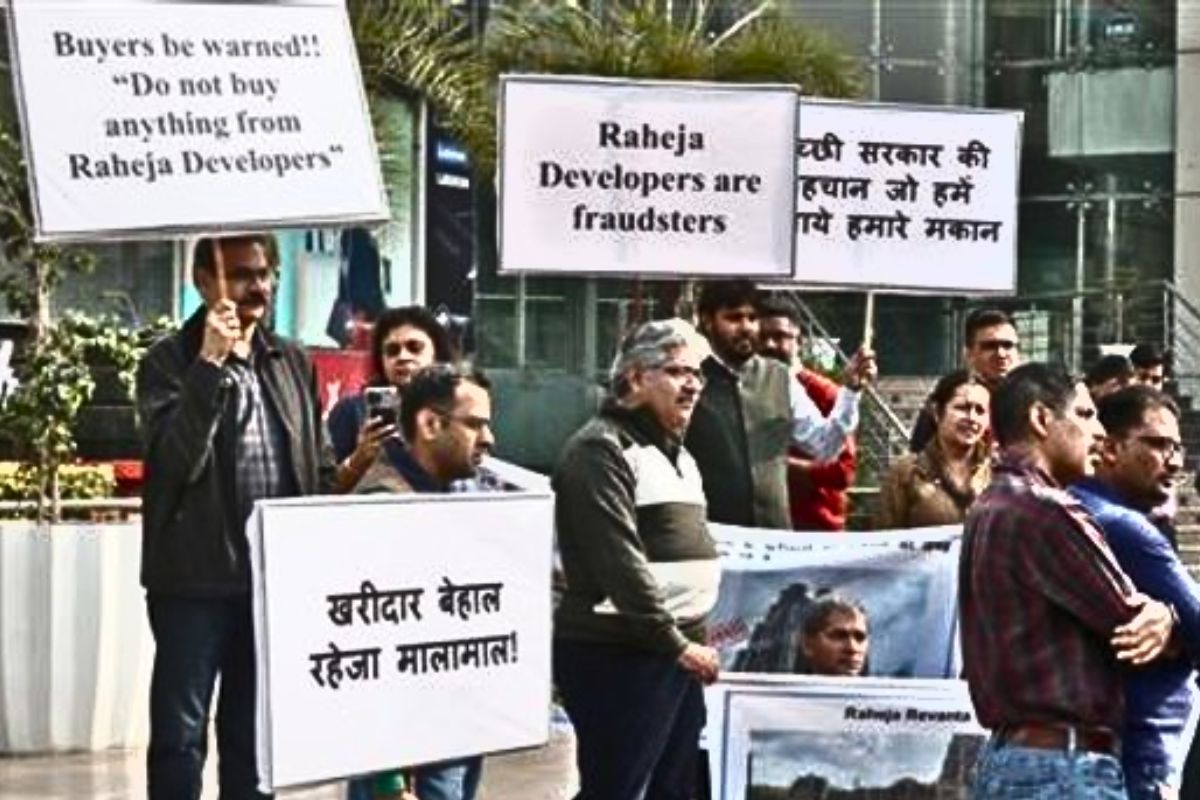
The Scale of Enforcement Action
If the allegations establish the pattern, the numbers establish the scale.
The Enforcement Directorate hasn’t moved in a single step – it has built this case through a series of escalating actions across 2026.
—April 2026: Assets worth ₹1,113.81 crore attached
—June 2026: Additional ₹503.48 crore
—July 2026: Further ₹782.36 crore
That takes the cumulative value of provisionally attached assets to approximately ₹2,399.65 crore. They place the Raheja Developers case among the more significant real estate-linked money laundering probes in recent years – both in terms of value and the number of affected buyers.
And importantly, these attachments aren’t arbitrary.
Under the Prevention of Money Laundering Act, they are meant to lock down assets that investigators believe are linked to the alleged diversion of funds – ensuring they are not sold, transferred, or dissipated while the case is still being built.
But there’s a gap here. Attachment is not resolution and freezing assets is not the same as returning money or completing homes. Which means that even as the numbers grow larger on paper, the ground reality for thousands of buyers remains unchanged.
The Ground Reality
Behind the numbers and court orders sits the part that doesn’t move as fast – the projects themselves.
Take Raheja Revanta in Sector 78, Gurugram.
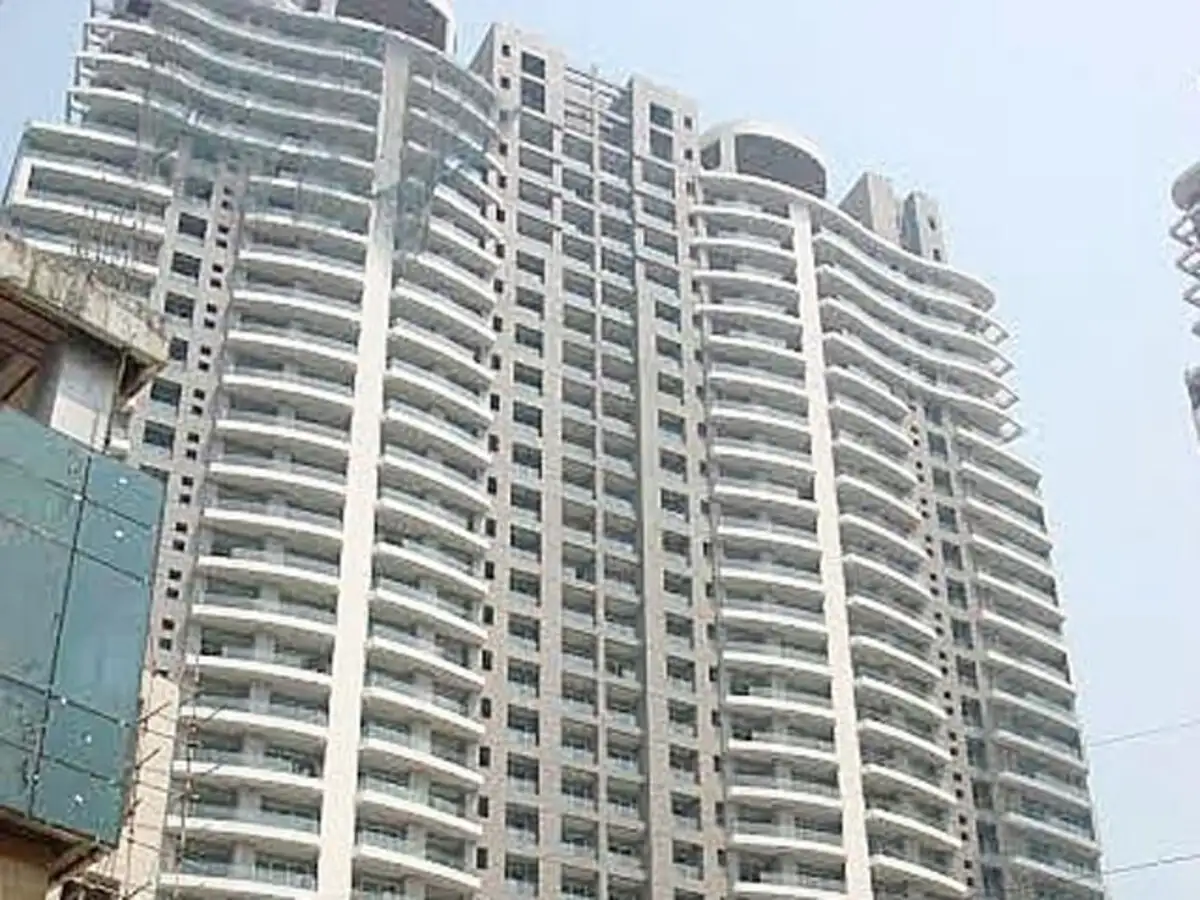
Launched around 2011–12, it was marketed as a premium high-rise development with a promised delivery timeline of 36 to 48 months. Buyers committed early, many paying as much as 90–95 percent of the total cost. More than a decade later, for many of them, possession still hasn’t happened.
The delays aren’t just anecdotal but have spilled into multiple legal forums.
In June 2026, the National Company Law Tribunal admitted an insolvency petition filed by 176 allottees who had collectively paid over ₹137 crore. At the same time, Haryana RERA stepped in – banning further sales in the project, ordering forensic audits, freezing accounts, and directing refunds with interest in several cases.
And Revanta isn’t an outlier.
Similar complaints of delay and non-delivery have surfaced across other Raheja projects, forming the base of roughly 4,600 homebuyer complaints that now feed into the larger investigation.
For buyers, this isn’t about legal classifications or financial trails. It’s about EMIs paid on homes they don’t have, rent paid alongside loans, and years lost waiting for possession that was once promised in months.
And while enforcement agencies trace money and courts weigh procedure, that waiting continues.
The Legal Fight
Inside the courtroom, the case has been less about what happened and more about how the process should move forward.
The Enforcement Directorate pushed for non-bailable warrants against Navin and Nayan Raheja, arguing that despite earlier cooperation, the accused failed to appear on multiple occasions after summons were issued in April 2026. From the agency’s perspective, that was enough to justify coercive action.

The Bigger Pattern
Step back from the specifics of Raheja Developers, and the outline starts to look familiar.
Large real estate projects launch with aggressive timelines. Buyers fund construction upfront. Delays begin – sometimes explained by approvals, sometimes by infrastructure gaps. Complaints pile up. Regulatory bodies step in. Years pass. And only then does enforcement escalate into criminal or financial investigation.
By the time agencies like the Enforcement Directorate enter the picture, the damage is already layered – financial, legal, and personal. That’s what makes this case larger than just one company. Because the elements here aren’t isolated.
- Heavy reliance on homebuyer funds.
- Complex inter-company financial flows.
- Delayed project delivery stretching into years.
- And enforcement that arrives long after the first signs of trouble.
RERA was meant to correct many of these issues – by enforcing project-level fund discipline and faster dispute resolution. But as this case shows, the gaps haven’t disappeared. They’ve just become harder to untangle once money, litigation, and multiple agencies enter the frame.
And that’s where the imbalance sharpens. Because for developers, the system offers multiple legal routes, time, and resources to respond. For buyers, however, the experience is very different – fragmented remedies, prolonged timelines, and outcomes that often come years after the initial investment.
Which is why cases like this don’t just raise questions about one investigation. They raise questions about whether the system itself is built to resolve them in time.
Why Big Builders Still Get Relief
For many homebuyers, the question isn’t complicated. When thousands of complaints exist, thousands of crores are under investigation, and projects remain incomplete for years – how does interim relief still come through?
The answer lies less in any single case, and more in how the system is built. Start with legal firepower.
Large developers have the resources to engage senior counsel, file layered legal challenges, and respond across multiple forums simultaneously – criminal courts, High Courts, regulatory bodies. Every procedural right is exercised fully, and often strategically. It’s entirely within the law. But it creates an imbalance that individual buyers simply cannot match.
Then comes the principle of bail itself.
Indian criminal law operates on a clear foundation – liberty first. Arrest is not automatic, and courts are cautious about coercive action unless it is clearly necessary. In cases where the accused have previously cooperated or are willing to do so, courts often lean toward restraint rather than immediate custody.
That’s exactly what played out here.
But there’s also time – the most under-discussed factor.
Investigations take years. FIRs are filed, complaints move across forums, evidence builds slowly. By the time enforcement reaches a stage where coercive action is considered, the case itself is already aged. That weakens the urgency argument in court, even if the underlying allegations are serious.
And then there’s fragmentation.
—Homebuyers fight in RERA. In consumer courts. In insolvency tribunals.
—Enforcement agencies pursue financial trails separately.
—Criminal proceedings move on a different timeline altogether.
There is no single, unified path to resolution.
Which means that even when action finally intensifies, it does so in pieces – not as a decisive outcome. For developers with resources, that system is navigable but for buyers, it’s exhausting.
The System Problem
What the Raheja case ultimately exposes isn’t just a dispute between a developer and its buyers. It exposes a gap, a gap between action and outcome.
Because even in a case where nearly ₹2,400 crore worth of assets have been provisionally attached, the question of actual recovery – or completed homes – remains unresolved.
That gap is where most homebuyers get stuck.
Asset attachment under the Prevention of Money Laundering Act is designed to prevent the dissipation of alleged proceeds of crime. It secures value on paper. But it does not automatically translate into refunds, nor does it restart stalled construction.
So while enforcement can move at scale, resolution does not.
And then there’s the issue of time.
Multiple forums – RERA, consumer courts, civil litigation, insolvency proceedings, and criminal investigation—operate in parallel, each with its own pace. What should have been a single dispute turns into a multi-front legal process that stretches across years.
Judicial observations over time have repeatedly pointed to the same pressure points—lengthy arguments, adjournments, and the disproportionate advantage of those who can sustain long legal battles.
Not because the system is designed to favour one side but because it is easier if you have the resources to stay in it longer. That’s the imbalance cases like this bring into focus. On one side, a system that emphasises due process, caution, and procedural fairness. On the other, thousands of buyers for whom delay itself has become the outcome.
And until those two timelines start to align, enforcement will continue to look active on paper-while resolution remains slow on the ground.
The Last Bit, When?
The immediate focus now shifts to the next hearing.
On 3 September 2026, the Saket Court will decide whether the interim protection granted to Navin and Nayan Raheja continues, or whether the Enforcement Directorate’s push for non-bailable warrants gains traction.
Until then, the situation remains in a holding pattern.
—The investigation is ongoing.
—The attached assets remain under provisional restraint.
—Parallel proceedings (in insolvency forums, RERA, and other courts) continue to move at their own pace.
Legally, nothing is settled but practically, very little changes.
For Navin and Nayan Raheja, the court’s order preserves liberty – at least for now.
For the roughly 4,600 homebuyers who collectively paid over ₹2,400 crore, time has already been spent – and not returned. That’s the imbalance this case leaves behind.
A system that can move to attach assets worth thousands of crores, yet still struggles to deliver either homes or recovery within the same timeline.

And until that gap closes, cases like this won’t just be about one developer or one investigation. It is about whether accountability in real estate and in this case – Raheja Developers – it arrives fast enough to matter for the troubled homebuyers.