The Purity Mirage: How FSSAI’s Dabur Clampdown Exposes The Rot In India’s Food Labelling Regime

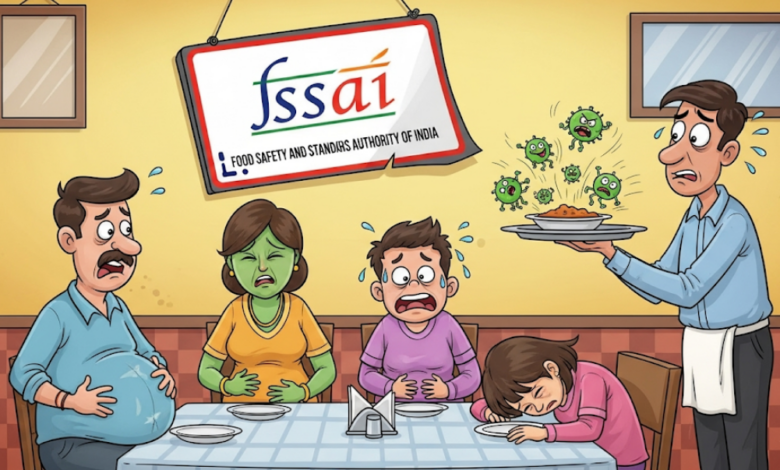
On 3 August 2026, the Food Safety and Standards Authority of India dropped a regulatory bombshell. In a prohibition order publicised on social media, FSSAI directed Dabur India to immediately halt the sale of a range of products—honey, cow ghee, virgin coconut oil, sesame oil, apple cider vinegar, coconut water, coconut milk and more—because they carried claims such as “100% Pure,” “100% Natural,” “100% Purity Guaranteed,” “100% Organic” and “100% Tender Coconut Water.” The regulator declared these expressions ambiguous, scientifically unverifiable and capable of misleading consumers, in violation of the Food Safety and Standards (Advertising and Claims) Regulations, 2018. It demanded an Action Taken Report within 15 days.
Dabur’s share price slid. The company scrambled, insisting it stood by the purity and quality of its products, had never made misleading claims, and had already begun transitioning labels and advertisements away from the contested wording. It pointed to an earlier April 2026 notice to which it had responded, and noted that the dispute concerned only labelling interpretation, not product safety, adulteration or sub-standard quality. Within days, Dabur approached the Delhi High Court.
On 7 August, Justice Amit Mahajan stayed the prohibitory order, observing that it had been passed without a show-cause notice or opportunity of hearing, thereby violating principles of natural justice. The stay holds until the next hearing on 24 August. Products that had been sold under similar claims “for decades,” the court noted, could not be suddenly yanked without due process.
This is not a minor labelling spat. It is a revealing collision between a regulator that has grown more assertive on paper and an industry that has long treated absolute purity claims as marketing oxygen. It is also a test of whether consumer protection in India means rigorous, transparent enforcement or selective, process-deficient drama that generates headlines while leaving systemic problems intact. The Firstpost framing of the case as one that “could reshape food labels” is accurate but incomplete. The deeper story is about regulatory inconsistency, the commercial value of linguistic exaggeration, the vulnerability of ordinary buyers to absolute claims, and the institutional habits that allow both overreach and under-enforcement to coexist.
The Regulatory Architecture and Its Ambiguities of FSSAI
The Food Safety and Standards (Advertising and Claims) Regulations, 2018, require that claims be truthful, unambiguous, meaningful and not misleading. They must be scientifically substantiated. Words such as “natural,” “pure,” “fresh,” “original,” “authentic” and “real” are conditional; they can be used only in accordance with Schedule V conditions.
Absolute numerical expressions like “100%” sit uneasily within this framework because the regulations do not define “100%” as a recognised claim category. FSSAI has previously directed the removal of “100% fruit juice” claims from reconstituted products, arguing that such language creates a false impression when the primary ingredient is diluted or reconstituted. Similar logic underpins the Dabur order: an absolute claim implies superiority and completeness that cannot always be objectively verified, especially for processed or compound foods.
For single-ingredient products such as honey or pure ghee, Dabur and other companies have long argued that “100% pure” is factually accurate if nothing has been added or removed beyond minimal processing. For compound products—packaged coconut milk that may contain stabilisers, or coconut water that may be reconstituted—the claim becomes more problematic.
FSSAI also flagged the unauthorised use of the Jaivik Bharat organic logo on certain Dabur products lacking valid endorsement. These distinctions matter. Yet the regulations leave considerable interpretive space. What counts as “minimal processing”? How does one scientifically verify “100% natural” once a product has been filtered, heated for shelf life, or packaged? The absence of precise numerical or analytical thresholds for purity claims turns enforcement into a matter of regulatory discretion rather than bright-line rules.
This ambiguity is not accidental. Marketing departments across the FMCG sector have exploited it for years. “100%” is a powerful heuristic. It signals purity, safety and superiority in a market saturated with competing brands and plagued by historical concerns about adulteration—especially of honey, ghee and oils. Consumers, many of them price-sensitive and time-poor, respond to absolute language. Companies know this. The result is a labelling arms race in which absolute claims become table stakes rather than exceptional differentiators. When almost every bottle of honey or jar of ghee proclaims near-absolute purity, the claim loses informational value and becomes pure signalling. FSSAI’s recent crackdown attempts to puncture that signalling. Whether it does so fairly and consistently is another question.
Due Process, Proportionality and the Court’s Intervention
The Delhi High Court’s interim stay rests primarily on procedural grounds. FSSAI’s order was issued without a prior show-cause notice or meaningful opportunity for Dabur to be heard on the specific prohibition. Natural justice is not a technicality; it is a constitutional expectation that state power, even when exercised by specialised regulators, must be constrained by fairness. Sudden, industry-wide or company-specific bans that force the withdrawal, destruction or costly repackaging of stock valued in the hundreds of crores demand careful process. Dabur claimed the commercial impact exceeded ₹150 crore. Even if the figure is contested, the scale of disruption is real.
The court’s observation that the products had been sold under similar claims for decades is telling. Long-standing practice does not legalise a violation, but it does raise questions of legitimate expectation and selective enforcement. If “100%” claims have been ubiquitous and largely unchallenged for years, why the sudden hard stop against one major player? FSSAI has issued notices and advisories against multiple companies on related issues—misleading “healthy” claims, “no added sugar” assertions that sit uneasily with ingredient lists, unauthorised organic logos, and other absolute or comparative language. Yet the leap from notice to immediate prohibition of sale, announced via social media, is aggressive. It risks appearing more performative than systematic.
Critics of the regulator will argue that aggressive action is overdue. India’s packaged food market is vast, opaque and historically under-policed. Adulteration scandals, exaggerated health claims and fine-print disclaimers that contradict bold front-of-pack language have eroded trust. The Central Consumer Protection Authority has also acted against “100%” claims on reconstituted products. In a market where many consumers lack the literacy or leisure to parse ingredient lists and nutrition information, absolute claims function as shortcuts that can mislead. FSSAI’s mandate is consumer protection, not industry convenience. The difficulty is that protection without process invites judicial pushback and undermines the very credibility the regulator needs.
Industry Practice and the Economics of Exaggeration
Dabur is not an outlier. Absolute purity language is industry standard. Honey, ghee, oils, vinegars and plant-based milks routinely carry “pure,” “natural” or “100%” descriptors. The commercial logic is straightforward. In categories where product differentiation on functional grounds is limited, branding and perceived purity become primary competitive tools. Premiumisation strategies—organic variants, single-origin claims, “Himalayan” or “Sunderbans” geographic signalling—rely on the same linguistic toolkit. Removing “100%” forces companies to recalibrate packaging, advertising creatives, e-commerce listings and website copy. The short-term cost is real; the longer-term risk is that competitors who continue using similar language gain an unfair edge until enforcement becomes uniform.
Dabur’s public response mixed compliance with defiance. It began removing the contested claims while asserting that its products are pure and that the claims were consistent with industry practice and the regulatory framework. This dual posture is common. Companies often treat regulatory notices as negotiation rather than final judgment. Some quietly adjust; others litigate.
The pattern across recent FSSAI actions—notices to multiple brands over “healthy,” “natural,” “fresh” and related language—suggests an industry that has grown accustomed to testing boundaries and then adjusting only when forced. The regulator’s own history of flagging claims that later remain on shelves has not helped. When earlier flagged products continue to circulate with the same language, the credibility of subsequent hard actions suffers.
There is also a deeper marketing pathology at work. Absolute claims are not merely descriptive; they are comparative by implication. “100% pure” suggests that other products are less pure. In a market with genuine quality variation and past adulteration problems, this implication can be commercially potent. Yet if every major player uses similar language, the comparative force collapses into noise. Consumers are left with a marketplace of competing absolutes and little reliable information. The solution is not necessarily to ban every absolute term, but to demand that claims be tethered to verifiable standards and presented with equal prominence to any qualifying information. Front-of-pack boldness paired with back-of-pack fine print is a classic misleading technique that regulators have repeatedly criticised.
Consumer Protection Versus Commercial Speech
At the heart of the dispute lies a tension between consumer protection and commercial speech. Food is not ordinary speech. It is ingested. Claims about purity, naturalness and composition affect health decisions, trust and willingness to pay premiums. Regulators worldwide restrict health and purity claims more tightly than ordinary advertising. The Indian framework attempts a balance: claims are permitted if truthful, unambiguous and substantiated, but certain absolute or comparative language is tightly conditioned or effectively discouraged.

The risk of over-restriction is real. If “pure” or “natural” becomes effectively unusable for any processed product, companies may retreat into bland, uninformative labelling that serves neither differentiation nor consumer understanding. Innovation in clean-label products could be chilled if the linguistic tools needed to communicate genuine improvements are withdrawn. At the same time, under-restriction leaves consumers vulnerable to the very practices FSSAI was created to curb. The current episode illustrates both dangers. An order that appears sudden and process-light invites judicial correction. A market that treats absolute claims as default invites regulatory intervention.
Transparency is the missing middle path. Regulators should publish clear guidance on what evidence is required to support purity or natural claims for different product categories. Companies should be required to maintain substantiation files that can be produced on demand. Front-of-pack claims should be matched by equally prominent disclosures where processing or reconstitution is involved. Enforcement should be consistent across the industry rather than episodic. And due process—notice, hearing, reasoned order—must be non-negotiable even when the regulator believes the violation is clear.
Broader Enforcement Patterns and Institutional Habits
FSSAI’s recent activity is part of a wider push. Notices against multiple brands over “healthy” claims, actions on flavour labelling in alcoholic beverages, scrutiny of organic logos, and earlier directives on fruit juice claims form a pattern of heightened attention to marketing language. Investigations take time. Follow-through on earlier flagged products has been incomplete. Social-media announcements of prohibition orders generate visibility but can also create the appearance of regulation by press release.
The Dabur case also highlights the interaction between specialised food regulation and general administrative law. Courts will continue to insist on natural justice even when the subject matter is technical. Regulators that skip process invite stays that blunt the immediate impact of their orders and force them back to the drawing board. Better practice would be to issue detailed show-cause notices, allow time for response and evidence, and then pass reasoned orders that address the company’s specific arguments. This is slower. It is also more durable and less vulnerable to judicial reversal.
For the broader FMCG sector, the message is clear even if the final outcome of the Dabur litigation remains pending. Absolute claims are under sustained pressure. Companies that continue to rely on them as primary marketing tools face rising compliance and litigation risk. Those that invest in clearer, evidence-based communication and cleaner formulations may find competitive advantage in a more sceptical regulatory environment. Retailers and e-commerce platforms, which amplify packaging claims through digital listings, will also face pressure to police the language they host.
What Should Happen Next?
The Delhi High Court’s stay is interim. The merits—whether the specific claims on Dabur’s products violate the 2018 regulations, whether the prohibition power was properly exercised, and how far absolute language can legitimately go—remain to be fully argued. Whatever the final judicial determination, several corrective steps are required.
First, FSSAI must publish detailed, category-specific guidance on the use of “pure,” “natural,” “organic” and numerical absolute claims. Ambiguity benefits neither compliance nor enforcement. Second, enforcement must become more consistent and less theatrical. Selective hard actions against high-profile companies while similar claims proliferate elsewhere breed cynicism.
Third, due process must be institutionalised. Show-cause notices, opportunity to be heard, and reasoned orders should be the default, not the exception. Fourth, the industry must move beyond defensive compliance. Treating purity language as disposable marketing copy rather than a claim that requires substantiation is no longer sustainable. Fifth, consumer education needs parallel investment. Labels matter only if people can interpret them. Front-of-pack nutrition labelling and clearer ingredient hierarchies would reduce reliance on absolute slogans.
The Dabur episode is a symptom of a larger condition: a food market in which linguistic inflation has outpaced regulatory clarity, and a regulator that has begun to push back without always mastering the procedural discipline that makes enforcement stick. Consumers deserve labels they can trust. Companies deserve predictable rules. Regulators deserve the institutional capacity and legal carefulness to deliver both. Until that alignment improves, every new prohibition order will generate the same cycle of market shock, judicial intervention, partial compliance and residual ambiguity. The purity claimed on the label will remain, for too many products, more aspiration than assurance.
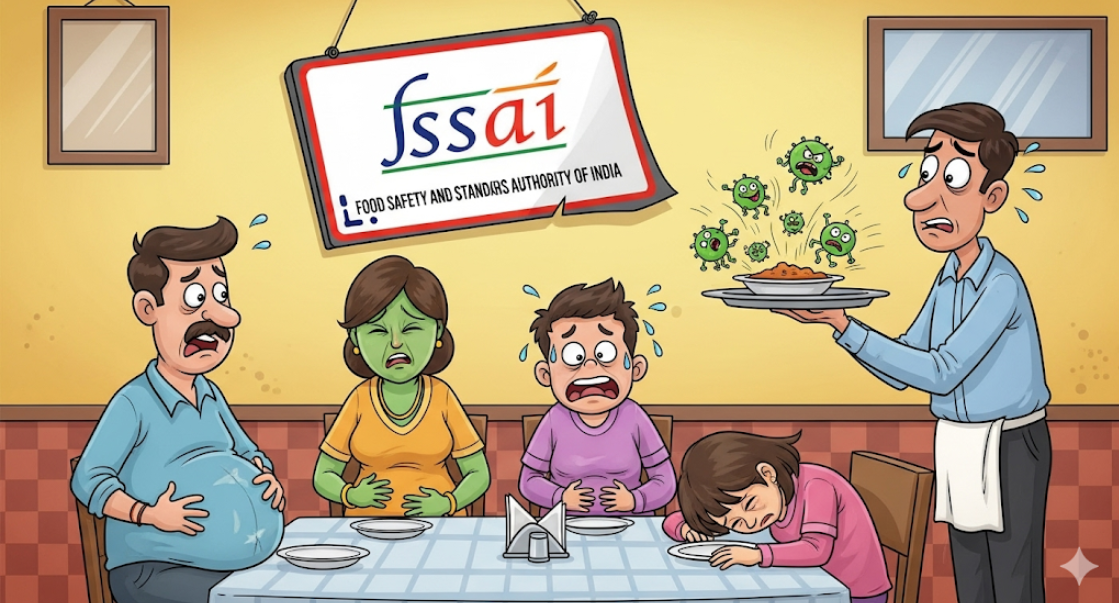
The court has paused one order. The deeper questions about what “100%” can legitimately mean on an Indian food label, who decides, and on what evidence, are only beginning to receive the scrutiny they have long required. The answer will shape not only Dabur’s packaging but the information environment in which hundreds of millions of consumers make daily choices about what they eat.