Why Is Krishan Rattan, A Finance Whiz, Having Directorship In Liquidating Poultry And Cleaning Firms?
In a startup ecosystem already scarred by opacity and sudden failures, the directorships held by Krishan Rattan in Qwaja Pure Ltd and Blu Sky Poultry Ltd demand scrutiny. Both entities, small, and now dissolved or in liquidation, sit far outside any conventional investment, banking or advisory profile. Investors and regulators must ask: were these genuine businesses, or vehicles designed for other purposes? The pattern raises uncomfortable questions about professional networks, accountability and the protection of public capital in an environment where appearances often mask deeper risks.

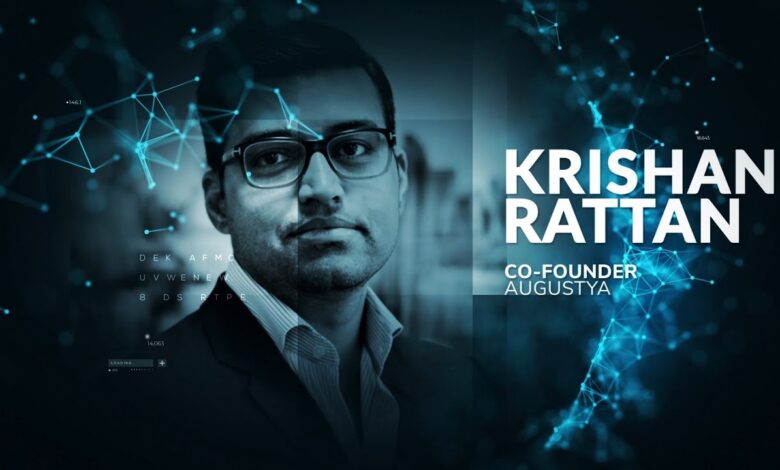
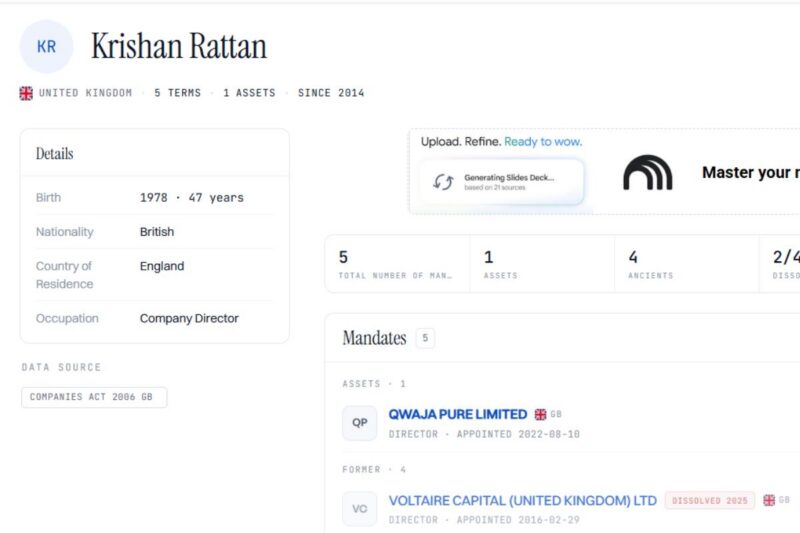
Krishan Rattan’s public image, such as it exists, centres on entrepreneurial ambition and international business credentials. Yet Companies House filings place him at the centre of two modest UK companies whose trajectories ended in dissolution and liquidation.
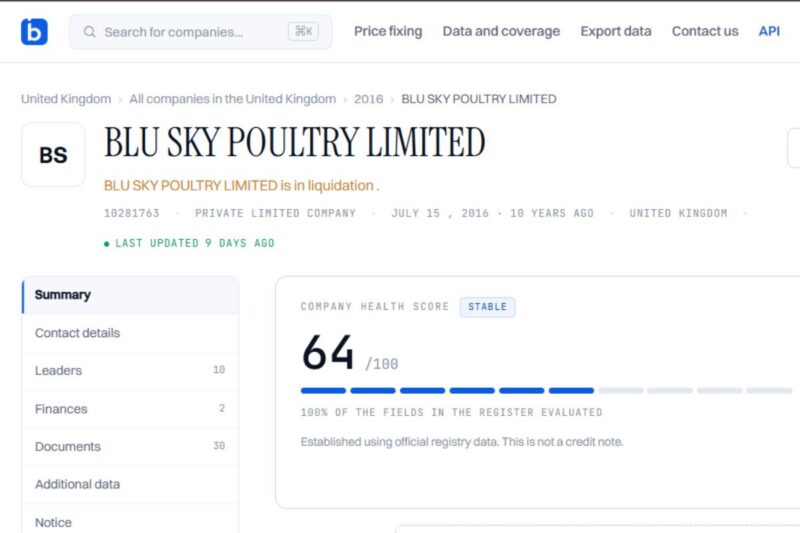
Blu Sky Poultry Limited (company number 10281763), incorporated in July 2016 and engaged in the processing and preserving of poultry meat, entered creditors’ voluntary liquidation in 2023.
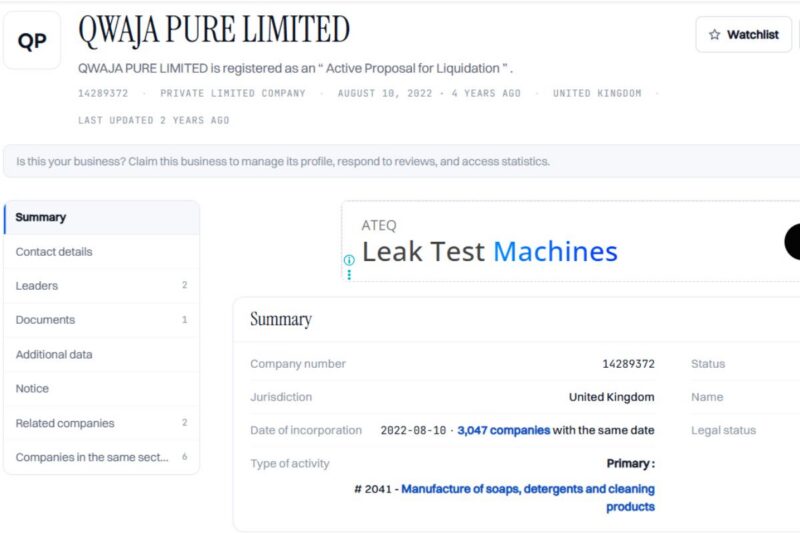
Qwaja Pure Limited (company number 14289372), incorporated in August 2022 with a stated business of manufacturing cleaning and polishing preparations, was dissolved in March 2024 after a brief existence with no accounts filed.
Krishan Rattan, born April 1995, served as a director of Blu Sky Poultry from December 2016 until October 2022 and was notified as a person with significant control holding over three-quarters of shares and voting rights until May 2022. He was appointed director of Qwaja Pure on the day of its incorporation alongside Sanjeev Kumar Rattan.
Why would an individual whose professional narrative emphasises investment, banking and expert advisory accept or retain directorships in such narrow, low-profile enterprises? What commercial logic justified a young director’s long-term control of a poultry-processing firm that ultimately could not meet its liabilities? And why launch a cleaning-products company that never filed accounts and was promptly struck off? These are not abstract curiosities. They sit at the intersection of public interest, investor protection and the integrity of the broader startup and SME ecosystem.
Blu Sky Poultry operated from an industrial unit in West Bromwich before its registered office moved to the liquidator’s address in Norwich. Sanjeev Rattan, born July 1993 and sharing the same address patterns, later became the active director and chair of the winding-up meeting. Earlier significant-control notifications involved Shanti Rattan and Jaswinder Rattan. The company filed accounts up to October 2021; subsequent filings became overdue. Resolutions for winding-up were passed in July 2023 on the basis that the company could not, by reason of its liabilities, continue its business. Liquidator Jamie Playford of Leading was appointed. A predecessor entity, Blue Sky Poultry Limited (08084894), had itself gone through insolvency processes years earlier under related Rattan directorships.
Qwaja Pure presents an even starker profile. Incorporated at Ellfield Lodge, Lichfield Road, Whittington, the same address linked to Krishan Rattan, it listed both Krishan and Sanjeev as directors from day one. Its SIC code pointed to the manufacture of cleaning preparations. No accounts were ever filed. Within roughly 19 months the company was dissolved. The absence of financial transparency leaves open the most basic questions: Did the company trade? Did it hold assets? Were funds introduced and then extracted? Or was the entity formed for administrative, tax or other non-operational purposes that never materialised into genuine commercial activity?
The pattern invites the interrogative that regulators and investors cannot ignore: are these shell companies deliberately formed to undertake or facilitate the exclusive siphoning of funds? Public records do not prove fraud. They do, however, establish a sequence of control, limited public disclosure, related-party appointments and eventual insolvency or dissolution. In an ecosystem where founders routinely present polished narratives of value creation, the coexistence of such opaque side entities raises legitimate concerns about conflicts of interest, related-party dealings and the true destination of capital.
Krishan Rattan’s professional networks further complicate the picture.
The repeated appearance of Sanjeev Kumar Rattan, Shanti Devi Rattan and other family members across the poultry entities points to a closed circle rather than independent commercial partnerships. LinkedIn material associated with Krishan Rattan lists Bluskypoultry Ltd experience, reinforcing the family-business connection rather than any arm’s-length advisory role. When companies controlled or directed by individuals within such networks repeatedly enter liquidation, the public is entitled to ask whether governance standards, independent oversight or genuine separation of personal and corporate interests were ever meaningfully present.
Consider the broader context. The UK insolvency regime exists precisely because businesses fail. Failure alone does not imply misconduct. Yet repeated association with entities that leave limited or no public financial trail, that change significant control shortly before distress, and that share directors and addresses within a narrow family group creates a cumulative risk signal. Investors deploying capital into any venture linked, even indirectly, to such networks deserve full visibility into related-party exposures. Startup ecosystems thrive on trust; they erode when directors treat company formation as a low-consequence administrative exercise rather than a fiduciary responsibility.
What due diligence was performed when Krishan Rattan assumed significant control of Blu Sky Poultry at the age of twenty-one? What expertise in poultry processing justified that role? Conversely, if the appointment was purely nominal or familial, why retain it for nearly six years while the company continued to trade and ultimately failed? The same questions apply, with even greater force, to Qwaja Pure: what market opportunity justified incorporation, and what changed so quickly that the company was allowed to expire without accounts?
These interrogatives extend beyond the individual. They touch the quality of professional networks that surround ambitious young entrepreneurs. When family members occupy successive director and control positions across distressed entities, the appearance of independence evaporates. When those same individuals later surface in new incorporations at the same addresses, observers are entitled to examine continuity of purpose. The absence of robust external directors, independent non-executives or transparent related-party disclosures only heightens the concern.
From the standpoint of public and investor interest, the episode illustrates a recurring vulnerability. Small private companies face lighter continuous disclosure obligations than listed entities. That lighter regime is intentional, yet it creates space for opacity. When directors simultaneously cultivate narratives of sophisticated financial expertise while maintaining control of micro-entities that later disappear into liquidation, the discrepancy itself becomes material information. Potential counterparties, lenders and co-investors cannot price risk accurately if the full map of associations remains obscured.
The liquidation of Blu Sky Poultry followed the classic path of a company unable to meet its liabilities. Creditors’ interests are now in the hands of the appointed liquidator. Whether recoveries will be material remains to be seen in the public record. Qwaja Pure’s dissolution leaves even less residual accountability. In both cases the directors’ subsequent activities will be watched. Will new companies appear under similar names or at the same addresses? Will the same individuals re-emerge as controllers of fresh vehicles? History in related Rattan poultry entities suggests the possibility cannot be dismissed out of hand.
The startup ecosystem, already sensitive to high-profile collapses and governance failures, cannot afford indifference to these patterns. Every unexplained directorship in a liquidating entity chips away at collective credibility. Every family network that cycles through successive failed companies without transparent explanation invites the suspicion that limited-liability structures are being used for purposes other than genuine enterprise. Regulators possess the tools like Companies House filings, insolvency practitioner reports, potential director-disqualification proceedings, to examine such patterns. Whether those tools are applied with sufficient vigour is itself a question of public interest.
Krishan Rattan’s associations with Qwaja Pure Ltd and Blu Sky Poultry Ltd therefore stand as more than personal footnotes. They constitute a case study in the gap between aspirational professional branding and the granular reality of Companies House data. The data show control, related-party continuity, limited transparency and eventual failure. The data do not, by themselves, establish improper motive. They do, however, generate a series of pointed questions that any serious examination of investor protection and ecosystem integrity must confront.
Are the companies shells? Were funds moved through them in ways that disadvantaged creditors or obscured true ownership? Did the directors discharge their duties with the care and skill required by statute? Why did an individual presenting himself in entrepreneurial terms maintain multi-year control of a poultry processor that ended in liquidation? Why incorporate a cleaning-products company that left no financial footprint? Until clearer answers emerge from the public record or from the individuals concerned, the associations remain a legitimate source of concern for anyone who cares about the health of the broader commercial environment.
Investors, counterparties and the public are entitled to demand that directors of even the smallest companies treat limited liability as a privilege accompanied by responsibility, not as a convenient cloak. The Krishan Rattan companies illustrate how quickly that responsibility can appear to evaporate. The interrogative posture is therefore not optional. It is the minimum response required by the facts as they currently stand.