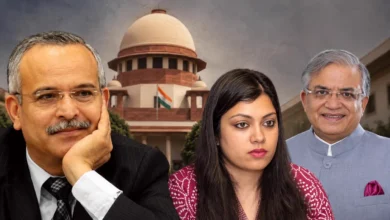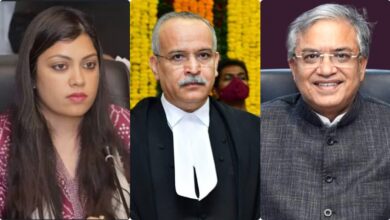
In the 80th Independence Day of India, free the Bar Council of India from the uncontrolled grip of Manan Kumar Mishra, to protect the institutional autonomy of BCI and the future ‘Officers Of The Court’.
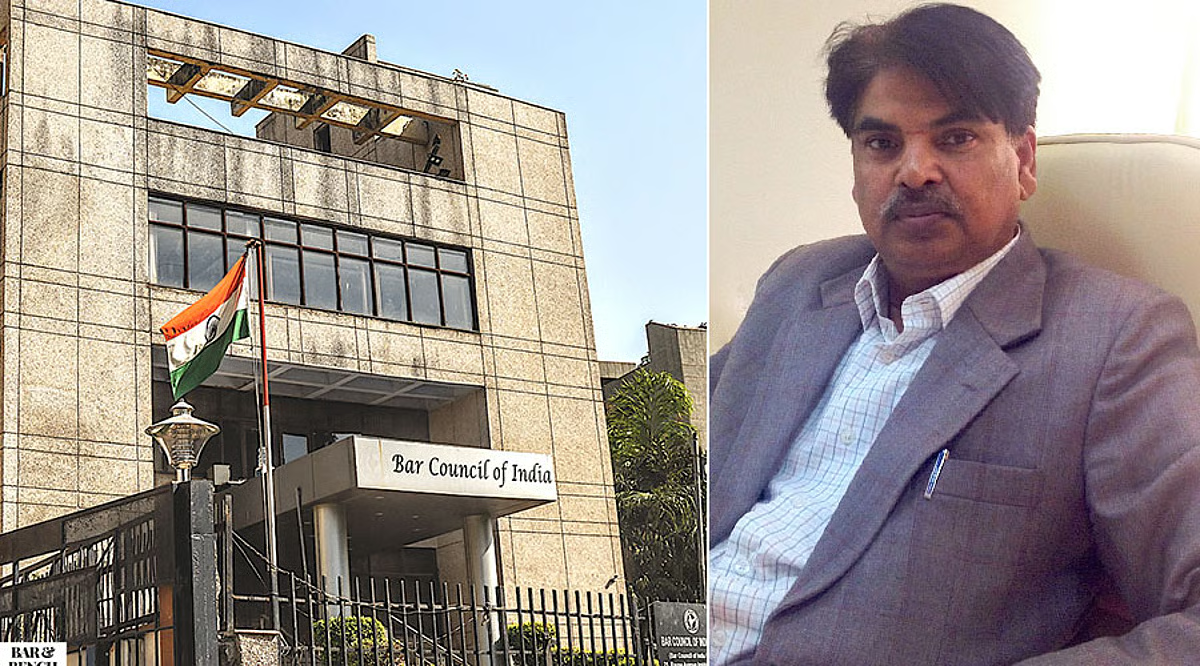
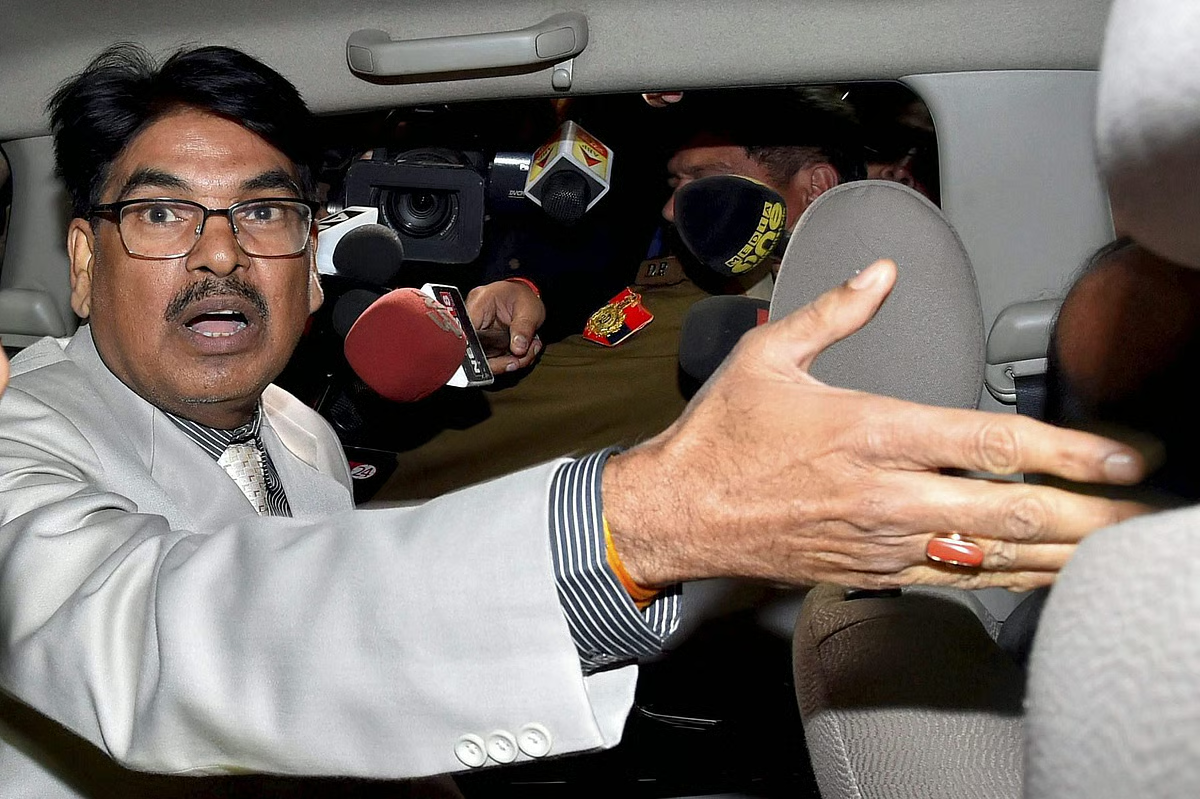
On the 80th anniversary of India’s Independence, the legal profession is confronted with an uncomfortable truth. The Bar Council of India, the statutory body meant to safeguard the integrity of legal education and the conduct of advocates, has for nearly 12 continuous years remained under the near-uninterrupted control of one man: Senior Advocate and BJP Rajya Sabha MP Manan Kumar Mishra.
The August 2026 NALSAR controversy did not create this problem. It merely exposed, in the most public and embarrassing manner, what years of concentrated power, selective outrage, and political proximity have already made clear: the institutional autonomy of the BCI is under serious strain, and the continued occupation of its highest office by the same individual has become a liability rather than an asset.
The NALSAR Episode: Regulatory Overreach Met with Judicial Rebuke
In July–August 2026, a group of NALSAR students, first around 70 from the outgoing batch, later supported by hundreds more, wrote to their university objecting to the reported invitation of Chief Justice of India Surya Kant as convocation chief guest. Their concern arose from the CJI’s reported remarks during a hearing on alleged police excesses, in which the bench indicated it had no interest in watching video evidence. The students framed their position as a matter of institutional values taught at the university.
The BCI’s response was neither measured nor proportionate. On official letterhead, Chairman Mishra directed every State Bar Council in the country not to enrol any NALSAR 2026 graduate as an advocate until further orders. The communication demanded that the Vice-Chancellor identify those behind the campaign and declared that a student showing “no regard or respect for the highest Judicial Office” could not be expected to become a responsible advocate, teacher or judge. In one stroke, an entire graduating class’s professional future was placed under threat for exercising speech that the Supreme Court itself would later describe as legitimate protest.
The order collapsed under its own weight within hours. Public outrage forced successive retreats; first a partial softening, then a complete withdrawal and closure of proceedings. On 14 August 2026, a Supreme Court bench led by CJI Surya Kant delivered a blunt assessment: the BCI directive was “absolutely uncalled for.” The Chief Justice stated that the matter was “a dialogue between students and me,” that students have a right to protest even if they are wrong, and that the BCI “doesn’t have any business” intervening. The Court issued notice and directed that no punitive action be taken against students or faculty.
That the order was withdrawn does not erase the fact that it was issued. It revealed a leadership prepared to use the regulatory power of the BCI as a blunt instrument against student expression — and then forced into a humiliating reversal when that overreach met resistance from the very institution it claimed to protect.
12 Years of Continuous Control of Manan Kumar Mishra as BCI Chairman: An Aberration in Institutional History
The official record of BCI Chairmen tells a story of rotation that held for five decades.
From M.C. Setalvad (1962) through C.K. Daphtary, H.D. Srivastava, R.B. Jethmalani (two non-consecutive terms), Niren De, S.V. Gupte, Ranjit Mahanty, B.N. Bajpayee, V.C. Mishra (two terms), V.R. Reddy, L.P. Bhargava, O.P. Sharma, Arun Mishra, S.K. Kharventhan, D.V. Subba Rao, Jagannath Patnaik, S. Gopakumaran Nair, Suraj Narain Prasad Sinha, Gopal Subramanium and Ashok Parija, the pattern was clear: most chairmanships lasted two to four years. Even those who returned did so after intervals.
Manan Kumar Mishra first assumed the chair on 17 April 2012. After a brief interlude under Biri Singh Sinsinwar in 2014, he returned on 9 November 2014 and has remained continuously in office ever since — approaching twelve years by August 2026. He was re-elected unopposed for a seventh consecutive term in March 2025. The BCI Rules provide for a two-year term. In practice, repeated re-election has converted a rotational office into a near-permanent personal hold.
This is not continuity of leadership. It is the effective suspension of the principle of rotation that the institution observed for half a century. When the same individual controls the apex regulatory body for more than a decade, the risk is no longer theoretical: institutional memory, internal dissent, and the injection of new priorities all become subordinated to the preferences of one person.
Political Proximity of Manan Kumar Mishra and PM Narendra Modi: An Erosion of Institutional Distance
Personal political affiliation is not, by itself, disqualifying. What is disqualifying is the repeated use of a statutory regulator’s official platform to project that affiliation as the collective voice of the profession.
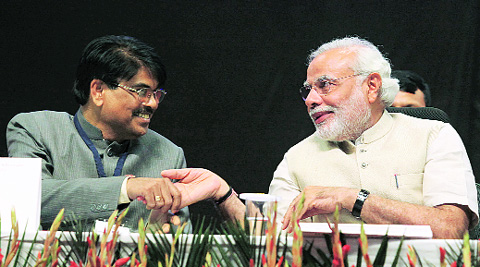
In 2014, at a BCI event in Gandhinagar, Mishra publicly described then Gujarat Chief Minister Narendra Modi as “Mahatma Gandhi reborn.” In a 2016 letter to the Prime Minister, written while holding the chairmanship, he addressed him as “My Lord!”, called him “our guardian, our guide,” “the most efficient and able leader of the world,” and “the most able and efficient leadership of our beloved Narendra Modiji.” He further declared that “Bar Council of India is your institution.” The same letter pledged the support of advocates under his leadership while claiming to defend the independence of the legal fraternity.
Language of this kind, issued on the authority of the BCI Chairman, collapses the necessary distance between a statutory regulator and the political executive. When the same office later issues statements on street protests, labels demonstrators as “illiterate ignorant masses” being “misled,” or characterises criticism of the judiciary as the work of “anti-national elements,” the pattern is no longer ambiguous. The institutional voice has been repeatedly pressed into service of personal political loyalty.
A Record of Selective Outrage and Institutional Inconsistency of Manan Kumar Mishra
The LiveLaw column of June 2020 and subsequent reporting have documented a consistent method: criticism directed at the government or at judges perceived as aligned with it is frequently met with institutional defence; criticism of those perceived as oppositional is met with labelling, show-cause notices, or public rebuke under BCI letterhead.
The inconsistency is particularly stark on the question of post-retirement appointments. The BCI under Mishra urged former CJI Dipak Misra not to accept government assignments after retirement in the interest of judicial independence. When former CJI Ranjan Gogoi accepted a Rajya Sabha nomination within months of demitting office, the same institutional voice reversed course and welcomed the move as a constructive “bridge between the Legislature and Judiciary.”
On gender issues, the BCI organised a “MenToo” protest in support of then CJI Gogoi after sexual-harassment allegations. Statements that questioned the complainant’s motives and proposed changes that would dilute the weight of a prosecutrix’s testimony drew strong condemnation from women lawyers, who described the approach as lacking commitment to constitutional equality. When lawyers in Jammu and Kathua obstructed the filing of a chargesheet in a high-profile rape case, the institutional response was widely regarded as inadequate.
These are not isolated lapses. They form a pattern in which the regulatory office has been used to shield certain figures and silence or stigmatise others — precisely the opposite of the even-handed institutional posture the BCI is required to maintain.
Why the Continuation of This Tenure Is Incompatible with Institutional Autonomy?
The argument for change does not rest on personal invective. It rests on the cumulative damage to the institution itself.
A regulatory body that must oversee legal education across the country, discipline professional misconduct, and speak for a diverse profession cannot function with credibility when its highest office has been occupied by the same individual for nearly twelve years through successive re-elections. Rotation is not a technicality; it is a safeguard against the personalisation of power.
The simultaneous holding of a political party’s parliamentary seat and the chairmanship of the apex legal regulator creates an unavoidable conflict of roles. The public is entitled to know whether statements issued under BCI letterhead represent the considered institutional view of the profession or the political preferences of its long-serving Chairman.
The NALSAR episode demonstrated a willingness to deploy the threat of professional exclusion against students exercising speech that the Supreme Court has recognised as legitimate. That the threat was later withdrawn under pressure does not restore the confidence that was damaged by its issuance.
The repeated pattern of selective labelling, “anti-national,” “disgruntled,” “myopic,” “nuisance”, directed at critics, while protective language is reserved for those aligned with the political establishment, has created a climate hostile to genuine internal critique of the profession’s own regulator.
On the 80th Independence Day, the legal community must confront a simple institutional question: can a body whose independence is essential to the integrity of the legal profession continue to function under the same uninterrupted leadership for more than a decade without serious cost to its autonomy and credibility? The record of the past twelve years, culminating in the NALSAR overreach and the Supreme Court’s public rebuke, supplies a clear answer.
The future “Officers of the Court” deserve a Bar Council that is institutionally independent, rotational in leadership, and restrained in the exercise of regulatory power. The continued occupation of the chairmanship by Manan Kumar Mishra has become incompatible with those requirements. The most constructive step the profession can take is to restore the principle of rotation and free the BCI from a concentration of control that has already done measurable damage to its institutional standing.