Hari Shankar Tibrewal : A Trial Outside the Trial Court
How Indian media declared Hari Shankar Tibrewal guilty long before any court could — and what two Delhi courts said about it

The story in brief
In March 2024, the Enforcement Directorate issued two press releases about its investigation into the Mahadev online betting case. Within days, parts of the Indian media had gone well beyond them, describing Hari Shankar Tibrewal (also spelt Tibrewala), a Dubai-based businessman, as “arrested”, “absconding”, a “fugitive”, a “kingpin” and a “hawala trader”, and tying him to companies he says he has nothing to do with. Those labels then travelled through wire syndication, news websites, social media, YouTube, the compliance databases that banks use to screen their customers and, eventually, AI chatbots.
Two civil courts in New Delhi have since examined that coverage. In November 2024, the Patiala House Courts found “nothing to suggest” that he had been arrested, was absconding or was a fugitive, and called a compliance-database entry recording his arrest “factually incorrect”. In August 2026, the Rouse Avenue Court held labels such as “hawala trader” and “one of the main accused” prima facie defamatory and warned that such “projection of guilt is a Trial outside the Trial Court”.
The findings are interim and the suits continue. The ED’s investigation is ongoing, and Mr Tibrewal denies its allegations. No court has convicted him of anything, or made any finding of guilt against him. This article examines how a man came to be pronounced guilty in print before any court had heard a word of evidence, and what that says about how India’s media treats the presumption of innocence.
An allegation is not a verdict
The presumption of innocence is where every criminal trial in India begins. The state must prove guilt beyond reasonable doubt; the accused has to prove nothing. The principle was written for the courtroom, but it exists to protect the accused from everyone else as well. The moment a person is named in an investigation, a process starts that owes nothing to evidence: an agency alleges, a reporter writes, an editor headlines, and each retelling is a little more certain than the one before it.
In August 2026, District Judge Harjyot Singh Bhalla of the Rouse Avenue Court in New Delhi gave that process a name. Examining articles that had called Mr Tibrewal a “Hawala Trader”, “one of the main accused in Mahadev Betting” and a “shadowy titan in a financial underworld”, he held that such expressions “impute criminality and portray the plaintiff as running organized crimes”, and warned: “Such projection of guilt is a Trial outside the Trial Court and may create prejudice against the plaintiff and interfere with the administration of justice” (CS DJ ADJ 1212/2025, order of 17 August 2026, paras 38 and 46).
Almost two years earlier, the Patiala House Courts had made the same point from the other direction. “The plaintiff may be an accused in the betting scam,” the court wrote, “but then too he is entitled to the presumption of innocence” (CS 4242/2024, order of 14 November 2024, para 127). It went on to observe that a person who is eventually acquitted “may still not be able to efface the damage done to his reputation by adverse press reports”, because no one wants to associate with a person “reported to be evading arrest or is on the run” (para 127).
Neither court said that the media may not report an investigation. Both expressly preserved fair and accurate reporting of what investigating agencies, regulators and courts say, provided the Press Council of India’s norms are followed (CS 4242/2024, para 129; CS DJ ADJ 1212/2025, para 57(i)). What they drew a line at was reporting that goes beyond the agency’s own words, states allegations as established facts, or attaches labels that the record does not support. The distance between reporting an allegation and pronouncing a verdict is the subject of this article.
Who is Hari Shankar Tibrewal
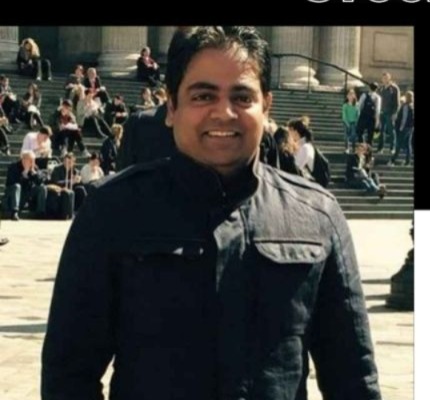
Hari Shankar Tibrewal, whose name also appears as Tibrewala in some records, is a businessman based in Dubai with trading and investment interests in the UAE. According to the media fact sheet issued on his behalf on 26 September 2026, his business interests include Zenith Multi Trading DMCC (Zenith Global), Plus Commodities DMCC and Three Musketeers Hospitality. He was formerly an approved individual on the public register of the Abu Dhabi Global Market’s Financial Services Regulatory Authority, a status the fact sheet says was withdrawn at his own request. His Indian director identification number, DIN 02693573, has never been disqualified.
What brought him into the headlines in March 2024 was the Enforcement Directorate’s investigation into the Mahadev online betting case: two press releases, and the coverage that followed them. The ED has made allegations against him, which he denies. He is now the plaintiff in two civil defamation suits in New Delhi, CS 4242/2024 at the Patiala House Courts and CS DJ ADJ 1212/2025 at the Rouse Avenue Court, and in both, courts have granted injunctions against specific statements made about him.
No court, in those suits or anywhere else, has convicted him or made any finding of guilt against him. Nor is guilt what the two suits are about. They are about what was said about him, whether it was true, and who bore the burden of proving it.
March 2024: what the agency said, and what got printed
On 1 March 2024 the Enforcement Directorate issued a press release on its investigation into “Mahadev Online Book”, the betting syndicate the agency says was run from Dubai on a franchise model. The release said the ED had identified another major player involved with the promoters: Hari Shankar Tibrewal, who it said hails from Kolkata and lives in Dubai, whom it described as “a huge hawala operator”, and who it alleged had partnered with the Mahadev promoters. It said searches at his known premises and those of his associates had “revealed” that he owned and operated the betting website Skyexchange, invested betting proceeds in Indian stocks through the foreign portfolio investor route, and used associates as directors of layering companies. It announced that securities worth Rs 580.78 crore held by entities it said he beneficially owned had been frozen. A second release, from ED Raipur on 8 March 2024, announced the arrests of two other men, Girish Talreja and Suraj Chokhani, and alleged that Mr Tibrewal had used Chokhani to launder proceeds under the guise of share investments and had manipulated stock prices in collusion with promoters of listed companies. It named no listed company.
Two things about those releases matter for everything that follows. First, the phrase “hawala operator” is the ED’s own. The fact sheet issued on Mr Tibrewal’s behalf lists “hawala trader” among the labels the media attached to him; it does not mention that the agency used the phrase first. Any honest account of this case has to say so. Second, neither release says he was arrested. Neither says he was absconding, a fugitive or wanted, or that any look-out circular or red corner notice existed. Neither mentions Eraaya Lifespaces or any other listed company. Those words came from somewhere else.
The wire copy of the first week tracked the agency closely. PTI’s report of 1 March, carried by the Tribune, Business Standard and others, described a Dubai-based “hawala operator” whose holdings had been frozen, attributed every claim to official sources, and did not call him arrested, absconding or a fugitive. ANI’s report the same afternoon reproduced the release almost line by line, each claim prefaced with “the ED said”. Aaj Tak called him the syndicate’s big player. This is roughly what fair reporting of an agency allegation looks like: the agency’s words, the agency’s name attached to them, and the amount frozen.
The escalation began within days, and it came from three directions. Market coverage turned him into a stock story: by 12 March a report carried under The Economic Times’ banner (retrievable now only as a syndicated copy) listed stocks “held by Tibrewala” as locked in lower circuit and named a string of listed companies and the entities said to hold them; a business-news site headlined him “the man behind share market crash”. Neither the list of companies nor the crash framing came from the ED. Second, sources-based reporting over the following two years added labels the record did not contain: “mastermind” (Business Today, November 2025, attributed to unnamed sources) and a man who “remains at large” (Free Press Journal, July 2026). Third, a long series of headlines on the news site Inventiva dropped the attribution altogether and supplied the verdict: he was a “certified hawala operator” who was “absconding from India”; one headline asked whether he was “the kingpin” of the betting app and was managing the finances of a named underworld figure; another asserted that he had renounced Indian citizenship for a Vanuatu passport; another asked why the ED and CBI had “not yet” been able to arrest him. The Vanuatu passport claim appears in agency-sourced reporting only in relation to a different person, the Mahadev promoter Ravi Uppal.
According to the fact sheet, the first wave of coverage in 2024 also described him as arrested and linked him to Eraaya Lifespaces. The specific 2024 articles by the outlets later sued could not be retrieved for this piece. That is consistent with their removal or amendment after the court’s orders, but it could not be confirmed.
Two years on, agency-sourced reporting still describes him in the ED’s terms, with the adjective intact: “alleged hawala operator”, in ThePrint’s phrasing in July 2026. The unsourced coverage hardened into something else. The point is not that the ED’s allegation is wrong; the agency may yet prove it, and Mr Tibrewal denies it. The point is that between the agency’s “alleged” and the headline’s “certified” lies the whole distance between reporting and judgment.
The first suit: Patiala House Courts, CS 4242/2024
In 2024 Mr Tibrewal sued in the Patiala House Courts in New Delhi. According to the fact sheet, the defendants included ANI Media, the publisher of the Free Press Journal, the publishers of The Economic Times and Hindustan Times, Google (for YouTube) and X Corp. An interim injunction followed on 25 October 2024. On 14 November 2024, in a detailed order that the fact sheet says was announced on 24 December 2024, the court made the injunction absolute until the suit is decided.
The order is not on Indian Kanoon or any legal-news site, and no newspaper reported it, including the defendants. The findings below are taken from the paragraph-referenced extracts in the fact sheet, which offers certified copies of the orders on request. They are interim and prima facie; the suit continues.
What the court found:
- No arrest, no absconding, no fugitive. “There is nothing to suggest that the Plaintiff herein has been arrested in this scam, is absconding/a fugitive or has links with” Eraaya Lifespaces (para 113).
- No notices shown. “No cogent material has been placed on record by the defendants which establish issuance of red corner notices and look-out circulars” (para 105). The public record two years later is consistent with that: red notices and extradition efforts in the Mahadev case have been reported for the promoters Sourabh Chandrakar and Ravi Uppal, and for none of them has any credible source named Mr Tibrewal.
- Other people’s arrests prove nothing about him. Co-accused persons being arrested “does not imply that the Plaintiff herein has been absconding or is evading arrest” (para 116).
- The database was wrong. An international compliance database had recorded him as arrested by the ED. The court’s verdict on that entry was three words: “This is factually incorrect” (para 117).
- Added in the retelling. The claims of arrest, absconding and fugitive status “do not find mention in the press releases” of the ED (para 106). Because they were “not made in press releases of ED and were yet stated as facts in the publications”, the publishers could not say they had merely reproduced the agency’s information (para 113).
- The burden was on the publishers. Under Press Council of India norms, “the onus was on the defendants to establish” that what they published was true; “it was not for the Plaintiff to prove to the contrary” (para 122).
- Repetition is not verification. Publication by one paper “does not give licence to others to publish news/information reproducing or repeating the same”, and a similar report elsewhere “does not bestow the status of accuracy on the charges” (para 119).
- Not fair reporting. The statements “will not qualify as fair reporting/fair comments in the facts of this case” (para 127).
- The company link. The connection the publishers drew with Eraaya Lifespaces was “too far-fetched to draw a connection” (para 123).
The court’s reasoning on reputation is the reason the presumption of innocence has to reach beyond the courtroom, and it deserves quoting. “The plaintiff may be an accused in the betting scam but then too he is entitled to the presumption of innocence,” it wrote (para 127). Then: “If eventually acquitted of the offence, the person may still not be able to efface the damage done to his reputation by adverse press reports. It goes without saying that no person wants to associate himself with a person who is reported to be evading arrest or is on the run” (para 127). On the publisher’s duty: “It is the duty of the publisher to make verifications and do its due diligence before making factual statements in its publications so that the image of any person does not get tarnished due to statements made irresponsibly or wantonly” (para 126). And on why an injunction rather than damages: “The loss of reputation is irreversible. It cannot be adequately compensated in monetary terms since quantification of the loss can vary drastically and this can persist over years” (para 128).
The directions followed from the findings. The defendants were restrained from publishing unverified reports that he was arrested, is a fugitive or absconder, or has links with Eraaya Lifespaces, and the publishers were told to expunge or remove such assertions (paras 130–131). The injunction was made absolute until the suit is decided (para 131). For new content, the court set out a procedure: a request to the originator, then to the platform, which must remove within three days or give reasons (para 132). Fair and accurate reporting of what investigating agencies and courts say, in line with Press Council norms, was expressly preserved (para 129).
One finding needs a note of its own. The court’s rejection of the Eraaya link concerned the record as it stood in November 2024, when no agency source connected the two. Since mid-2026, reporting on the ED’s investigation of the Ebix chairman Vikas Garg has carried ED-attributed allegations that money from entities the agency says Mr Tibrewal controls found its way to Eraaya’s acquisition of Ebix (Free Press Journal, 15 July 2026; ThePrint, 23 September 2026). Those are allegations, which he contests. They are also a different thing from what the court was asked to examine in 2024: reports that stated a link as fact when no agency had alleged one. The distinction is the whole point. An allegation made by an agency, attributed to it, can be reported. A connection invented in a newsroom cannot be rescued by an allegation that arrives two years later.
The second wave and the second suit: Rouse Avenue Court, CS DJ ADJ 1212/2025
Between February and April 2025 a further wave of articles appeared, from outlets that had not been party to the first suit. Mr Tibrewal sued again. According to the fact sheet, the defendants include Nine Network (publisher of the news site Inventiva), Adarsh News, TICE News, Moneycontrol and ComplyAdvantage, a London-based provider of compliance-screening data, along with a second international risk-data company. TICE News’s own account, published on 11 November 2025, described an injunction petition naming nine media organisations, including TICE, Moneycontrol, Business Standard and Dow Jones, and quoted its editor asking whether an injunction would next be sought against the ED’s website. That question, meant rhetorically, contains the answer to itself: nobody has asked the ED to stop publishing its allegations, and the courts have expressly protected the reporting of them.
Interim injunctions were granted on 6 November 2025 and 9 June 2026. On 17 August 2026, District Judge Harjyot Singh Bhalla confirmed them. ANI reported the confirmation on 21 September 2026; within a day the wire had been republished, word for word, by at least six other sites, a small live demonstration of the syndication described later in this article.
The court examined five expressions used in the articles before it (para 38):
- “key figure in stock market manipulation scheme”
- “help pump the stock through various market manipulations”
- “Hawala Trader”
- “one of the main accused in Mahadev Betting”
- “shadowy titan in a financial underworld”
It held that these expressions “impute criminality and portray the plaintiff as running organized crimes and are per se defamatory” (para 38), and that the words “convey that the plaintiff is in conflict with the law” (para 45). Then came the sentence that gives this article its title: “Such projection of guilt is a Trial outside the Trial Court and may create prejudice against the plaintiff and interfere with the administration of justice” (paras 38, 46). The court noted that the underlying matter “seems to be subjudice and the allegations, prima facie, may ultimately, act as media trial” (para 56). It rejected the argument that restraining these expressions was vague or overbroad (para 46). It cited the Press Council’s rule that headings “must reflect and justify the matter printed under them” and that allegations in headings should identify their source or carry quotation marks. It also discussed the Delhi High Court’s ruling of 29 May 2026 on the right to be forgotten (paras 40–43), to which this article returns below.
According to ANI’s report, the court also dealt with what had happened after its first order. Later publications using “absconding”, “farar” and “fugitive from Indian justice” were held to fall within the material already restrained; those pieces, the court said, were not merely reporting a probe but sensationalising it. The order confirmed the interim injunctions against the restrained defendants (para 57(ii)), directed that where they do not comply, intermediaries “shall de-index the material/publication as per legal guidelines and rules” (para 57(ii)), and treated making a publication inaccessible to the public through privacy settings as compliance (para 57(iii)).
Two caveats were the court’s own. Fair reporting of FIRs, of information disclosed by agencies and of court proceedings was preserved, subject to journalistic norms (para 57(i)). And the findings are interim: they decide neither the defamation claim nor the truth of the ED’s allegations, a point ANI’s report closed on.
The finding on “Hawala Trader” calls for the same honesty as before. The ED used “hawala operator” in its own release. What the court found prima facie defamatory, as reported, was the label deployed in the publications before it as the publisher’s own description of the man, in pieces the court characterised as sensationalising rather than reporting. The reconciling principle runs through both Delhi orders: a publication may report that the ED alleges something, attributed and in the agency’s words, and may not convert the allegation into a settled fact about a person in its own voice.
Anatomy of a media trial: how a press release becomes a verdict
Nothing in this case required a conspiracy. It required only that each participant in a long chain do the ordinary, careless thing. The chain has seven links, and each can be documented.
- The release. An investigating agency describes a person in declarative sentences. The ED’s 1 March 2024 release does not say it suspects Mr Tibrewal of hawala; it says he “is a huge hawala operator”, and that its searches “revealed” what he owns. The grammar of certainty is the agency’s, but the legal status of the sentence is an allegation by a party to future litigation. In September 2023 the Supreme Court, in People’s Union for Civil Liberties v State of Maharashtra, said exactly this about police briefings: they must not produce a media trial, because unfair reporting impinges on the presumption of innocence and on the dignity of the person under investigation. That principle has not yet been extended in terms to central agencies’ press releases, and this case shows why it should be.
- The wire. One agency line becomes hundreds of near-identical stories. The Press Trust of India is a cooperative owned by more than 450 newspapers and supplies nearly every major masthead in the country; ANI’s copy is republished by a further ecosystem of sites. A Cardiff University study of the British quality press found that 60 per cent of stories came wholly or mainly from wire or public-relations material and only 12 per cent were original reporting; there is no reason to think the Indian figure is lower. To a reader, and later to a compliance analyst or a language model, forty identical stories look like forty confirmations. The Patiala House court saw through this: repetition “does not bestow the status of accuracy on the charges”.
- The headline. The Press Council’s norm on headings says a heading containing an allegation should identify its source or carry quotation marks. The first casualty of a competitive news cycle is the word “alleged”, and the second is the attribution. “ED says Dubai-based businessman is hawala operator” becomes “hawala operator”, which becomes “certified hawala operator”. The question headline does the same work while pretending not to: “Is X the kingpin?” asserts nothing and insinuates everything, and it is precisely the form the Press Council’s norm was written to catch.
- Escalation by inference. How does a man who was never arrested come to be recorded as arrested in an international compliance database, an entry a court called “factually incorrect”? Two explanations are plausible, and neither is proven. The ED’s 8 March 2024 release was headed “Arrest” and announced two arrests in the same document that described Mr Tibrewal; a person reading fast, or a machine reading literally, produces “arrested”. And a different man, Nitin Tibrewal, was arrested by the ED in the same case in January 2024 and later granted bail by the Supreme Court. Surname, case and agency all match; only the person is wrong. Whichever it was, the entry that resulted was consumed by banks as a fact about Hari Shankar Tibrewal.
- Absence as guilt. He lives in Dubai and has for years. The Mahadev promoters also live abroad and are the subject of Interpol red notices. Therefore, the reasoning goes, he is “absconding”. But nobody has reported a look-out circular, a red notice, an extradition request or a warrant in his name, and the court found no cogent material of any. A person living where he has always lived is not a fugitive because an agency in another country has begun to investigate him. The court put it plainly: other people’s arrests do not imply that he is evading arrest.
- The self-referential loop. “Sources say” becomes “reports say”, which becomes “it is widely reported”, which becomes a database field, which becomes an AI chatbot’s confident summary, which becomes a new article’s background paragraph. There is a documented precedent for this loop running in reverse: when ChatGPT falsely accused the American law professor Jonathan Turley of harassment in 2023 and he wrote a column correcting it, Microsoft’s Bing chatbot repeated the accusation and cited his own correction as its source. Corrections are ingested as confirmations.
- The silence after the order. In November 2024 a Delhi court found, at the interim stage, that publications by some of the country’s best-known news organisations had stated as fact things that were not in the agency’s release and that the record did not support. No newspaper appears to have reported it. Nearly two years later, the second court’s confirmation order reached the public through a single wire story. The accusation travels on every platform the country has; the correction travels on none. The Law Commission observed as long ago as 2006 that apologies in Indian newspapers tend to be buried where no one will see them. The asymmetry is not incidental to the media trial; it is what makes it a trial, because a verdict is only a verdict if it is not reversible in practice.
None of this needed malice. It needed a deadline, a competitor, a rival headline and the reasonable assumption that a businessman in Dubai would never sue. The last assumption turned out to be wrong.
What the law says
India does not lack rules against trial by media. It lacks rules with teeth, which is why the people it harms end up in civil courts asking for injunctions.
The Law Commission saw this coming twenty years ago. In its 200th Report, dated 31 August 2006, the Law Commission of India examined “Trial by Media” and found the central gap: under the Contempt of Courts Act 1971, a criminal case is “pending”, and prejudicial publication therefore punishable, only once a charge-sheet is filed or a court issues summons or a warrant. The window between the start of an investigation and the charge-sheet, which is when most media trials happen, is unprotected. The Commission recommended treating proceedings as active from arrest, giving High Courts a power to issue “postponement orders” against prejudicial coverage, and naming the categories of coverage that prejudice a trial: pronouncing guilt, publishing purported confessions, attacking character. Parliament enacted none of it. The statutory text still keys “pending” to the charge-sheet. A person who is merely under investigation, as Mr Tibrewal was in March 2024, has no contempt remedy at all. Defamation is what is left.
The Supreme Court has said the principle, repeatedly, without a mechanism. In Sidhartha Vashisht (Manu Sharma) v State (2010) the Court warned that the presumption of innocence should not be destroyed at the threshold by a parallel media trial. In Sahara India Real Estate v SEBI (2012) a Constitution Bench allowed constitutional courts to pass temporary postponement orders where there is a real and substantial risk of prejudice, and in the same judgment refused to lay down general guidelines for the press. In Subramanian Swamy v Union of India (2016) it held that reputation is part of the right to life under Article 21. In September 2023, in PUCL v State of Maharashtra, it told the Ministry of Home Affairs to prepare a manual on police media briefings so that briefings do not become media trials; when no manual came, the Court in January 2026 adopted an amicus-drafted Police Manual for Media Briefing and gave the States three months to frame policies. In March 2026 the Chief Justice observed in open court that a media trial subverts the rule of law, and on 18 August 2026 the Court issued notice on a petition to stop police from posting accused persons’ images online, the Chief Justice remarking that a regulatory regime has to exist. The trajectory is unmistakable; the enforceable rule is still missing.
The Bombay High Court wrote the rulebook in 2021. In Nilesh Navlakha v Union of India, decided on 18 January 2021 after the coverage of Sushant Singh Rajput’s death, a Division Bench held that a media trial during an investigation can amount to criminal contempt, and set out what reporting on an investigation must not do: publish confessions, interview or cross-examine witnesses on air, reconstruct the crime, analyse evidence, pronounce guilt, assassinate the character of the accused, run sustained campaigns, leak investigation material or demand arrests. Of the channels before it the court said: “These TV channels took upon themselves the role of investigator, prosecutor and Judge” (para 329). It found the broadcasts prima facie contemptuous and punished no one. That pattern, findings without sanction, recurs in every Indian precedent discussed below.
The codes converge on three duties, and none of them bites. The Press Council of India’s Norms of Journalistic Conduct require accuracy and fairness, verification with the person concerned before publishing imputations, restraint in defamatory matter, headings that reflect and justify the text with allegations attributed or in quotation marks, prompt corrections, a right of reply, and, in the norm on trial by media, respect for the presumption of innocence until a court pronounces guilt. The broadcasters’ code of the News Broadcasting and Digital Standards Authority says allegations are not to be portrayed as fact and charges not conveyed as guilt, and its 2010 guidelines bar channels from assessing an investigation once an FIR exists. The Cable Television Networks Rules bar defamatory, false and half-true content. The IT Rules 2021 extend the Press Council norms to digital news publishers, though the Bombay High Court stayed the relevant provisions in August 2021. Enforcement, however, is nominal: the Press Council can only censure; the NBDSA’s fines are capped at Rs 1 lakh. The three duties the codes agree on are exactly the three that failed in this case: verify, attribute, do not convey an allegation as guilt.
The Supreme Court has also made injunctions harder to get, which makes these two orders more significant, not less. On 22 March 2024, in Bloomberg Television v Zee Entertainment, a three-judge bench set aside an ex parte order that had forced Bloomberg to take down an article about a SEBI finding. The Court held that the usual three-fold test for injunctions must not be applied mechanically against the press; that the rule in Bonnard v Perryman demands exceptional caution; that pre-trial injunctions against journalism should issue only in exceptional cases where the defence would undoubtedly fail and the content is malicious or palpably false; and that courts must be alert to SLAPP suits by the wealthy against reporting in the public interest. Any defendant in Mr Tibrewal’s suits could have invoked that judgment: a wealthy plaintiff, an agency’s investigation, a takedown of coverage. Both Delhi orders came after Bloomberg. Neither was an ex parte gag. The first was made absolute in a detailed, reasoned order after hearing; the second was confirmed after two interim rounds. And both rest on the kind of finding Bloomberg requires: statements that were false on the record (an arrest that never happened), that went beyond the agency’s own release, and that were stated as fact in the publisher’s own voice. That is the narrow ground on which a court can restrain the press consistently with Bloomberg, and it is the ground these courts occupied.
The press-side precedent shows where the line is. In December 2017 the Delhi High Court refused Shashi Tharoor an injunction against Republic TV’s coverage of his wife’s death, holding that where an investigation had stalled for three and a half years, aggressive investigative journalism was legitimate and damages, not prior restraint, were the remedy, even while recording the danger that a media trial creates a perception of guilt regardless of any verdict. Read together with the 2024–2026 orders, the distinction Indian courts now draw is between probing an investigation and declaring its result. A channel asking why a case has stalled is doing journalism. A headline calling a man a certified hawala operator who is absconding is doing something else.
2026 has produced a line of cases. On 6 May 2026 the Delhi High Court, in Satish Sanpal v Jagran Prakashan, restrained 21 media defendants from calling a Dubai-based businessman a “fraudster”, “Satta King”, “hawala operator” and “absconder”, reasoning that he had been granted bail in every FIR, that the publications went beyond the FIRs, that continued use of “absconder” after notice of the bail orders prima facie pointed to malice, and that the harm was tangible: a bank had closed his accounts and a foreign government had refused his brother citizenship citing the coverage. On 29 May 2026, in Laksh Vir Singh Yadav v Union of India, the same court recognised a right to be forgotten under Article 21 and ordered search engines to de-index name-based searches for concluded matters, while keeping records accessible by case number and excluding public figures and serious convictions. In June 2026 the Patna High Court, in Rishu Shree v State of Bihar, directed that a person under investigation may not be described as a “mastermind”, “scamster” or “kingpin” pending trial. The Rouse Avenue order of 17 August 2026 belongs to this line. What the courts are restraining, in each case, is not reporting. It is the verdict.
The machine downstream: databases, banks, AI and search
A newspaper headline used to have a shelf life. It now has a supply chain. What made Mr Tibrewal’s case different from the media trials of the past is not the labels, which are old, but the machinery that carried them beyond the reach of any correction. According to the fact sheet, an international compliance database recorded him as arrested; most of his banks then closed his accounts; risk profiles carried a wrong nationality and towns he has never visited; and an AI answer attached another man’s biography to his name. The banking and AI claims are his, not a court’s. The database entry is a court finding. Each stage of that chain has a documented history elsewhere, and it is worth setting out, because it explains why a court order in Delhi cannot by itself undo what a headline did.
Compliance databases turn allegations into risk. Banks screen customers against commercial risk-intelligence databases that compile profiles from public sources, mainly news. The largest, LSEG’s World-Check, says it holds more than four million records and draws on thousands of media sources; its own privacy statement says that inclusion does not suggest involvement in crime and that subscribing banks make their own decisions. ComplyAdvantage, a London-based company backed by Goldman Sachs and Index Ventures, markets a machine-learning “adverse media” product that scans news at a scale it says search engines cannot match. The international standards that supposedly govern all this are more cautious than the products. The Financial Action Task Force’s 2013 guidance on screening databases says they draw solely on public information whose accuracy they cannot verify, cannot be relied on to be current, generate many false positives from inconsistent name transliterations, are “not sufficient” on their own, and must never replace a bank’s own due diligence. The Wolfsberg Group of global banks, in its 2022 guidance on negative-news screening, introduced the idea of a “risk stage”, from allegation through investigation and charge to conviction, and said allegation-stage news carries the least weight. An entry that records a man as “arrested” when he was never arrested is a risk-stage inflation of exactly the kind the standards warn against, and a database that ingested forty syndicated copies of one wire story has treated one source as forty.
The databases have been wrong before, expensively. In 2016 a copy of World-Check with 2.2 million profiles was found exposed online; more than 15,000 entries cited Wikipedia as a source, and people with no terrorism charge against them sat in its terrorism category, among them a former World Bank adviser and a British anti-extremism campaigner (Vice, June 2016). In February 2017 Thomson Reuters, then World-Check’s owner, apologised in open court to the Finsbury Park Mosque and paid damages after a profile built on old press reports had placed the charity in the terrorism category; one bank had closed its account and others had refused it (Inforrm). Further settlements followed for individuals whose profiles had stood for fifteen or sixteen years and who had lost accounts at Barclays, HSBC and a Jordanian bank (Vice, October 2017; Al Jazeera, January 2019). The anatomy is the same each time: a thin or stale press report, a severe category, silent consumption by many banks, closures without reasons, discovery by accident, and a remedy in defamation years later.
Banks de-risk rather than decide. The FATF said in 2015 that terminating whole categories of customers to avoid risk is inconsistent with the risk-based approach the standards require; the standards ask banks to manage risk, not to avoid it by exit. The best regulator-led evidence of what banks actually do comes from Britain: after the 2023 controversy over the closure of Nigel Farage’s accounts, the Financial Conduct Authority reviewed account closures across the industry and found in September 2024 that “reputational risk” was defined inconsistently within firms and often undocumented, and told banks to give customers clear reasons and proper notice. In India, the Reserve Bank’s Master Direction on KYC does not use the phrase “adverse media” at all, but it requires banks to categorise customers by risk, to monitor high-risk accounts intensively and to re-verify their KYC every two years, which are the procedural moments at which a database hit re-fires. That is a plausible mechanism, and no more than that, for how one erroneous entry can produce serial closures across several banks over months: each closure is a fresh adverse signal for the next bank.
AI answers are the newest link, and courts are beginning to treat them as statements. Large language models are least reliable about people who appear rarely in their training data, and they conflate such people with better-documented namesakes: research on long-tail knowledge (Kandpal et al., 2023) predicts it, and case law records it. In 2023 an American aerospace professor named Jeffery Battle sued Microsoft after Bing’s AI summary merged his biography with that of a convicted terrorist who shared his name (Volokh). In March 2025 the privacy group noyb complained to Norway’s data protection authority on behalf of a man whom ChatGPT had described as the murderer of two of his children, while correctly stating his hometown and the number of his children; OpenAI’s position was that it could block such outputs but not correct them. The first American merits ruling, in Walters v OpenAI in May 2025, went the company’s way because the single reader of the false output had not believed it. Since then the ground has shifted. In July 2026 a Delaware court refused to dismiss Robby Starbuck’s suit against Google over fabricated criminal accusations; in September 2026 an Illinois federal court did the same in Keene v Google, holding that a person who searches a name is seeking facts, not AI work product, and that notice to the company followed by inaction supports a finding of malice. A Munich court in May 2026 treated Google’s AI Overviews as Google’s own statements. The lesson for anyone in Mr Tibrewal’s position is that written notice to the AI company, and its failure to act, is now where liability turns. The lesson for readers is in the numbers: India has the highest weekly use of AI chatbots for news of any market surveyed by the Reuters Institute, at 18 per cent in 2025.
De-indexing reaches the least of all. Under Rule 3(1)(d) of the IT Rules 2021, an intermediary that receives a court order must disable access within 36 hours. But Google’s own policy is to act on specific URLs, to rely on courts to decide what is defamatory, and to restrict access only in the country where the content is unlawful. De-indexing removes a link from search results in one country; it does not remove the page, its copies on aggregators and mirrors, or the profile a database built from it before the order existed. For a man who lives in Dubai, a delisting on google.co.in leaves google.ae untouched.
Put the pieces together and the shape is clear. Propagation is automatic, global and self-corroborating. Correction is manual, adversarial, jurisdiction-bound and does not flow backwards into the systems that already ingested the error. Every remedy described above, from the open-court apology to the data-subject request to the de-indexing order, arrived years after the accounts were closed, and none of them, by itself, reopened a bank account. That is the machine into which Indian newsrooms now feed their headlines, and it is why the courts’ insistence that the presumption of innocence applies outside the courtroom is not a nicety. It is the only point in the chain where anyone is asked to check.
India’s long record of convicting before trial
Mr Tibrewal’s case is unusual only in that a court examined the coverage while it was still fresh. The pattern it exposes is decades old, and the people it has caught include a rocket scientist, two dentists, an actor, a crime reporter and a schoolteacher.
Nambi Narayanan (1994–2022). The head of ISRO’s cryogenic engine programme was arrested on 30 November 1994 on allegations of selling rocket secrets through two Maldivian women. Kerala’s newspapers built the story into a honey-trap spy thriller with Pakistani and Russian links. The CBI found the case baseless and closed it in April 1996; the Supreme Court quashed Kerala’s attempt to reopen it in 1998. It took until 14 September 2018 for the Supreme Court to award him Rs 50 lakh in compensation and order an inquiry into the officers who built the case; the CBI registered an FIR against eighteen of them in 2021. The veteran Malayalam journalist Paul Zacharia later said of 1994: “The criminal here is the media itself.” No newspaper apologised. Compensation, when it came, was paid by the state, not the press.
Rajesh and Nupur Talwar (2008–2017). A week after their daughter Aarushi and their domestic worker Hemraj were murdered in May 2008, a police inspector-general held a press conference accusing the father and impugning the dead child’s character. Newspapers ran an unsubstantiated wife-swapping rumour and a false report that the parents had been at a party on the night. A CBI court convicted them in November 2013. On 12 October 2017 the Allahabad High Court acquitted them, finding the chain of circumstances incomplete and the investigation shoddy, and saying the trial judge had prejudged the case. The CBI’s appeal, admitted by the Supreme Court in 2018, appears never to have been decided. They spent four years in prison on a conviction later found unsustainable, after nine years as the country’s most notorious suspects.
Rhea Chakraborty (2020–2025). After Sushant Singh Rajput’s death in June 2020, television channels ran a months-long campaign presenting a suicide as murder and his partner as its author, with on-air labels of witch and gold-digger and hashtags demanding her arrest; a Microsoft Research study of more than 190,000 posts found one channel a “clear outlier” in engagement and journalists’ use of the word “suicide” collapsing after the first week. The Narcotics Control Bureau arrested her in September 2020; the Bombay High Court granted bail on 7 October 2020, holding she was not part of any chain of drug dealers. The same court’s Navlakha judgment in January 2021 found the coverage prima facie contemptuous. The broadcasters’ regulator fined one channel Rs 1 lakh and ordered apologies from three others, for insensitivity to the deceased rather than for the campaign against her. On 22 and 23 March 2025 the CBI filed closure reports finding suicide and no abetment, confinement, theft or financial wrongdoing. Her lawyer noted she had spent 27 days in jail. No channel has apologised to her.
Jigna Vora (2011–2019). A Mumbai crime reporter was arrested in November 2011 for allegedly instigating the murder of a rival journalist, J. Dey. Her own profession supplied daily speculative updates, including invented confessions and a headline musing about the death penalty. She was acquitted on 2 May 2018 and the Bombay High Court upheld the acquittal in August 2019, finding no evidence she had known of any conspiracy. In 2023 she said she still could not find work because employers saw the arrest record. No compensation was paid.
Uma Khurana (2007). A Delhi schoolteacher was beaten by a mob, arrested, suspended and dismissed within days of a television “sting” broadcast on 30 August 2007 that purported to show her pushing a student into prostitution. Police found within ten days that the sting had been staged by a reporter with a grudge and an aspiring journalist playing the student. The Delhi High Court took up the matter on its own motion and in December 2007 laid down twelve guidelines for sting operations; the government took the channel off air for a month. It remains the only case in this list in which the state acted against the broadcaster.
The 2G acquittals (2017). In December 2017 a special CBI court acquitted every accused in what the press had called, for seven years, the 2G scam; the judge said he had waited in vain for admissible evidence and that the case rested on “rumour, gossip and speculation” (Business Standard). The Delhi High Court admitted the CBI’s appeal in March 2024, so the acquittal is not final; its value here is the judge’s explicit contrast between public perception and proof, which is the gap every media trial lives in.
Aryan Khan (2021–2022). Arrested by the NCB after a cruise-ship raid in October 2021 and held for 25 days amid saturation coverage, he was dropped from the chargesheet in May 2022 for want of evidence; the CBI later alleged the case had been part of an extortion attempt against his family.
The sequence in every case is the one this article has traced for Mr Tibrewal. An official source supplies an accusatory narrative. Outlets convert it into a label: spy, honour-killer, murderer, witch, drug financier, scamster, hawala operator, absconder. The correction arrives years later by acquittal, closure or discharge, on a page nobody reads. In exactly one of these cases has anyone been compensated, and that was by the state, twenty-four years after the arrest. No outlet has apologised unless a regulator ordered it, and regulators’ sanctions stop at apologies, takedowns and a fine of Rs 1 lakh.
What has changed since 2021 is the courts’ willingness to intervene before the damage is complete. The Delhi High Court in 2017 refused to gag reporting on a stalled investigation; the Bombay High Court in 2021 found contempt and imposed nothing; since late 2024 two Delhi district courts, and in 2026 the Delhi and Patna High Courts, have restrained specific words at the interim stage. Mr Tibrewal’s two suits sit inside that shift. They are not a departure from Indian law. They are the first time in a long while that it has been applied at the moment it matters.
What fair reporting would have looked like
None of this argues for silence. The ED’s investigation into the Mahadev syndicate is a matter of obvious public interest; the allegations against Mr Tibrewal are serious; the frozen sums are large; the public is entitled to know all of it. Both Delhi courts said so in terms, and Mr Tibrewal’s own fact sheet says he has never asked anyone to stop reporting what investigators or courts say. The question is not whether to report. It is how. The gap between what was published and what would have been both fair and legally safe is, in most instances, a few words.
| What was published | What the record supported |
| “Arrested by the ED” | The ED announced searches and a freeze of Rs 580.78 crore; it did not announce his arrest. A court later found nothing to suggest one and called a database entry saying so factually incorrect. |
| “Absconding”, “fugitive”, “evading arrest” | No look-out circular, red notice or warrant has been reported for him; he lives in Dubai, where he lived before the investigation. A court found no cogent material of any notice. |
| “Certified hawala operator” | The ED alleged he is a hawala operator; he denies it; no court has decided it. “The ED has described him as a hawala operator, an allegation he denies” is accurate. “Certified” is a verdict. |
| “Kingpin”, “mastermind”, “one of the main accused” | The ED’s releases call him a major player who partnered with the promoters; whether he has been formally arraigned as an accused is not clear from public reporting. The promoters the agency has named as the operation’s heads are other men. |
| Linked to Eraaya Lifespaces (2024) | No agency source connected them in 2024; a court found the link too far-fetched. ED-attributed allegations of a connection emerged only in 2026 and remain allegations. |
| Presented as established fact | Agency allegations may be reported, attributed and in the agency’s words. A person under investigation is presumed innocent. |
The Press Council’s norms would have produced, without any special effort, a headline like “ED freezes Rs 580 crore of securities linked to Dubai-based businessman it calls a hawala operator”. That headline is not timid. It carries the agency’s charge, the sum and the location, and it happens to be true. The suggested formulations in Mr Tibrewal’s own fact sheet, which the courts’ findings support, are of the same kind: a Dubai-based businessman who has won defamation injunctions in Delhi courts; allegations made by the ED, which he denies; a court’s warning that projecting guilt before trial is a trial outside the trial court.
Beyond the wording, four practices would have interrupted the cascade at each of its links, and each is already in the rulebook.
- Verification with the subject before publication. The Press Council’s norm on pre-publication verification asks editors to check imputations with the person concerned. The Delhi High Court in Satish Sanpal treated ignored cease-and-desist notices as prima facie evidence of malice; the corollary is that a request for comment, and the printing of the reply, is the cheapest insurance a newsroom has.
- Attribution that survives the headline. The norm on headings exists because headlines are what syndication, databases and AI models actually ingest. If “ED alleges” does not fit in the headline, the headline is wrong, not the norm.
- Corrections that travel. A correction published where the original ran is the minimum; the Delhi High Court held in 2024, in a case involving India Today, Mid-day and the Indian Express, that merely updating an arrest-era post with a later acquittal was not enough and ordered the originals removed. For a story that has been syndicated, the correction must be sent down the same wire, to the same subscribers, with the same prominence. Nothing in Indian practice currently requires this, and nothing in this case suggests it happened.
- Notice to the machines. Compliance databases and AI companies have correction channels, and the emerging case law on both sides of the Atlantic makes written notice, followed by inaction, the point at which liability attaches. A publisher that corrects a story owes the subject, at minimum, a copy of the correction that he can send onward.
Indian journalism has a phrase for what these practices produce: a story that stands up. The alternative, as this case shows, is a story that stands up until someone sues.
Where the matter stands
As of 26 September 2026, the position is this.
The two defamation suits continue. The findings of both Delhi courts are interim and prima facie. They restrain specific statements pending trial; they do not decide the defamation claims, and they do not decide the truth of the ED’s allegations. Both courts said so themselves.
The ED’s investigation is ongoing, and its allegations against Mr Tibrewal have grown, not shrunk. On 10 September 2026 the agency filed its sixth prosecution complaint in the Mahadev case before the special court in Raipur. According to PTI’s report of it, the complaint describes Mr Tibrewal as the Dubai-based owner of the Skyexchange betting platform and alleges that entities he controlled routed Rs 765.77 crore to the Ebix chairman Vikas Garg and that a foreign fund fronting for him bought shares in a listed travel company. ThePrint reported that the ED alleges meetings in London in 2024 to discuss funding Eraaya’s acquisition of Ebix. Whether Mr Tibrewal has himself been formally arraigned as an accused is not clear from the public reporting: one outlet described him as a co-accused, while PTI’s list of the 42 persons and entities named did not include him. These are allegations. Mr Tibrewal denies them, and has done so consistently, including in his 2024 petition before the Patiala House court, where, Scroll reported, he denied any role in the Mahadev app and objected to the hawala label.
What has not happened. He has not been arrested. No look-out circular, red corner notice, extradition request or warrant concerning him has been reported by any credible source; the notices reported in the case concern the promoters Sourabh Chandrakar and Ravi Uppal. No trial has begun in the ED’s case against anyone. No court has convicted him or made any finding of guilt against him. His status on the Abu Dhabi Global Market regulator’s public register shows as withdrawn, which the fact sheet says was at his own request; the register itself gives no reason. His Indian director identification number has never been disqualified.
What he is doing. According to the fact sheet, he is pursuing both suits; sending correction and removal requests, backed by the orders, to publishers, search engines, video platforms, social networks, hosts and registrars; asking the risk-data companies to correct their records and to notify the banks that received them; and asking AI providers to stop presenting allegations as facts and to fix wrong-person errors. He says most of his banks have closed his accounts. That claim is his, and it is consistent with everything documented above about how such closures happen.
His own statements, issued for quotation, put the case in fewer words than this article has needed:
“A headline is written once, but it is copied a thousand times — into databases, search results and now AI answers. Each copy is treated as confirmation of the last. By the time a court looks at the evidence and says a report was untrue, the damage has already travelled around the world.”
“I have never asked anyone to stop reporting what investigators or courts say. That is the media’s job, and I respect it. I have asked only that they stop presenting allegations as facts, and stop printing things that are simply untrue.”
“Behind every label is a family, a business and people who depend on it. The presumption of innocence should not end at the newsroom door.”
He may, in the end, be found to have done what the ED says. He may be found to have done none of it. That is what the trial court is for. What two courts have already found is that, long before any evidence was tested, the verdict had been written, printed, syndicated, databased and summarised, and that the record did not support it.
Conclusion: the presumption of innocence does not end at the newsroom door
The Indian media did not invent the case against Hari Shankar Tibrewal. An investigating agency did, in two press releases that describe him in the language of certainty and that he disputes. What the media added was everything the agency had not said: an arrest that did not happen, a flight that no notice attests, a company link that no source supported, a kingpin’s crown, an underworld’s finances, a foreign passport that belonged to someone else. Then the machinery did the rest. The wire multiplied it, the databases scored it, the banks acted on it, the search engines ranked it and the chatbots summarised it, until a Dubai businessman who had never been charged, let alone tried, was, in every practical sense that matters to a bank or a counterparty, already convicted.
Two Delhi courts have now said what the Law Commission said in 2006, the Supreme Court said in 2010 and 2023, and the Bombay High Court said in 2021: that the presumption of innocence is not a courtroom formality but a right that exists precisely for the interval before a court has spoken, and that the media is not exempt from it. One court found that the record contained nothing to support the words that had been printed as fact. The other gave the phenomenon its proper name, a trial outside the trial court, and its proper consequence, prejudice and interference with the administration of justice. Both preserved the press’s freedom to report what the agencies allege. What they took away was the freedom to pronounce the sentence.
The lesson is not that reporters should be gentler with businessmen in Dubai. It is that a headline is now the first entry in a permanent record that the subject cannot see, cannot easily correct and cannot escape, and that the only checkpoint in the entire chain is a human being in a newsroom deciding whether “alleged” fits. It fits. It has always fitted. The costs of leaving it out have simply become visible, and in this case they were counted by a court.
Mr Tibrewal will have his day in whatever court eventually hears the ED’s case, if it comes to that, and the outcome is not the subject of this article. The subject is the trial he was given first, by people with no evidence, no jurisdiction and no appeal, and what it says about a press that still confuses being first with being right. The presumption of innocence should not end at the newsroom door. In this case, a court had to be asked to hold it open.