Manan Kumar Mishra And His Decade At The BCI Helm: Does The NALSAR Episode Expose Risks To The Bar Council’s Institutional Autonomy?

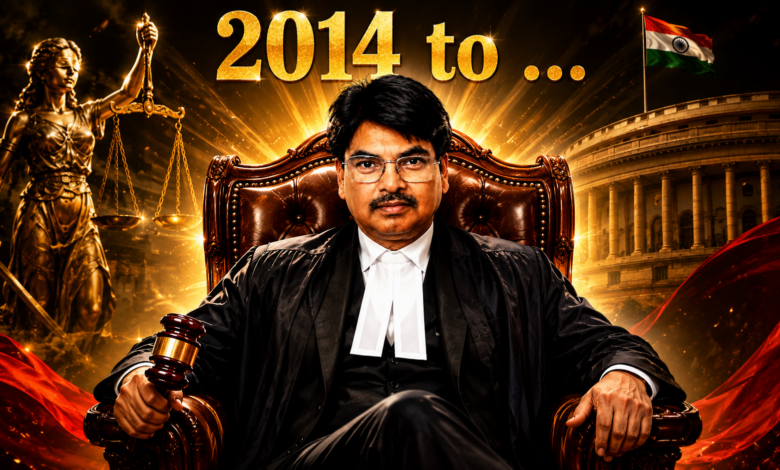
Manan Kumar Mishra: Long Tenure, Recent Overreach, and Questions of Institutional Independence at the Bar Council of India
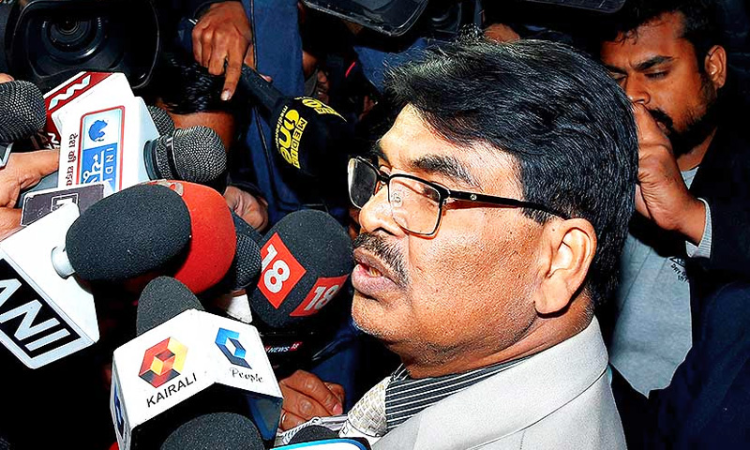
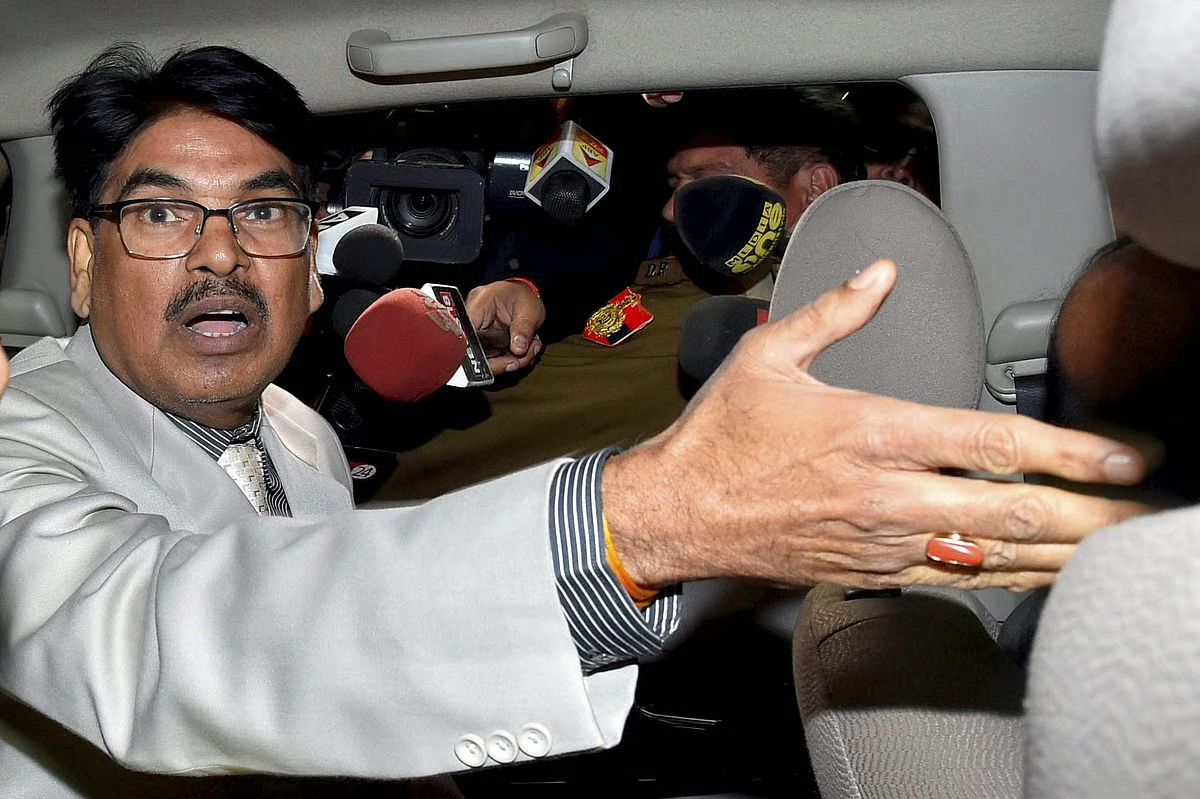
In August 2026, a sharp confrontation between the Bar Council of India (BCI) and students of NALSAR University of Law in Hyderabad placed Manan Kumar Mishra, the long-serving Chairman of the BCI, at the centre of intense scrutiny. What began as a student representation objecting to Chief Justice of India Surya Kant being invited as the chief guest for the 2026 convocation quickly escalated into a regulatory intervention that many in the legal community viewed as disproportionate and beyond the BCI’s proper role.
A section of the outgoing 2026 batch, later supported by students from subsequent batches, wrote to the university administration expressing discomfort with receiving degrees from a dignitary whose recent remarks during a hearing on alleged police excesses against protesters were perceived as dismissive. The students cited the CJI’s reported comments that the court was not interested in watching videos of the incidents. The representation framed the issue as a matter of institutional values taught at the university rather than a personal attack.
The BCI’s response was swift and sweeping. On BCI letterhead, Chairman Mishra directed that no graduate of the NALSAR 2026 batch be enrolled as an advocate by any State Bar Council until further orders. The communication demanded that the Vice-Chancellor identify those behind the campaign and suggested that a student lacking regard for the highest judicial office was unfit to become a responsible advocate, teacher or judge. The order effectively held an entire graduating class’s professional future hostage over an internal university protest.
The reaction from the legal fraternity was immediate and severe. Within hours the BCI modified its stance, first allowing enrolment while an inquiry continued, and later closing the proceedings altogether after stating that the 2026 batch had no role in any disturbance. The Supreme Court itself intervened. A bench led by CJI Surya Kant, hearing a challenge to the BCI circulars, described the original directive as “absolutely uncalled for.”
The Chief Justice observed that the matter was essentially a dialogue between the students and him, that students have a right to protest even if they are wrong, and that the BCI had “no business” intervening in the university’s internal affairs. The Court issued notice, recorded the withdrawal of the circulars, and directed that no punitive action be taken against students or faculty of NALSAR or any other national law university.
The episode crystallised long-standing concerns about the concentration of power in the office of the BCI Chairman and the risks of personal or political considerations influencing a statutory regulator meant to oversee legal education and the profession in an independent manner.
Manan Kumar Mishra: Why The Longest Continuous Tenure in BCI History?
The official list of BCI Chairmen maintained on the Bar Council of India’s website reveals a striking pattern. Most chairmanships lasted two to four years, with many shorter acting or interim stints, but Mr Mishra has an odd term.
| S.No | Name | From | To |
|---|---|---|---|
| 1 | Shri M. C. Setalvad | 18.08.1962 | 31.12.1962 |
| 2 | Shri C. K. Daphtary | 26.01.1963 | 31.10.1968 |
| 3 | Shri H. D. Srivastava | 11.07.1969 | 28.11.1970 |
| 4 | Shri R. B. Jethmalani | 29.11.1970 | 11.09.1976 |
| 5 | Shri Niren De | 15.10.1976 | 31.03.1977 |
| 6 | Shri S. V. Gupte | 01.04.1977 | 17.03.1978 |
| 7 | Shri R. B. Jethmalani | 18.03.1978 | 17.03.1980 |
| 8 | Shri Ranjit Mahanty | 18.03.1980 | 17.03.1984 |
| 9 | Shri B. N. Bajpayee | 18.03.1984 | 17.03.1986 |
| 10 | Shri V. C. Mishra | 18.03.1986 | 07.05.1987 |
| 11 | Shri C. L. Sachdeva (Acting Chairman) | 08.05.1987 | 26.07.1987 |
| 12 | Shri V. R. Reddy | 26.07.1987 | 18.02.1990 |
| 13 | Shri K. J. Shethna (Acting Chairman) | 18.02.1990 | 17.03.1990 |
| 14 | Shri L. P. Bhargava | 18.03.1990 | 17.03.1992 |
| 15 | Shri V. C. Mishra | 18.03.1992 | 10.03.1995 |
| 16 | Shri R. Muthukrishnan (Acting Chairman) | 11.03.1995 | 05.05.1995 |
| 17 | Shri O. P. Sharma | 06.05.1995 | 31.03.1998 |
| 18 | Shri Dhairyasheel V. Patil | 01.04.1998 | 25.04.1998 |
| 19 | Shri S. K. Kharventhan (Acting Chairman) | 25.04.1998 | 15.05.1998 |
| 20 | Shri Arun Mishra | 15.05.1998 | 24.10.1999 |
| 21 | Shri S. K. Kharventhan (Acting Chairman) | 25.10.1999 | 17.12.1999 |
| 22 | Shri S. K. Kharventhan | 18.12.1999 | 16.04.2000 |
| 23 | Shri D. V. Subba Rao | 17.04.2000 | 16.04.2004 |
| 24 | Shri Jaganath Patnaik | 17.04.2004 | 05.05.2007 |
| 25 | Shri S. Gopakumaran Nair | 05.05.2007 | 16.04.2008 |
| 26 | Shri Suraj Narain Prasad Sinha | 17.04.2008 | 16.04.2010 |
| 27 | Shri Gopal Subramanium | 17.04.2010 | 24.07.2011 |
| 28 | Shri Ashok Parija | 24.07.2011 | 16.04.2012 |
| 29 | Shri Manan Kumar Mishra | 17.04.2012 | 16.04.2014 |
| 30 | Shri Biri Singh Sinsinwar | 17.04.2014 | 09.11.2014 |
| 31 | Shri Manan Kumar Mishra | 09.11.2014 | till date |
Manan Kumar Mishra first became Chairman on 17 April 2012 and served until 16 April 2014. After a brief interlude under Biri Singh Sinsinwar (17 April 2014 to 9 November 2014), Mishra returned on 9 November 2014 and has remained in the post continuously since then. As of August 2026 Manan Kumar Mishra has completed nearly twelve years as BCI Chairman, with repeated unopposed re-elections, most recently for a 7th consecutive term in March 2025. No previous Chairman has approached this length of continuous service.
The BCI Rules provide for a two-year term for the Chairman, linked to membership of the Council. In practice, repeated re-election by the elected representatives of State Bar Councils has produced what critics describe as de facto permanence. A pending petition before the Supreme Court has specifically highlighted this prolonged occupancy and sought structural reforms, including fixed two-year terms and a lifetime cap on the number of terms an individual may hold the post. The argument is that the original design contemplated rotation and accountability; prolonged single-person control risks institutional capture and weakens the collective character of the regulator.
Political Alignments of Manan Kumar Mishra and the Blurring of Roles!
Mishra’s public political trajectory is a matter of record. He contested the 2010 Bihar Assembly elections on a Congress ticket, later joined the Bharatiya Janata Party, and was elected unopposed to the Rajya Sabha from Bihar as a BJP nominee in August 2024. His closeness to the party has been publicly demonstrative.
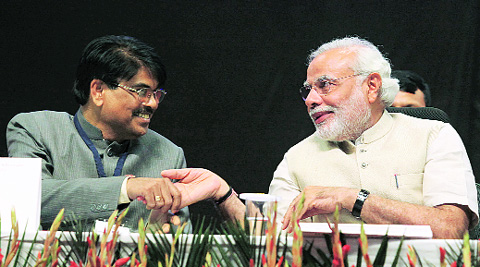
At a 2014 BCI event in Gandhinagar marking the Council’s fiftieth anniversary, he praised then Gujarat Chief Minister Narendra Modi as “Mahatma Gandhi reborn.” In a 2016 letter to the Prime Minister opposing certain reform proposals, he used strikingly personal and deferential language, referring to “his leader” and simultaneously pledging the collective support of India’s advocates—an act critics argued was inappropriate for the head of a statutory body that is expected to remain institutionally independent of party politics.
Commentators have noted the recurring pattern of statements issued under BCI letterhead that appear to align closely with the political positions of the ruling establishment, while simultaneous criticism is directed at other lawyers and bar leaders for “politicising” the profession. The conflation of personal political loyalty of Manan Kumar Mishra with the official voice of the regulator raises legitimate questions about whether the office is being used to advance institutional interests or to project individual political affiliations.
Institutional Autonomy and the Risks of Prolonged Control
The Bar Council of India is a statutory body under the Advocates Act, 1961, charged with regulating legal education, standards of professional conduct, and the enrolment of advocates. Its independence from both the executive and transient political majorities is essential if it is to command the confidence of the profession and the public. When one individual occupies the chairmanship for more than a decade through successive re-elections, the risk arises that the institution’s identity becomes intertwined with that individual’s personal and political preferences.
The NALSAR episode illustrated the danger in concrete form. A regulatory body stepped into a university’s internal dialogue with its own students over the choice of a convocation guest and sought to penalise an entire graduating class by withholding professional enrolment. The Supreme Court’s clear rebuke—that the BCI had no business in the matter—underscored the limits of the Council’s authority. That the original order was reversed within hours after public and professional backlash does not erase the fact that it was issued in the first place, on official letterhead, with potentially career-altering consequences for hundreds of young graduates.
Prolonged tenure also reduces the space for internal democratic renewal. When the same person is re-elected unopposed term after term, the incentive for robust debate within the Council diminishes. Fresh perspectives on legal education reform, professional ethics, or the regulation of an expanding and diverse bar become harder to introduce. The perception of permanence can itself chill dissent, both inside the Council and among the wider profession.
Questions That Remain Open…
Does a person who has publicly aligned himself so closely with a political party, and who has held the chairmanship of a statutory regulatory body for nearly 12 continuous years, continue to be the most appropriate occupant of that office? The question is not one of personal integrity or professional competence in isolation; it is about institutional design and the appearance of independence.
A regulator that must oversee legal education across the country, discipline professional misconduct, and speak for the collective interests of the bar needs to be seen as standing above partisan loyalty. When the same individual issues official communications that appear to punish student speech critical of the judiciary while simultaneously occupying a seat in Parliament as a party nominee, the boundary between regulator and political actor becomes difficult to discern.
The Supreme Court’s intervention in the NALSAR matter has drawn a firm line: the BCI does not have a roving mandate to police student expression or university governance. Whether that clarification prompts a broader re-examination of tenure norms, election processes, and the separation of political office from regulatory leadership remains to be seen. What is already clear is that the concentration of authority in one long-serving Chairman has generated legitimate concerns about institutional autonomy—concerns that the recent controversy has only amplified.
The legal profession in India depends on a Bar Council that commands respect through independence, rotation of leadership, and restraint in the exercise of power. The events of August 2026 have placed those expectations under renewed and necessary scrutiny.