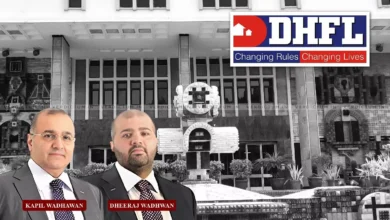
The ₹537.5-Crore BPTP Money Trail: From Mauritius to Manhattan — What Is Kabul Chawla Hiding?

From Mauritius to Manhattan: The ₹537.5-Crore BPTP Money Trail and the Kabul Chawla Investigation
ED’s FEMA probe, Mauritius-based investments, foreign entities allegedly beneficially owned by Kabul Chawla, a $19.4-million New York condominium and the unresolved question of where the money went
Investigative Report
There is a question at the heart of the Enforcement Directorate’s investigation into BPTP Ltd. that is considerably bigger than a disputed foreign-investment structure.
It is a question that travels across jurisdictions, corporate entities and financial transactions.
It begins in Mauritius.
It passes through BPTP, one of Haryana’s prominent real-estate companies.
It leads to Kabul Chawla, the company’s Chairman and Managing Director.
And it reaches New York, where a $19.4-million luxury condominium was purchased through an opaque corporate structure and was investigated by The New York Times in 2015 after evidence emerged connecting the property to Chawla, although Chawla denied owning it.
Now, more than a decade after that New York investigation, the Enforcement Directorate has itself put the foreign entities, the New York property and—most importantly—the source of funds used to acquire the property under examination.
The ED’s August 29, 2025 press release states that BPTP received more than ₹500 crore in foreign direct investment from Mauritius-based entities, including ₹322.5 crore from CPI India I Ltd. and ₹215 crore from Harbour Victoria Investment Holding Ltd. The agency alleges that the investments were structured with put/swap options providing guaranteed returns to the foreign investors in violation of the FEMA regime then applicable.
The ED also says that its investigation found Kabul Chawla to be the beneficial owner of multiple foreign entities, one of which had previously been used to acquire a costly immovable property in New York.
And then comes the sentence that potentially changes the entire character of the investigation:
The foreign entities, the overseas property and the source of funds used for the acquisition are under examination.
That is the money trail that now demands scrutiny.
THE ₹537.5-CRORE MAURITIUS TRAIL
According to the Enforcement Directorate, the investigation against BPTP was initiated after information that the company had received foreign direct investment of more than ₹500 crore from Mauritius-based entities in violation of prevailing FEMA rules and regulations.
The ED’s investigation identifies two transactions:
₹322.5 crore — CPI India I Ltd., Port Louis, Mauritius
₹215 crore — Harbour Victoria Investment Holding Ltd., Mauritius
Total: ₹537.5 crore.
The agency says these investments were made under the automatic route during financial year 2007–08.
But according to the ED, the agreements contained “put/swap” options that provided foreign investors with guaranteed returns upon exit, which the agency says violated the FEMA regulations applicable at the time.
The ED further says that the Reserve Bank of India had specifically directed BPTP to amend the shareholders’ agreement and remove the impermissible put-option clause, but that BPTP failed to comply.
This is an important distinction.
The issue being examined by the ED is not simply that foreign investors from Mauritius invested in an Indian company.
Foreign investment itself is not unlawful.
The issue is the structure and contractual terms of that investment, and whether those arrangements complied with the foreign-exchange regulations in force at the time.
And that brings the investigation to its first fundamental question:
What happened to the ₹537.5 crore after it entered the BPTP ecosystem?
THE ₹322.5-CRORE CPI INVESTMENT WAS ALREADY IN THE COURTS
The CPI India I Ltd. investment is not a transaction that surfaced for the first time in the 2025 ED investigation.
It has been part of litigation for years.
In a detailed judgment dated July 3, 2015, the Delhi High Court recorded that CPI India I Ltd., a company incorporated in Mauritius, had invested ₹322.5 crore in BPTP, subscribing to approximately 5.67% of BPTP’s paid-up equity capital.
The court identified Kabul Chawla and Anjali Chawla as promoters of BPTP, and stated that Kabul Chawla was the representative of the promoter group.
The court further recorded that the investment was governed by a Share Subscription Agreement and a Shareholders Agreement dated August 10, 2007.
According to the judgment, the agreements provided CPI with substantial contractual rights, including rights relating to dividends, major corporate decisions and mechanisms for ultimately redeeming or exiting its investment.
One particularly important provision concerned the use of the investment proceeds.
The court recorded that the shareholders agreement contemplated that the proceeds from CPI’s share subscription would be utilised by BPTP only for specified FDI-compliant real-estate projects, hotels and SEZs and for capital expansion or land acquisition connected with those activities.
That creates another important investigative question:
If the investment proceeds were contractually earmarked for specified purposes, where exactly did the money go?
That question becomes particularly important when examined against subsequent disputes concerning BPTP’s project-level finances.
THE SWAP OPTION AND THE ESCROW DISPUTE
The CPI-BPTP relationship subsequently deteriorated into extensive litigation and arbitration.
The Delhi High Court judgment records that the agreements contained mechanisms through which CPI could exercise a swap option if BPTP failed to achieve the contemplated IPO.
The arrangements involved selected BPTP projects and contemplated mechanisms for monetising those projects and distributing proceeds.
The parties later entered into a Memorandum of Understanding in December 2009.
The MoU created an escrow mechanism under which proceeds from specified projects were to be deposited into an escrow account.
The court recorded that proceeds generated from presales of units in selected projects after the effective date were to be deposited into that escrow account.
This becomes highly significant because some of the selected projects were not merely abstract assets on a corporate balance sheet.
They were projects involving ordinary homebuyers.
Among them were:
Project A — Park Serene
and
Project M — Park Arena.
₹213 CRORE FROM HOME BUYERS
In proceedings before the Delhi High Court, CPI alleged that BPTP had sold units in Projects A and M without the consent contemplated by the contractual arrangements.
The court recorded that the amount collected by BPTP from flat purchasers in those two projects was approximately:
₹213 CRORE.
CPI sought an order requiring that money to be deposited into an escrow account.
The court also recorded that BPTP was facing a financial crunch and had argued that restrictions were preventing it from raising further financing.
The litigation therefore brought into sharp focus a critical question concerning project collections:
How was money collected from buyers being utilised?
The court directed BPTP to furnish accounts of the money collected through sales in Projects A and M.
The record also reflects disputes over encumbrances, additional debt and the use of assets and sale proceeds.
None of these findings, standing alone, establishes money laundering.
But they establish something else of considerable investigative importance:
There was a documented dispute over the movement, control and utilisation of substantial sums generated through BPTP’s real-estate projects.
THE COURT’S RECORD AND THE WORD “UTILISED”
The Delhi High Court’s 2015 judgment records that the Single Judge had found a prima facie case concerning BPTP’s obligations in relation to the sale of units in Projects A and M.
The court noted that BPTP had been raising construction and selling units, and that approximately ₹213 crore had been collected from flat purchasers.
It also recorded BPTP’s position that the money collected had already been utilised in construction activities in those projects.
This distinction matters.
The question was not simply whether money had disappeared.
The question was where it had gone and whether its utilisation complied with the contractual and legal framework governing the projects.
That is precisely the kind of question that a modern forensic financial investigation is designed to answer.
THEN COMES HARBOUR VICTORIA
The second major Mauritius-linked investment identified by the ED was:
₹215 crore from Harbour Victoria Investment Holding Ltd., Mauritius.
The Delhi High Court’s record shows that Harbour Victoria Investment Holdings Limited, described in the judgment as a wholly owned member of the JPMorgan Chase & Company group, became another investor in BPTP.
The timing is significant.
The court records that on July 9, 2008, CPI acknowledged that BPTP would issue shares to Harbour Victoria.
The transaction therefore places two major foreign-investment relationships around BPTP:
CPI India I Ltd.
and
Harbour Victoria Investment Holdings Ltd.
The combined investment identified by the ED:
₹537.5 CRORE.
And years later, Harbour Victoria would itself become involved in litigation concerning Chawla and the Manhattan property.
That is where the story takes an international turn.
THE NEW YORK TIMES INVESTIGATION
In 2015, The New York Times was conducting a broader investigation into the use of shell companies and opaque ownership structures in luxury Manhattan real estate.
One of the properties examined was a condominium at the Time Warner Center.
It was not an ordinary apartment.
It was approximately:
4,050 square feet
with
five bedrooms
on the
68th floor
of the south tower.
The purchase price was approximately:
$19.4 MILLION.
The property was held through:
NYC Real Estate Opportunities
—a Delaware entity associated with a Singapore address.
The New York Times investigation connected the property to Kabul Chawla, founder and promoter of BPTP.
Chawla denied that he owned the apartment.
His position was that he and his family had used the apartment but that it belonged to his cousin Aneil Anand, who was listed as the purchaser in transaction documents.
The newspaper, however, reported evidence connecting Chawla to the transaction.
THE “KABUL” IN THE BROKER CORRESPONDENCE
The significance of the New York investigation lies partly in the way it approached ownership.
The issue was not resolved simply by looking at the name appearing on the property record.
The investigation followed the documentary trail generated by litigation concerning brokerage fees.
Correspondence between real-estate brokers reportedly referred to someone named:
“Kabul.”
That evidence was significant because it came from communications surrounding the actual property transaction.
The investigative question therefore became:
If the property was legally owned through an entity and the purchaser’s name pointed to Aneil Anand, why did communications surrounding the transaction apparently involve someone named Kabul?
And was that “Kabul” the same Kabul Chawla who headed BPTP?
The New York Times concluded that the circumstances connected Chawla to the property strongly enough to warrant publication.
Chawla, however, denied ownership.
That denial remains an important part of the record.
THE DELAWARE–SINGAPORE STRUCTURE
The corporate architecture surrounding the apartment is another reason the property attracted attention.
The recorded owner was not simply Kabul Chawla.
It was a corporate entity.
A Delaware entity.
Associated with a Singapore address.
The purchase contract also reportedly contained provisions allowing the property to be transferred to an LLC potentially owned through Cayman Islands or British Virgin Islands structures and/or a trust.
None of this is inherently unlawful.
International property ownership frequently involves holding companies, trusts and special-purpose vehicles.
But in an investigation into beneficial ownership, source of funds and cross-border transactions, these structures become critical.
The central question is:
Who ultimately controlled the asset?
And immediately after that:
Who ultimately paid for it?
THE $19.4-MILLION SOURCE-OF-FUNDS QUESTION
For years, the Manhattan property was principally a question of ownership.
Today, the ED has elevated it into a question of source of funds.
The ED’s August 2025 press release specifically states that Kabul Chawla was found to be the beneficial owner of multiple foreign entities.
It further says that one of those entities had previously been used to acquire a costly immovable property in New York.
And then it says:
the foreign entities, the overseas property and the source of funds used for the acquisition are under examination.
This is the single most important financial question in the entire story.
Not:
Who stayed in the apartment?
Not:
Who appeared on the purchase documents?
Not even:
Which company owned it?
But:
WHO FUNDED THE PURCHASE?
FROM MAURITIUS TO BPTP TO NEW YORK?
The public record presently establishes several separate points.
The ED says:
₹322.5 crore came from CPI India I Ltd.
₹215 crore came from Harbour Victoria Investment Holding Ltd.
Kabul Chawla was the beneficial owner of multiple foreign entities.
One such entity had been used to acquire an expensive New York property.
The source of funds for that acquisition is under examination.
What the public record does not yet establish is that the ₹537.5 crore itself—or any identifiable portion of it—was used to purchase the Manhattan apartment.
That distinction is critical.
Money laundering cannot be established merely by drawing a line between two large numbers.
There has to be a financial trail.
The investigation therefore needs to answer whether the following chain exists:
Mauritius investor
↓
BPTP
↓
BPTP/group bank account
↓
promoter-controlled entity
↓
foreign entity
↓
US bank account
↓
property transaction
If such a trail exists, the evidentiary significance would be substantial.
If it does not, the Manhattan property cannot legitimately be described as having been purchased with the Mauritius investment merely because the two transactions involve the same corporate ecosystem.
THE ED SEARCHES BPTP
The investigation acquired a new dimension in August 2025.
The Enforcement Directorate conducted searches on August 26 and 27, 2025 at multiple locations in Delhi-NCR and Noida.
The searches included BPTP offices and the residences of:
Kabul Chawla
and
Sudhanshu Tripathi, Whole-Time Director of BPTP.
The ED says it froze bank lockers and recovered and seized documents and digital evidence.
According to the agency, those materials revealed that despite RBI directions to amend the shareholders agreement and remove the impermissible put option, BPTP had failed to comply.
The agency describes this as a violation of FEMA provisions and applicable FDI regulations.
This gives the investigation a documentary dimension.
The question is no longer dependent entirely on historical newspaper reporting.
The ED says it has obtained:
- documents;
- digital evidence;
- corporate records;
- and financial information.
The next question is what those materials reveal about the movement of funds.
THE OTHER PART OF THE ED PRESS RELEASE
There is another sentence in the ED’s press release that deserves attention.
The agency states that its investigation found multiple FIRs against BPTP and its directors in various police stations across Delhi-NCR concerning:
non-completion of projects for long periods
and
diversion of funds.
The ED says those matters are also under investigation.
This does not mean that the FIR allegations have been proved.
An FIR is an allegation requiring investigation and, where appropriate, adjudication.
But from an investigative standpoint, the existence of those cases matters because they potentially create another financial trail.
If money was allegedly diverted from projects, investigators can ask:
where did it go?
If money went to related companies:
who controlled those companies?
If it went to foreign entities:
who were their beneficial owners?
If those entities acquired overseas assets:
what were the sources of funds?
And if the ultimate destination was a property associated with the promoter:
what was the complete transaction chain?
PARK SERENE AND THE HOME BUYERS
The Manhattan property becomes even more striking when placed beside the experience of BPTP’s customers.
The 2015 New York Times investigation examined complaints surrounding Park Serene, where hundreds of purchasers, including military personnel, had reportedly invested substantial sums.
The buyers alleged prolonged delays and incomplete construction despite having paid substantial portions of the purchase price.
The story generated public protests by aggrieved buyers.
The issue was not merely whether an apartment was late.
For many buyers, the property represented retirement savings, family security and years of accumulated wealth.
That makes the financial question particularly important:
What happens to money after a customer pays it to a developer?
A developer’s financial ecosystem can involve:
- customer advances;
- land payments;
- construction expenditure;
- project-company transfers;
- debt servicing;
- corporate overheads;
- related-party transactions;
- investor repayments;
- new project acquisitions;
- and promoter transactions.
The accounting trail is therefore critical.
THE PARKLANDS NUMBERS
BPTP’s Parklands development around Faridabad represented a much larger financial operation.
Contemporaneous reporting cited BPTP figures indicating that by 2009 the company had presold approximately:
10,685 apartments
and
5,657 residential plots.
The development was reported to cover approximately 1,700 acres.
The scale of the project meant that enormous sums of customer money entered the BPTP ecosystem.
That does not imply wrongdoing.
But it means that the question of fund utilisation is not a trivial accounting matter.
It is potentially a question involving hundreds or thousands of individual purchasers and substantial corporate cash flows.
THE COURT RECORD ON PROJECT MONEY
The Delhi High Court’s record provides an unusually detailed window into the financial disputes surrounding BPTP projects.
In the 2015 proceedings, the court recorded CPI’s concerns regarding the sale of units in Projects A and M and the approximately ₹213 crore collected from flat purchasers.
The court also directed BPTP to provide accounts of monies collected from those sales.
The court record further reflects disputes over:
- encumbrances;
- additional borrowing;
- project assets;
- sale proceeds;
- escrow arrangements;
- and the use of funds.
At one stage, the Division Bench permitted BPTP to raise a ₹125-crore loan from IFCI, while imposing conditions concerning the handling of money from Projects A and M and requiring information concerning existing buyers and utilisation of their payments.
The language of the court record is important because it provides something that allegations alone cannot provide:
a contemporaneous judicial record of the financial disputes.
THE INVESTIGATION MUST DISTINGUISH THREE DIFFERENT THINGS
There are three concepts that are increasingly being mixed together in public discussion.
They should not be.
FEMA violation
A transaction may violate foreign-exchange regulations.
That does not automatically make it money laundering.
Fund diversion
Money may allegedly be used for a purpose different from the one for which it was collected or earmarked.
That may create civil, regulatory or criminal consequences depending on the facts.
But it does not automatically establish money laundering.
Money laundering
For money laundering, investigators must establish the relevant statutory elements, including the existence and handling of proceeds of crime in the manner contemplated by the PMLA.
Therefore, the critical investigative question is not simply:
Was there a FEMA violation?
It is:
Was there an underlying criminal source of funds, and can the subsequent movement or use of those funds be established?
AND THEN THERE IS HAWALA
The term “hawala” has also entered public discussions surrounding cross-border financial transactions.
But hawala cannot simply be used as another word for offshore investment.
A Mauritius-based investor does not automatically mean hawala.
A Delaware company does not automatically mean hawala.
A Singapore address does not automatically mean hawala.
A New York property does not automatically mean hawala.
To establish an underground or unlawful value-transfer mechanism, investigators would need evidence of how value moved and whether the transaction bypassed or concealed the formal financial system.
That requires evidence such as:
- bank records;
- remittance records;
- SWIFT messages;
- correspondent-bank information;
- foreign-exchange declarations;
- internal ledgers;
- communications;
- beneficial ownership records;
- instructions to intermediaries;
- and potentially records from foreign jurisdictions.
The question for investigators is therefore:
Was every cross-border movement of value properly documented and routed through lawful channels?
THE HARBOUR VICTORIA CONNECTION DESERVES PARTICULAR SCRUTINY
There is another remarkable aspect to the chronology.
The ED identifies Harbour Victoria Investment Holding Ltd. as the source of ₹215 crore of FDI into BPTP.
The Delhi High Court record identifies Harbour Victoria as a wholly owned member of the JPMorgan Chase & Company group.
And years later, Harbour Victoria/JPMorgan became involved in litigation concerning Chawla and the New York condominium.
In 2015, reporting on the US litigation stated that Harbour Victoria had pursued efforts connected with a roughly $90-million judgment against Chawla and his companies and sought to investigate the ownership of the Time Warner Center apartment.
A federal judge ultimately rejected the effort to investigate or attach the condominium.
That judicial outcome is important and must not be distorted.
But the chronology itself is striking:
Harbour Victoria invests in BPTP
↓
BPTP/promoter dispute
↓
Harbour Victoria/JPMorgan litigation
↓
New York property
↓
questions concerning whether Kabul Chawla was the real owner
↓
2025 ED investigation
↓
ED says Chawla is beneficial owner of multiple foreign entities
↓
ED says source of funds for the New York property is under examination.
This is precisely the kind of chronology that demands a forensic financial reconstruction.
THE BENEFICIAL-OWNERSHIP QUESTION
The phrase “beneficial owner” is perhaps the most consequential phrase in the ED press release.
Legal ownership and beneficial ownership are not necessarily identical.
A property may be registered in the name of:
- an individual;
- an LLC;
- a company;
- a trust;
- a nominee;
- or another special-purpose vehicle.
The investigative question is who ultimately exercises ownership, control or economic benefit.
The NYT investigation in 2015 revolved around precisely this problem.
The property appeared under a corporate structure.
Chawla denied owning it.
Another person appeared in the purchase documents.
Yet the newspaper reported evidence connecting Chawla to the transaction.
Ten years later, the ED says its investigation has identified Kabul Chawla as the beneficial owner of multiple foreign entities, including an entity previously used to acquire an expensive New York property.
That makes the question of beneficial ownership considerably more important than the name appearing on a deed.
THE SOURCE-OF-FUNDS TEST
The most straightforward way to resolve the controversy would be to reconstruct the purchase of Apartment 68AF dollar by dollar.
Investigators would need to identify:
Who was the purchaser?
Who controlled the purchasing entity?
Which bank account funded the transaction?
Who was the account holder?
Where did the money in that account originate?
What transactions immediately preceded the transfer?
Were funds received from India?
Were funds received from Mauritius?
Were funds received from BPTP or its affiliates?
Were funds received from entities controlled by Kabul Chawla?
Were funds received from personal accounts?
Were there loans?
Were there inter-company transfers?
Were there nominee arrangements?
Were there trust structures?
Were taxes paid on the relevant income?
Were foreign-exchange declarations made where required?
This is the point where the investigation either produces a connection or does not.
THE ₹537.5-CRORE NUMBER MUST NOT BE USED CARELESSLY
The number is enormous.
₹537.5 crore is approximately:
₹5.375 billion.
But the size of the number should not be allowed to replace evidence.
It would be irresponsible to say:
“BPTP received ₹537.5 crore from Mauritius, therefore that money bought the New York apartment.”
That conclusion does not follow automatically.
The money could have been used for legitimate corporate purposes.
It could have been deployed in projects.
It could have been subject to contractual disputes.
It could have been returned or transferred in accordance with agreements.
Or, if the evidence ultimately establishes it, some portion could have travelled through other entities and eventually contributed to the acquisition of overseas assets.
The answer lies in the accounts.
THE ACCOUNTING TRAIL THAT NOW MATTERS
The investigation should therefore reconstruct the financial history in chronological sequence.
Stage One
Mauritius
Who sent the money?
Stage Two
India
Which BPTP account received it?
Stage Three
Corporate deployment
Where did BPTP transfer it?
Stage Four
Project level
Which projects benefited?
Stage Five
Promoter level
Did any promoter-controlled company receive funds?
Stage Six
Foreign structures
Were funds transferred outside India?
Stage Seven
Beneficial ownership
Who controlled those foreign entities?
Stage Eight
New York
Did any such entity participate in the acquisition of Apartment 68AF?
Stage Nine
Source of funds
Where did the $19.4 million ultimately originate?
Stage Ten
Ultimate beneficiary
Who ultimately owned or economically benefited from the property?
That is the investigative map.
WHAT IS DOCUMENTED AND WHAT REMAINS AN ALLEGATION?
A credible investigative report must draw a hard line between these categories.
DOCUMENTED
The ED conducted FEMA searches against BPTP in August 2025.
The ED identifies ₹322.5 crore from CPI India I Ltd. and ₹215 crore from Harbour Victoria Investment Holding Ltd.
The Delhi High Court recorded CPI’s ₹322.5-crore investment in BPTP and identified Kabul Chawla as a BPTP promoter and promoter-group representative.
The Delhi High Court record contains extensive litigation concerning CPI’s investment, swap mechanisms, project assets, escrow arrangements and project sale proceeds.
The NYT investigated a $19.4-million Time Warner Center condominium connected to Chawla, while Chawla denied ownership.
The property was held through a Delaware entity associated with a Singapore address.
The ED now says Chawla was the beneficial owner of multiple foreign entities and that one had been used to acquire a costly New York property.
The ED says the source of funds for that acquisition is under examination.
ALLEGATIONS UNDER INVESTIGATION
The ED alleges that the Mauritius investments were structured in violation of FEMA.
The ED says BPTP failed to comply with RBI directions concerning the put-option clause.
The ED says multiple FIRs concern prolonged project non-completion and diversion of funds.
These remain matters of investigation and cannot be presented as final findings of criminal guilt.
NOT YET ESTABLISHED BY THE PUBLIC RECORD
There is currently no publicly established documentary proof showing that the ₹537.5 crore itself was used to purchase the Manhattan property.
There is also no established public finding that the Manhattan purchase constituted money laundering or hawala.
Those are precisely the questions the financial investigation now needs to answer.
THE CENTRAL QUESTION IS NO LONGER ABOUT A CONDO
The Manhattan apartment is visually spectacular.
A 68th-floor luxury residence.
Five bedrooms.
4,050 square feet.
Central Park views.
$19.4 million.
But the apartment itself is not the real story.
The real story is the financial architecture surrounding it.
A Mauritius investment.
An Indian real-estate company.
A promoter group.
Foreign entities.
A Delaware corporate structure.
A Singapore-linked address.
A luxury property.
A beneficial-owner question.
A source-of-funds question.
And now an Enforcement Directorate investigation.
That is why the Manhattan apartment matters.
THE QUESTIONS THAT REMAIN
The investigation now leaves a series of questions hanging over the BPTP financial structure.
Where did the ₹322.5 crore invested by CPI ultimately go?
Where did the ₹215 crore invested by Harbour Victoria ultimately go?
Were the investment proceeds used strictly for the purposes contemplated under the investment agreements?
What happened to the money collected from BPTP’s projects?
Were project collections transferred between group entities?
Did any promoter-controlled entity receive project money?
Were any BPTP funds transferred overseas?
Which foreign entities were controlled by Kabul Chawla?
What was the relationship between those entities and BPTP?
Which entity acquired the Manhattan property?
Who controlled that entity at the time of acquisition?
Who provided the $19.4 million?
What was the source of that money?
Did any money originate in India?
Did any money originate from BPTP or its affiliates?
Did any money originate from Mauritius-based investors?
Were there intermediary entities between the source and the property?
Were there nominee or trust arrangements?
Were all relevant transactions disclosed to Indian and US authorities?
And can the entire chain of funds be reconstructed from the bank records?
These are not questions that can be answered by corporate statements, newspaper denials or assumptions.
They require the documents.
They require the ledgers.
They require the bank statements.
They require the beneficial-ownership records.
They require the international transaction records.
And ultimately, they require the money trail.
Mauritius → BPTP → Group Entities → Foreign Structures → New York
The question now before investigators is whether that chain exists—and, if it does, what exactly travelled along it.