The New York Investigations Against Kabul Chawla Raise More Questions Than They Answer

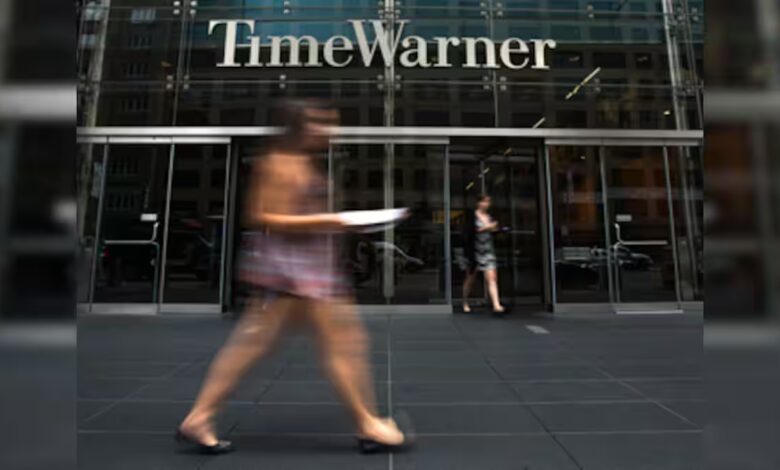
In February 2015, The New York Times published a meticulously reported investigation that placed Kabul Chawla, founder and promoter of the Faridabad-based real-estate company BPTP Ltd., at the centre of one of Manhattan’s most expensive residential transactions of 2012. The apartment in question was unit 68AF on the 68th floor of the south tower of the Time Warner Center at 25 Columbus Circle. It measured 4,050 square feet, contained five bedrooms, a media and playroom, soaring ceilings, five-and-a-half marble bathrooms, a 23-by-24-foot great room, his-and-her master closets, and sweeping Central Park and river-to-river views. The purchase price was $19.4 million, paid entirely in cash. Legal title was held by a Delaware company named NYC Real Estate Opportunities that listed a Singapore address. The corporate structure was designed for opacity.
Chawla’s public response was categorical. He acknowledged that he stayed in the apartment and that his family had used it, yet he insisted he did not own it. Ownership, he said, rested with his cousin Aneil Anand, a Dubai-based hedge-fund trader who had previously worked at JPMorgan Chase and later joined the Duet Group. Anand’s name did appear as the purchaser in certain transactional documents later disclosed in litigation. That denial, however, did not close the matter. It opened it.
The Times did not rely on anonymous tips or internet speculation. It followed a documentary trail created by a brokerage-fee lawsuit filed after the sale. Internal emails exchanged among the real-estate professionals who handled the transaction referred to a person named “Kabul” making specific requests about the apartment’s measurements and other details. One such communication originated from Brenda S. Powers, then a broker at Brown Harris Stevens, the firm representing the seller. Hall F. Willkie, president of the same firm, observed that ownership was “usually just put in another name for public records.” The paper also recorded suggestions from individuals connected to the building that Chawla and his wife Anjali were the true parties in interest. The investigative architecture was therefore clear: property → Delaware shell → Singapore address → transaction documents → brokers → emails naming “Kabul” → Kabul Chawla. The paper presented these circumstances as sufficiently substantial to connect Chawla to the apartment despite the formal denial.
That reporting did not occur in a vacuum. The Times deliberately set the Manhattan luxury against the lived experience of BPTP’s Indian customers. At the Park Serene project, approximately 400 buyers, including nearly 200 retired military officers who had booked apartments in 2008, claimed they had paid 95 to 100 percent of the purchase price—an estimated collective outlay exceeding $35 million—yet still lacked completed homes years later. Major General (retd) Brajesh Kumar publicly stated that the officers had invested their life savings expecting to live together in retirement. Protests were staged at Jantar Mantar. The same pattern of prolonged delay and incomplete delivery appeared across the much larger Parklands development near Faridabad, where BPTP had, by its own earlier figures, pre-sold more than 10,000 apartments and 5,000 residential plots across roughly 1,700 acres. The landscape that emerged was one of vacant plots, unfinished structures, and widespread consumer complaints about quality, infrastructure, and escalating charges. Consumer commissions recorded instances in which deposits collected for specific projects appeared to have been utilised elsewhere.
The New York reporting therefore posed a stark contrast: Indian homebuyers who had paid nearly the full price of apartments they could not occupy, set against a 4,050-square-foot Manhattan residence offering Central Park views and held through layered corporate vehicles. The question the article left hanging was not merely who held legal title, but whose economic interest the title ultimately served, and from what sources the $19.4 million had been assembled.
Months later, the same apartment became the subject of formal legal action in New York. In 2015, a unit of JPMorgan Chase moved in court to prevent the transfer of the condominium and to attach it as partial satisfaction of a $90 million arbitration award obtained in London against companies linked to Chawla, including BPTP. The award arose from a dispute following an investment by Harbour Victoria Investment Holdings—the same Mauritius entity later named by the Enforcement Directorate as having injected ₹215 crore into BPTP in 2007–2008. The bank’s filings cited the Times reporting and argued that Chawla was the true beneficial owner who had taken steps to conceal his interest. A process server reported that Chawla was present in the building as recently as April 2015. Yet a federal judge ultimately rejected the bank’s attempt to seize the property, finding the evidence of ownership insufficient to support the requested relief. The legal proceeding, like the journalistic investigation that preceded it, illuminated the opacity without finally piercing it.
These New York developments—the 2015 Times investigation and the subsequent JPMorgan attachment attempt—must now be read in light of the Enforcement Directorate’s searches conducted on 26 and 27 August 2025 at BPTP’s offices and at the residences of Kabul Chawla and Sudhanshu Tripathi. The Directorate’s press release of 29 August 2025 stated that BPTP had received more than ₹500 crore in Foreign Direct Investment from Mauritius entities in violation of FEMA. The specific inflows were ₹322.5 crore from CPI India I Ltd. and ₹215 crore from Harbour Victoria Investment Holding Ltd., both based in Port Louis. The investments, made under the automatic route in 2007–2008, were structured with put/swap options that guaranteed returns to the foreign investors—clauses prohibited under the FDI policy then in force. The Reserve Bank of India had directed BPTP to amend the shareholders’ agreement and remove the impermissible language. According to the Directorate, the company failed to comply. The same release recorded that Chawla was the beneficial owner of multiple foreign entities, one of which had been used to acquire a costly immovable property in New York, and that the source of funds for that acquisition was under examination. Parallel FIRs concerning non-completion of projects and alleged diversion of funds were also brought within the investigative frame.
The New York investigations therefore sit at the intersection of several unresolved strands. They established the existence of a high-value Manhattan asset acquired through a Delaware company with a Singapore address. They produced contemporaneous broker correspondence naming “Kabul.” They recorded Chawla’s own admission that his family used the apartment while he denied ownership. They placed that asset in the same temporal and corporate neighbourhood as the Harbour Victoria investment that later generated a $90 million arbitration award. They juxtaposed the luxury of the 68th-floor residence against the incomplete projects and financial distress of Indian homebuyers who had paid nearly the entire consideration for apartments that remained undelivered. And they left the ultimate questions of beneficial ownership and source of funds open—questions the Enforcement Directorate is now examining under FEMA more than a decade later.
What the New York record does not answer is whether the funds that entered BPTP through the Mauritius vehicles in 2007–2008, or the large sums collected from Indian purchasers in the years that followed, contributed in any measure to the $19.4 million paid for Apartment 68AF. It does not establish whether the layered corporate structure was employed to obscure beneficial ownership or to facilitate the movement of value across jurisdictions. It does not determine whether the non-compliance with RBI directives on the put-option clauses formed part of a broader pattern of regulatory disregard. It does not quantify the extent to which homebuyer deposits may have been diverted into other projects or into overseas assets. And it does not resolve the tension between formal legal title held by a Delaware company and the economic reality suggested by the broker emails, the family usage, and the subsequent creditor attempts to treat the apartment as Chawla’s asset.
These unanswered questions are not academic. They concern the integrity of foreign investment routed through Mauritius, the protection of Indian homebuyers who entrusted their savings to BPTP, the transparency of beneficial ownership in high-value overseas real estate, and the effectiveness of regulatory oversight under FEMA. The New York investigations of 2015 performed the essential public service of exposing the opacity and forcing the issues into the open. They did not, however, close the file. The Enforcement Directorate’s 2025 searches and the ongoing examination of the New York property and its funding sources represent the next chapter. Until those inquiries produce clear, public findings on beneficial ownership, the origin of the purchase funds, and the relationship between the inbound Mauritius investments and the Manhattan acquisition, the questions first raised by the New York Times and the subsequent legal proceedings will continue to hang over Kabul Chawla and BPTP—unresolved, consequential, and demanding of answers.