Vijay Aggarwal: A Lawyer’s Fall into Alleged Sexual Predation and the National Disgrace He Represents

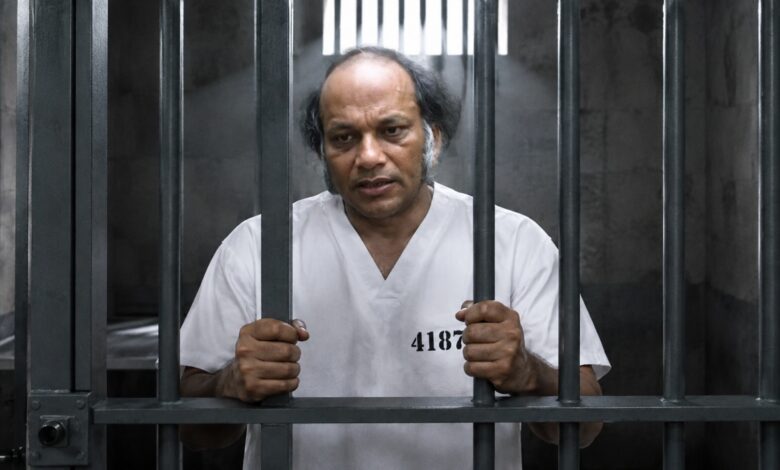
Vijay Aggarwal, the 57-year-old Delhi criminal defence lawyer who has spent years defending fugitive diamantaire Mehul Choksi, is now locked inside a British prison. On 11 August 2026 he was arrested at a luxury Mayfair townhouse. On 13 August he was formally charged with four counts of sexual assault under Section 3 of the Sexual Offences Act 2003. His personal assistant, Manpreet Kaur, faces two counts of intentionally encouraging or assisting those offences. Both remain remanded in custody. Their next hearing is set for 10 September 2026 at Southwark Crown Court.
These are not abstract accusations. They are precise criminal charges alleging that Aggarwal intentionally touched two women in a sexual manner without their consent—one incident on 26 May 2026 and three counts arising from events on 9 August 2026—at a high-end serviced townhouse where he and Kaur were staying. The prosecution case further asserts that Kaur introduced the women after posting a false job advertisement and invited them to the property. That combination of deception, invitation, and alleged assault is the heart of the case now before the British courts.
What makes this episode especially corrosive is not only the nature of the charges but the identity of the man facing them. Aggarwal has long presented himself as a sophisticated legal operator navigating complex extradition and financial-crime cases. He has acted for Mehul Choksi before the Bombay High Court and in connection with Choksi’s ongoing detention in Belgium following his April 2025 arrest on an Indian extradition request. Choksi is accused, along with others, of involvement in the Punjab National Bank fraud of approximately ₹13,500 crore; he denies the allegations. Aggarwal’s professional image has been built on proximity to precisely this kind of high-stakes, high-value controversy. The allegations now levelled against him in London expose a grotesque contradiction: a man who argues about justice and due process abroad is himself accused of using false employment inducements to bring women into a private luxury residence where sexual assaults are said to have occurred.
The Mayfair Setting and the Mechanism of Alleged Deception
The property at 29 Brick Street is no ordinary lodging. It is a four-storey, five-bedroom serviced townhouse of roughly 4,000 square feet, complete with maid service and daily breakfast provision, available at approximately £2,000 a night. It sits in the heart of Mayfair, one of London’s most expensive and discreet districts. The choice of such a location is not incidental. It creates an environment of isolation, status, and control. When that environment is allegedly reached through a false job advertisement, the power imbalance becomes systemic rather than accidental.
According to the charges, Kaur’s role was to facilitate the introductions and invitations. The prosecution case is that the women were drawn to the address by a fabricated employment opportunity. Once there, the alleged assaults took place. This is not a claim of spontaneous misconduct. It is an allegation of structured predation: advertise a job that does not exist, bring the targets into a controlled private space, and then commit sexual offences. If proved, it would represent a calculated abuse of trust and a deliberate exploitation of economic vulnerability. That is the gravamen of the case the British courts must now try.
Two other individuals—a 23-year-old man and a 43-year-old woman—were arrested on the same day and later released on bail. The two women who reported the assaults are receiving specialist support. Their identities remain protected under British law. The process is ongoing. No conviction has yet been recorded. But the formal charges themselves already constitute a public indictment of the most serious kind.
The Earlier Spin: Immigration Claims, Cash Rumours, and the Attempt to Reframe Reality
In the days before the court appearance, a different story was pushed into circulation. Reports claimed Aggarwal had been detained by British immigration authorities over alleged work-permit violations. A landlord’s complaint in May about activity at the Mayfair property was said to have triggered an inspection. During that inspection, some outlets reported the discovery of a substantial quantity of cash. Junior lawyers were allegedly present. Aggarwal was said to have been held for roughly three days.
Associates and family members responded through ANI with categorical denials. They insisted there was “nothing on record or in our knowledge” of any cash recovery or involvement with such funds. They condemned the portrayal of the matter as money-related and demanded that reporting rest only on verified information. Those denials may or may not prove accurate regarding cash. What they cannot erase is the subsequent formal charging of Aggarwal and Kaur with sexual assault and the assistance of sexual assault. The British courts did not remand them on immigration technicalities. They remanded them on multiple counts of sexual offending facilitated, according to the prosecution, by a false job advertisement.
The earlier narrative of immigration irregularities and unexplained cash therefore functions, whether by design or by accident, as a distraction. It attempts to reframe a sexual-assault case as a bureaucratic or financial misunderstanding. That reframing collapses the moment the formal charges are examined. The Metropolitan Police investigation produced sexual-assault charges. The magistrates remanded the accused in custody. The case now proceeds to Southwark Crown Court. Everything else is secondary.
Professional Prestige as a Shield—and Its Collapse
Aggarwal’s career has been built on the defence of individuals accused of large-scale economic offences. That work requires, at minimum, a public posture of integrity and respect for legal process. The allegations now confronting him in London invert that posture. A lawyer who argues about fair trial rights and human rights standards for clients abroad is himself accused of deploying deception to create the conditions for sexual assault. The dissonance is absolute.
The use of a false job advertisement is particularly damning in this context. It is not a spontaneous act. It is an instrument of recruitment. It targets individuals seeking legitimate employment and converts that hope into an alleged opportunity for sexual offending. When such conduct is alleged against a senior Indian criminal defence lawyer operating from a Mayfair townhouse, the damage extends far beyond the individual. It becomes a national stain.
The Shame Such People Bring to India
Individuals like Vijay Aggarwal do not merely face personal criminal allegations. They inflict collective reputational harm. India sends professionals, lawyers, and citizens abroad every day. The overwhelming majority conduct themselves with dignity and competence. A small number, however, convert opportunity into predation and then hide behind the prestige of their professional titles. When a high-profile Indian lawyer is charged in a British court with multiple counts of sexual assault allegedly facilitated by false job advertisements, the story does not remain private. It becomes an international headline that associates India with the abuse of power, the exploitation of women, and the corruption of professional status.
This is the real cost. Every time such a figure is arrested and charged abroad for sexual offences, the carefully built image of Indian professional competence is undermined. Foreign observers do not parse the nuances of due process with the same care that Indian courts and media sometimes apply. They see a pattern: power, luxury, deception, and alleged sexual offending. The result is simple and corrosive—shame. Shame for the profession. Shame for the country that produced and elevated the individual. Shame that is entirely preventable if such conduct is met with unambiguous public condemnation rather than reflexive defence.
Aggarwal is entitled to the presumption of innocence in a court of law. That presumption does not require silence from the public about the seriousness of the charges, the mechanism of the alleged deception, or the national embarrassment that flows from them. A man who has spent years arguing legal technicalities for a fugitive accused of multi-thousand-crore fraud now faces formal accusations that he used a false job advertisement to bring women into a Mayfair townhouse where sexual assaults are alleged to have occurred. That is not a private misfortune. It is a public disgrace.
The British justice system will test the evidence. Until a verdict is reached, the charges stand as a formal and devastating indictment. They expose the gap between the polished professional image Aggarwal cultivated and the alleged reality of his private conduct. They also expose a broader failure: the willingness of some to treat national reputation as expendable when one of their own is accused. Such people do not merely risk their own freedom. They drag the name of the country into the same dock. That is the true measure of the damage, and it cannot be minimised.