ED Arrests Vatika Group Promoters Over ₹260 Crore Plot Case What We Know About The Developer’s Business, Projects And Controversies Behind One Of Gurugram’s Best Known Developers
The ED has arrested Vatika Group promoters Anil Bhalla and Gautam Bhalla in a ₹260 crore plot case, putting one of Gurugram’s best-known developers under fresh scrutiny. But Vatika’s story goes well beyond the latest arrests, stretching across major projects, buyer disputes, RERA proceedings, insolvency and an earlier ED investigation.


The latest trouble for Vatika Group comes from the Enforcement Directorate, which has arrested Anil Bhalla, Chairman-cum-Managing Director of Vatika Limited, and Gautam Bhalla, a promoter of the group.
The arrests were made on September 28, 2026, under the Prevention of Money Laundering Act, in a case arising from multiple FIRs registered by the Economic Offences Wing of Delhi Police. The underlying allegations include fraudulent inducement, non-delivery of residential plots and related offences.
According to the ED, the case centres on seven purchaser entities that paid approximately ₹260 crore between 2010 and 2012, representing the full sale consideration for residential plots in Vatika India Next in Sectors 84 and 85 and Vatika India Next-2 in Sector 88A, Gurugram.
Plot-wise agreements were subsequently executed in 2014 and 2015. The agency alleges that project layouts were later revised, plots were renumbered or relocated, while the underlying land continued to be allotted and sold to other purchasers.
The allegation becomes particularly striking in the case of Vatika India Next-2. The ED says that not a single plot from approximately 1.10 lakh square yards of land purchased for around ₹90 crore had been delivered even after about 14 years. Across the two projects, the agency says substantial portions of plots worth approximately ₹140.73 crore remained undelivered.
The agency has also alleged that purchaser money did not remain confined to the projects for which it was collected. Its investigation found that funds received by Vatika Limited were transferred to other group companies and promoter-linked entities that were not part of those projects. ED says the group used around 22 companies to hold project land, provide corporate guarantees and manage its land bank, including land mortgaged to financial institutions.
There is another transaction in the ED’s account. In 2024, Scaler Ventures allegedly paid ₹473.18 crore under an Agreement to Sell and a Buy-Back Agreement. ED says only 15 of 165 plots were bought back and that 14 of the remaining 150 plots were subsequently sold to third parties for approximately ₹13.62 crore without Scaler’s knowledge or consent. The agency has presently quantified the proceeds of crime in this case at approximately ₹154.36 crore.
Following the arrests, both accused were produced before the Special Court under PMLA in Gurugram and were remanded to ED custody until October 3, 2026. The investigation remains underway.

Who Is Vatika Group And How Big Is Its Business?
To understand why the latest ED action matters, it is worth stepping back from the allegations and looking at the business behind the name.
Vatika Group is not a small or recently established real-estate operator. The group traces its origins to the 1980s and built its business around property development, particularly in the National Capital Region, before expanding into other parts of North India and into businesses connected to real estate.
Its portfolio has extended beyond conventional housing. Vatika has developed residential properties, plotted developments, integrated townships, commercial projects, retail spaces and hospitality assets, while the broader group has also been associated with education, restaurants and facilities management. Gurugram, however, remains central to the group’s real-estate identity, with a substantial concentration of its projects spread across the city.
The group’s own corporate material says it has delivered more than 36 million square feet of residential space to over 32,000 customers. It also says its township developments cover more than 1,200 acres across Gurugram, Jaipur and Ambala. Those figures are company claims, but they give an indication of the scale Vatika has sought to build over several decades.
Its Gurugram portfolio includes projects such as Vatika India Next, Vatika India Next-2, Vatika City, Aspirations, Xpressions, V’Lante and several commercial developments. In Jaipur, the group’s major presence includes the large Vatika Infotech City, while Ambala has Vatika City Central. The group has also developed commercial property in Faridabad.
The breadth of this portfolio is important because the current ED case concerns only one part of a much larger business. Vatika Limited has operated through a network of companies connected to different projects and land holdings, something that also appears in the ED’s latest investigation. The agency says approximately 22 group companies were used to hold project land, provide corporate guarantees and manage the group’s land bank.
That makes the question surrounding Vatika considerably bigger than whether a handful of plots were delayed. The group built a substantial real-estate business on the back of large township and land-development projects, but some of those same projects have subsequently become the subject of buyer complaints, regulatory proceedings, creditor disputes and now multiple ED investigations.
The Vatika Project Empire
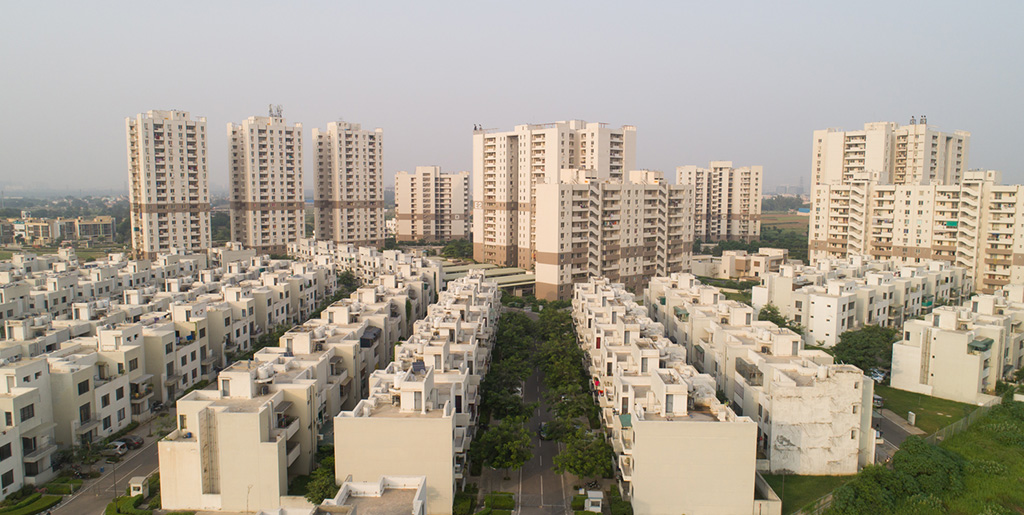
If Gurugram is the centre of Vatika’s story, township development is what made the group a recognisable name in the city’s real-estate market. Its portfolio stretches across residential plots, apartments, floors, villas and commercial developments, with several projects built around the idea of integrated communities rather than standalone housing projects.
The most relevant project for the latest ED case is Vatika India Next, spread across Sectors 84 and 85, and Vatika India Next-2 in Sector 88A. These are large-scale developments and not simply individual apartment blocks. Vatika’s wider Gurugram portfolio also includes projects such as Vatika City, Aspirations, Xpressions, Sovereign Park and V’Lante, along with commercial developments including Market Walk and other retail and office properties.
The group has also taken its township model outside Gurugram. In Jaipur, Vatika Infotech City is a large integrated development with residential plots, apartments, villas and commercial components. The project includes developments such as Jaipur 21, The Park Apartments and other residential enclaves. In Ambala, Vatika City Central is another township development, while in Faridabad, the group’s Mindscapes project represents its commercial real-estate presence.
This scale matters when looking at the disputes surrounding the group. The projects that have appeared in legal and regulatory proceedings are not necessarily obscure corners of the business. Some are part of the same broader development portfolio that helped establish Vatika as a significant NCR developer.
And there is another complication. The group’s structure is not limited to a single company owning every piece of land and developing every project. The latest ED investigation says approximately 22 group companies were involved in holding project land, providing corporate guarantees and managing the land bank.
That corporate structure becomes important later, because the movement of funds between Vatika Limited and other group or promoter-linked entities is itself part of the ED’s allegations.
The Numbers Behind Vatika
The picture becomes more complicated when the group is viewed through its financial numbers. Vatika Limited is an unlisted company, which means its financial performance does not receive the same continuous scrutiny as that of listed developers. Still, available financial and rating documents provide a picture of a sizeable operation.
According to an Infomerics rating report, Vatika Limited’s operating income increased from ₹814.57 crore in FY23 to ₹957.09 crore in FY24. EBITDA rose from ₹174.92 crore to ₹239.37 crore during the same period, while profit after tax increased from ₹14.47 crore to ₹57.34 crore.
The company, however, also carried substantial debt. Total debt stood at approximately ₹1,486 crore in FY23, before declining to around ₹1,395 crore in FY24, according to the same rating assessment.
That makes Vatika’s financial story less straightforward than either a simple growth story or a straightforward distress story. The company was generating hundreds of crores in annual operating income and reported a significant improvement in profitability in FY24, while at the same time carrying substantial borrowings and developing a large portfolio of properties and land.
The balance sheet also needs to be read carefully. MCA-derived records show sizeable registered charges against the company, but registered charges should not automatically be described as debt owed.
They represent security interests created in favour of lenders and other creditors, some of which may subsequently be satisfied. That distinction is important when assessing the group’s financial position.
More importantly, the financial numbers exist alongside a very different set of facts emerging from the group’s legal history. Buyers have approached consumer forums over delayed possession and refunds; RERA authorities have dealt with project and agreement-related disputes; creditors have pursued proceedings; and the ED has investigated allegations concerning the handling of purchaser and investor money.
That is where Vatika’s story begins to move beyond the conventional developer-versus-buyer dispute. The latest ED case alleges that money paid for specific projects was transferred to other group companies and promoter-linked entities rather than being used exclusively for those projects.
In other words, the question is no longer simply how much Vatika built or how much money it made. It is also about what happened to money collected for projects that buyers say remained incomplete or undelivered.

The Buyer Complaints That Wouldn’t Go Away
The allegations in the latest ED case did not emerge in isolation. Vatika has faced a trail of buyer disputes over delayed possession, refunds, project changes and agreements, with several matters reaching consumer forums and real-estate regulators.
One recent example came from the National Consumer Disputes Redressal Commission, which in February 2026 directed Vatika Limited to refund ₹1.21 crore to a Gurgaon homebuyer, along with 12% simple interest. The buyer had paid the entire consideration for a residential plot, with possession stipulated by August 2018.
The NCDRC recorded that the plot had still not been handed over. Vatika told the commission that Vatika India Next was a large township being developed in phases and cited circumstances it said were beyond its control.
There are other cases that show how long some of these disputes have stretched. In a 2024 consumer case involving a villa, the buyer had booked the property in 2009 with possession expected by 2013. The court recorded that Vatika subsequently offered to buy back the villa in 2016 and refund the money with interest, but the refund was not made despite reminders.
Another NCDRC matter concerning Vatika India Next involved a buyer who had applied for a 300-square-yard plot in 2011 and paid nearly ₹60 lakh against the total consideration. Possession was promised within 36 months, but was not delivered. The consumer commission subsequently treated the matter as a deficiency in service and ordered relief to the buyer.
The significance of these cases is not that every dispute against Vatika necessarily establishes wrongdoing. Real-estate litigation can involve competing claims about contracts, approvals, payments and project circumstances. But taken together, the cases show that delayed delivery and refund disputes have persisted across different Vatika projects and over several years.
And in some cases, the issue was not simply that a project was late. Buyers have also challenged changes to what they were originally promised. That becomes particularly relevant given the latest ED allegations concerning plots being renumbered or relocated and subsequently allotted or sold. Those are allegations specific to the current PMLA investigation and should not be conflated with every earlier buyer dispute.
RERA And The Project-Level Legal Trouble
The buyer disputes have also spilled into the regulatory system. In April 2024, the Gurugram chapter of Haryana RERA penalised Vatika Limited in complaints concerning builder-buyer agreements. The authority found a violation of Section 13 of the RERA Act and imposed a ₹1 lakh penalty in each of five complaints, while directing Vatika to execute registered buyer agreements in the prescribed format.
The underlying issue was significant. The five complainants had alleged that they had paid money for commercial units, but the units were subsequently moved to another location without their consent. The RERA proceedings found that Vatika had accepted more than the permissible advance without first executing the required agreement for sale. Reports on the order said the total penalty, including amounts payable by the promoter and complainants in relation to compliance, came to more than ₹6 lakh.
The regulatory record also shows that individual projects have generated their own disputes. Vatika India Next-2, for instance, is registered with Haryana RERA as a project of M/s Vatika Limited in Sectors 88A and 88B, Gurugram. Haryana RERA
Another Gurugram RERA matter concerning Vatika INXT City Center records a project where the original buyer agreement dated 2010 contained a three-year completion clause and an assured-return arrangement. The complaint record also shows that the buyer’s original unit was subsequently changed to another unit.
The legal record therefore presents a broader picture than a single delayed-project complaint. There are proceedings involving agreements, project changes, possession, refunds and recovery, while some matters have already resulted in orders and others remain part of continuing litigation.
The First ED Case And ₹176 Crore In Attachments
The September 2026 arrests are not the first time the Enforcement Directorate has turned its attention to Vatika. An earlier PMLA investigation, based on multiple FIRs registered by the Delhi Police Economic Offences Wing in 2021, concerns allegations involving investors who paid money into four Vatika projects.
In January 2025, ED provisionally attached nine immovable properties worth approximately ₹68.59 crore, including around 27.36 acres of agricultural land, in that case. The agency said its investigation had found that more than 600 investors had invested approximately ₹248 crore in four projects: Vatika INXT City Centre Towers D, E and F in Gurugram, Vatika Mindscapes Tower-C in Faridabad, Vatika Towers Tower-C in Gurugram and Vatika High Street, part of V’Lante in Gurugram.
The allegations in that case were different in their details from the latest ₹260 crore plot investigation. ED alleged that investors had been attracted with promises of assured returns until completion and lease-rental returns thereafter, but that payments stopped midway and the respective units were not handed over. The agency also cited alleged lapses involving DTCP licence renewals and project completion timelines.
By November 2025, the attachment had grown. ED provisionally attached another 1.35-acre commercial plot valued at approximately ₹108 crore, taking the total provisional attachment in the case to around ₹176 crore. The agency also said it had filed a prosecution complaint against Vatika Limited, Anil Bhalla, Gautam Bhalla and other Vatika Group companies before the Special PMLA Court in Gurugram in May 2025. Enforcement Directorate
The earlier case concerns approximately ₹248 crore from 659 investors across four projects; the current case concerns approximately ₹260 crore paid by seven purchaser entities for plots in Vatika India Next and Vatika India Next-2. They are separate ED investigations, even though both involve Vatika Limited and its promoters.
Vatika And The Insolvency Question
Alongside the ED investigations, Vatika has also faced a significant battle with creditors under the insolvency framework. In February 2026, the NCLT admitted a Section 7 insolvency application filed by IDBI Trusteeship Services Limited against Vatika Limited. The underlying dispute concerned financing linked to the company’s Aspirations project in Sector 88B, Gurugram.
The case subsequently reached the National Company Law Appellate Tribunal, where the question became larger than whether a particular creditor had established a default. Homebuyers connected to the project challenged the NCLT proceedings, while the wider issue was whether the insolvency process should apply to Vatika Limited as a whole.
The NCLAT’s March 27, 2026 order is important because it confined the insolvency proceedings to the Aspirations project in Sector 88B, rather than allowing the entire Vatika business to be dragged into the corporate insolvency process. The insolvency records subsequently identify the corporate debtor as Vatika Limited but the project under CIRP specifically as Project Aspirations, Sector 88B, Gurugram.
The project itself covers roughly 19.70 acres, according to the appellate proceedings, and had been registered with Haryana RERA in December 2022. The tribunal record also details the underlying DTCP licences covering the land in Sector 88B. Indian Kanoon
That distinction is crucial for understanding Vatika’s current position. It would be inaccurate to simply say that Vatika Limited went into insolvency. The legal position is more specific: insolvency proceedings were initiated and subsequently confined to the Aspirations project. The appellate ruling therefore provided the wider company with relief from an enterprise-wide CIRP, while leaving the project-level insolvency process in place.
For a developer with a portfolio spread across multiple cities and dozens of projects, that difference is significant. It means Vatika’s financial and legal problems cannot be reduced to a single company-wide collapse. Instead, different projects, creditors, buyers and regulators have produced different legal tracks, some of which now intersect with the ED’s investigations.

What The ED Arrests Mean For Vatika Group Now
The latest arrests put Vatika’s promoters at the centre of an investigation that is still developing. The ED’s case is based on allegations about plot allotments, non-delivery and movement of purchaser funds, with the agency putting the proceeds of crime at approximately ₹154.36 crore. The promoters have denied the allegations through their defence in court, arguing, among other things, that the investigation is based largely on transactions and documents dating back more than a decade.
But the immediate legal position has continued to evolve. After the initial remand, a PMLA court subsequently granted the ED three more days of custody, with the agency saying it needed additional time to examine documents, question the accused and trace the alleged proceeds of crime. The court directed that the two promoters be produced again on October 5.
The latest investigation therefore needs to be viewed alongside the group’s existing legal record rather than as a standalone event. There is the earlier ED case involving 659 investors and approximately ₹248 crore, in which provisional attachments have reached about ₹176 crore and a prosecution complaint has already been filed.
Enforcement Directorate There are also consumer and RERA proceedings involving delays and project-related disputes, including a September 2026 HRERA order directing Vatika to pay two homebuyers more than ₹22 lakh over a six-year delay in handing over a residential unit. The Times of India
At the same time, the insolvency picture is more nuanced than saying that Vatika itself has gone bankrupt. NCLAT held in March 2026 that the debt and default necessary to initiate CIRP had been established, but confined the insolvency process to the Aspirations project in Sector 88B, Gurugram, rather than extending it across Vatika’s other projects.
That leaves Vatika in an unusual position. It remains a sizeable real-estate business with a large project portfolio, revenue and assets, while simultaneously dealing with multiple legal tracks involving buyers, regulators, creditors and the Enforcement Directorate.
The Last Bit, What Happens To Vatika Now?
For Vatika, the immediate issue is no longer simply the allegations contained in the ED’s September 30 press release.
The investigation has moved into custodial interrogation, and the agency is seeking to trace the alleged movement of funds and establish how the transactions under investigation were structured. After the initial remand, a PMLA court extended the ED’s custody of Anil Bhalla and Gautam Bhalla by another three days, with investigators citing the volume of documents and the need for further questioning.
That means the September arrests are still only one stage of a case that has yet to be adjudicated.
The ED alleges that the two promoters jointly controlled important decisions relating to the transactions under investigation and that purchaser money moved to other group and promoter-linked entities. Those remain agency allegations, not findings of guilt.
But the latest action is difficult to view in isolation. Vatika was already facing a separate ED investigation dating back to allegations involving investors in four other projects. That earlier probe has involved asset attachments and a prosecution complaint, while the group has simultaneously faced consumer disputes, RERA proceedings and project-level insolvency litigation.
There is also a broader business question. Vatika remains a substantial real-estate operation with projects across Gurugram and other cities, rather than a company that has simply disappeared from the market. Its reported financial performance shows significant revenue and profitability, even as debt, project disputes and creditor proceedings have remained part of the picture.
For buyers, creditors and regulators, the central question now is therefore what the latest investigation establishes about the relationship between money collected for projects, the group companies holding land and the eventual use or movement of those funds. The ED has said further investigation is underway.
And that is ultimately where the Vatika story stands today: a large, multi-project real-estate group facing a fresh PMLA investigation against its top promoters, on top of an existing trail of buyer disputes, regulatory proceedings, creditor action and an earlier ED probe.