Bandra Book: A Saga Of DHFL Frauds
How did a company whose stated purpose was to help Indians own homes allegedly construct, over more than a decade, an accounting architecture that transformed concentrated promoter-linked exposures into hundreds of thousands of small-ticket “housing loans,” inflate reported profitability with fictitious interest, raise tens of thousands of crores from banks, mutual funds and ordinary depositors, and still leave fixed-deposit holders, borrowers trapped in EMI-without-possession situations, and public-sector lenders facing multi-thousand-crore shortfalls, while the corporate shell obtained statutory immunity and criminal proceedings crawl forward years after the first public exposure? The questions that remain unanswered are not merely about numbers; they are about whether the institutions designed to protect the public ever possessed the capacity, or the will, to see what was being constructed in plain sight.

Bandra Book- The story of Dewan Housing Finance Corporation Limited is not merely the story of a company that ran out of money.
It is the story of a regulated housing financier whose business model rested on the public’s trust that money raised from banks, mutual funds, bond investors and ordinary households would be converted into genuine home loans for genuine homebuyers. What the regulatory record ultimately describes is something far more troubling: an alleged architecture in which large disbursements to a network of connected entities were fragmented, recorded and presented as hundreds of thousands of ordinary retail housing loans, generating interest income that, according to the Securities and Exchange Board of India’s final order of 12 August 2025, would have left the company reporting losses in multiple years had that income been excluded.
The question that refuses to go away is simple and devastating: how did such an architecture operate for so long inside a supervised financial institution without the system stopping it?
DHFL was established in 1984. On paper its model was classic: raise relatively shorter-duration funds and extend long-term housing loans. By mid-2018, according to contemporaneous reconstructions of its balance sheet, nearly ₹50,000 crore of its debt was due within a year. Continuous refinancing was therefore essential. The IL&FS crisis of 2018 intensified liquidity pressure across the entire non-banking financial sector. Yet the eventual scandal was not merely a liquidity story.
SEBI’s 181-page final order of August 2025 concluded, on the civil and regulatory standard of preponderance of probability, that DHFL had participated in an “egregiously fraudulent scheme” beginning in 2006. The scheme, according to the regulator, involved the diversion of funds to entities associated with its promoters and the misrepresentation of those transactions as housing loans. It is, however, the most authoritative regulatory characterisation available as of the research cut-off of 28 September 2026, and it demands to be examined with the seriousness it warrants.
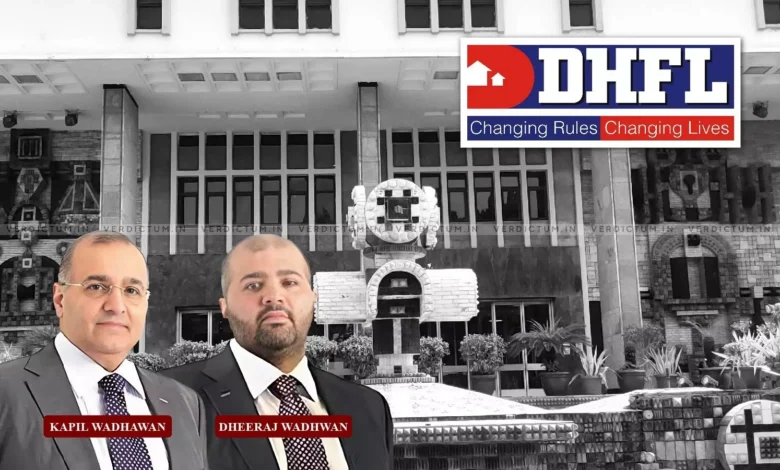
Kapil Wadhawan was promoter of DHFL from 1997 and served as Vice Chairman and Managing Director from April 2006 to July 2009 and as Chairman and Managing Director from July 2009 until the Reserve Bank of India superseded the board on 20 November 2019. SEBI records that he attended 74 of 77 board meetings between 2006 and 2019.
Dheeraj Wadhawan was identified by the same order as one of the principal orchestrators of the alleged scheme under the regulatory standard. The central question is not simply that money left the company. It is how a housing financier could repeatedly classify enormous connected-party exposures as ordinary housing loans, maintain the necessary accounting records, certify financial statements year after year, and continue raising money from the market.
The public scandal erupted on 29 January 2019 when the investigative website Cobrapost alleged that more than ₹31,000 crore had been siphoned from DHFL through loans and advances to shell companies and other mechanisms. Cobrapost further alleged that DHFL had raised roughly ₹96,000 crore through loans and public deposits and that about ₹31,000 crore had been diverted through promoter-linked entities, with money moving through layers of entities and eventually contributing to offshore assets. These were journalistic allegations, not judicial findings.
DHFL rejected them as a “mischievous misadventure” based on a complaint by a person it described as neither a shareholder nor a borrower, and insisted that loans to developers were legitimate and made after due diligence under National Housing Bank norms. The distinction matters. The ₹31,000-crore figure did not begin as a government-certified fraud number. It began as an allegation. Subsequent regulatory and investigative proceedings independently uncovered serious irregularities, although the numbers and methodologies differ. That difference is not a technicality; it is the difference between allegation and adjudicated finding, and any serious examination must preserve it.
The Registrar of Companies in Mumbai initiated a preliminary enquiry. Contemporary reporting stated that at least ten firms associated with DHFL and named in the Cobrapost report could not be found at their registered addresses. The questions that immediately arise are elementary yet damning: who were these borrowers, where were they headquartered, who owned them, what assets did they possess, who were their directors, what collateral did they offer, what cash flows justified the loans, and why did multiple supposedly independent borrowers share addresses and directors? Those questions became central to the forensic and regulatory investigations that followed.
At the heart of the regulatory case sits the so-called Bandra Book. The name is misleading if read literally. It was not a conventional branch full of ordinary home-loan customers. SEBI’s 2025 final order explains that DHFL maintained records associated with a “Bandra” branch through FoxPro, Synergy and Tally systems. Large amounts were allegedly disbursed to 87 Bandra Book Entities. Instead of presenting these as large corporate or inter-corporate exposures, the systems allegedly fragmented or camouflaged the transactions into numerous small fictitious home-loan accounts.
SEBI found that ₹11,548.95 crore was actually disbursed to the 87 unique Bandra Book Entities between financial year 2006-07 and financial year 2018-19. For the period financial year 2007-08 to financial year 2018-19, DHFL’s books recorded ₹21,995.07 crore against actual disbursements of ₹11,309.12 crore. ₹8,610.45 crore was collected from those entities. ₹21,995.07 crore was recorded as 224,491 small-ticket home loans. The average recorded ticket size was about ₹0.10 crore. These transactions represented roughly 24.8 per cent of the “Total Loans” disclosed over the years. The Bandra Book Entity loans were presented as “Housing Loans” rather than “Other Property Loans.” Outstanding Bandra Book Entity exposure recorded in the retail portfolio as of 31 March 2019 stood at ₹14,040.50 crore.
Consider the human and systemic implications of these figures. When a regulated housing financier records more than two lakh small-ticket housing loans that, according to the regulator, correspond to actual disbursements concentrated among 87 connected entities, the risk profile presented to banks, mutual funds, depositors and rating agencies is radically different from the economic reality. Diversification appears where concentration exists.
Retail housing risk appears where promoter-linked corporate risk may have been present. The public, including ordinary households placing fixed deposits and institutional investors purchasing debt instruments, is invited to trust a picture that the regulatory finding later describes as false. How many investment decisions, how many credit decisions, how many household savings decisions were made on the basis of that picture? The question is not rhetorical; it is the measure of the information asymmetry that the alleged architecture created.
SEBI further found that 39 of 54 Bandra Book Entities to which ₹5,662.44 crore had actually been disbursed invested approximately ₹2,254.63 crore in 48 companies connected with the DHFL promoters. Standard loan underwriting procedures were not followed for the Bandra Book Entity disbursements. The 87 entities were connected to one another and to DHFL’s promoter or promoter group. Employees of RKW Developers and other promoter-connected companies served as directors across numerous Bandra Book Entities.
Eighty-two of the 87 entities had a director who was an employee of DHFL or a promoter-connected company. Forty-nine entities had promoters or promoter relatives as directors. Twenty-seven entities were later amalgamated into promoter-connected companies, and ₹4,890.78 crore had been disbursed to entities subsequently involved in those amalgamations. SEBI examined emails concerning the appointment and replacement of directors and concluded that Kapil and Dheeraj Wadhawan were involved in appointing directors to the entities and therefore had control over them.
The accounting software issue deepens the concern. SEBI found evidence involving three systems, FoxPro, Synergy and Tally, and concluded that DHFL had used the accounting systems to camouflage Bandra Book Entity loans as retail housing loans. The alleged device was to use software codes to generate fictitious loan entries corresponding to actual disbursements. This is not merely a story of bad underwriting or optimistic credit decisions.
It is a story, according to the regulator, of the data architecture itself being deployed to create a false picture of the underlying portfolio. When the classification of an exposure determines capital treatment, risk weighting, interest-income recognition and the story told to the market, the integrity of that classification is not a technical detail. It is the foundation of the trust that allows a financial institution to raise money from the public.
Perhaps the single most powerful regulatory finding concerns profitability. SEBI’s final order concluded that if DHFL had excluded the fictitious interest income associated with the Bandra Book Entity loans, the company would have reported losses every year from financial year 2007-08 through financial year 2015-16. Instead, reported Profit Before Tax increased from ₹105.7 crore in financial year 2007-08 to ₹1,102.2 crore in financial year 2015-16.
Stakeholders who relied on those financial statements—shareholders, bond investors, banks conducting credit appraisals, rating agencies assigning ratings—were, according to the regulator, presented with a picture of rising profitability that the exclusion of the disputed interest income would have reversed into consistent losses. The interference with share-price discovery and the misrepresentation of financial position are not abstract governance failures. They are the mechanisms by which capital continued to flow into the company while the alleged architecture remained in place.
None of the 87 Bandra Book Entities was disclosed as a related party from financial year 2006-07 to financial year 2018-19, despite SEBI’s conclusion that they were related parties under the applicable accounting and securities regulations. How can a listed financial institution lend thousands of crores to connected entities while presenting those exposures as ordinary retail housing loans? How did the board, the audit committee, the statutory auditors, the regulators and the lenders fail to identify the pattern earlier? These are not questions that can be answered by pointing to the eventual collapse. They are questions about the capacity of the entire governance and supervisory architecture over more than a decade.
The Grant Thornton forensic audit, appointed after the insolvency process began, identified fictitious accounts and questioned the recoverability of approximately ₹14,046 crore. Contemporary reporting stated that the report covered 91 entities and found that in many cases no security or collateral had been obtained. It also identified common addresses and diversion toward promoter-linked entities.
The report reportedly identified 2,60,315 fake or fictitious home-loan accounts between 2007 and 2019 and approximately ₹11,755.79 crore deposited to Bandra Book entities. These figures differ from SEBI’s later quantification of 224,491 recorded small-ticket accounts linked to the 87 entities. The differing numbers reflect different datasets and methodologies; they must not be mechanically equated. Yet both point to the same underlying concern: the creation of an appearance of retail diversification that did not correspond to the economic concentration of risk.
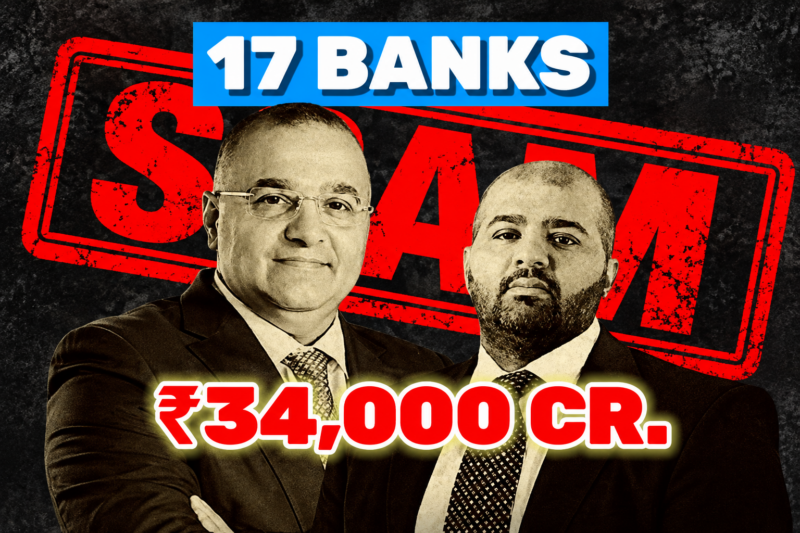
A separate but interconnected pillar is the Central Bureau of Investigation case arising from a complaint by a consortium of 17 banks led by Union Bank of India. The CBI alleged that DHFL and its promoters cheated the consortium by approximately ₹34,614.88 crore. This figure is distinct from the Cobrapost ₹31,000-crore allegation. The broader value of loans and credit facilities involved in the consortium case exceeded ₹57,000 crore; that larger figure is not itself the amount alleged to have been siphoned. In August 2026 a special CBI court ordered the framing of charges against Kapil and Dheeraj Wadhawan and others in the ₹32,930-crore fund-diversion case, holding that the material raised a “grave suspicion” of conspiracy.
The allegations include criminal conspiracy, cheating, forgery, falsification of accounts and diversion or siphoning of bank funds. The prosecution case again incorporates the Bandra Book: approximately ₹11,765.11 crore was alleged to have been disbursed to 87 shell companies between 2007 and 2017, with the fictitious Bandra branch used to disguise those transactions as retail housing loans. Framing of charges is not conviction. It is, however, a significant procedural advance beyond the stage of preliminary investigation, and it keeps the criminal dimension of the matter alive as of the September 2026 cut-off.

The Yes Bank–DHFL controversy adds another layer. Investigators alleged that Yes Bank invested ₹3,700 crore in DHFL short-term debentures in 2018. Around the same period, DHFL allegedly sanctioned a ₹600-crore loan to DOIT Urban Ventures, a company linked to the Kapoor family. The investigative theory was that the ₹600 crore functioned as a kickback for the Yes Bank investment. The Bombay High Court record in the Rana Kapoor bail proceedings records the prosecution’s allegations concerning both the investment and the loan.
The same case involved a ₹750-crore Yes Bank loan to Belief Realtors, a Wadhawan-linked company, allegedly for the Bandra Reclamation project; investigators alleged that the money was diverted rather than used for the sanctioned purpose. The alleged proceeds of crime in the Yes Bank/DHFL Prevention of Money Laundering Act case were estimated by investigators at around ₹5,050 crore. Again, investigators’ allegations are not final criminal convictions.
On 2 February 2026 the Mumbai Special PMLA Court discharged DHFL as a corporate accused in the ₹5,050-crore money-laundering case. The court relied on Section 32A of the Insolvency and Bankruptcy Code, which provides statutory protection to a corporate debtor after resolution and change of management under specified conditions. The immunity applied to DHFL as the corporate entity but did not extend to individuals involved in the alleged offences.
The reasoning is that a new management acquiring an insolvent company should not inherit criminal liability for the previous management’s offences and thereby destroy the value of the resolution process. The result is a structural contradiction that the law itself creates: the corporate shell obtains a clean slate while the individuals allegedly responsible remain exposed. Whether that balance adequately protects the interests of the original victims is an open and legitimate question.
The insolvency process itself produced further complexity. The Committee of Creditors approved the Piramal Capital & Housing Finance resolution plan with 93.65 per cent voting support in January 2021. The National Company Law Tribunal approved the plan in June 2021 and the National Company Law Appellate Tribunal upheld it in July 2021. Implementation resulted in a change of management and the eventual merger of DHFL into the Piramal financial-services structure.
In its major April 2025 judgment the Supreme Court dealt with multiple avoidance and fraudulent-transaction applications, including ₹17,394 crore relating to Bandra Book entities, ₹12,705.53 crore concerning irregularities in Slum Rehabilitation Authority project loans, ₹2,150.84 crore involving the sale of DHFL’s stake in DHFL Pramerica Life Insurance and certain inter-corporate deposits, and other avoidance applications.
The Court upheld the legal position concerning recoveries under the resolution plan, meaning that recoveries from fraudulent transactions could accrue to the resolution applicant under the approved plan. The legal triangle that results is victims and creditors, fraudulent-transaction recoveries, and the resolution applicant, rather than a simple path from victims to promoter assets. Whether that incentive structure is optimal for recovery and deterrence remains a matter of legitimate public debate.
DHFL was primarily a lender, not a real-estate developer. Therefore any claim that DHFL systematically harassed homebuyers for decades would be too broad. Yet the company was deeply involved in housing-finance transactions and builder-finance and subvention structures. In one National Consumer Disputes Redressal Commission case involving a Rise Project, a homebuyer had obtained a DHFL loan and DHFL had disbursed ₹2.22 crore to the builder while the project itself suffered serious construction delays.
The broader structural problem is that a buyer can be trapped between developer, lender and loan obligation: the developer may fail to build, the lender may already have released funds, and the borrower may still face EMI obligations without possession. Consumer cases document specific grievances—unilateral extension of loan tenure by four years despite payment of approximately ₹49.96 lakh, failure to generate or forward necessary Pradhan Mantri Awas Yojana applications, and disputes over insurance attached to home loans after the death of the borrower.
These cases establish deficiencies in service for the individuals involved; they do not convert into a claim that every DHFL borrower was systematically harassed. They do, however, illustrate the human cost when the lending architecture that was supposed to enable home ownership instead leaves borrowers servicing debt for incomplete or non-existent homes.
The Pradhan Mantri Awas Yojana dimension is especially sensitive. The CBI alleged that DHFL created fake or fictitious home-loan accounts under the scheme and used them to claim interest subsidies. Contemporary reporting described approximately 2.60 lakh fictitious accounts and ₹14,046 crore in associated loans.
DHFL itself had reportedly stated that by December 2018 it had processed 88,651 PMAY cases and had received ₹539.40 crore in interest subsidy while claiming a further ₹1,347.80 crore. If fictitious accounts were used to exploit a government housing-subsidy architecture intended for economically weaker and lower-income households, the policy instrument itself becomes entangled in the accounting controversy. The allegation remains an allegation until finally adjudicated; its public-policy implications, however, are already grave.
By July 2019 DHFL’s total obligations to banks, mutual funds, the National Housing Bank and bondholders stood at approximately ₹83,873 crore. The alleged irregularities were unfolding inside a systemically significant housing financier with exposure to public-sector banks, private banks, mutual funds, bond investors, fixed-deposit holders, home-loan borrowers, developers and government housing-subsidy programmes.
CRISIL downgraded DHFL’s commercial-paper rating to CRISIL D in June 2019 after delays in debt servicing, citing inadequate liquidity. CARE downgraded a huge pool of obligations—bank facilities of approximately ₹42,713 crore, non-convertible debentures of ₹46,655 crore, fixed deposits of ₹8,940 crore and subordinated debt of ₹2,205 crore—to “D.” The company had entered a funding death spiral. On 20 November 2019 the Reserve Bank of India superseded the board. On 29 November 2019 the RBI applied for commencement of the corporate insolvency resolution process under the special framework applicable to financial service providers. DHFL became one of the first major financial companies subjected to that route.
Fixed-deposit holders challenged the resolution plan, arguing that their statutory claims were not being fully protected. One challenge noted that public depositors had admitted claims of around ₹5,375 crore while the plan allocated approximately ₹1,300–1,500 crore. Courts ultimately held that the approved resolution plan was binding.
The ordinary depositor who placed savings with a regulated housing financier therefore absorbed a restructuring loss while the individuals alleged to have engineered the structure remained the subject of years of litigation. Is that the allocation of loss that the regulatory and insolvency architecture intended? The question is not answered by the formal validity of the resolution plan; it is a question of distributive justice that the plan itself cannot silence.
SEBI’s investigation in 2023 revoked restraints against eight promoter entities and persons after concluding that their role could not be conclusively established. That fact prevents any one-sided narrative. Not every person originally restrained was ultimately found by SEBI to have played a provable role.
The August 2025 final order, however, imposed substantial penalties and market restraints: Kapil Wadhawan ₹27 crore and five years; Dheeraj Wadhawan ₹27 crore and five years; Rakesh Wadhawan ₹20.75 crore and four years; Sarang Wadhawan ₹20.75 crore and four years; Harshil Mehta ₹11.75 crore and three years; Santosh Sharma ₹12.75 crore and three years. SEBI further indicated that it would determine the quantum of illegal gains and could initiate further action. By 2026 recovery certificates and bank-account attachment notices were being issued against the principal promoters. The 2025 order was not merely symbolic.
In September 2025 the Enforcement Directorate provisionally attached assets worth approximately ₹185.84 crore—154 flats and receivables relating to another 20 flats in Mumbai—bringing the total attachment in the case to ₹256.23 crore when combined with an earlier ₹70.39-crore attachment that had included paintings and sculptures, watches, diamond jewellery, a helicopter stake and two Bandra flats. These were provisional attachments, not final confiscation after conviction.
On 19 August 2026 the ED conducted fresh searches, examining the account of Al Jalore Trading FZE, a UAE-based entity, and freezing approximately US$5.41 million or ₹51.75 crore, described as proceeds of crime under investigation. Contemporary reporting linked the freeze to proceeds from the sale of a UK property, Hurtmore House, held in the name of Vanita Wadhawan. Asset tracing continued more than seven years after the original Cobrapost allegations.
In December 2025 the Supreme Court granted bail to Kapil and Dheeraj Wadhawan in the major bank-fraud case. The Court did not declare them innocent. It based the decision on prolonged pre-trial incarceration—more than five years—completion of investigation, non-commencement of trial, a chargesheet of nearly four lakh pages, 736 witnesses, 17 trunks of documents and more than two terabytes of digital data. Prolonged pre-trial detention cannot become punishment before conviction.
Bail is not acquittal. A subsequent review petition was dismissed on 18 February 2026 both on delay and on merits. In August 2026 the Delhi CBI court ordered the framing of charges. The criminal process remains alive, slow, and heavily document-laden.
The central institutional failure is not merely the size of the alleged diversion. It is the duration. SEBI’s order places the beginning of the alleged scheme in 2006. For more than a decade banks lent to DHFL, investors purchased its securities, depositors placed money with it, regulators supervised it, auditors reviewed its statements, rating agencies assessed its creditworthiness, and institutional investors analysed its accounts.
Yet the regulatory case ultimately described a system in which large promoter-connected loans were allegedly disguised as retail housing loans. A financial institution can make a corporate loan look like thousands of retail loans if the underlying data architecture is manipulated. The risk appears diversified when it is concentrated. The classification itself becomes material. The alleged fraud was therefore not only about where money went; it was about what the money was made to look like before it got there.
The stakeholder universe is far larger than banks alone. It includes home-loan borrowers, fixed-deposit holders, bondholders, mutual funds, shareholders, institutional investors, government subsidy programmes, developers dependent on DHFL finance, employees, and ultimately taxpayers through the exposure of public-sector banks.
When a bank suffers a large corporate loss, the consequences affect profitability, capital requirements, provisioning, lending capacity, depositors and, potentially, public finances. The consortium of 17 banks is therefore not a technical detail; it is the transmission mechanism through which private alleged misconduct becomes a public-system problem.
The questions that remain unanswered are the ones that should animate any serious examination. How did a purported retail housing portfolio conceal concentrated promoter-linked exposures for so many years? Why were 87 entities able to receive enormous sums despite weak financial profiles, and why were they allegedly not disclosed as related parties? How could fictitious interest income contribute to reported profitability for years? What exactly did the auditors know and when? Why did the regulatory system identify the full extent of the problem only after the liquidity crisis?
How much of the allegedly diverted money will ultimately be recovered, and how much did ordinary fixed-deposit holders actually lose? How many borrowers experienced service failures following the collapse? Did developer-finance and subvention structures transfer disproportionate risk to homebuyers? Why did government housing-subsidy architecture become entangled in the PMAY allegations? How much public money was ultimately exposed?
Does the Insolvency and Bankruptcy Code clean-slate principle adequately balance the interests of victims against the need to attract resolution applicants? If fraudulent-transaction recoveries ultimately benefit the resolution applicant, does that create the right incentive structure? Why did it take until 2025 for SEBI to issue its definitive regulatory order on conduct dating back to 2006? Will criminal trials actually reach verdicts given the enormous volume of documents and witnesses?
The DHFL case is therefore three scandals inside one story. The first is the alleged financial-engineering machine itself—the Bandra Book, the 87 entities, the fictitious loans, the related-party non-disclosure, the accounting software and the alleged fund diversion. The second is the institutional failure—the auditors, the boards, the regulators, the lenders, the rating agencies and the governance controls that allowed the architecture to persist.
The third is the aftermath—the depositors who absorbed restructuring losses, the borrowers trapped between incomplete homes and continuing EMIs, the insolvency process that transferred the corporate shell to a new owner, the statutory immunity granted to that shell, the continuing asset-tracing efforts, and the years-long criminal litigation that has yet to produce final verdicts. The strongest question is not simply where the money went. It is how a system designed to finance ordinary Indians’ homes allegedly became capable of making billions of rupees of connected-party exposure look like thousands of ordinary home loans—and why it took the company’s collapse for that architecture to become visible to the institutions that were supposed to see it all along.