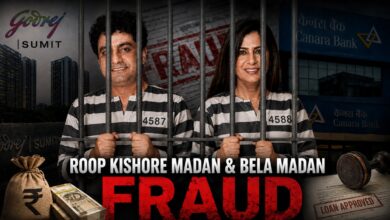
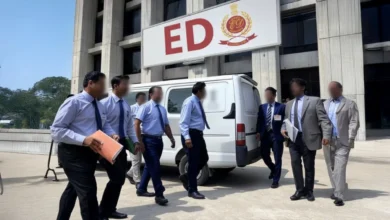
The Bhiwadi Blueprint: How M3M Allegedly Engineered a ₹407-Crore Money-Laundering Masterpiece at the Expense of IREO Investors and Homebuyers

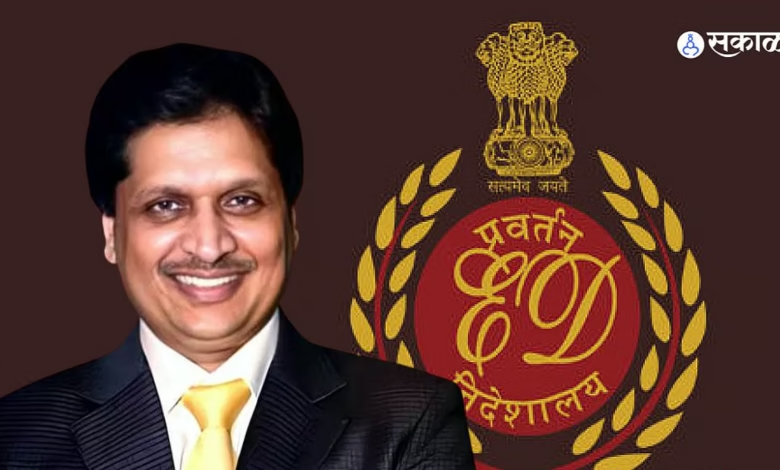
In the annals of Indian real-estate fraud, few episodes expose the cold precision of alleged financial engineering as starkly as the M3M–IREO Bhiwadi Scam. What began as an outstanding liability of ₹407 crore owed by ten M3M companies to IREO land-buying entities in 2010–11 was, according to detailed investigative dossiers and, more critically, the Enforcement Directorate’s own prosecution complaints, transformed into a meticulously layered circular transaction that returned the money to M3M while IREO wrote the entire sum off its books. The land remained with the Bansal family. No project was ever built. No licence was ever obtained. And thousands of homebuyers and foreign investors were left holding the loss.
This was not an accounting error. It was, in the language of the ED’s supplementary chargesheet filed before the Panchkula PMLA court, a classic diversion of proceeds of crime through shell companies, dummy directors, and fabricated development rights.
The Outstanding Liability That Never Left M3M’s Orbit
By 2010–11, ten M3M-linked companies still owed IREO approximately ₹407 crore:
- Aashrya Developers Private Limited – ₹41 crore
- Consolidate Realtors Private Limited – ₹27.6 crore
- Luminous Builders Private Limited – ₹46.25 crore
- Marconi Infratech Private Limited – ₹43.5 crore
- Passion Realtech Private Limited – ₹47 crore
- Premium Realcon Private Limited – ₹25 crore
- Royal Multiplex Private Limited – ₹37.75 crore
- Shaan Realcon Private Limited – ₹46.5 crore
- Silver Fox Realcon Private Limited – ₹45 crore
- Social Realtors Private Limited – ₹47.5 crore
Instead of repayment, the promoters of M3M — Basant Bansal, Roop Kumar Bansal and Pankaj Bansal — together with Lalit Goyal of IREO, allegedly devised a new “investment” vehicle in Bhiwadi, Rajasthan. The vehicle was Misty Meadows Private Limited, a company controlled by the Bansal family (Basant Bansal, his HUF, Roop Kumar Bansal, his HUF, Lal Chand Bansal HUF, Abha Bansal, Anita Bansal, Shakuntala Rani and R S Infrastructure Private Limited). Varun Singhal and Tarun Singhal acted as directors on behalf of the group.
Misty Meadows owned 78 acres of industrial land in Bhiwadi. It assigned development rights equally to five intermediary companies — Aadi Buildwell, Base Realtors, Cygnus Property Build, Innovative Realtech and Vision Multiplex. These five companies then sold the same rights to ten IREO land-owning companies (Adson Software, Auspicious Infrastructure, BTVS Buildwell, Bulls Realtors, Buzz Hotels, Hardcore Realtors, High Star Builders, Panoply Propbuild, Regal Greens Lands and Sang Promoters) for ₹40 crore each — a total of ₹400 crore.
The money flowed from IREO to the ten IREO companies, then to the five shells, then to Misty Meadows, and finally back into the M3M ecosystem. On paper, the original ₹407 crore liability appeared repaid. In reality, the funds had simply completed a circle and returned to the same group that had owed them.
The Write-Down That Completed the Theft
In December 2011 the ten IREO companies assigned the development rights to IREO itself at a valuation of approximately ₹407 crore. Between 2012 and 2016, that value was systematically written down to roughly ₹50 crore on the strength of successive valuation reports that the ED later described as collusive and fabricated. The active participation of Lalit Goyal, Jai Bharat Aggarwal and Nitin Gupta is recorded in the complaint material. The net effect was that IREO’s books absorbed a near-total loss while the cash remained with M3M.
The land titles continued to stand in the names of Basant Bansal, Roop Bansal and Misty Meadows. No development licence was ever applied for. No architects, project managers or site employees were hired. No boundary wall or fencing was erected. No senior IREO executive is recorded as having visited the land. A residential development agreement was executed on industrial land. The purchase price worked out to nearly ₹6 crore per acre against a prevailing circle rate of less than ₹10 lakh per acre. No income tax was paid by M3M on the receipts. No stamp duty or GST was paid by either side.
The ED’s investigation confirmed the essential architecture: a driver was installed as director of Misty Meadows to facilitate the paper trail; the five shell companies were operated under the directions of the Bansal promoters; and the ₹404 crore ultimately remained with the M3M Group for its other investments and liabilities. Roop Kumar Bansal was arrested on 8 June 2023 under the Prevention of Money Laundering Act precisely in connection with this diversion. Basant Bansal and Pankaj Bansal were arrested days later in a linked PMLA case. Although the Supreme Court later quashed the latter two arrests on procedural grounds, describing the ED’s conduct as “clandestine,” the underlying ECIR and the prosecution complaints remain active.
The Larger Pattern: From Bhiwadi to RS Infrastructure and Beyond
Bhiwadi does not stand alone. It is the most fully documented node in a network that the ED has been peeling back since 2021.
In the RS Infrastructure episode, the same promoters obtained commercial licences on residential or panchayat land in Sector 62 by classifying the case as one of “extreme hardship.” The ED’s July 2024 provisional attachment order records that these licences generated proceeds of crime of approximately ₹300.15 crore. The shares and licensed land were later sold for ₹726 crore to a Religare-linked entity. The agency attached 88.29 acres valued at ₹300.11 crore belonging to M3M India Infrastructures Private Limited in Basharia village, Gurugram, and further properties worth ₹124.57 crore (including 430 acres linked to Kenwood Mercantile and Goodfaith Builders) in the related Religare Finvest money-laundering probe.
During the June 2023 raids on M3M and IREO premises, the ED seized seventeen luxury vehicles (Ferrari, Lamborghini, Rolls-Royce, Bentley, Mercedes Maybach and others) valued at over ₹60 crore, jewellery and bullion worth ₹5.75 crore, and cash of ₹15 lakh. Bank accounts of group companies were marked debit-freeze. Multiple ECIRs and prosecution complaints now name twenty-eight M3M companies and their key managerial persons as involved in the offence of money laundering.
Parallel criminal proceedings continue. A Delhi Economic Offences Wing chargesheet, of which a Chief Judicial Magistrate took cognisance in early 2026, summons Basant, Roop and Pankaj Bansal under Sections 406, 420, 120-B and 34 IPC in a ₹450-crore land-exchange fraud complaint filed by MGF Developments. Haryana RERA and consumer forums remain seized of numerous complaints against M3M projects for possession delays, refund claims and, most recently, the Smart World Sector 61 project in which nearly 800 buyers have alleged systematic misrepresentation of green areas and road access. The National Consumer Disputes Redressal Commission has issued notice and stayed coercive recovery.
Analytical Verdict: Design, Not Coincidence
The Bhiwadi structure exhibits every classic indicator of money laundering recognised under the Prevention of Money Laundering Act: layering through multiple shell companies, use of dummy directors (including domestic staff), circular fund flows that return the money to the originators, simultaneous write-downs on the paying side, absence of any commercial substance (no licence, no development, no site activity), and valuation multiples that bear no relation to market reality. The same promoters appear in the RS Infrastructure licence scandal, the alleged Star-City undervalued transfers, the Commander Realtors shareholding manoeuvres, and the MGF land dispute. The common thread is the conversion of IREO’s investor and homebuyer money into M3M-controlled assets while the original projects remain incomplete or abandoned.
The ED has already mapped the Bhiwadi diversion in forensic detail. The asset attachments, the luxury-car seizures, the multiple prosecution complaints, and the continuing criminal and regulatory proceedings against the promoters demonstrate that the pattern is neither isolated nor accidental. Until the full money trail — from the original ₹407 crore liability through the five shells, the write-downs, and the subsequent investments — is traced, frozen and restored to the victims, the Bhiwadi episode will stand as a textbook illustration of how sophisticated real-estate groups can allegedly convert public and investor money into private wealth while leaving thousands of families without homes and without recourse.
The facts already established by the Enforcement Directorate are damning. The residual allegations still under investigation are more damning still. Both demand the fullest possible accountability.