Raheja Developers Has Faced FIRs, ED Action And Insolvency The ₹1,600 Crore Question Hanging Over Thousands Of Homebuyers
Thousands of homebuyers paid Raheja Developers for homes that never arrived on time. What followed was a trail of delayed projects, refund battles, FIRs, insolvency proceedings and an ED investigation involving assets worth nearly ₹2,400 crore. The uncomfortable question now is simple - where did the money go, and will buyers ever get it back?

For a homebuyer, the calculation is supposed to be simple. Pay the money. Wait for construction. Get the keys. Start life in the home you spent years paying for. But for thousands of Raheja Developers buyers, that simple promise has turned into something far more complicated.
Years can pass without possession. Refund demands can end up before consumer forums. Complaints can become court cases. And while buyers keep waiting for either a home or their money back, the developer has found itself facing investigations, regulatory action and insolvency proceedings across multiple projects.
That is where the Raheja Developers story begins. Not with an ED investigation. Not with a ₹1,600 crore asset attachment. And not with an insolvency petition. It begins with people who paid for homes and are still waiting to find out what happens to the money they put into them.
How Raheja Developers Became A Problem For Thousands Of Buyers
A delayed housing project is hardly unusual in India. Construction gets stuck, approvals take time and possession dates move. But the Raheja Developers story goes well beyond a project running late.
- Over the years, buyers across multiple projects have approached courts and regulatory authorities over delayed possession, refunds and other grievances. The result is a growing pile of complaints and litigation involving a developer that once sold homes on the promise of a finished address.
The problem is also not confined to one project.
- Multiple Raheja projects have entered legal proceedings, while authorities have taken action on different fronts. There have been consumer cases, proceedings before RERA and, more recently, insolvency proceedings involving specific projects.
For buyers, that creates a particularly frustrating situation.
A person who bought a flat is not necessarily interested in corporate restructuring, regulatory orders or criminal investigations. They want one of two things – the home they paid for or the money they put into it.
Instead, many have found themselves moving from one forum to another, chasing answers while the legal machinery around the developer keeps getting bigger.
And then the allegations became more serious.
Investigating agencies began looking beyond delayed projects and buyer disputes, bringing questions about the handling and movement of funds into the picture.
That is when the Raheja Developers story moved from a prolonged homebuyer dispute into something much bigger.
Then Came The Criminal Cases
The trouble did not stop with delayed projects and angry homebuyers.
Raheja Developers also came under the scrutiny of the Economic Offences Wing, with FIRs registered in connection with allegations made by homebuyers and other complainants. The allegations concern financial wrongdoing and the handling of funds, making the dispute considerably more serious than a conventional possession delay.
What the FIRs do show is how far the dispute had travelled.
For homebuyers, the fight had already moved from sales offices and customer-care departments to regulatory authorities and courts. Now, criminal investigators were examining the allegations as well.
And the pressure was about to widen further.
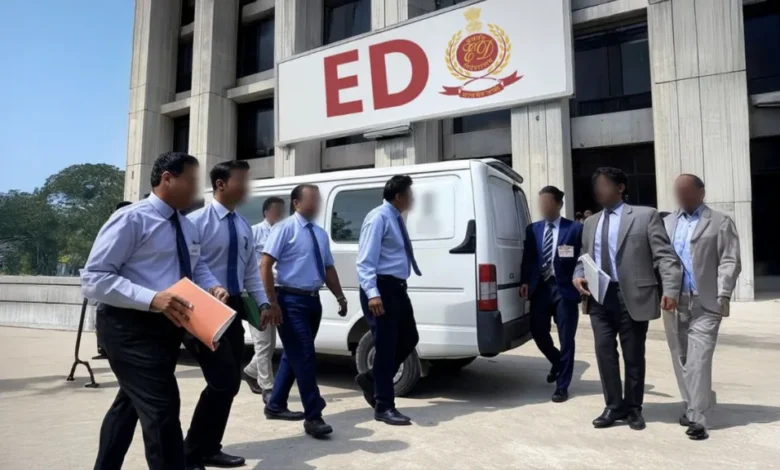
The Enforcement Directorate eventually entered the picture, taking the financial investigation into a different league – one involving alleged money laundering and assets running into thousands of crores.
For buyers who had spent years asking where their homes and money were, the question was becoming much bigger: where did the money go?
The ED Enters The Picture
Once the Enforcement Directorate entered the case, the Raheja Developers story acquired a much bigger financial dimension.
The ED has been investigating alleged money laundering linked to the developer and its associated entities. As part of the investigation, the agency has provisionally attached assets valued at more than ₹1,600 crore.
That number is difficult to ignore.
But it also needs to be understood correctly. A provisional attachment does not mean the government has permanently taken possession of those assets or that the allegations have been finally proved. Such attachments can be challenged through the legal process and are subject to adjudication.
For the investigation, however, the attachment represents a significant development.
The ED’s case is focused not simply on whether projects were delayed, but on the alleged movement and handling of money connected to the wider group. That brings the question of funds paid by buyers into the centre of the investigation.
And this is where the story becomes particularly important for homebuyers.
If money paid for housing projects was allegedly diverted or handled improperly, recovering it is not as simple as winning a consumer case. Buyers now have to navigate a system involving criminal investigation, asset attachment, regulatory proceedings and insolvency.
The ₹1,600 crore figure, therefore, is not the end of the story.
It is one of the biggest clues to understanding just how large the financial problems surrounding the developer have become.
₹1,600 Crore Is Only Part Of The Money Story
The number that stands out is ₹1,617 crore.
That is the approximate value of assets the Enforcement Directorate had provisionally attached in the Raheja Developers money-laundering case by June 2026. But the more revealing number may be the money the agency says was collected from homebuyers in the first place.
According to the ED, Raheja Developers mobilised about ₹2,425.99 crore from nearly 4,600 homebuyers across multiple residential projects. The agency alleges that substantial amounts of this money were diverted and used for purposes other than developing and completing the projects for which buyers had paid.
That allegation goes to the heart of the entire dispute.
If buyers hand over money for a particular project, they reasonably expect that money to help build that project. But the ED’s investigation alleges that this did not happen with substantial portions of the funds it examined.
The agency’s findings are still part of an ongoing investigation, and the allegations will have to stand the legal test. But for a buyer who has already paid lakhs for a home, the distinction between a delayed project and money allegedly being diverted elsewhere is enormous.
It also explains why the case has grown so much larger than a dispute over possession. The questions are no longer limited to when will the home be delivered?
They now include how was the money collected, where did it go, what assets remain, and how can buyers recover what they are owed?
And while the ED follows the money, another legal process is now deciding what happens to the developer and its projects. That process is insolvency.
Then Insolvency Entered The Story
The ED investigation is one battle. Insolvency is another.
And for Raheja Developers’ homebuyers, this may be the process that matters most because insolvency can determine what happens to the projects themselves – whether they can be completed, whether a new developer can step in, or whether buyers eventually have to fight for recovery.
Raheja Developers has faced multiple insolvency proceedings involving different projects.
The legal position, however, has become more complicated than simply saying that the entire company is under one giant insolvency process.
In March 2026, the National Company Law Appellate Tribunal said insolvency proceedings should be pursued on a project-specific basis, rather than putting the developer’s entire portfolio at risk because of buyers from one project. The decision followed earlier proceedings involving Raheja Shilas (Low Rise).
Then there was Krishna Housing Scheme.
In August 2025, the NCLT admitted an insolvency petition filed by homebuyers against Raheja Developers. The NCLAT later confined that CIRP specifically to the Krishna Housing Scheme.
And in June 2026, another insolvency petition involving Raheja Developers was admitted by the NCLT, this time after a petition by homebuyers linked to the Revanta project. The proceeding was initiated on June 8, 2026.
That makes the insolvency story particularly important. These are not simply corporate proceedings happening somewhere in a tribunal. They directly affect buyers who have already put money into specific projects.
Under the insolvency process, homebuyers are treated as financial creditors and can submit their claims. But that does not automatically mean a refund cheque is coming.
The process is about finding a way forward for the project – potentially through a resolution plan – while determining how creditors will be dealt with. For someone who has been waiting years for a flat, that creates a new kind of uncertainty.
The question is no longer just when will Raheja build my home? It becomes who will finish it, under what plan, and what happens to my money if the project cannot be completed?

RERA Orders Sound Like Relief But Getting The Money Back Is Another Story
For some Raheja buyers, the battle has already produced something that looks like a victory on paper – refund orders.
Haryana RERA has passed multiple orders directing Raheja Developers to return money to buyers, along with interest. In one 2025 order covering six complaints, the authority directed refunds at 11.10% interest from the dates of payment until actual realisation.
In another case involving the Raheja Revanta project, RERA had earlier ordered the developer to refund more than ₹1.08 crore paid by two complainants, along with interest, after finding that possession had not been delivered as promised.
But there is a frustrating gap between winning a refund order and actually receiving the money.
The legal record shows execution proceedings following some refund orders. In the Revanta matter, for instance, RERA records also show that the authority ordered the freezing of project-related bank accounts and restricted the creation of third-party rights over remaining inventory.
That is the problem facing many buyers.
A court or regulator can say that money must be returned. But if the developer does not have enough freely available funds to make those payments, the order itself does not magically create the cash.
And that is where the different pieces of the Raheja case begin to collide = RERA orders, frozen accounts, consumer litigation, ED action and insolvency proceedings.
For the buyer, they all lead back to the same question: After years of waiting, when does the money actually come back?
The Legal Fight Homebuyers Are Still Fighting
For many buyers, taking the legal route was not a choice. It was the next step after the promised possession date had come and gone.
The cases now stretch across RERA authorities, consumer commissions and insolvency tribunals. And they are not merely old disputes sitting in files. Proceedings involving Raheja Developers continued through 2026, including execution matters before the National Consumer Disputes Redressal Commission and fresh proceedings before Haryana RERA.
The legal system has, in some cases, gone beyond simply hearing a buyer’s complaint. Refunds have been ordered. Execution proceedings have followed. And where orders have not translated into payment, buyers have had to continue pursuing enforcement.
That creates a particularly painful loop. A buyer first approaches the developer. Then RERA. Then perhaps a consumer forum. If the money still does not come back, another proceeding may be needed to enforce the order.
Meanwhile, the clock keeps ticking.
There is another complication. Once insolvency proceedings begin for a project, the buyer is no longer dealing with a simple builder-versus-customer dispute. Homebuyers become financial creditors within the insolvency process, while the larger objective is generally to find a viable route to revive and complete the project rather than simply turn the process into a debt-recovery exercise.
So even a buyer who has spent years fighting for a refund may find the question changing again. Will I get my money back? Or will the better outcome be getting the home I was promised in the first place? That uncertainty is now sitting at the centre of the Raheja Developers saga.
So What Happens To The Homebuyers Now?
This is the question that matters most.
The investigations may take years. Courts may continue hearing cases. Insolvency professionals may look for resolution plans. The ED may attach more assets. But none of that, by itself, tells a homebuyer when the wait will finally end.
For buyers caught in the Raheja Developers proceedings, there are now several possible routes.
If a project moves successfully through insolvency, a resolution plan could bring in a new investor or developer and give the project a chance of being completed. In the case of Raheja Revanta, for example, proposals involving strategic developers and investors were placed before the NCLT as possible routes to revive and complete the project.
A refund is another possibility, particularly where buyers already have orders in their favour. But again, an order for repayment and actual recovery are two different things.
Then there is the question of the assets attached by the ED. The agency says it has so far provisionally attached assets worth more than ₹1,617 crore in the case. But those assets are tied up in legal proceedings, and provisional attachment does not mean buyers can simply claim a share of them.
For buyers, therefore, there is no single button marked refund. Some may be waiting for possession. Some may be pursuing refunds. Others may now have to participate in insolvency proceedings and submit their claims.
And that is perhaps the most frustrating part of the entire story.
After years of putting money into a home, buyers are still being asked to wait – this time for the legal system to decide what happens next.
The Bigger Question For NCR Real Estate
The Raheja Developers case is no longer just about one builder or a handful of delayed projects.
It has become a test of what happens when a real-estate company faces pressure from several directions at once – homebuyers demanding refunds or possession, RERA orders, insolvency proceedings and a money-laundering investigation.
The scale is significant. The ED says Raheja Developers collected around ₹2,425.99 crore from approximately 4,600 homebuyers and alleges that a substantial portion of the money was siphoned through related entities and used for purposes unrelated to the projects. The investigation is ongoing.
At the same time, insolvency proceedings have increasingly moved towards individual projects rather than automatically swallowing the developer’s entire portfolio. NCLAT’s March 2026 decision allowed allottees of other projects to pursue their own Section 7 proceedings, reinforcing the project-specific approach.
That distinction matters. Because for a homebuyer, a builder is not a balance sheet. A project is not just an asset. It is the house they planned their life around.
And when that project gets stuck, the consequences are far more personal than a corporate insolvency proceeding might suggest.
The Raheja case therefore raises a difficult question for NCR’s property market: how much protection does a homebuyer really have when the developer runs into serious financial and legal trouble?
RERA was supposed to make the buyer more powerful. Insolvency law created a formal route for homebuyers to act as financial creditors. Enforcement agencies can investigate alleged financial wrongdoing.
But none of those mechanisms can give a buyer back the years already lost. And that may be the biggest lesson in the entire Raheja Developers story.
For Homebuyers, The Wait Is Far From Over
There is a temptation to look at the Raheja Developers case and see the ₹1,600-crore-plus asset attachments, multiple insolvency proceedings and criminal investigations as the end of the story.
For homebuyers, it is anything but.
The legal machinery is now moving on several fronts. The ED investigation is continuing. Insolvency proceedings have been admitted in relation to different projects, with tribunals increasingly insisting that such proceedings remain project-specific rather than dragging unrelated projects into the same process.
But none of this changes the basic reality for the buyer. They paid for a home.
The Question Now Is Whether The System Can Deliver What The Builder Could Not
For years, the promise was a home.
Now the promise is something else – that the legal system can untangle what happened and give thousands of buyers a way forward.
That process is already moving. The ED is pursuing its investigation and has continued attaching assets. Insolvency proceedings are underway for individual projects, while homebuyers continue to pursue claims through RERA and consumer forums.
The Latest Twist Is A Courtroom Battle Of Its Own
Just when the Raheja Developers story was beginning to look like a battle over stalled projects and missing money, another legal fight entered the picture.
On August 4, 2026, a Delhi court granted interim protection from arrest to Raheja Developers chairman and managing director Navin M. Raheja and his son Nayan N. Raheja in connection with the ED’s money-laundering investigation. The court was hearing the ED’s applications seeking open-ended non-bailable warrants.
That does not mean the case against them has disappeared.
The court’s order was about protection from arrest while the proceedings continue. The underlying allegations remain under investigation, and the court has yet to determine the merits of the wider case.
But the development adds another layer to an already complicated story.
The developer is now dealing with a financial investigation involving thousands of homebuyers, assets worth thousands of crores under provisional attachment, project-specific insolvency proceedings and continuing disputes before RERA and other courts.
And once again, the legal battle moves forward while the buyers remain stuck in the middle. For them, the names of the people facing investigation, the warrants being sought or the protection granted by a court are secondary.
Their question has remained the same for years. Where is the home they paid for – and if they cannot get that, where is their money?