Satish Sanpal: The Dubai ‘Billionaire’ Who Couldn’t Buy His Way Out of Jabalpur’s Betting Net

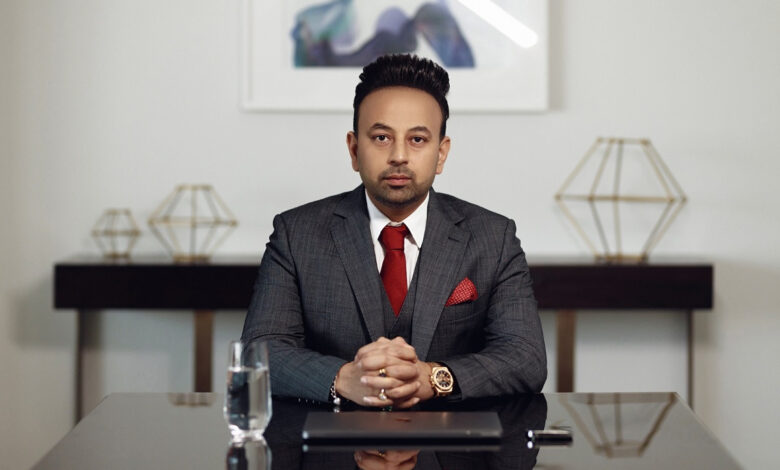
Satish Sanpal, the Dubai-based operator who wrapped himself in the glitter of Netflix’s Desi Bling and projected himself as a self-made empire-builder, has been handed a sharp judicial slap. On 11 August 2026, Justice Himanshu Joshi of the Madhya Pradesh High Court at Jabalpur dismissed his petition to quash FIR No. 170/2022 registered at Madan Mahal police station. The court refused to let him walk free at the threshold. The message was clear: the material collected by police, including the recovery of ₹21.55 lakh linked to the operations and the web of companies, discloses a prima facie case that must face trial.
This is not a minor gambling case. It is the story of a man who, according to the prosecution, ran an illegal IPL betting racket from afar while cultivating an image of legitimate success.
The Raid That Exposed the Machinery
On 23 April 2022, acting on secret information about illegal IPL betting, police raided the residence of co-accused Sunil Thakur in Jabalpur. There they found Sunil Thakur and Deepak Patel actively engaged in betting operations during the cash-rich cricket tournament. The FIR was registered under Section 4-A of the Public Gambling Act and IPC sections covering abetment, conspiracy and later cheating (Section 420 added in the chargesheet).
Investigation did not stop at the two men caught on the spot. Police material identified Satish Sanpal as the mastermind. The prosecution case states he opened fake shell companies in his own name and in the names of others, routed large transactions through them, and thereby defrauded the government. A related recovery of ₹21,55,600 in cash — described in investigation records as linked to the betting collection — along with company seals, cheque books, betting ledgers, mobiles and property documents, formed part of the evidentiary foundation.
Sanpal’s lawyers argued the ₹21.55 lakh was never recovered from him or at his instance, that there was no money trail to his personal account, and that forensic examination of phones yielded nothing incriminating against him. The High Court was unimpressed. Justice Joshi noted that recovery of money from the accused is not an indispensable requirement in every conspiracy case. The material, the court held, indicates involvement. Disputes over the evidence are for the trial court, not for a quashing petition.
The Shell Company Web and the Scale of Alleged Flows
Police investigations linked Sanpal to a network of companies that, according to the prosecution narrative reported across multiple accounts, processed enormous sums. Reports detailing the broader probe into his operations describe 12–13 shell entities — many registered using documents of low-income individuals — through which deposits and withdrawals totalling over ₹1,003 crore in and roughly ₹1,001 crore out were allegedly routed between incorporation and mid-2022. Funds were said to move rapidly, layered and sent abroad via hawala channels toward Dubai.
Sanpal’s side insisted the companies were genuine, filed ITRs and GST returns, and that he had ceased to be a director of entities such as Laakshya Hoteliers Hub Pvt. Ltd. well before the FIR. MCA records were cited. The court rejected this as a ground for quashing. Filing statutory returns, it observed, does not automatically disprove alleged use of the entities for the offences. The role of the companies and Sanpal’s connection to them require evidentiary appreciation at trial.
The Dubai Defence That Collapsed
Sanpal’s central shield was geography. He is an NRI residing in Dubai and, according to his counsel, was not present in India at the relevant time, having left years earlier. The court dismantled this argument with clinical precision. Physical presence at the scene of a raid is not a necessary condition for liability. Involvement can be through other persons, companies, electronic communication, financial transactions, instructions or intermediaries. Whether Sanpal participated despite his absence is a matter of evidence to be tested at trial, not a conclusive proof of innocence that justifies ending the case at the FIR stage.
The High Court also rejected the claim that he was not named in the original FIR. An FIR, the bench noted, is not expected to contain the entire prosecution case or the names of every person who may ultimately be found involved. The investigating agency is entitled to dig deeper. Subsequent implication is not a ground for exercising inherent jurisdiction to quash.
Parity Rejected: No Free Pass Because Another Accused Walked
Sanpal sought parity with co-accused Sanjay Sanpal, whose proceedings arising from the same FIR were quashed by the High Court on 6 May 2025. Justice Joshi shut that door firmly. The principle of parity is not absolute. Relief depends on the peculiar facts and evidentiary foundation attributable to each accused. An order passed in favour of one cannot be mechanically extended to another unless the factual and evidentiary foundation is demonstrably identical. In Sanpal’s case, the court found the material different.
The same logic was applied in related matters. The High Court has refused to quash proceedings against other co-accused on the ground that parity cannot be applied mechanically when evidence needs independent evaluation.
The Netflix Image Versus the Court Record
Satish Sanpal cultivated a public persona through Desi Bling — the polished Dubai businessman, the success story. The prosecution case and the High Court’s refusal to quash present a different picture: a man identified by police as the mastermind of an IPL betting racket operating through local agents in Jabalpur while he remained outside India, using a network of companies that moved large volumes of money, and now facing multiple FIRs across Jabalpur police stations including Madan Mahal, Omti, Lordganj and others.
Court records have listed him as “Farar” (absconding) in connected matters. Bail applications and revisions in related cases have faced resistance. The High Court’s August 2026 orders — dismissing not only the Madan Mahal FIR quash petition but a clutch of similar pleas — underline that the material on record is sufficient to require trial. The allegations, the court observed, are not inherently absurd or improbable.
What the Court Explicitly Declined to Do
Justice Joshi was careful. The inherent jurisdiction under Section 528 of the Bharatiya Nagarik Suraksha Sanhita is to be exercised sparingly. The court will not conduct a mini-trial, will not meticulously weigh every piece of evidence, and will not decide the ultimate truth of the prosecution case at the quashing stage. That is the job of the trial court. What the High Court did decide is that the material collected — the raid findings, the statements, the company trails, the recovery of ₹21.55 lakh linked to the operations, and the overall investigative narrative — discloses a prima facie case. Sanpal’s explanations, denials and claims of innocence remain to be tested under cross-examination and full evidence.
The petition was dismissed. FIR No. 170/2022 and the consequential proceedings continue. Satish Sanpal, the man who presented himself as a Dubai success story, must now face the criminal process in the same city where the betting dens were allegedly operating under his alleged direction.
The shine of Netflix and the distance of Dubai did not persuade the Madhya Pradesh High Court. The allegations stand for trial.