Duality of Regulations, Duality of Threat: How India’s Laser Machine-Safety Blind Spot Leaves Both Beam and Mechanical Hazards Unaddressed
A cross-border safety gap is allowing documented machine hazards onto Indian factory floors — because India's machinery-safety standards remain voluntary, and no law requires a foreign recall to be disclosed here.

At the end of July 2026, a worker died on the shop floor of a factory in Hyderabad. In the official record the death was unremarkable: on average, three workers die every day in India’s registered factories. But what the paperwork recorded as one more industrial fatality led us to a regulatory blind spot hiding in plain sight.
On 29 July 2026, Battula Suresh Babu, a 42-year-old worker, was fatally trapped in a laser cutting machine at Sudarshan Iron Fabrications Company in IDA Cherlapally, Hyderabad. Cherlapally police registered a case and sent the body for post-mortem examination.
The incident invites the obvious inquiry into shop-floor safety practice. Our examination disclosed something wider. The early headlines followed a narrow script, attributing the death broadly to “lasers”. A fatality reported from Goregaon, Mumbai was reported the same way: a 25-year-old worker, Jayram Mhadesiya, was killed when a laser machine re-energised and struck him with the beam.
To read both deaths as laser-radiation accidents is to misdiagnose them. High-power laser cutting machines are dual-threat traps, combining high-intensity optical radiation with a heavy, automated gantry under programmed motion. By fixing blame on the invisible beam, the Indian safety debate has left untouched a prior question: how machinery of this class is certified at all before it reaches a factory floor.
The Anatomy of the Split: Beam vs. Machine
Why current safety training is failing is apparent from the two mechanisms involved.
The radiation hazard (Goregaon, Mumbai). At Shanta Industries, the cutting machine stopped mid-operation. When Mhadesiya entered the working area to examine it, the machine re-energised and the beam struck him in the head, causing fatal injuries. The questions that follow are whether the machine had functioning beam shutters and a laser-safe enclosure, and whether it could restart without a deliberate reset.
The mechanical hazard (Cherlapally, Hyderabad). Suresh Babu was neither burned nor blinded. He was trapped between heavy structural material and the moving machine gantry, and died at the scene. The beam played no part in the injury; the cause was the mechanical force of a powered gantry completing its programmed travel.
The Mumbai death illustrates the hazard the public already recognises. The Hyderabad death illustrates the one it does not: on a machine of this class, the gantry can kill without the beam ever firing.
The Global Trail: A History of Similar Accidents
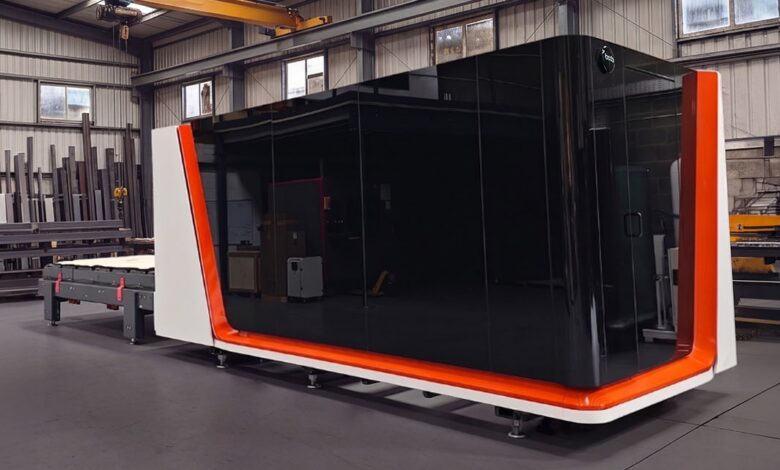
The mechanical failure that killed Suresh Babu corresponds closely to a defect pattern documented in the United States. The make and serial number of the Hyderabad machine have not been confirmed on the public record. Broadcast footage from the site shows an enclosed cabinet-type cutter with a white body, dark front panels and a continuous orange band along the base and door edge — the same combination that appears in Bodor’s published imagery of its P Series. The nameplate is not legible in the footage.
If that identification is confirmed, it would place the Hyderabad machine in a series for which the United States holds a documented fatality record — and in which both deaths were mechanical, not optical.
Nevada, October 2022. US Occupational Safety and Health Administration records (Inspection No. 1629704.015) show that a 48-year-old operator at Wolf Powder Coating Inc. placed the upper half of his body into the operating area of a Bodor P3015 while the machine was energised. The machine arm pinned him against the door edge, causing fatal crushing injuries to his abdomen, back and chest. Twelve citations followed, with penalties of US$77,797.
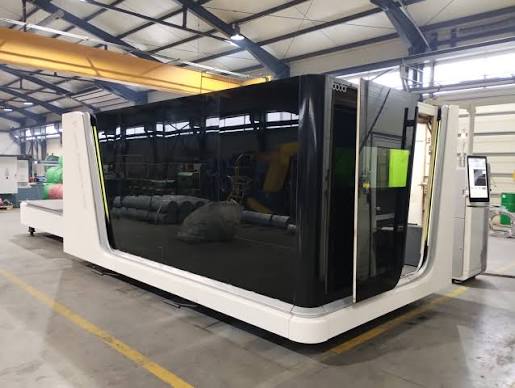
Maryland, June 2024. OSHA Inspection No. 1753302.015 records that a 56-year-old operator at Lab Inventory Systems Inc. leaned into the right-hand maintenance door while sheet metal was being framed inside the machine. The laser-head gantry retracted and returned, pinning her between the door jamb and the gantry; she sustained fatal injuries. Eighteen citations followed, three of them repeat violations. OSHA’s event keywords included “Bypass Guard”, “Door”, “Lockout/Tagout” and “Machine Guarding”.
Neither death occurred at a Bodor facility; both occurred at customer workplaces. In each, an operator was able to place part of their body inside the machine’s working envelope while the machine remained capable of hazardous movement.
Bodor subsequently initiated two recalls, which the US Food and Drug Administration classified as Class II: 269 P and C Series machines in December 2024, and 20 I Series machines in February 2025 — 289 in all. The stated reason was non-compliant laser products, and the corrective action targeted both sides of the dual-threat equation: interlocks on side maintenance doors to cut power when they are opened, and vision-based collision detection to sense when a human body enters the machine envelope. The recalls were initiated by the manufacturer, not ordered by the FDA in consequence of the fatalities; the two processes should not be read as cause and effect.
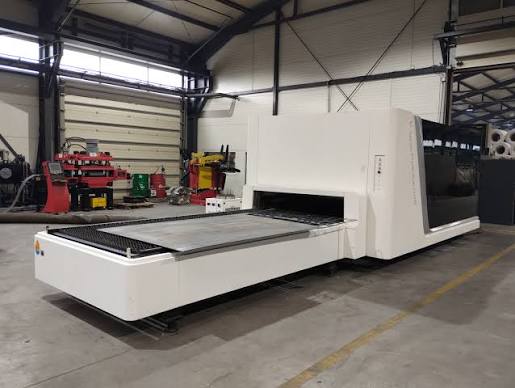
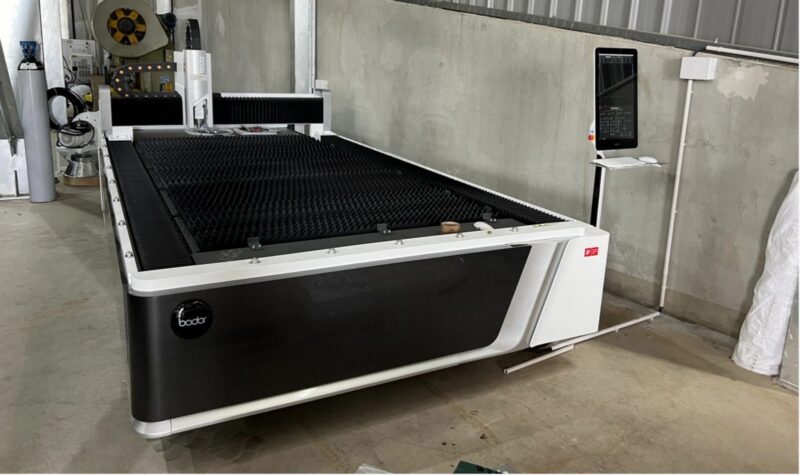
None of this is distant. Bodor has had a wholly owned Indian subsidiary since 2019, with regional offices, warehouses and more than a thousand import shipments on record, and a distributor network covering the south, west, north and east. P and C Series machines — the same series covered by the US recalls — are openly listed on Indian B2B marketplaces, one P Series unit at around ₹59 lakh, advertised with a “full protection cover”.
Whether that cover includes the door interlocks and collision detection the same series required in the United States is stated nowhere. And in September 2026, Bodor and its southern distributor broke ground on what the invitation calls the country’s biggest laser cutting machine manufacturing unit — an 11,000 sq. m. facility.
The Regulatory Void: Duties Without Enforcement
The regulatory record discloses the core difficulty. India’s framework recognises machinery-safety duties but provides no mechanism to verify product compliance before a machine reaches the factory floor.
India’s Occupational Safety, Health and Working Conditions (OSH) Code, 2020 , in force from 21 November 2025, places duties under Section 8 on those who design, manufacture, import or supply machinery. They must, so far as reasonably practicable, ensure it is safe when properly used, carry out the necessary tests and examinations, and provide adequate information about the conditions necessary for its safe operation. Importers of machinery manufactured abroad carry additional obligations concerning applicable standards. Where a breach results in a fatal accident, Section 103 provides for imprisonment of up to two years, a fine of not less than Rs. 5 lakh, or both.
Three gaps, however, run through that framework.
Voluntary rather than Mandatory Standards. The Bureau of Indian Standards has adopted detailed safety standards for both hazards — IS 16819 on interlocking guard devices, IS 16811 on preventing unexpected start-up, and others covering guarding, emergency stops and safety-related control systems. None is compulsory.
The Rescinded Order. The Machinery and Electrical Equipment Safety (Omnibus Technical Regulation) Order, 2024 would have made third-party BIS certification mandatory for this class of machinery. Its commencement was first deferred, and the order was then rescinded on 14 January 2026. No replacement has been notified.
The Cross-Border Information Gap. There is no statutory requirement in India requiring an importer or manufacturer to notify regulators or purchasers if an identical machine model has been recalled or corrected abroad. BIS recall powers reach only goods bearing the Standard Mark; sector-specific recall powers exist for motor vehicles, drugs, medical devices and food, but not for industrial machinery generally.
The combined effect is that an industrial laser-cutting machine may be manufactured, imported, sold, installed and operated in India without any third-party safety certificate, and without anyone in the chain being required to disclose that the identical model was recalled abroad. None of those listings mentions the US recalls or the retrofit.
Redefining Workshop Safety Awareness
Because the public and regulatory focus remains heavily fixed on the “laser beam,” workshops treat these massive machines like high-tech printers rather than heavy, automated manufacturing presses. They mandate laser safety eyewear but overlook lock-out protocols for gantry maintenance.
The questions that remain are Indian ones. What was the make and model of the machine at Cherlapally? Were its access doors interlocked? Could it restart without a deliberate reset? Was it examined by the factory inspectorate before being repaired? The Code already empowers inspectors to answer every one of them — to secure the machine, require it to be tested, and direct that the premises remain undisturbed.
The US record does not prove what happened in Hyderabad. The question is whether the Indian system has enough information, oversight and traceability to find out — and, if the same concern exists elsewhere, to ensure the warning reaches the workers who operate the machines. Until Indian regulators establish mandatory certification and a cross-border recall framework, a worker stepping into a cutting cabinet faces two ways to die, and only one of them involves the beam.