₹150 Crore, Relatives on Payroll, Students Punished: How Manan Kumar Mishra Built a Private Empire Inside the Bar Council of India
The Man Who Turned the Bar Council into His Family Business: Manan Kumar Mishra’s 14-Year Loot of India’s Legal Regulator

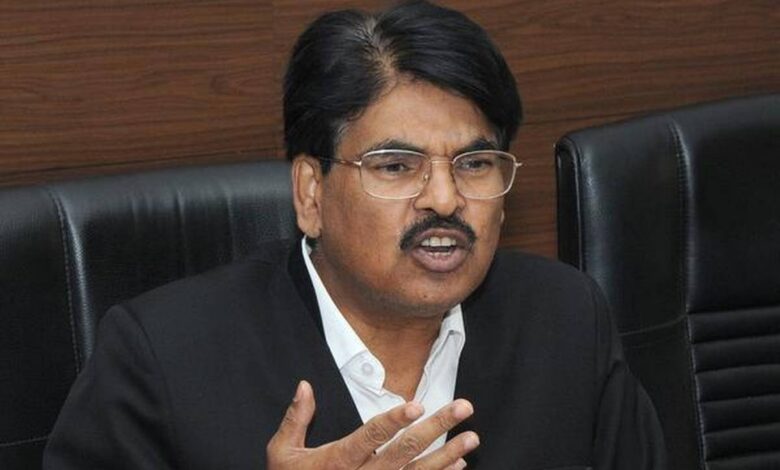
For fourteen long years, one man has treated the Bar Council of India as if it were his private estate. Manan Kumar Mishra, the eternal Chairman, the man who has clung to the chair since 2012 through successive “elections” that have become a farce of rotation, now stands accused by his own Co-Chairman of systematically draining the institution’s finances, packing its offices with relatives, and turning regulatory power into a fundraising racket. The charges, laid out in a six-page letter dated 22 August 2026 by Senior Advocate Y.R. Sadasiva Reddy, are not the usual political sniping. They are specific, documented in outline, and damning.
Reddy does not mince words. He tells Mishra to resign “forthwith” or within fifteen days. He demands a special meeting of the Council, a full independent audit by a CAG-empanelled firm of both the BCI and the shadowy BCI Trust PEARL-First, and an immediate halt to the extraction of “contributions” from law colleges. The language is clinical; the implications are explosive.
The ₹150-Crore Question
At the heart of the letter sits a simple, brutal allegation: approximately ₹150 crore of funds contributed by advocates across India was moved from the statutory Bar Council of India into a private trust registered on 17 September 2020 under the name BCI Trust PEARL-First. The original Bar Council of India Trust was, according to Reddy, deliberately allowed to wither. The new trust’s trustees were handpicked by Mishra. Members of the Council, Reddy states, have never been shown the Trust Deed.
“I know of no provision of the Advocates Act, 1961 which permits the corpus of a statutory regulator to be transferred to a private trust registered by its own Chairman,” Reddy writes. The Campaign for Judicial Accountability and Reforms has separately claimed that a CBI probe into this very trust and the transfer of funds is already pending. Mishra’s response has been to declare the allegations “baseless,” insist the trust is transparent and annually audited, and note that Reddy himself is listed as a trustee. The contradiction only deepens the smell.
The Approval-for-Cash Pipeline
Worse still is the charge that law colleges seeking approval or renewal of recognition have been required to make “contributions” to this same trust. The amounts cited range from ₹25 lakh to ₹50 lakh and, in some cases, up to ₹1 crore. Regulatory power, meant to protect the standards of legal education, is alleged to have been converted into a revenue stream. Reddy’s language is uncompromising: the power of approval “is not a licence to raise funds.” If even a fraction of these claims is accurate, the BCI under Mishra has not merely failed as a regulator; it has actively monetised its own regulatory authority.
Nepotism Without Shame
Then comes the staffing. Reddy examined the current staff list and found what he describes as “a pattern that no responsible Member can overlook.” A striking proportion of employees, he alleges, are personally connected to Mishra, including members of his own family. No advertisements, no selection committee proceedings, no comparative merit lists have been placed before the Council to justify these appointments. Key administrative posts in BCI-linked educational institutions are also said to be occupied by family members. The Bar Council of India, Reddy declares, “is not the personal estate of any individual.”
The NALSAR Debacle – The Final Straw
The letter reserves particular contempt for the events of 13 August 2026. From the Chairman’s office went a directive ordering State Bar Councils not to enrol a single graduate of the 2026 batch of NALSAR University of Law. The stated reason was a student campaign opposing the invitation of the Chief Justice of India as convocation chief guest. No material was placed before the full Council. No resolution authorised the action. Within hours, after the Supreme Court Bar Association and the Supreme Court itself reacted with sharp criticism, the directive was withdrawn. Reddy calls it “a reprisal for having held an opinion” and asserts that this single act “has done more damage to the standing of this Council than anything else in its history.”
Fourteen Years and Counting
Mishra first took the chairmanship in 2012. After a brief interruption, he returned in November 2014 and has remained ever since, securing re-election after re-election, most recently in 2025. The statutory term is two years. An office occupied by the same individual for fourteen years, Reddy observes, “has ceased, in any real sense, to be an elected office.” When the arrangements are so managed that the outcome is a foregone conclusion, democracy becomes theatre.
This is not the first time questions have been raised about Mishra’s long reign. Critics have pointed for years to the proliferation of law colleges of dubious quality, to the failure to curb the scourge of fake degrees (Mishra himself once claimed 35–40 per cent of advocates practice on fabricated certificates), and to the sense that the regulator has become more interested in control than in standards. A writ petition filed in the Supreme Court only days ago challenges the legality of his prolonged tenure and seeks a comprehensive audit of BCI finances, the PEARL-First Trust, and related entities.
The Defence of the Indefensible
Mishra’s reply has been characteristic. He is an elected representative, he says, not a nominated one. More than two-thirds of the Council support him. The allegations are political. The trust is transparent. Anyone is free to examine the accounts. He will step down only if the charges are proved. The language is defiant, almost regal. It is the language of a man who has grown accustomed to treating institutional power as personal entitlement.
Yet the weight of the accusations now comes from inside the house. The Co-Chairman of the very body Mishra heads has put his name to a detailed indictment. Young advocates, student bar associations, and members of Mishra’s own state bar have publicly called for his departure. When the profession the regulator is meant to serve begins to repudiate the regulator itself, the question is no longer one of personal preference. It becomes, as Reddy writes, a question of institutional survival.
The Bar of this country has watched for fourteen years as one man consolidated control, created parallel structures of money and influence, and treated regulatory power as a private resource. The letter of 22 August 2026 does not merely demand a resignation. It demands an accounting. Whether that accounting will ever be allowed to take place is the test that now faces both the Bar Council of India and the larger legal community that has tolerated this arrangement for far too long.
The Bar deserves better. The only remaining question is whether it will finally insist on it.