So You Want To Be An Investor? Meet Krishan Rattan, Terra-Invest, And The $100 Million UK Lawsuit


If you are in the market looking for somewhere to put your money, you will quickly discover that the world of investments has its own language, its own` characters and, more importantly, its own promise of opportunity, and Krishan Rattan is one of the names you eventually come across when you start looking beyond the usual fund managers, banks and investment houses towards the people operating across international finance, private capital and investment businesses.
It is not necessarily a name that would jump out at you if you were casually scanning the financial world, but look a little closer and there is a fairly interesting career sitting behind it, one that runs through international banking, investment businesses, complex corporate structures and, eventually, Terra Invest, where Rattan became a founding partner.
That, however, is only the straightforward part of the story.
Because when you start digging into Rattan’s professional history, you eventually arrive at another chapter involving a very different set of names, a substantial investment, a dispute over what happened to that money and a lawsuit in the UK in which the Sawiris family’s investment vehicle is seeking around $100 million, with Rattan himself named as one of the defendants.
And this is where the story gets interesting, because Terra Invest is not the reason the dispute exists, nor is this a story about the Sawiris family having anything to do with Terra Invest; rather, it is the story of a financier whose career has moved through different businesses and relationships over the years, with one earlier chapter now being played out in a London courtroom while another, Terra Invest, represents the more recent chapter of his professional journey.
So, before we get to the courtroom, the money and the $100 million question, it is worth going back to the beginning and asking a rather simpler question: who exactly is Krishan Rattan?
Before Terra Invest, There Was A Much Longer Story
Before Krishan Rattan became associated with Terra Invest, there was a much longer professional journey behind the name, and like most careers in international finance, it did not begin with someone simply deciding one morning to build an investment firm, but with years spent moving through institutions, deals and financial businesses where relationships, access to capital and an understanding of how money moves between jurisdictions can matter just as much as the balance sheet itself.
Rattan’s career took him through the world of international banking, before he moved deeper into investment and private financial businesses, gradually building the kind of experience that comes from operating across different parts of the financial system rather than remaining confined to a single institution or one narrow investment speciality.
That background matters because it helps explain the trajectory that followed; Rattan was not an outsider suddenly appearing in the investment business, but someone who had already spent years around financial markets and the people who operate within them, and over time his professional interests increasingly moved towards investment structures and businesses where the line between advising on capital, managing capital and participating in the businesses themselves could become considerably more complicated.
It was during this broader phase of his career that Rattan became involved with a number of companies and business relationships that would later become important to the story, including Voltaire, the corporate structure at the centre of the dispute that would eventually bring the Sawiris family and Rattan into the UK courts.
And that is worth pausing on, because the name Voltaire may seem like just another company in a long list of corporate entities, but it is actually where one of the more consequential chapters of Rattan’s professional history begins to take shape, involving investors, business partners, corporate restructurings and ultimately allegations about what happened to an investment that would later become the subject of a claim running into nine figures.
Terra Invest, meanwhile, belongs to a later chapter.
Rattan’s association with the firm would eventually place him in a very different part of the investment market, but to understand why his name now appears alongside a $100 million UK legal dispute, it is necessary to resist the temptation to connect every part of his career into one neat corporate story, because the more interesting reality is that these are different chapters, involving different businesses and different relationships, even though they all form part of the professional history of the same man.
And perhaps that is the best place to go next: Terra Invest, the firm that made Rattan’s name more visible in the investment world, and the chapter of his career that exists entirely separately from the Sawiris dispute.

Enter Terra Invest
By the time Terra Invest enters the picture, Krishan Rattan is no longer simply a financier with experience in international banking and investment businesses; he is now part of an investment firm of his own, and for anyone coming across his name today, this is probably the most obvious place to start understanding what he does and where he sits in the financial world.
Terra Invest presents a rather different chapter from the earlier corporate dealings that will become important later in this story, with Rattan serving as a founding partner and the firm operating across investment and financial opportunities rather than as a continuation of the companies involved in the Sawiris litigation.
That distinction is important because it is very easy, particularly when a story involves several companies, investors and jurisdictions, to draw a line between them simply because the same person appears somewhere in the middle, but the fact that Rattan’s name appears in both stories does not make Terra Invest part of the dispute involving the Sawiris family, and it is worth keeping those two strands separate from the outset.
What Terra Invest does tell us, however, is something about the direction Rattan’s career has taken: from the institutional world of international banking into investment businesses where the opportunities are broader, the structures can be more complex and the people behind the capital can become just as important to the story as the capital itself.
For the casual observer, that might be where the story ends – a financier with an international background who went on to become a founding partner of an investment firm – and, on the surface, there would be nothing particularly unusual about that trajectory.
But careers in finance rarely fit neatly into a single paragraph.
Rattan’s professional history contains another, considerably more complicated chapter, one that predates Terra Invest and involves a different group of companies, a major investment by a vehicle connected to the Sawiris family, and a series of transactions that would eventually turn a business relationship into a legal dispute in London’s High Court.
So now we have to go back again – this time not to understand Terra Invest, but to understand the earlier business relationship that ultimately put Krishan Rattan on the other side of a $100 million claim.

Another Chapter In Rattan’s Career
This is where the story takes a turn, because long before the Sawiris family became connected to a legal claim involving Krishan Rattan, there was a business relationship built around investment and a set of companies that would eventually become central to the dispute, and understanding that relationship is important because the court case did not appear out of nowhere; it grew out of decisions, transactions and corporate changes that took place years earlier.
At the centre of that earlier story was Voltaire, a corporate structure through which the relevant investment interests were held, and it was here that Rattan became involved alongside other figures, including Eric Watson, as the business developed and attracted outside capital.
The outside capital was significant, and it came from an investment vehicle connected to the Sawiris family, one of Egypt’s best-known business families, whose interests extend across telecommunications, construction, investment and other major businesses, with the family’s investment interests eventually becoming entangled with the Voltaire structure and the events that followed.
For the investors, this was supposed to be about capital being put to work through an investment structure; for the people running and developing the businesses, it was about building value and managing the companies involved, but as the years passed, the relationship became considerably more complicated, particularly as questions emerged over the way certain businesses and assets were structured and controlled.
And this is where names such as Stater and IronFX begin appearing in the story, because what initially looks like a straightforward investment relationship becomes harder to follow once you start tracing the companies, the transactions and the people involved.
The allegations made by the Sawiris side centre on what happened to their investment and whether the individuals involved acted properly in relation to the businesses and transactions at issue, while Rattan disputes the claims made against him; those competing positions are important because the existence of a lawsuit does not, by itself, establish that the allegations are true.
What makes the story particularly interesting is the gap between the apparent simplicity of the original proposition – investors put money into a business structure and expect that investment to be managed in their interests – and the complexity that followed, with corporate restructurings, changing ownership arrangements and business relationships making it increasingly difficult to answer the most basic question of all: where did the money ultimately go, and who was responsible for what happened along the way?
To answer that, we need to slow the story down and look at the investment itself, the companies sitting around it and the transactions that eventually became the foundation of the $100 million claim against Rattan and others.

Follow The Money
If there is one rule that tends to make complicated financial stories a little easier to understand, it is this: when the corporate names start piling up, follow the money, because companies can be renamed, ownership can be rearranged and businesses can move through different structures, but the trail of capital often tells you why the people involved eventually ended up on opposite sides of a courtroom.
In the case involving Krishan Rattan, that trail leads back to the investment made through Gemini Investment Fund, the vehicle associated with the Sawiris family, and into the Voltaire structure, where the investment was tied to a broader set of businesses and relationships involving Rattan and other individuals.
The important point here is that this was not simply a matter of someone handing over a cheque and waiting for a return; the investment sat within a corporate structure, and as that structure evolved, so did the interests of the various people involved, creating a chain of transactions that would later become central to the allegations brought before the UK court.
Among the businesses that appear in that chain were Stater and IronFX, with the latter in particular becoming an important name in understanding the wider commercial background, while Eric Watson’s role also becomes significant as the story moves from the original investment towards the subsequent transactions and restructuring.
According to the claims brought by the Sawiris side, the problem was not simply that an investment failed to perform as expected, but that the manner in which the businesses and assets were dealt with raised questions about whether the investors’ interests had been properly protected and whether those involved had acted within the responsibilities they owed.
Rattan’s position is different, and that distinction matters: he contests the allegations made against him and does not accept the claimants’ account of his role or responsibility for the losses they say they suffered.
That leaves the court with a considerably more complicated question than “Did the investment lose money?” because investments lose money all the time, sometimes spectacularly, without anyone having done anything wrong; the real issue is what happened to the investment, what decisions were made as the corporate structure changed, who made those decisions and whether any of those actions created a legal liability for Rattan.
And somewhere in that maze sits the 2016 restructuring, a point in the chronology that becomes particularly important because it changed the corporate landscape around the businesses involved and ultimately became part of the story the court is now being asked to untangle.
But before getting there, there is one question that naturally follows from all of this: if the dispute involved a wider group of companies and individuals, why did Krishan Rattan personally end up facing a claim of around $100 million?
So Why Rattan?
This is probably the point at which most readers would stop and ask the obvious question: if there were multiple companies, investors and businesspeople involved in the story, and if the dispute developed over a series of transactions rather than one isolated event, why exactly is Krishan Rattan personally facing a claim that runs to around $100 million?
That question sits at the heart of the litigation.
The Sawiris family’s investment vehicle, Gemini Investment Fund, brought proceedings in the UK against a number of defendants, with Rattan named as Defendant No. 2, and the claim concerns allegations arising from the way the investment and the businesses connected to it were handled, including the transactions and corporate arrangements that followed the original investment.
The claimants’ case, in broad terms, is that the individuals involved had responsibilities towards the investment and that those responsibilities were not properly discharged, with the alleged conduct ultimately causing substantial losses to the investors; the precise legal arguments are more complicated, but the basic dispute is easier to understand when stripped of the corporate language: the investors say something went seriously wrong with their money, and they believe Rattan bears legal responsibility for at least part of what happened.
That is a very different proposition from saying that Rattan simply managed an investment that lost money.
A bad investment, by itself, does not create a $100 million lawsuit, and the court therefore has to examine the conduct surrounding the investment, the roles played by the different defendants, the relevant transactions and whether the legal duties alleged by the claimants existed and were breached.
For Rattan, this distinction is critical because his presence in the corporate history does not automatically establish personal responsibility for everything that happened within the businesses involved, and his defence challenges the case being made against him.
There is also a timing issue that makes the story particularly interesting: the transactions and restructuring at the centre of the dispute date back years, while the legal battle has taken place much later, meaning that the court is effectively being asked to reconstruct a complicated commercial history from documents, corporate records, transactions and the recollections and positions of the people involved.
And that is why the 2016 restructuring matters so much.
It was not simply another date in a long corporate timeline; it forms part of the sequence that the claimants rely upon in explaining what happened to their investment and why they say the defendants should be held responsible.
To understand that argument properly, we need to go back to 2016 and look at what actually changed – because that is where the corporate story becomes considerably more interesting.

The 2016 Restructuring
Now we get to one of those moments in a corporate story where a date can look completely harmless on paper but become rather important once you start asking what actually changed around it, because in 2016, the businesses connected to the dispute went through a restructuring that altered the corporate arrangements surrounding the investment and subsequently became an important part of the case brought by the Sawiris family’s investment vehicle.
Restructuring, of course, is hardly an unusual word in the world of finance; companies restructure all the time, whether to bring businesses under a different holding company, separate assets, accommodate new investors or simply make an existing corporate arrangement more efficient, and there is nothing inherently suspicious about a restructuring merely because one takes place.
The question here is what this particular restructuring meant for the investment and for the people who were involved.
By this stage, the original business arrangement had already become more complicated, with different companies and commercial interests sitting within the wider structure, and the restructuring effectively changed the way those interests were held and organised, creating a new set of relationships between the businesses, their owners and the investors who had put capital into the structure.
This is also where the distinction between being involved in a business and being legally responsible for what happened to an investor’s money becomes particularly important, because the claim against Rattan is not simply based on the fact that his name appears in the history of these companies; the claimants have to establish why his particular role and conduct give rise to personal liability.
The Sawiris side has its own account of what the restructuring accomplished and how it affected their interests, while Rattan disputes the allegations made against him and the responsibility attributed to him, leaving the court to examine not only the transactions themselves but also the roles played by the various individuals at each stage.
And this is where the story stops being quite so easy to tell as a simple tale of investors, businessmen and a company that went wrong, because once the corporate structure changes, the question becomes much more precise: who controlled what, who knew what, who made which decisions and whose interests were those decisions supposed to protect?
Those questions may sound dry when written in the language of corporate law, but they are ultimately what the dispute is about, because behind all those company names and restructuring documents is a very straightforward disagreement over responsibility for a very large sum of money.
For the Sawiris family and its investment vehicle, the argument ultimately became serious enough to pursue through the UK courts; for Rattan, the case represents a challenge to the way his role in those events has been characterised.
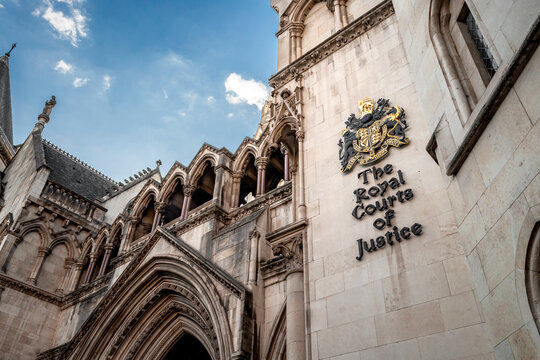
And so the story that began with an investment and became increasingly tangled in corporate transactions eventually arrived at the place where those competing versions could be tested: the High Court in London.
When The Business Dispute Reached London
By the time the dispute reached the UK courts, this was no longer simply a disagreement that could be settled around a boardroom table or buried under another round of corporate restructuring, because the questions surrounding the investment, the transactions and the responsibilities of the people involved had become serious enough for the parties to take their fight into litigation.
At the centre of the proceedings is Gemini Investment Fund, the investment vehicle associated with the Sawiris family, which brought the claim against several defendants and is seeking damages of around $100 million, with Krishan Rattan named as Defendant No. 2.
That number, naturally, is the part that catches the eye, but the more interesting question is what sits underneath it, because the court is not simply being asked to decide whether the investors lost money; it has to examine the sequence of events that led to the alleged loss and determine whether the defendants, individually and collectively, bear the legal responsibility that the claimants say they do.
For Rattan, that means the case is ultimately about his role in the businesses and transactions at issue, what responsibilities he owed, what he knew and did at the relevant points in time, and whether the actions attributed to him amount to the breaches alleged by the claimants.
The claimants’ allegations are serious, but they remain allegations, and that distinction is particularly important in a case such as this because the existence of a High Court claim – even one involving a nine-figure sum and a prominent family — is not itself a finding that the defendants did anything wrong.
Rattan contests the case against him, and the substantive issues therefore remain matters for the court to determine rather than conclusions that can simply be drawn from the fact that his name appears on the defendant side of the litigation.
What makes the proceedings particularly significant is the amount of history that has to be unpacked before those questions can be answered, because the court is dealing with events that stretch back years, involving multiple companies, investment arrangements, transactions and changes in corporate structure, all of which have to be placed in the correct order before responsibility can be properly assessed.
In other words, the $100 million figure may be the headline number, but it is not really the story. The story is how that number came to be attached to Krishan Rattan’s name in the first place.
And that brings us to the question the litigation will ultimately have to answer: was Rattan merely one of the people who passed through this complicated corporate history, or did his conduct create the personal legal responsibility that the claimants say he carries?
Rattan’s Side Of The Story
There is, however, another side to this story, and it is one that cannot simply be tucked away at the end as a formality, because when a lawsuit of this size is built around a complicated history of companies, investments and transactions, the position of the person being sued matters just as much as the allegations being made against him.
Krishan Rattan disputes the claims brought against him.
That distinction is worth keeping firmly in view as the story moves forward, particularly because the case involves events that took place years ago and a corporate structure complicated enough that responsibility cannot simply be assumed from association, position or proximity.
The claimants have their version of what happened to the investment and why they believe Rattan should be held personally responsible, but Rattan’s position challenges that account, including the way his role in the relevant businesses and transactions has been presented, meaning that the court will ultimately have to look beyond the broad narrative and examine the evidence relating specifically to him.
This is where the case becomes less about the names on the corporate paperwork and more about the details behind them: what authority did Rattan actually have, what decisions was he involved in, what information was available to him at the time, what obligations did he owe to the investors and, perhaps most importantly, can the losses claimed by Gemini be legally attributed to his conduct?
Those are not questions that can be answered simply by looking at the size of the investment or the scale of the eventual claim.
They require the court to reconstruct what happened, transaction by transaction and decision by decision, while also considering the competing accounts offered by the parties.
There is another reason why this matters.
Financial disputes can look remarkably straightforward when reduced to a headline – investor loses money, businessman gets sued, $100 million is claimed – but the legal reality underneath can be considerably more complicated, because an investor’s loss does not automatically mean that someone else is personally liable for it.
The court therefore has to distinguish between commercial failure and actionable wrongdoing, between being involved in a transaction and being legally responsible for it, and between what the claimants allege happened and what the evidence ultimately establishes.
That is also why the forthcoming proceedings matter so much for Rattan, because this is not merely an old business disagreement resurfacing in the press; it is a legal dispute in which the court will be asked to examine his specific role in a series of events and decide whether the allegations against him stand up.
Until that happens, there is only one thing that can responsibly be said with certainty: the Sawiris side has made a substantial claim, and Rattan is contesting it. The rest is for the courtroom.
The Man, The Businesses And The Questions
Step back from the legal documents for a moment and the story becomes easier to understand, they are different chapters and what connects them is Rattan himself.
And that is precisely why looking at his career as a whole becomes useful, because the question surrounding him is not simply whether he helped build or participate in a particular company, but how his role evolved over time and how his earlier business relationships eventually produced a legal dispute serious enough to result in a claim of around $100 million.
There is also a broader lesson here about the way investment businesses work, particularly when several companies, investors and individuals are operating across jurisdictions and corporate structures, because from the outside a transaction can look perfectly straightforward while the real questions — who owns what, who controls what, who owes duties to whom and who ultimately carries the risk when something goes wrong – can sit several layers underneath.
That is what the UK proceedings will have to untangle.
For the Sawiris family’s investment vehicle, the issue is ultimately about what happened to its investment and whether the defendants, including Rattan, should be held responsible for the losses it says it suffered.
For Rattan, the issue is whether the allegations against him accurately reflect his role and whether the claimants can establish the personal liability they are seeking to impose.
And for anyone looking at the story from the outside, perhaps the most interesting part is that both questions now have to be answered against the backdrop of a career that has continued to move forward, with Rattan now associated with Terra Invest while the earlier dispute remains unresolved.
The courtroom, eventually, will have the final word on the part that matters most: whether the allegations against Krishan Rattan translate into legal liability, or whether the $100 million claim ultimately fails to establish the responsibility being alleged.